
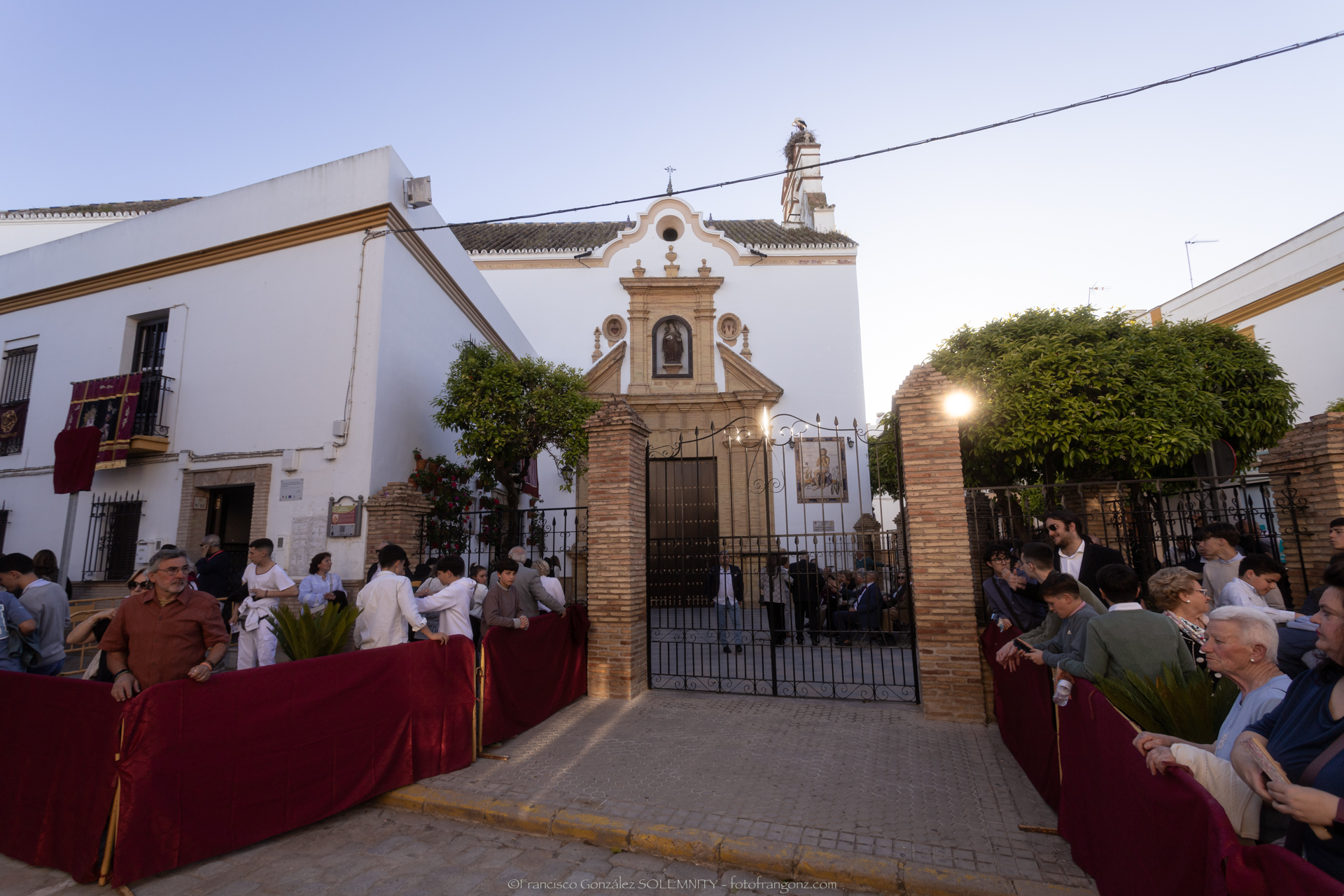
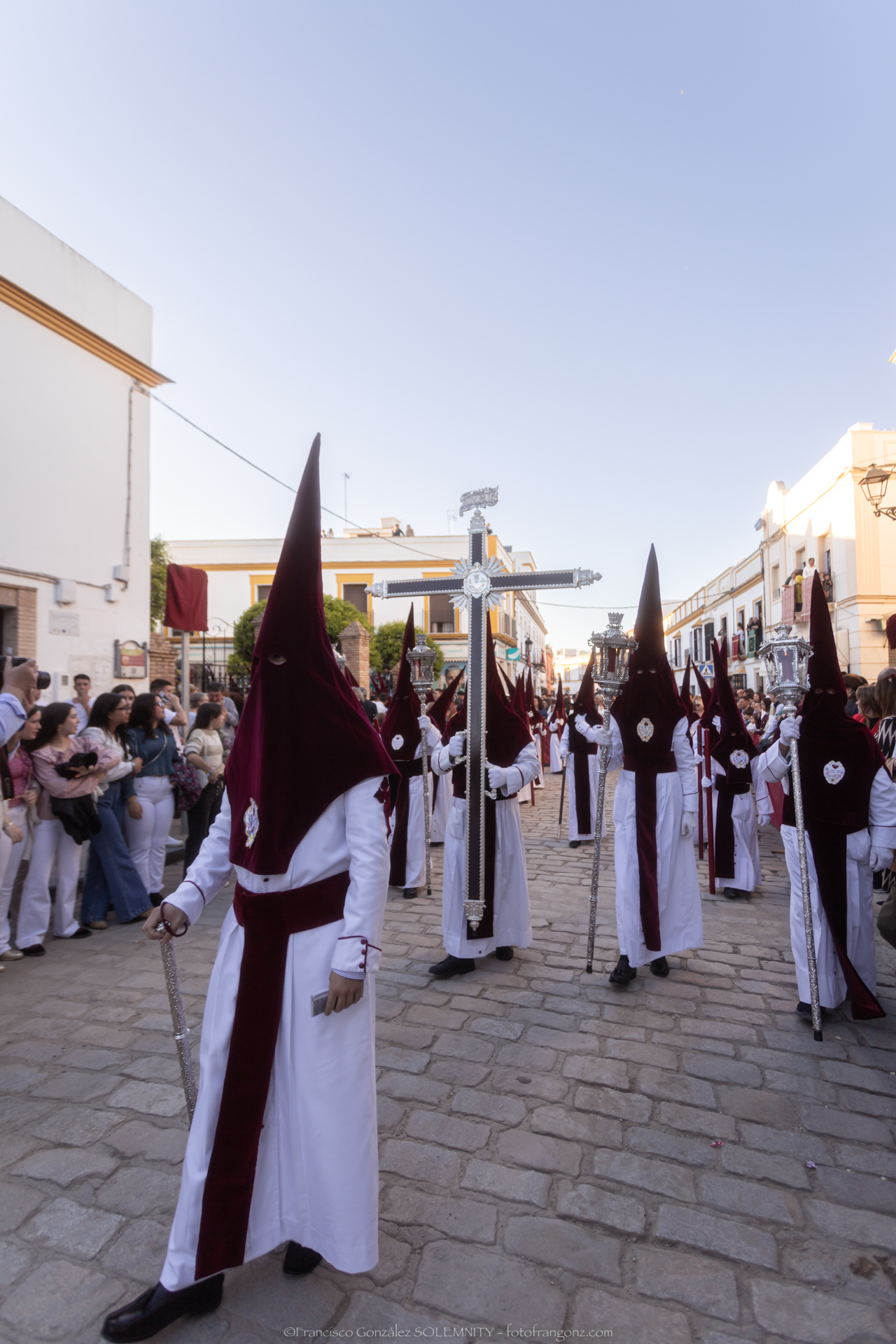
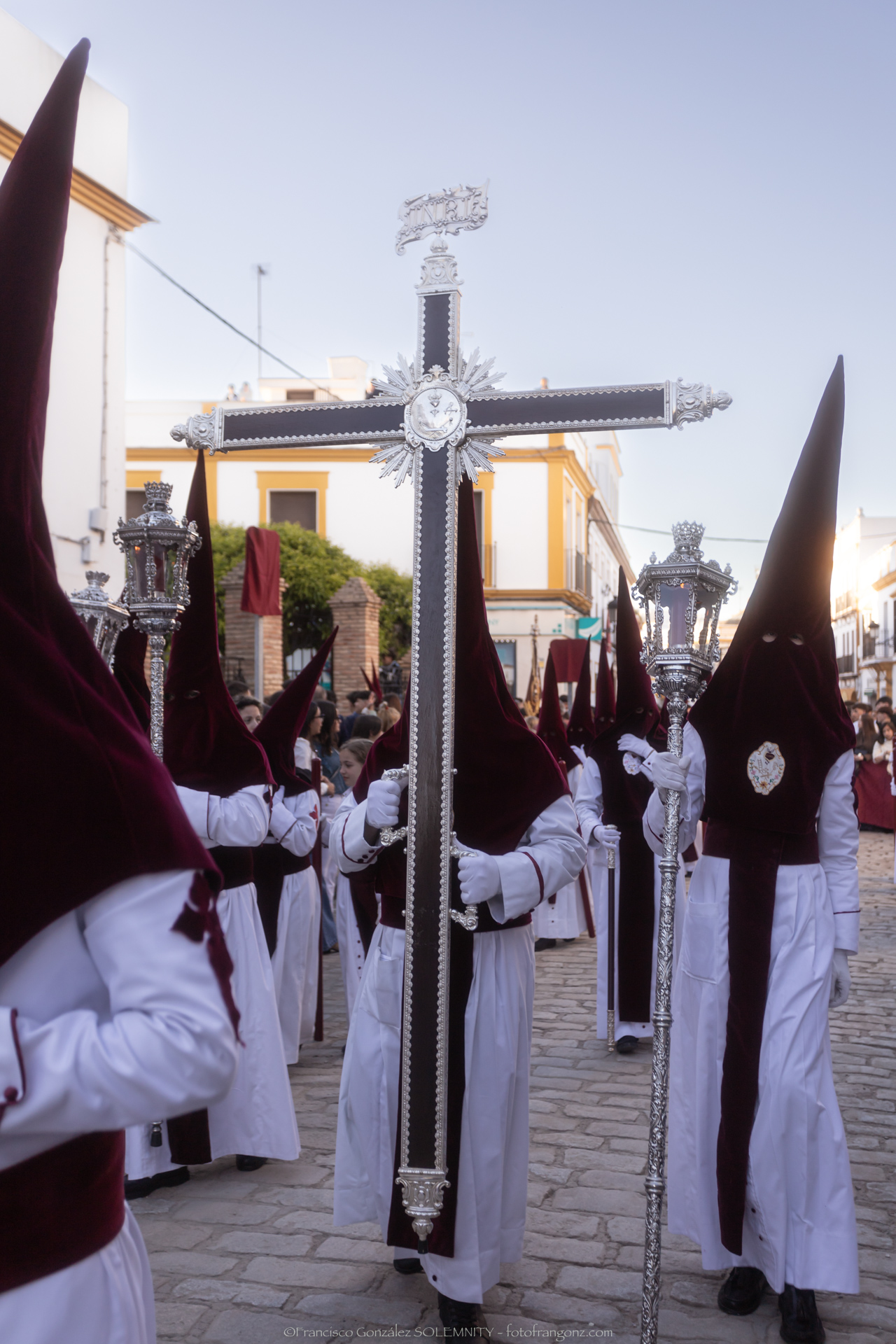
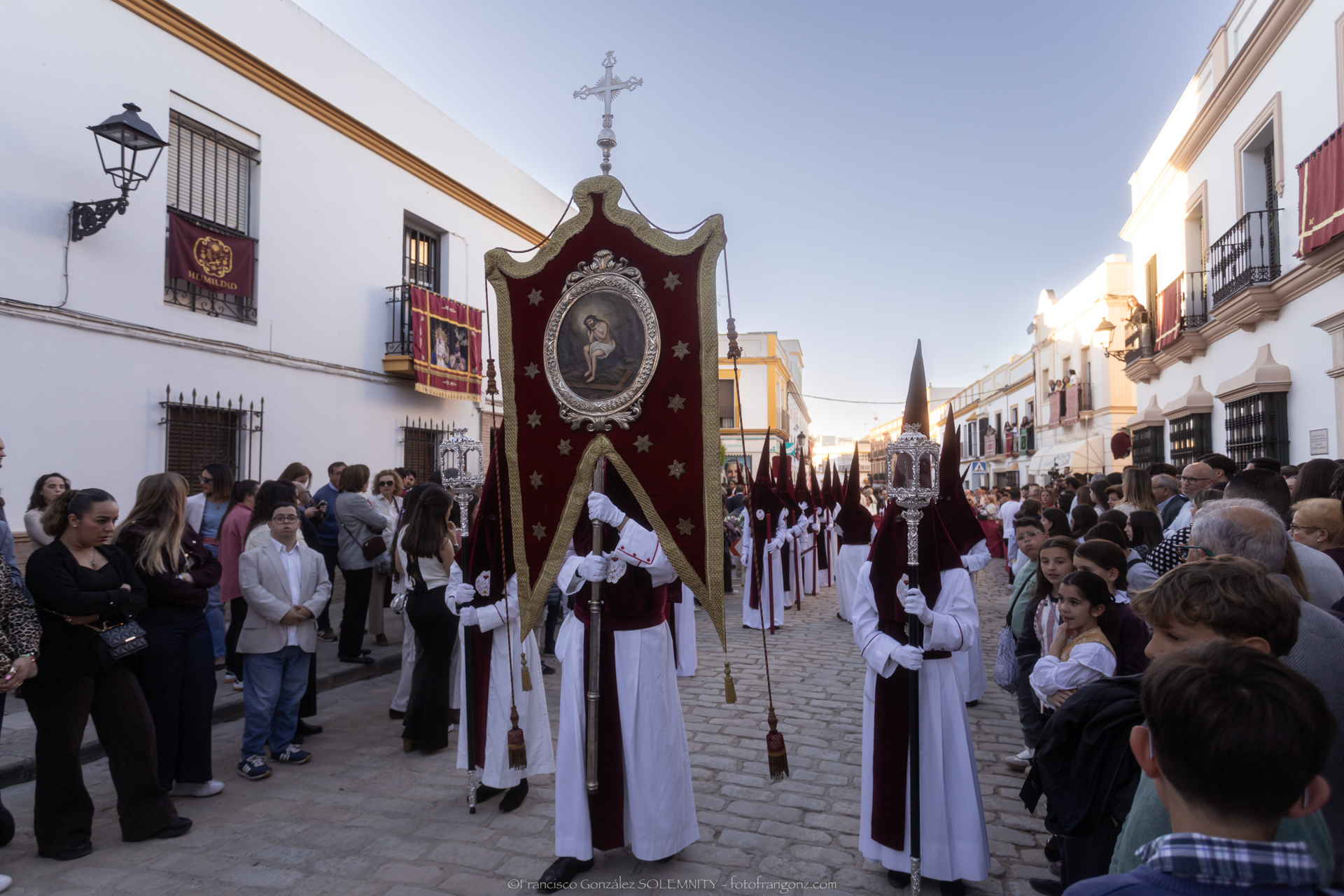
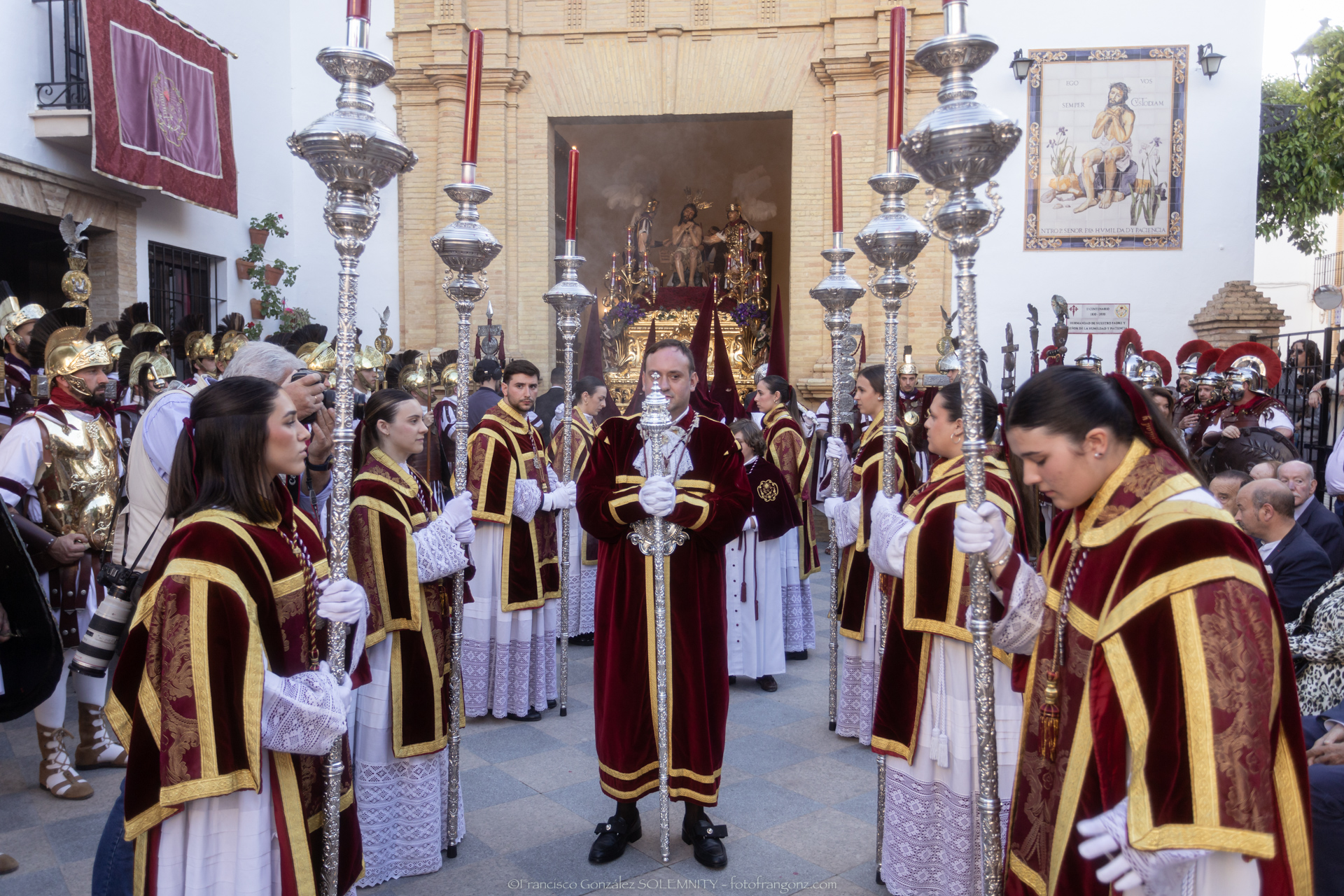
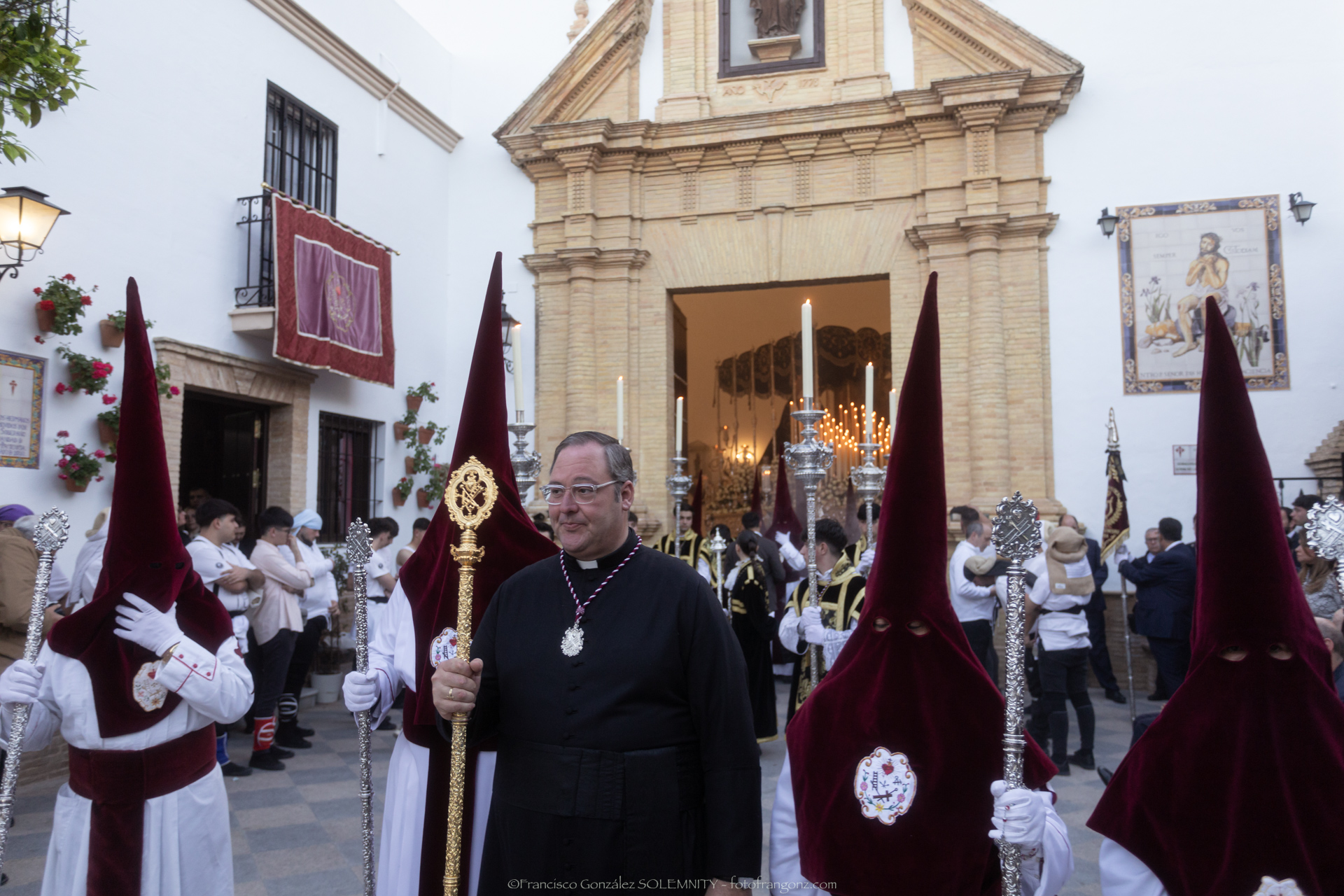
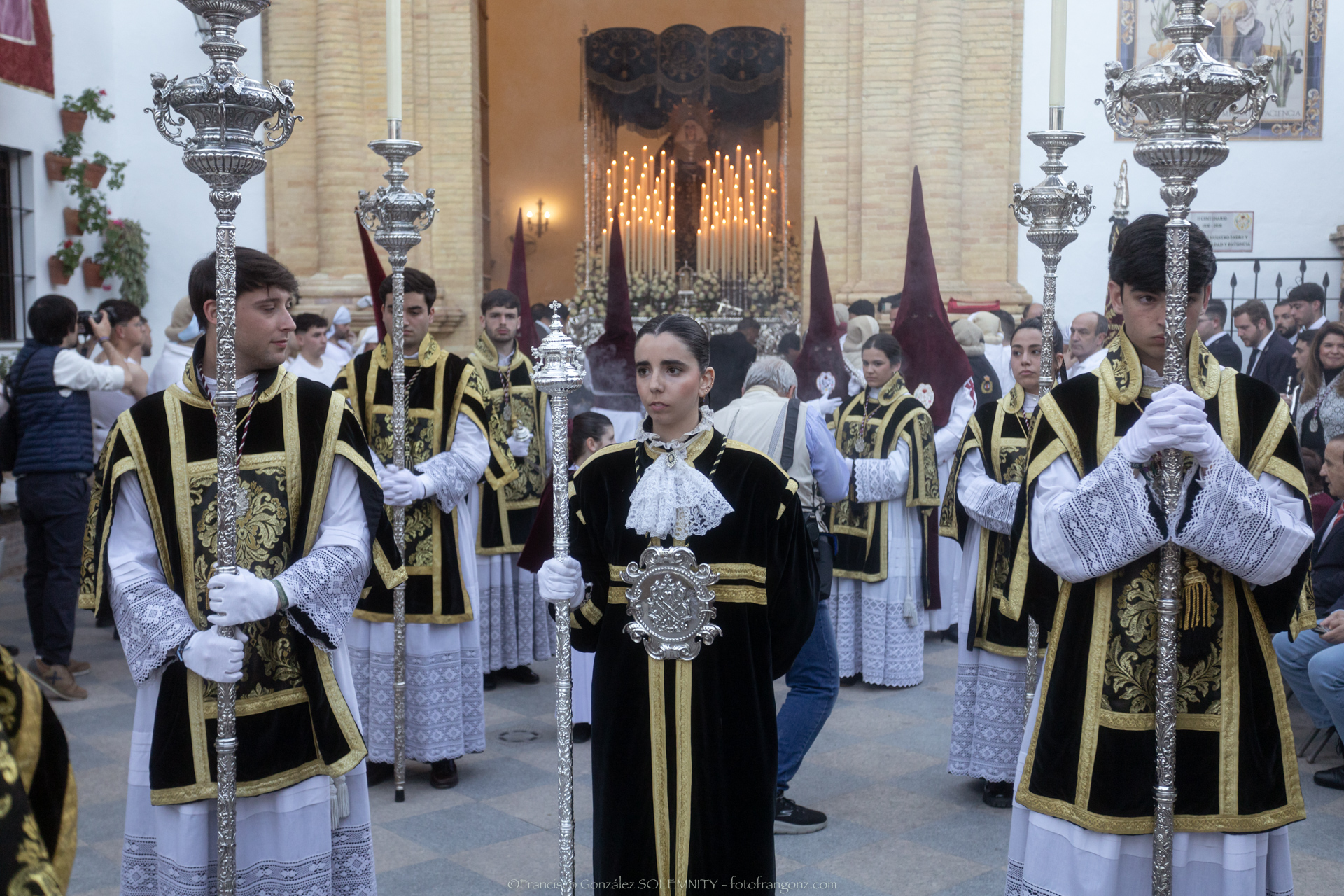
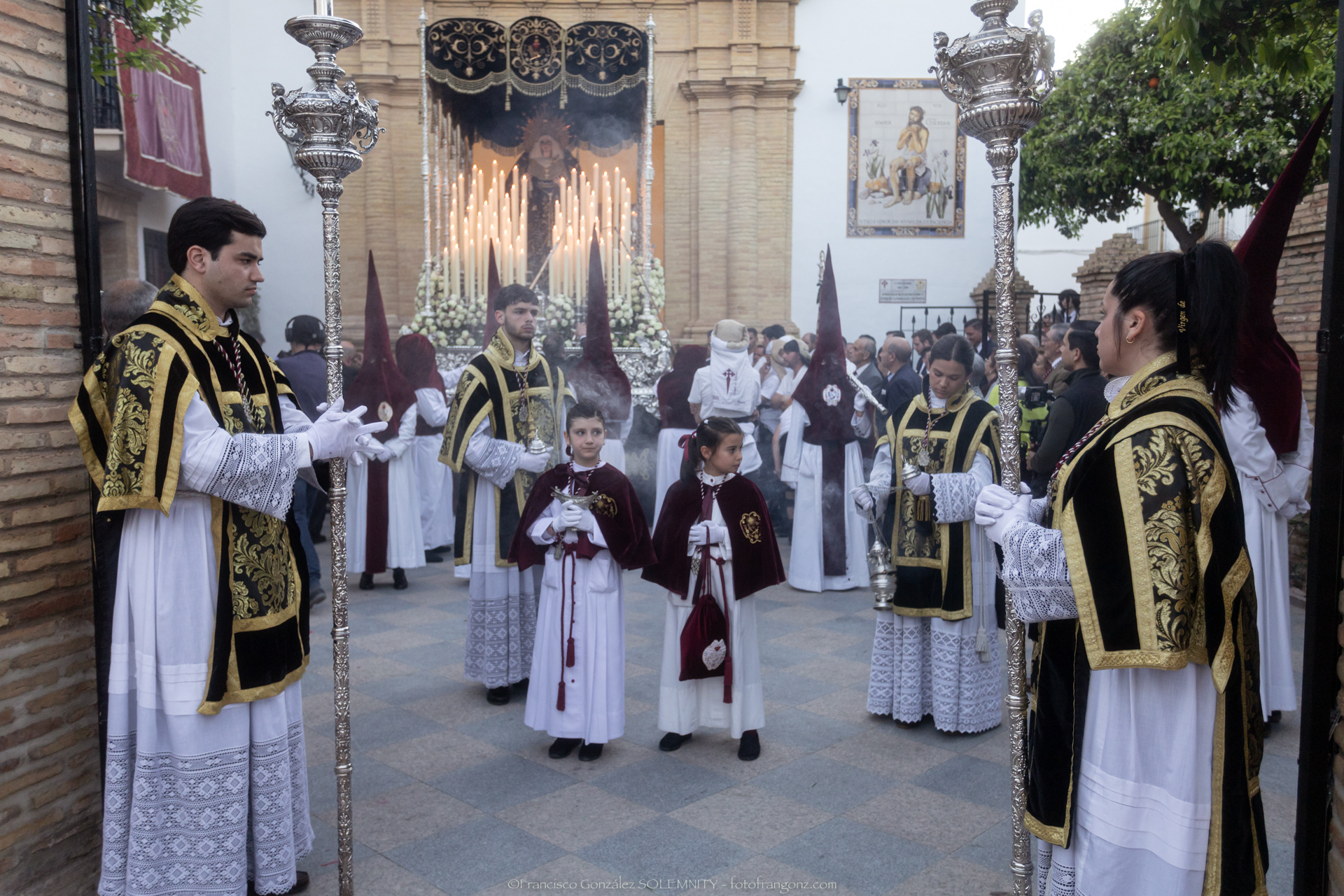
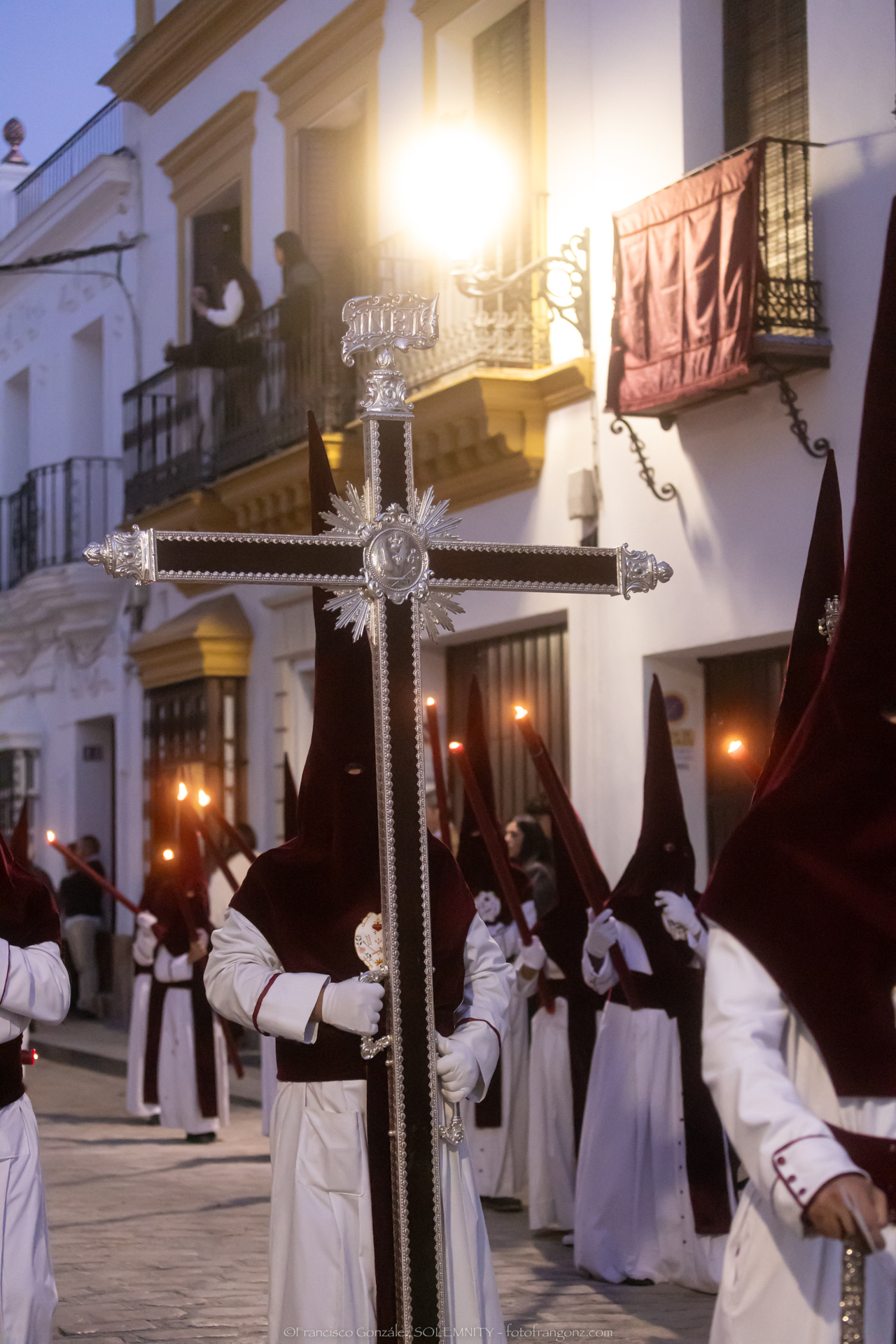
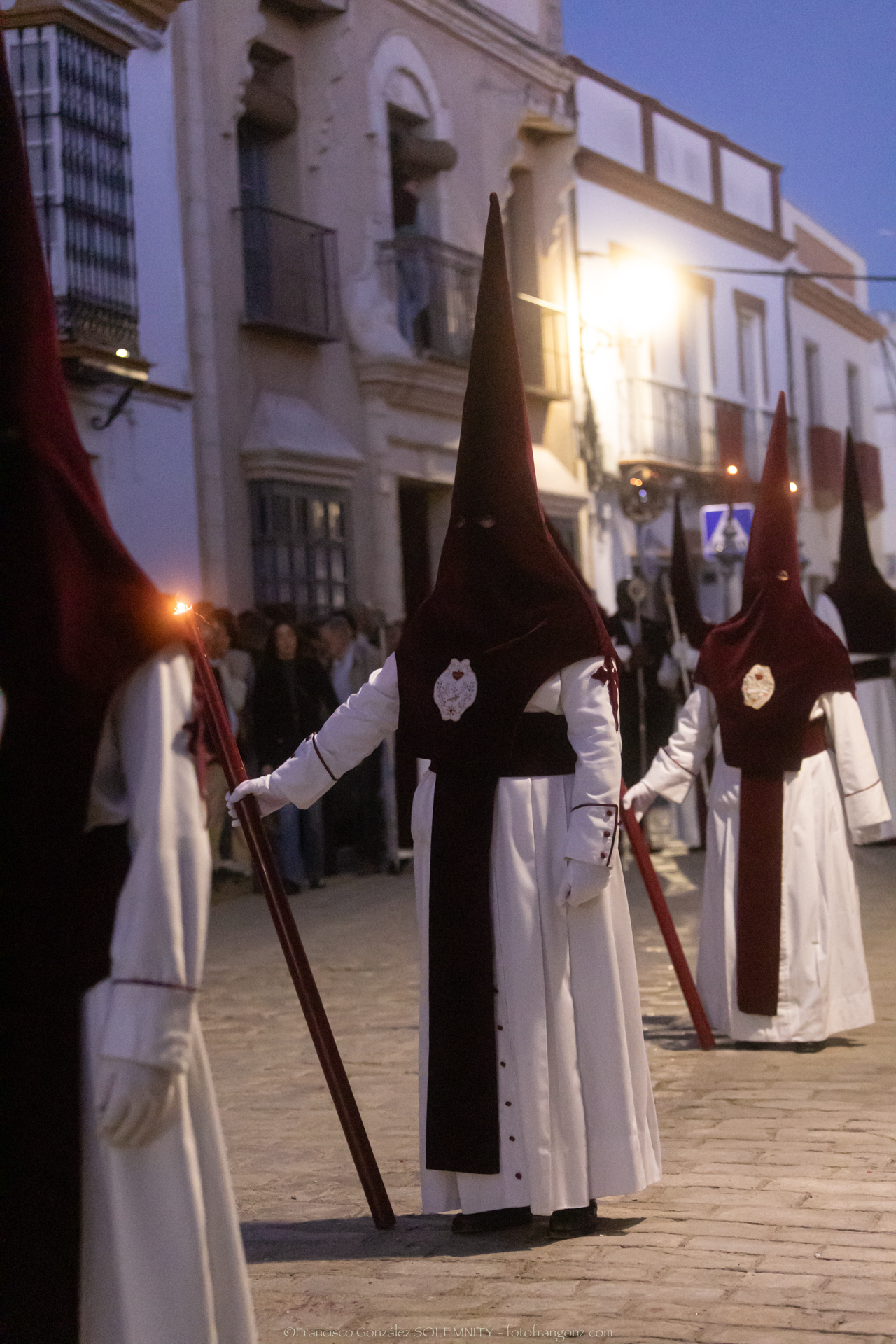
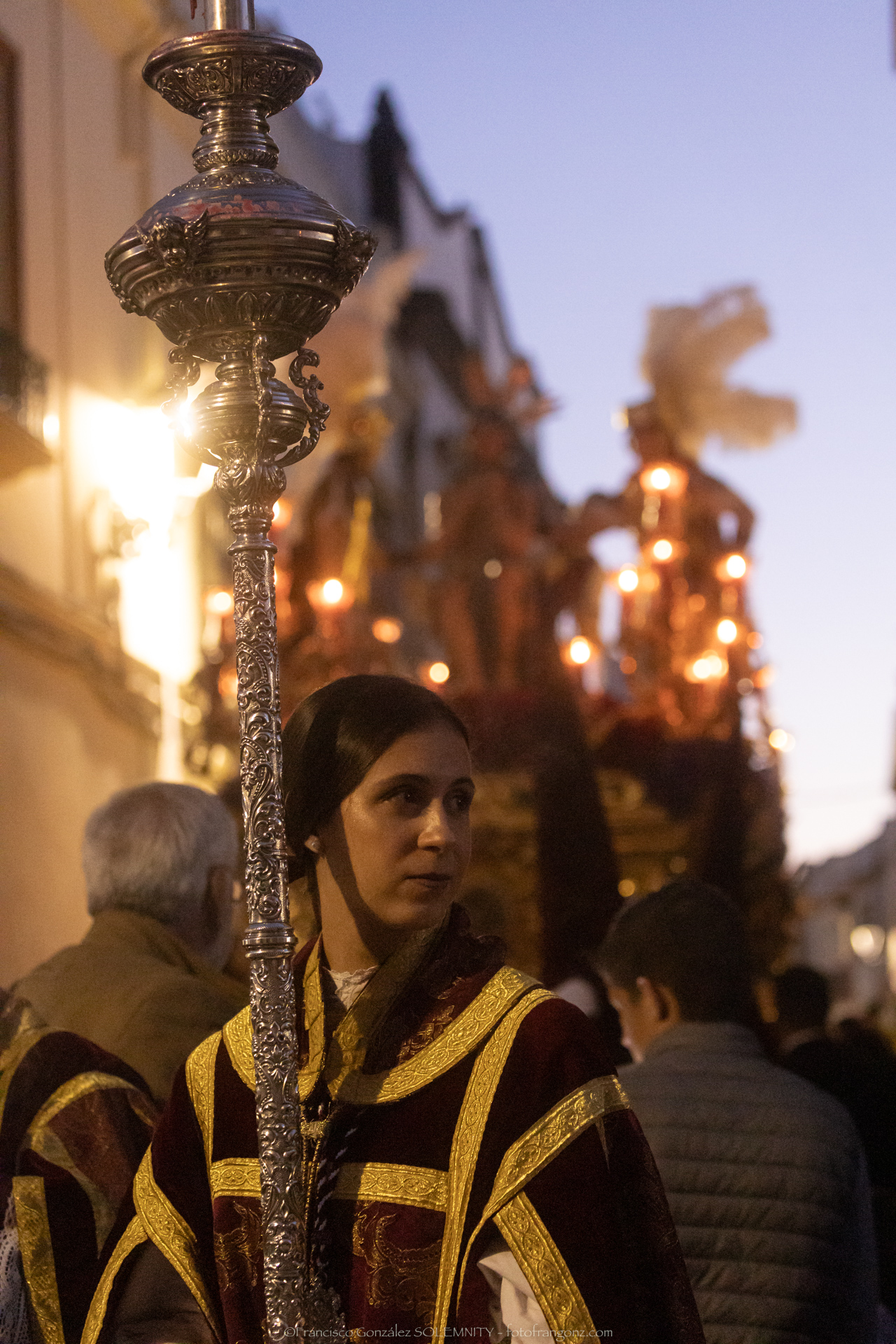
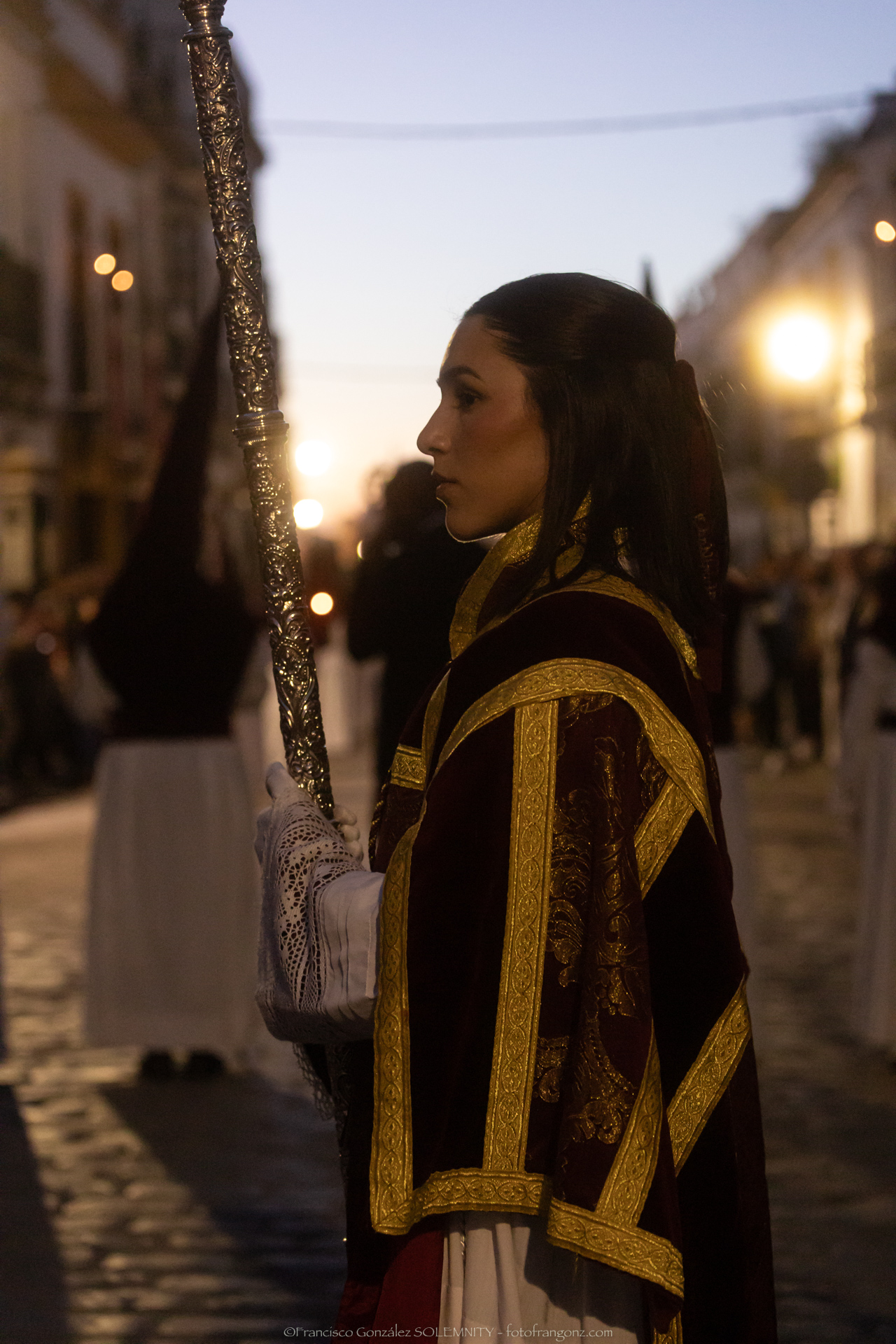
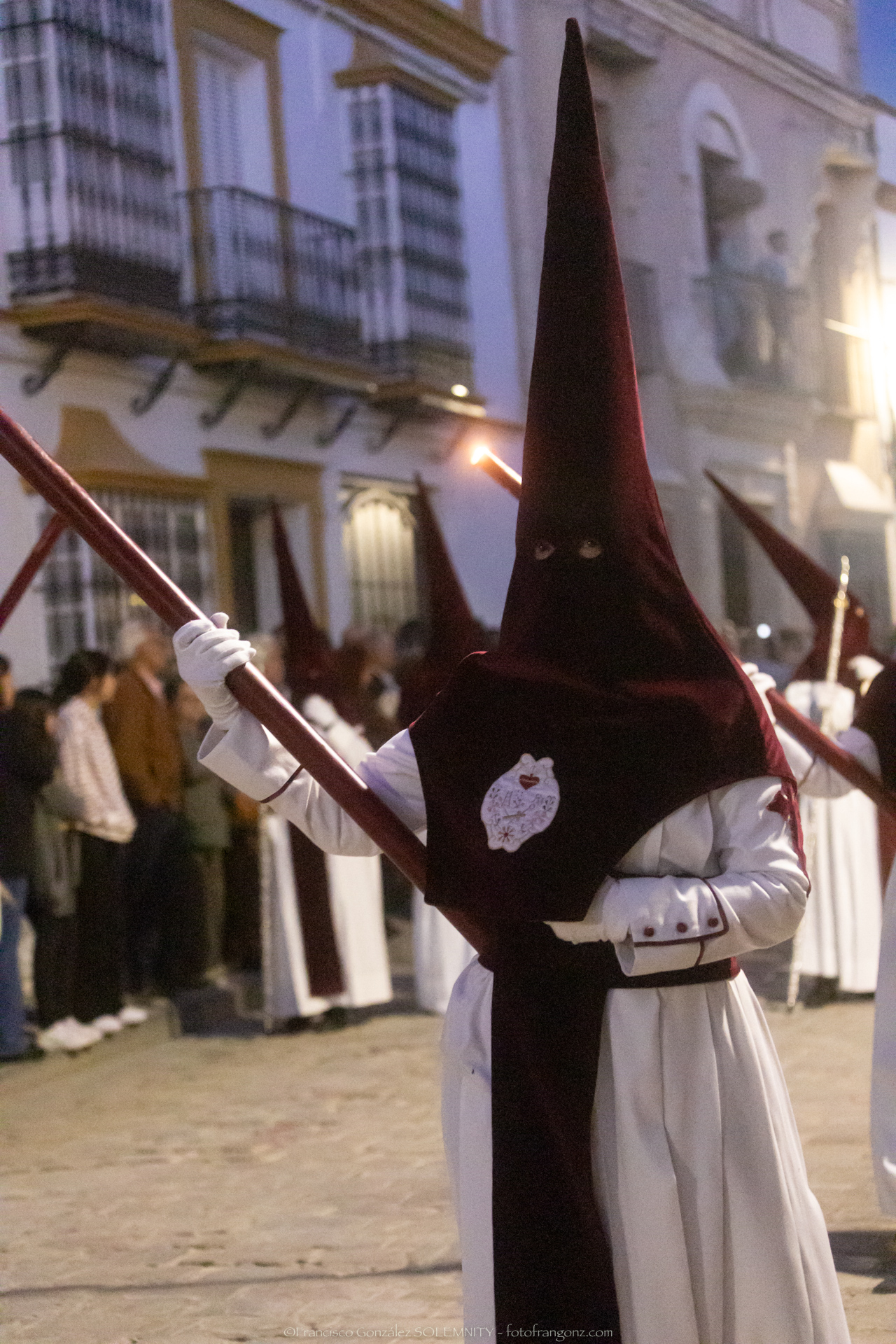
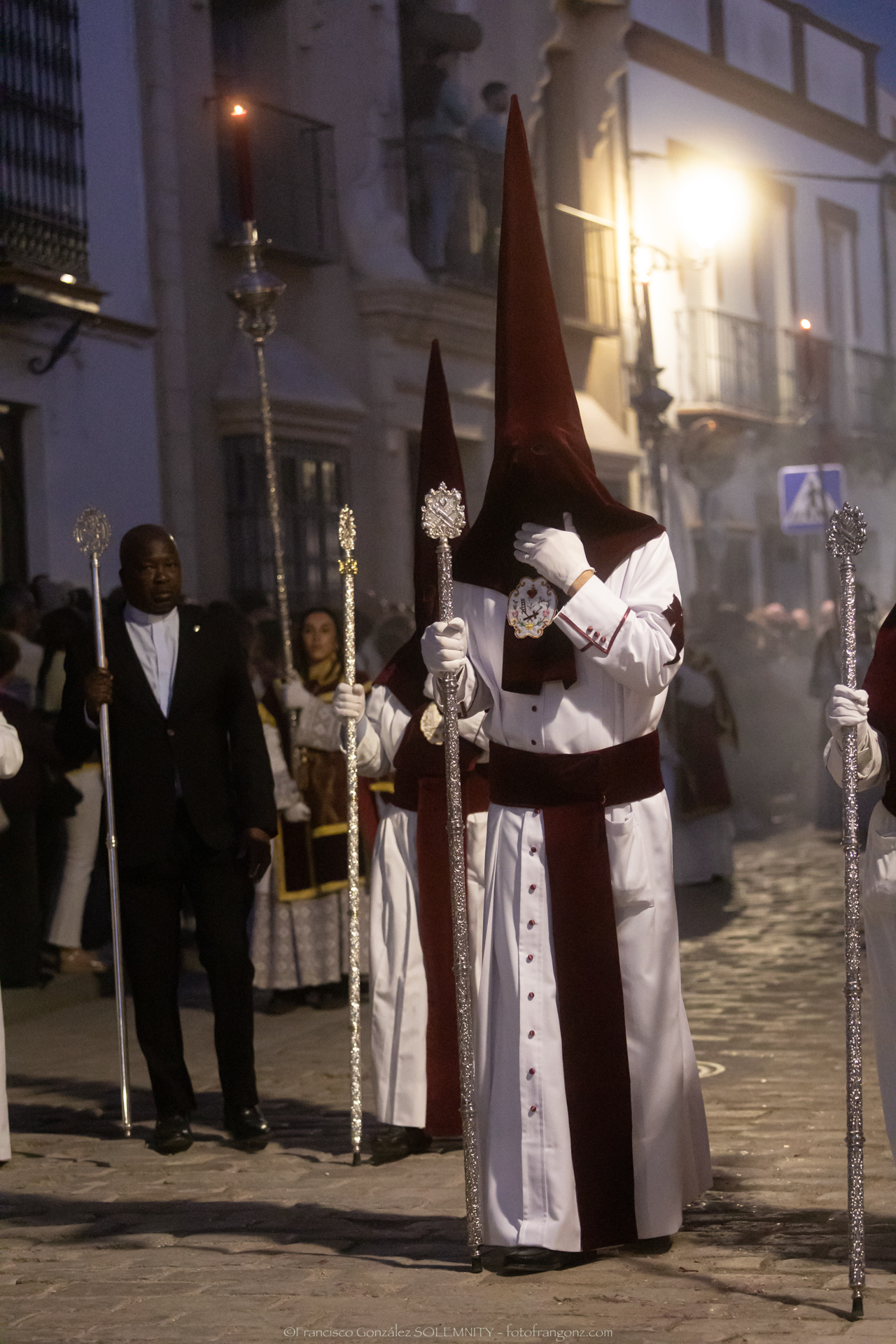
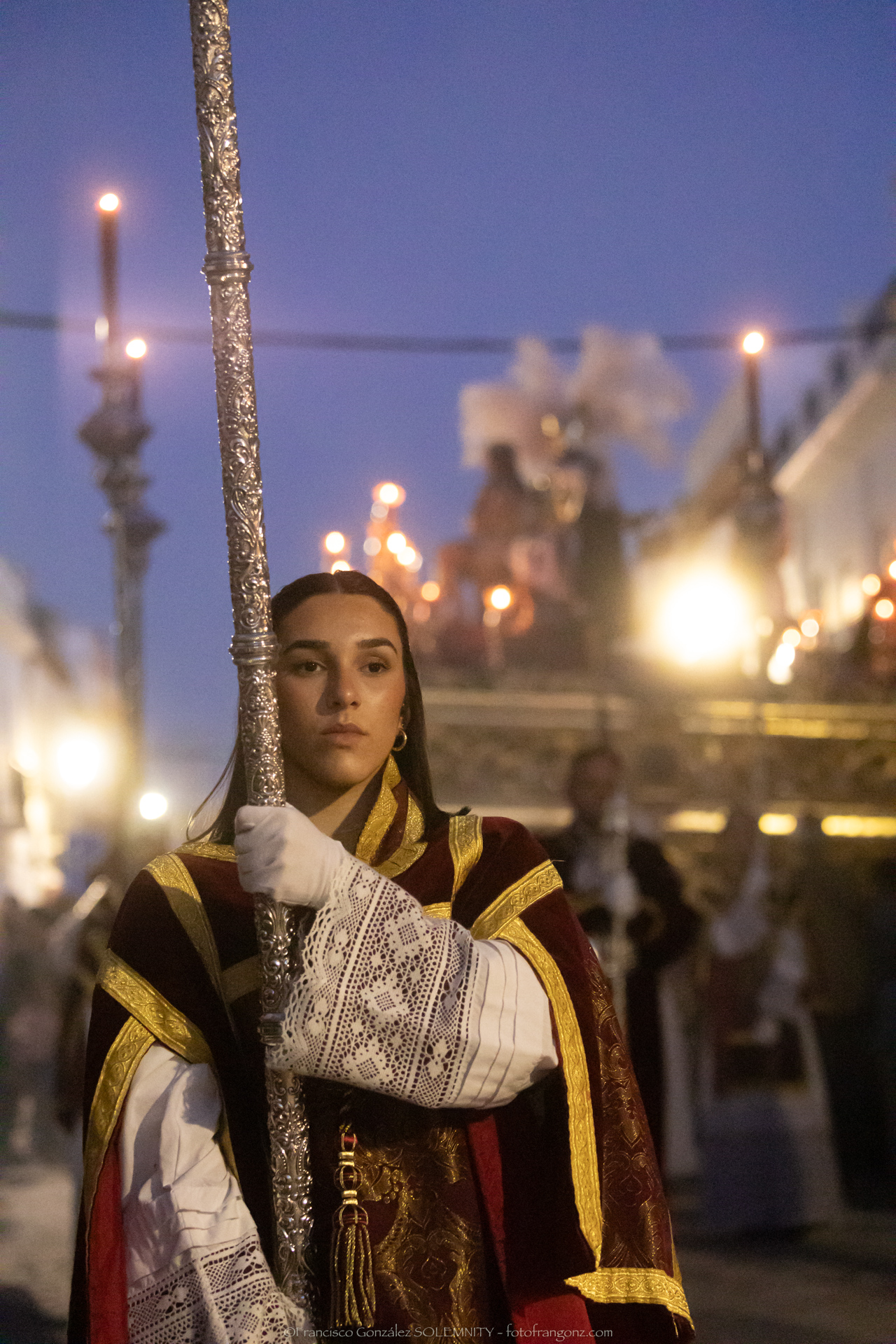
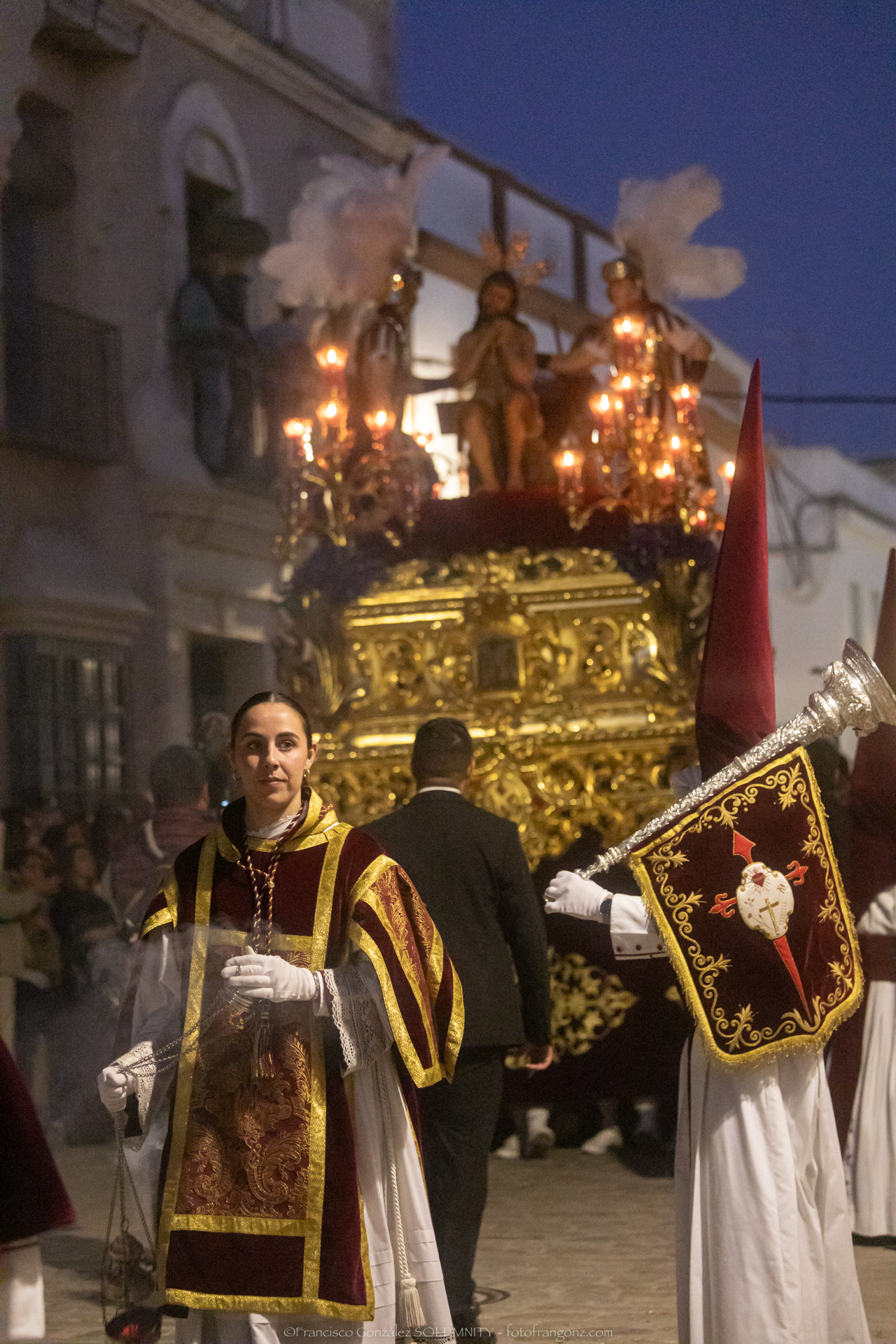
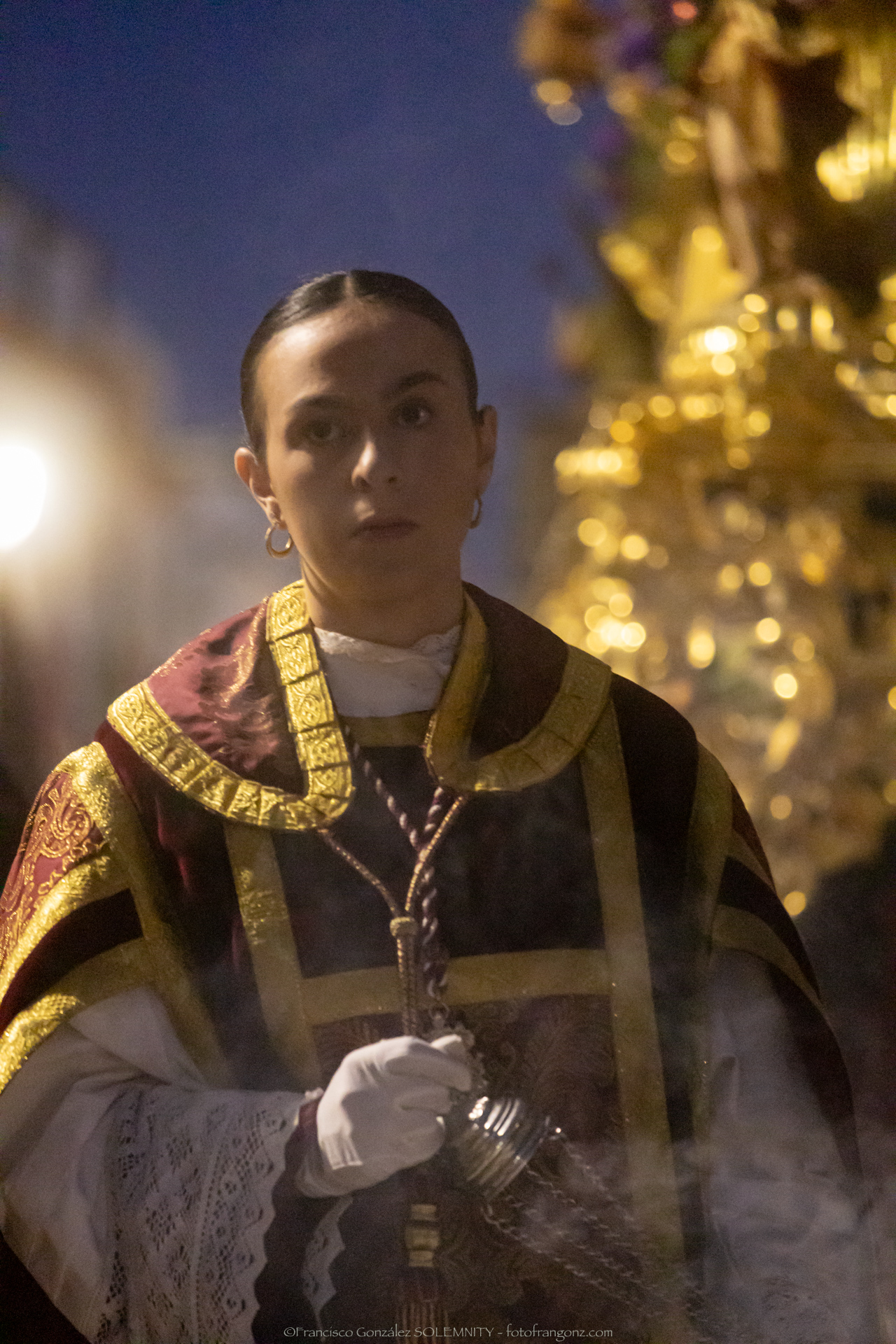
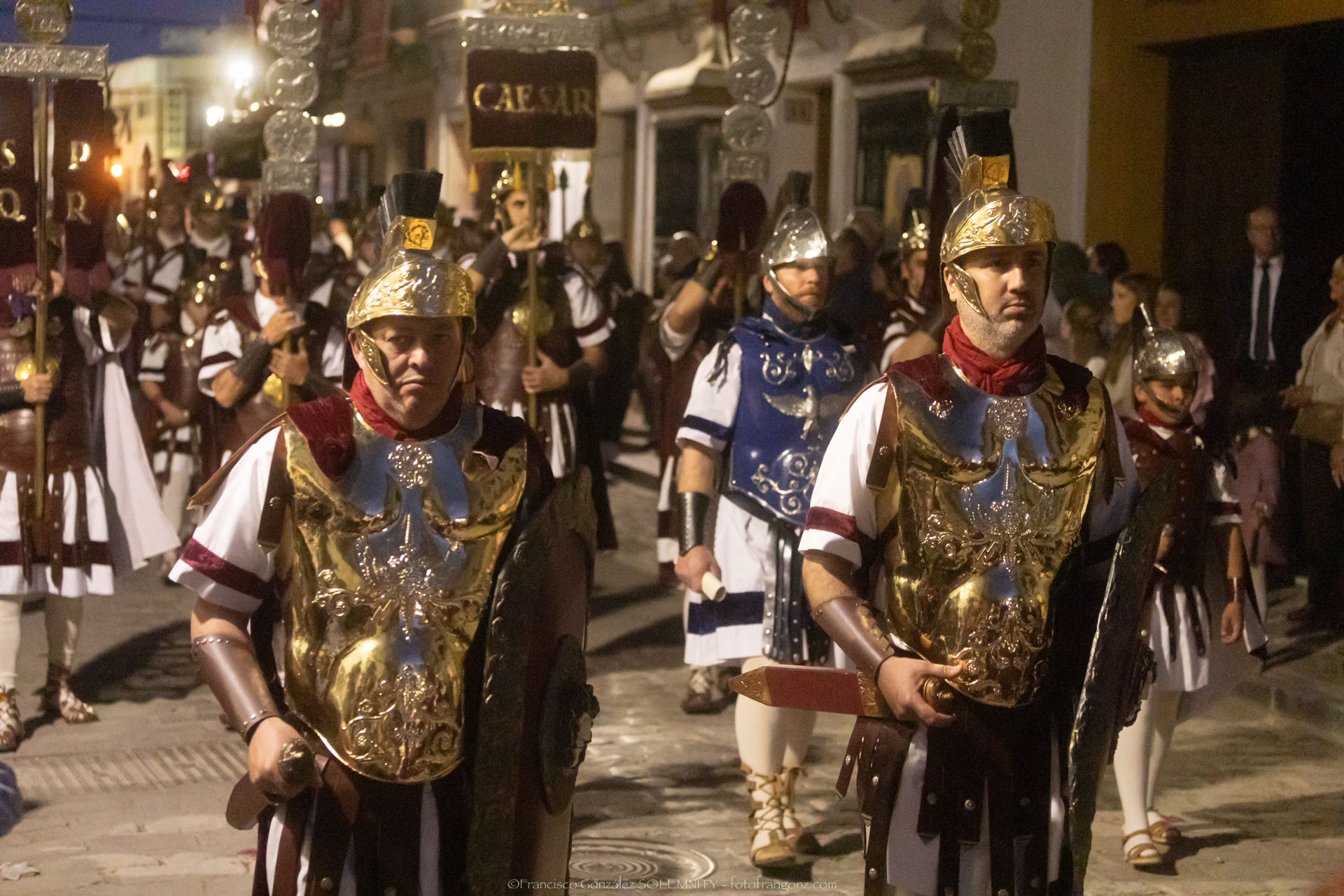
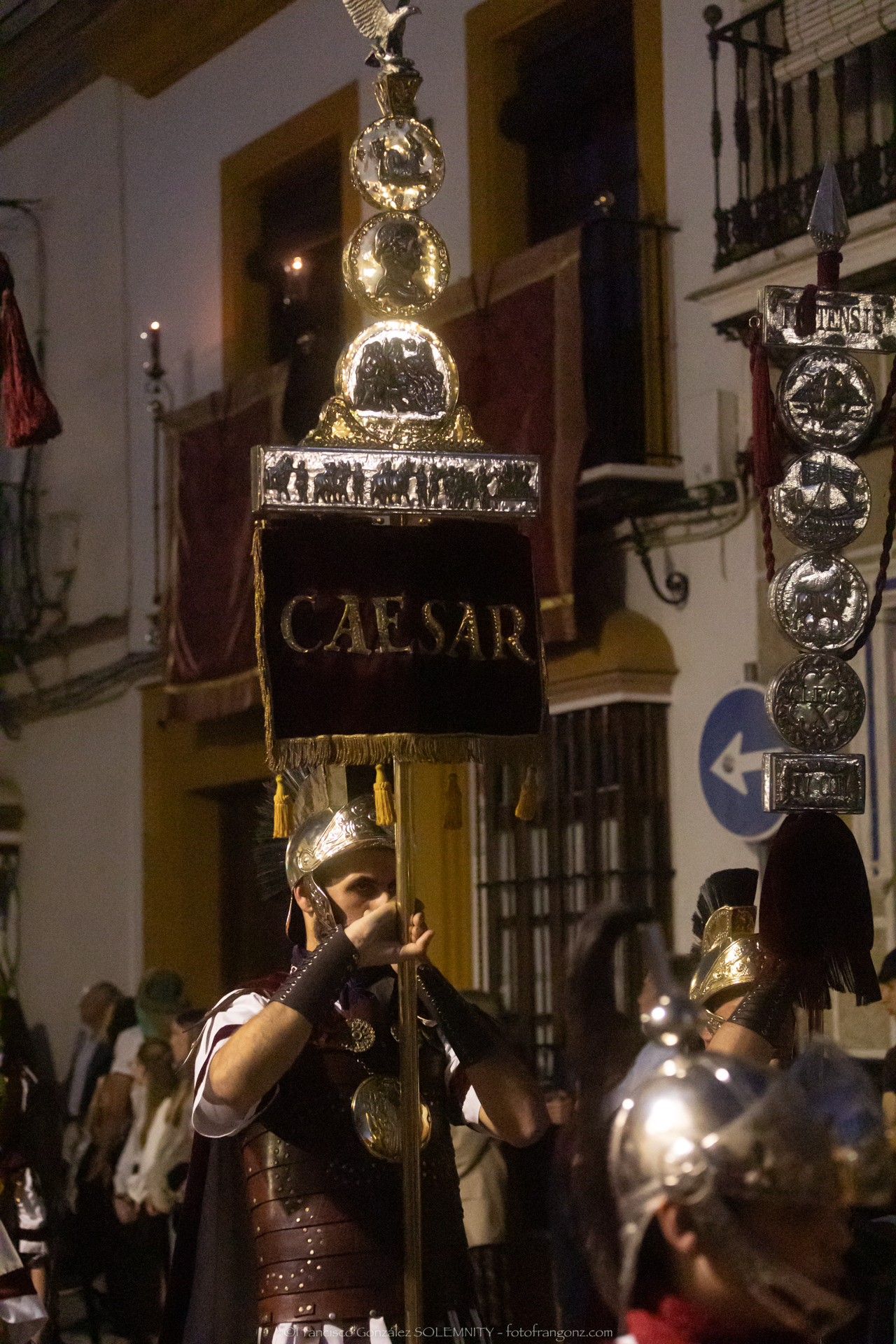
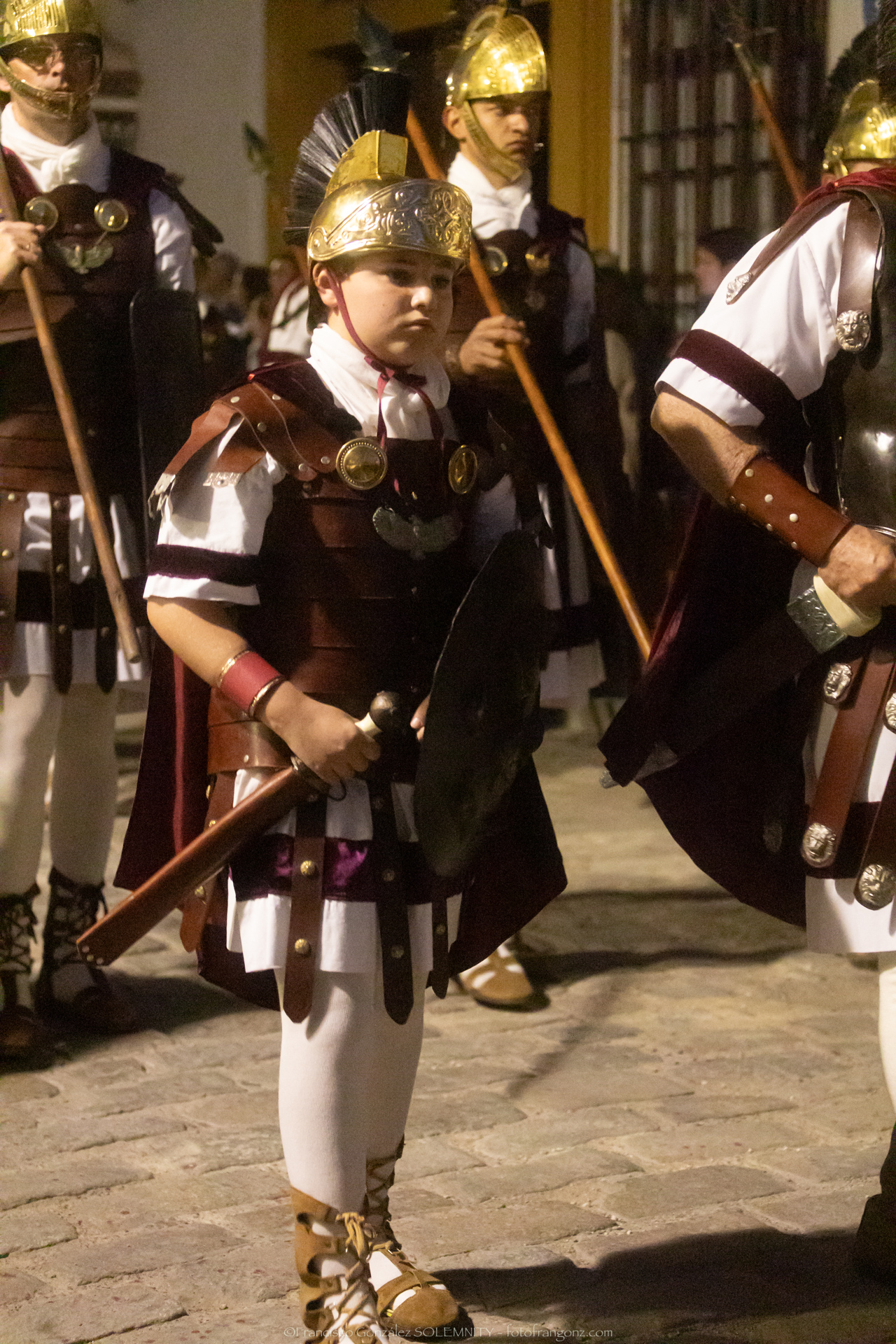
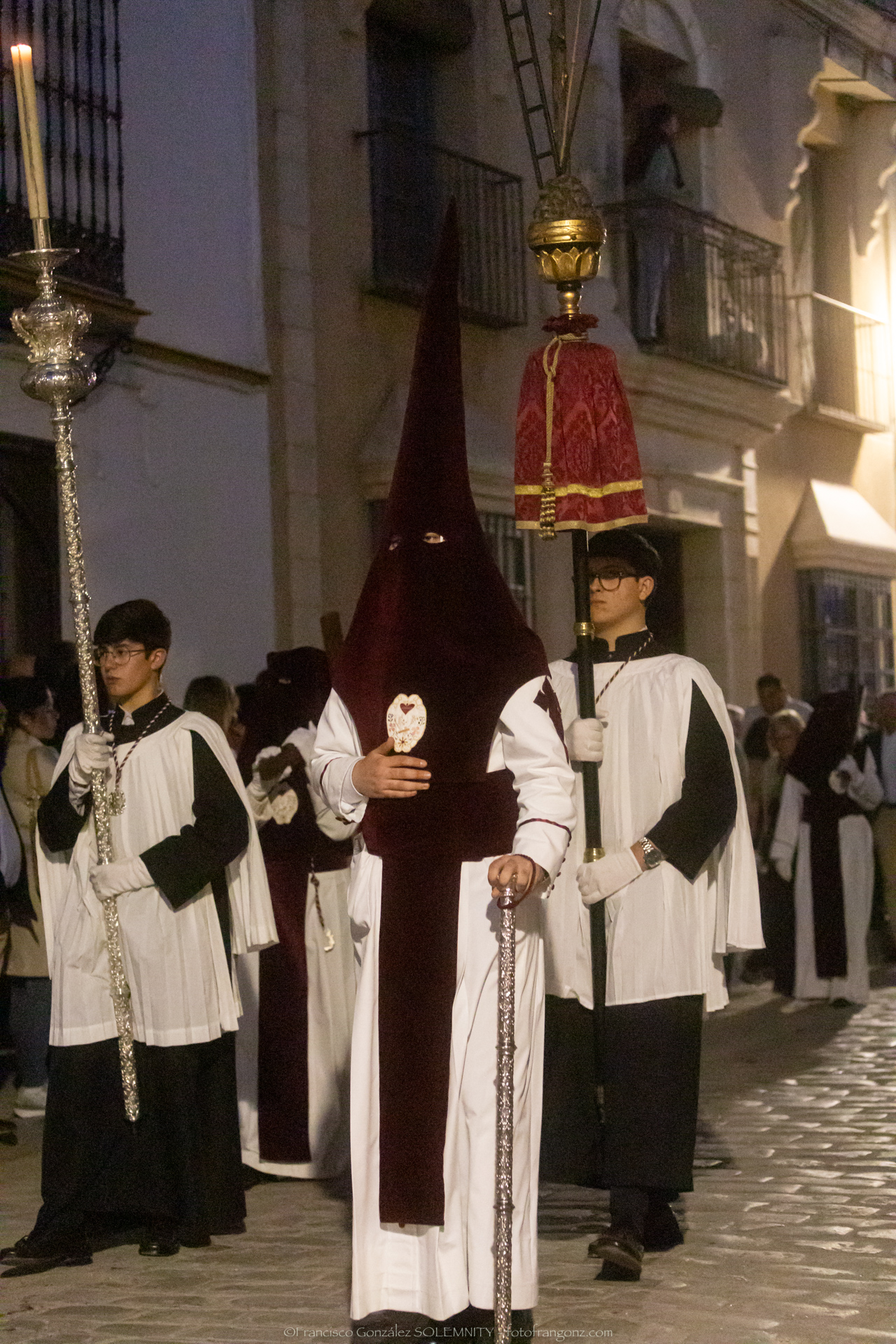
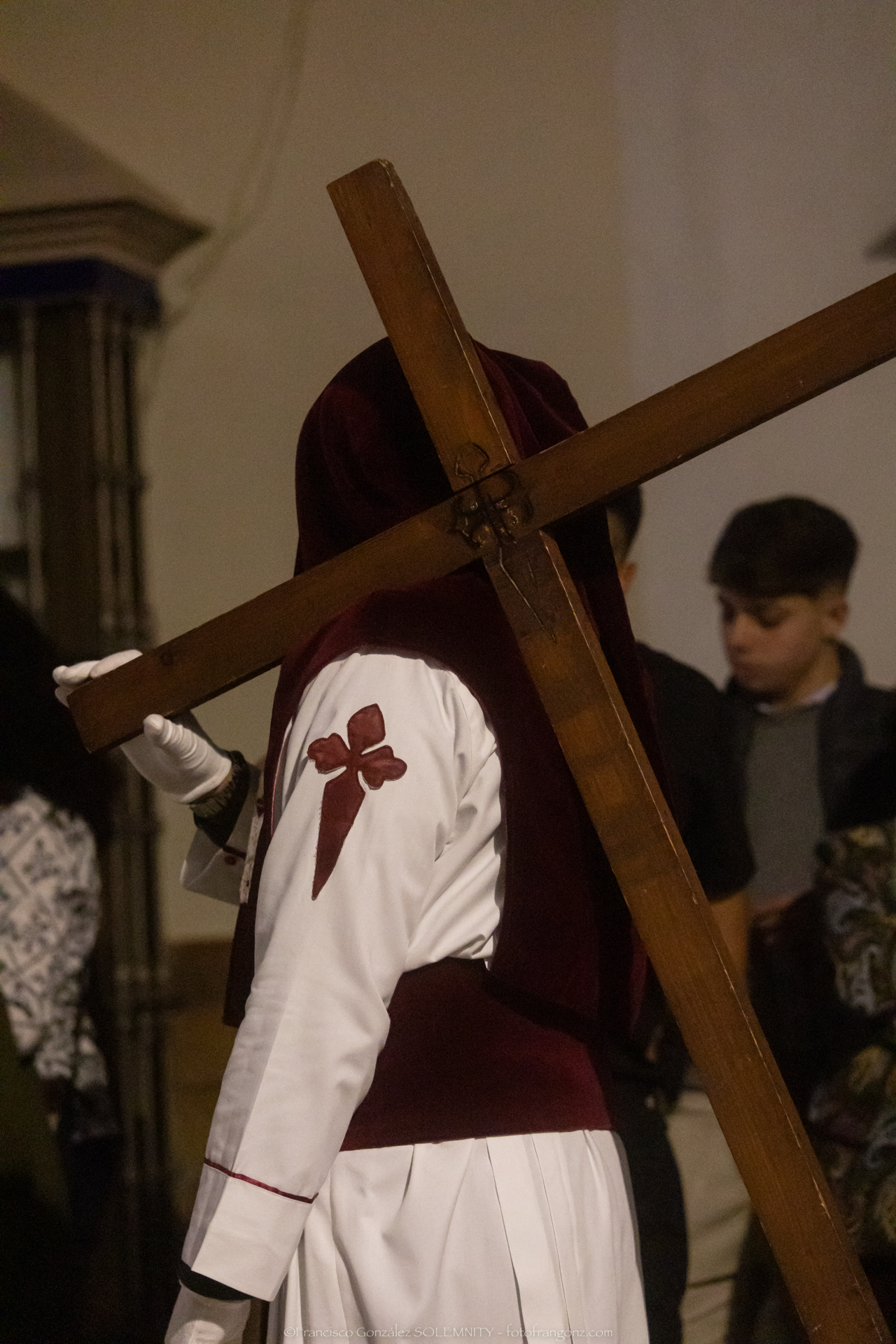
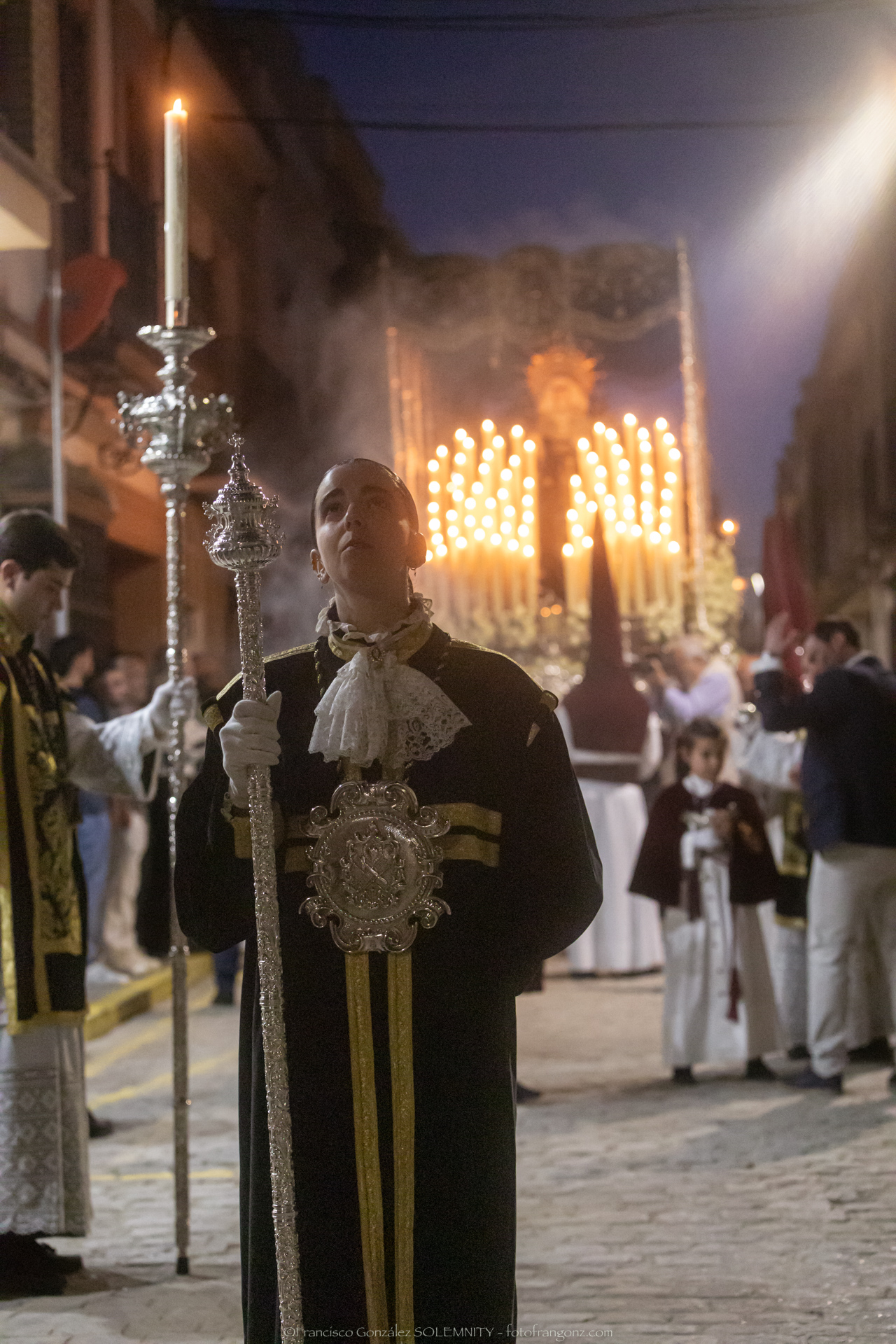
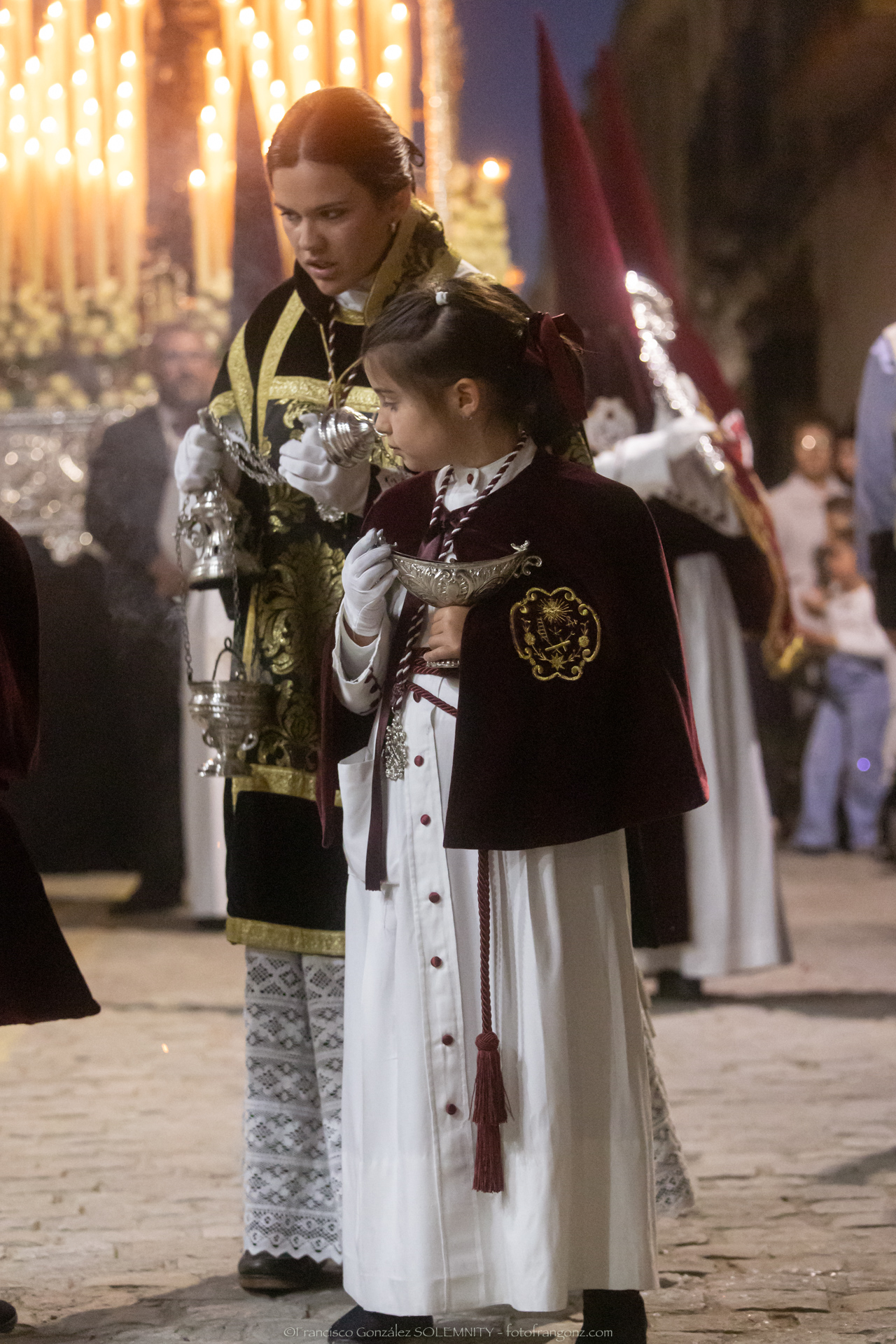
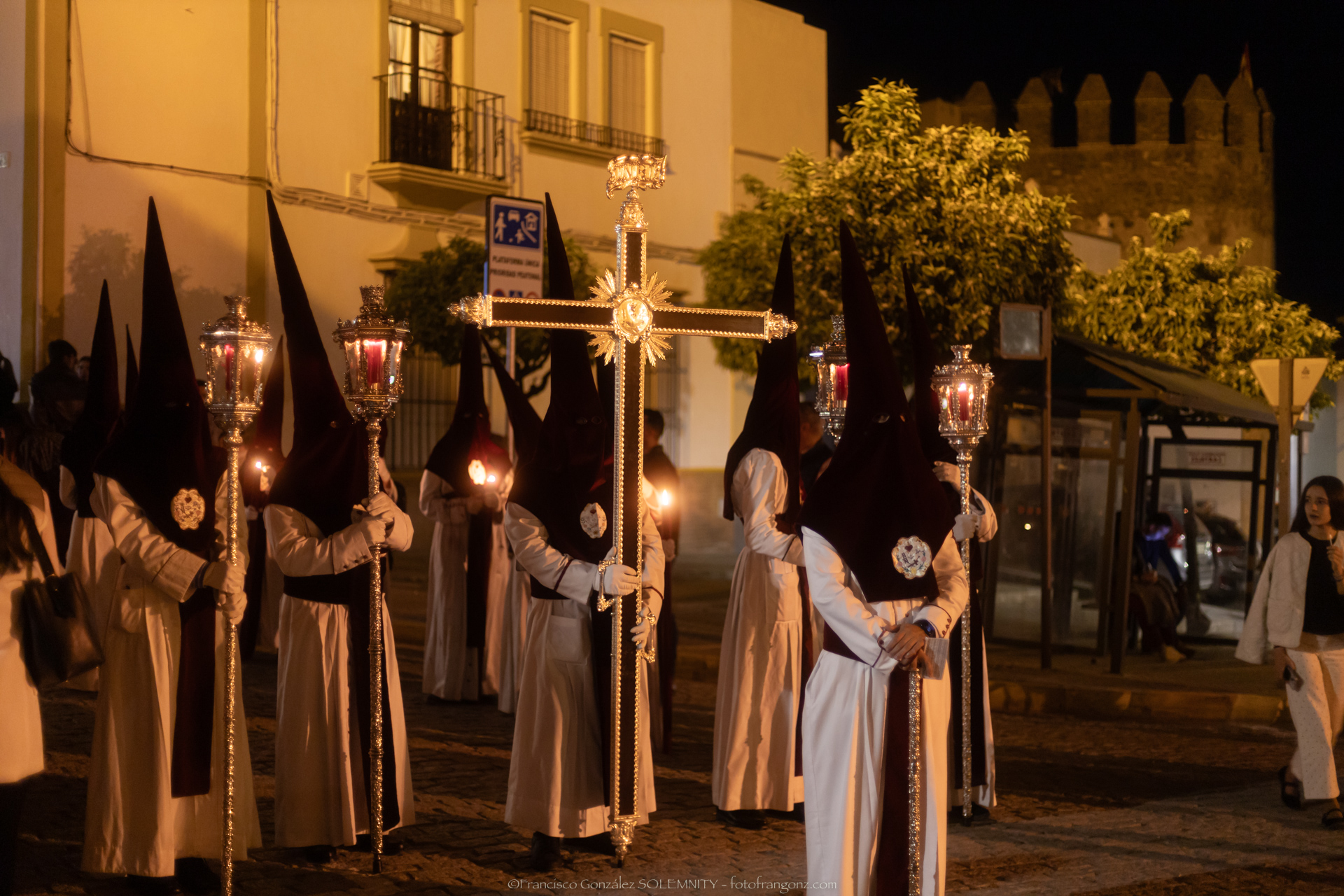
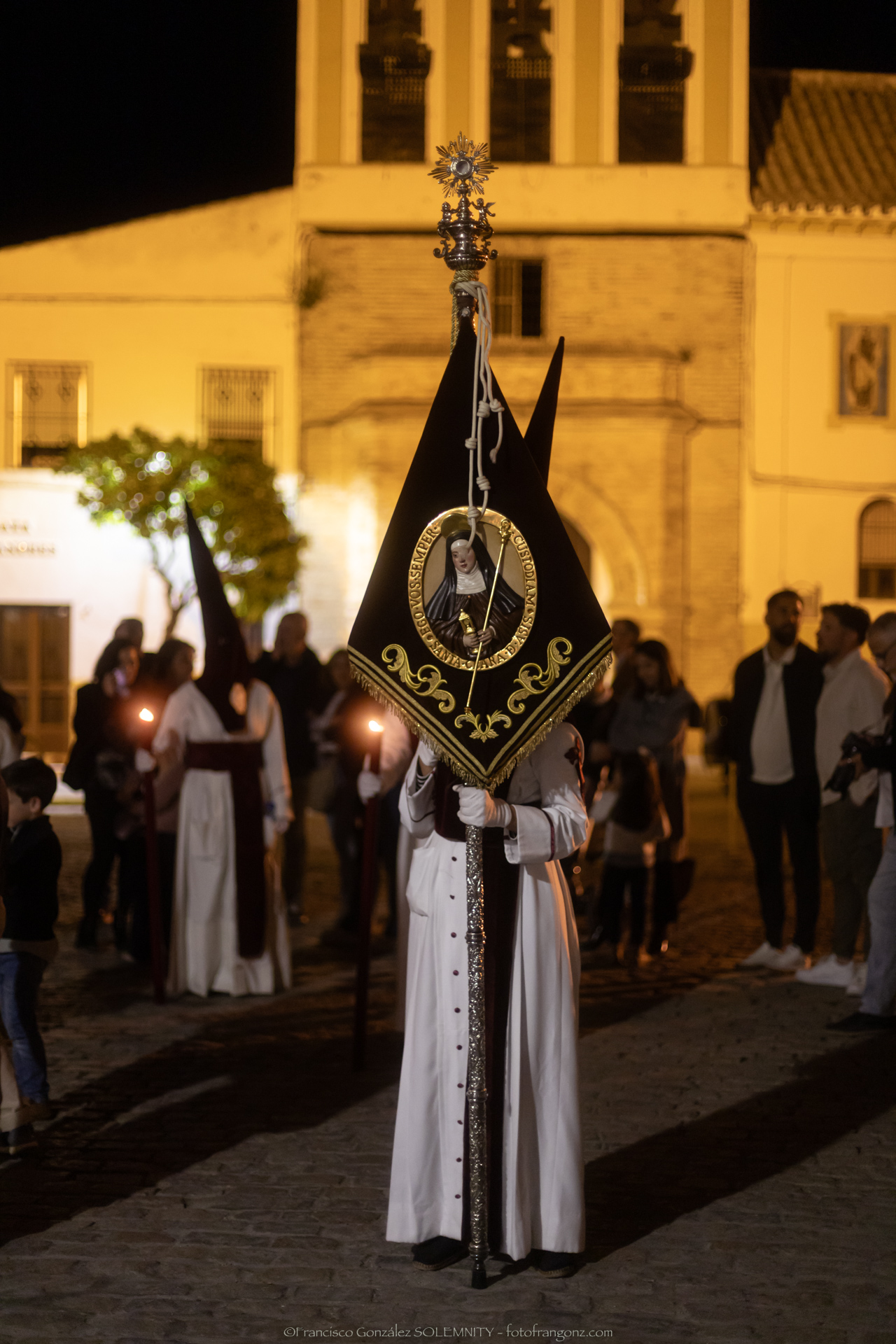
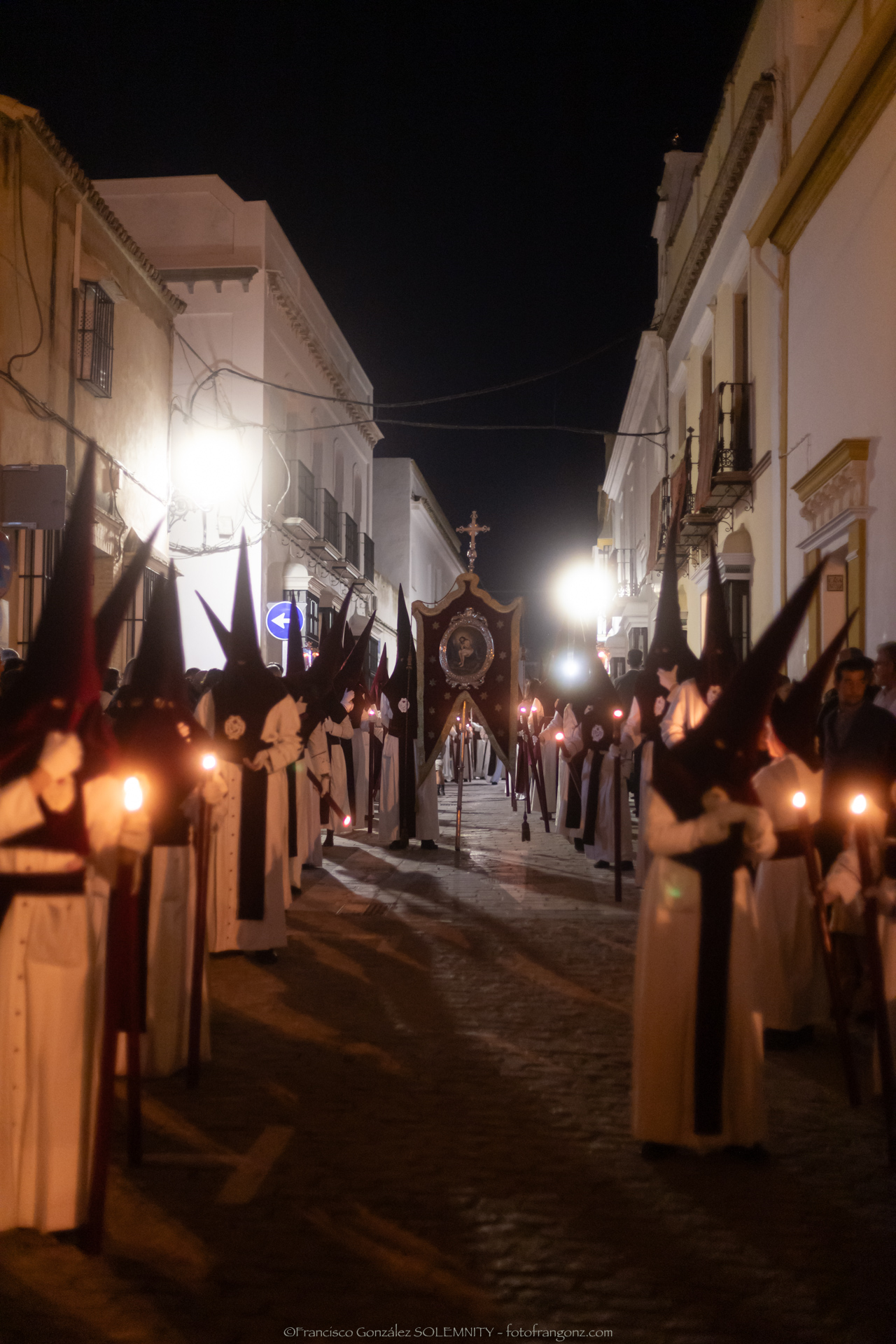
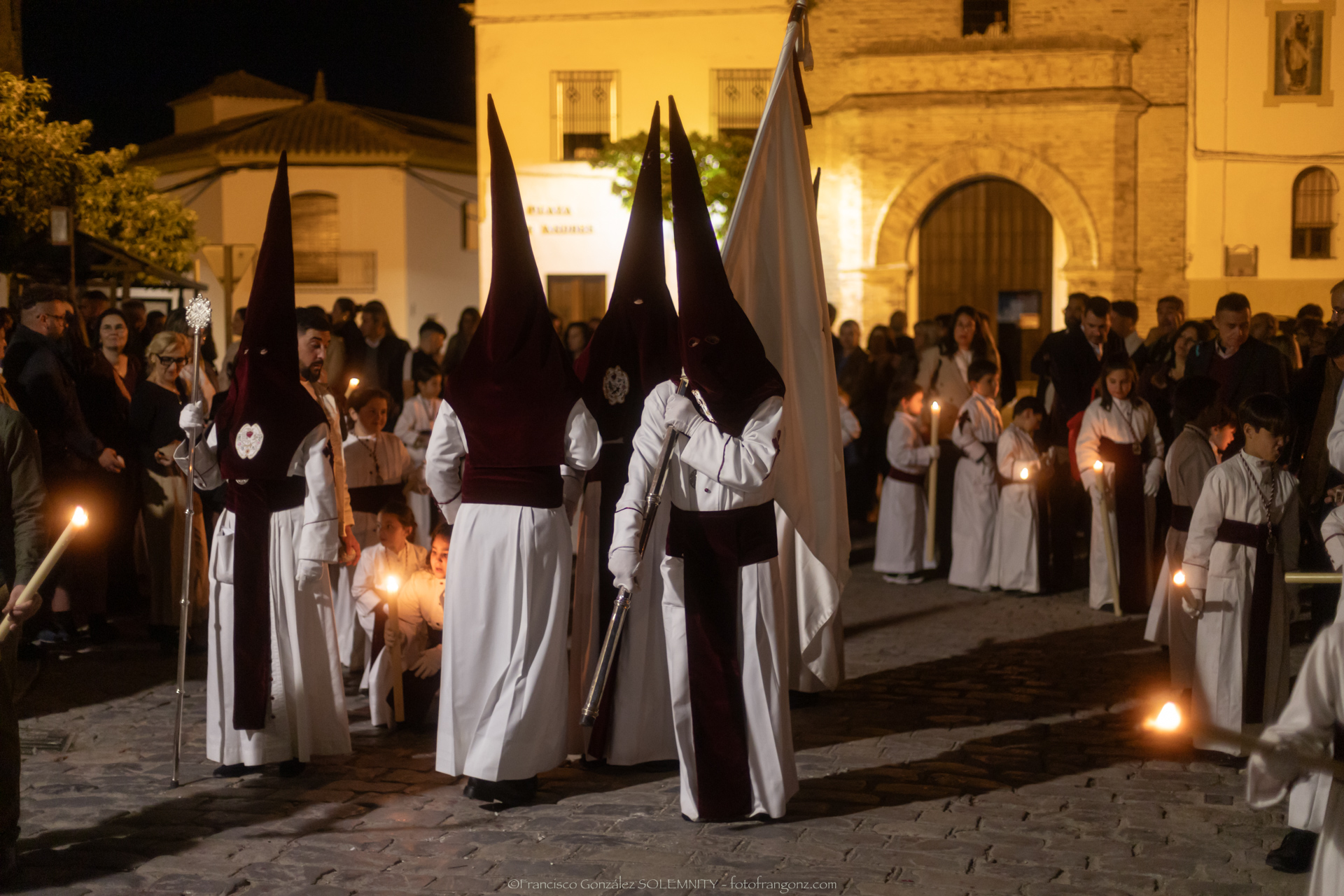
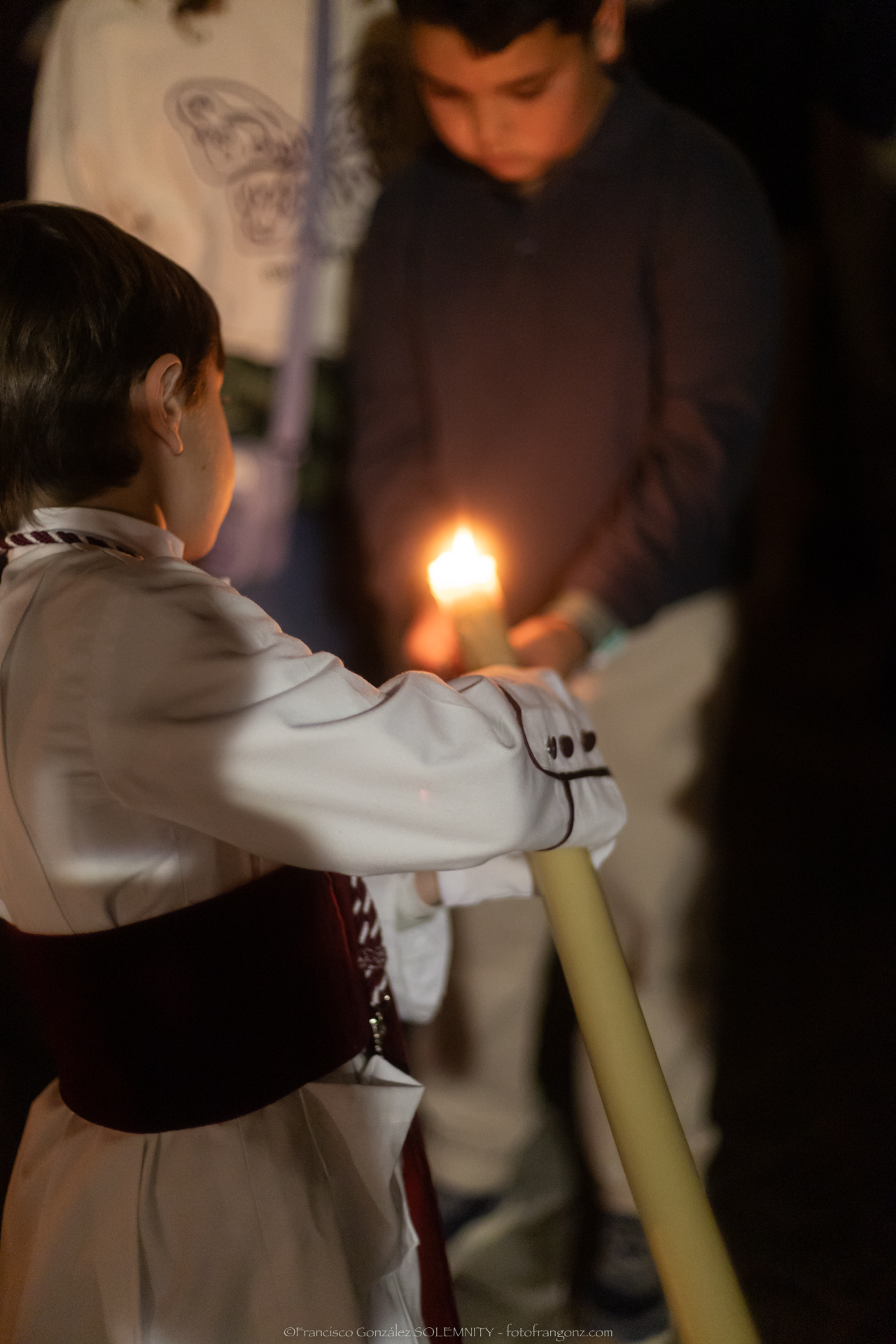
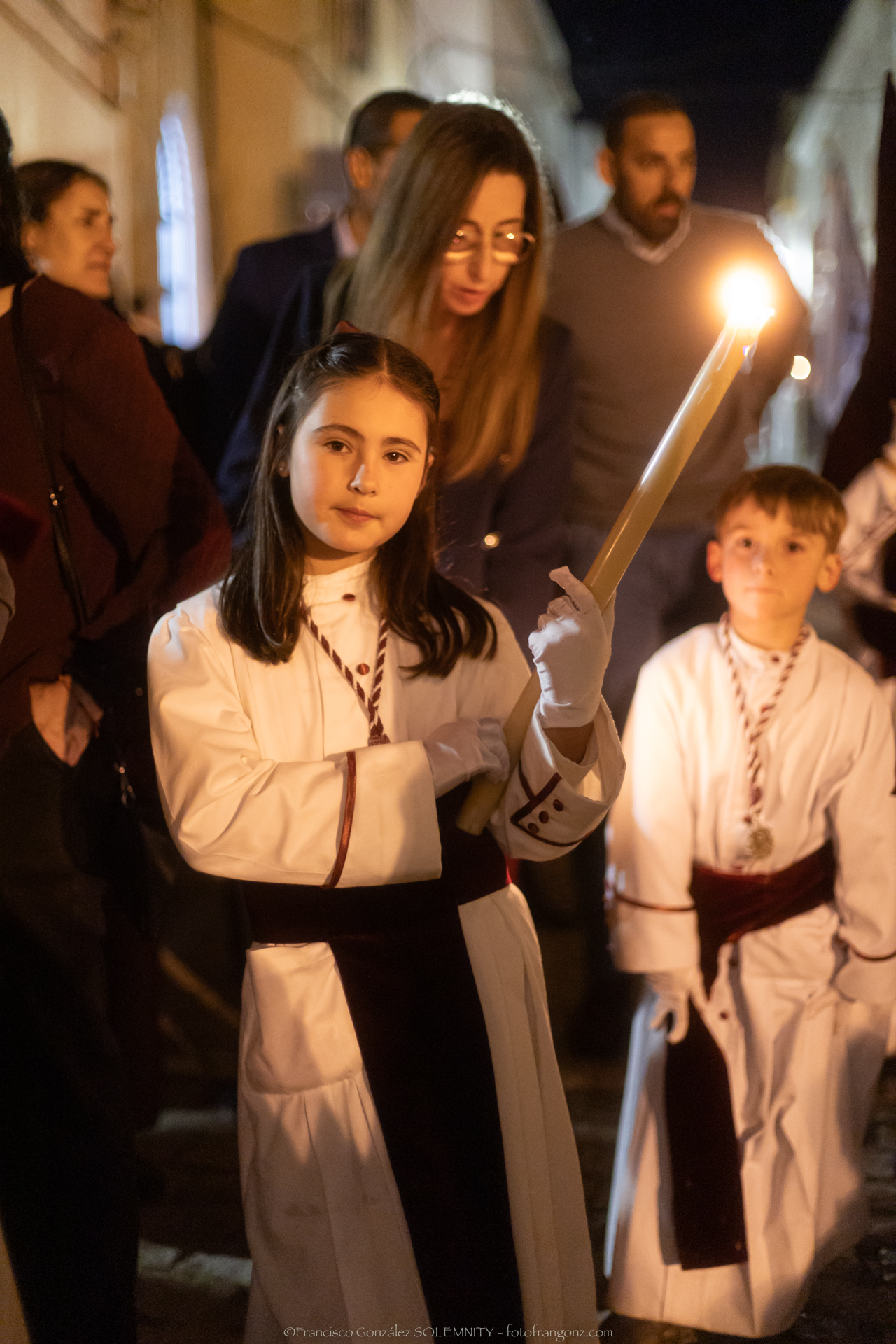
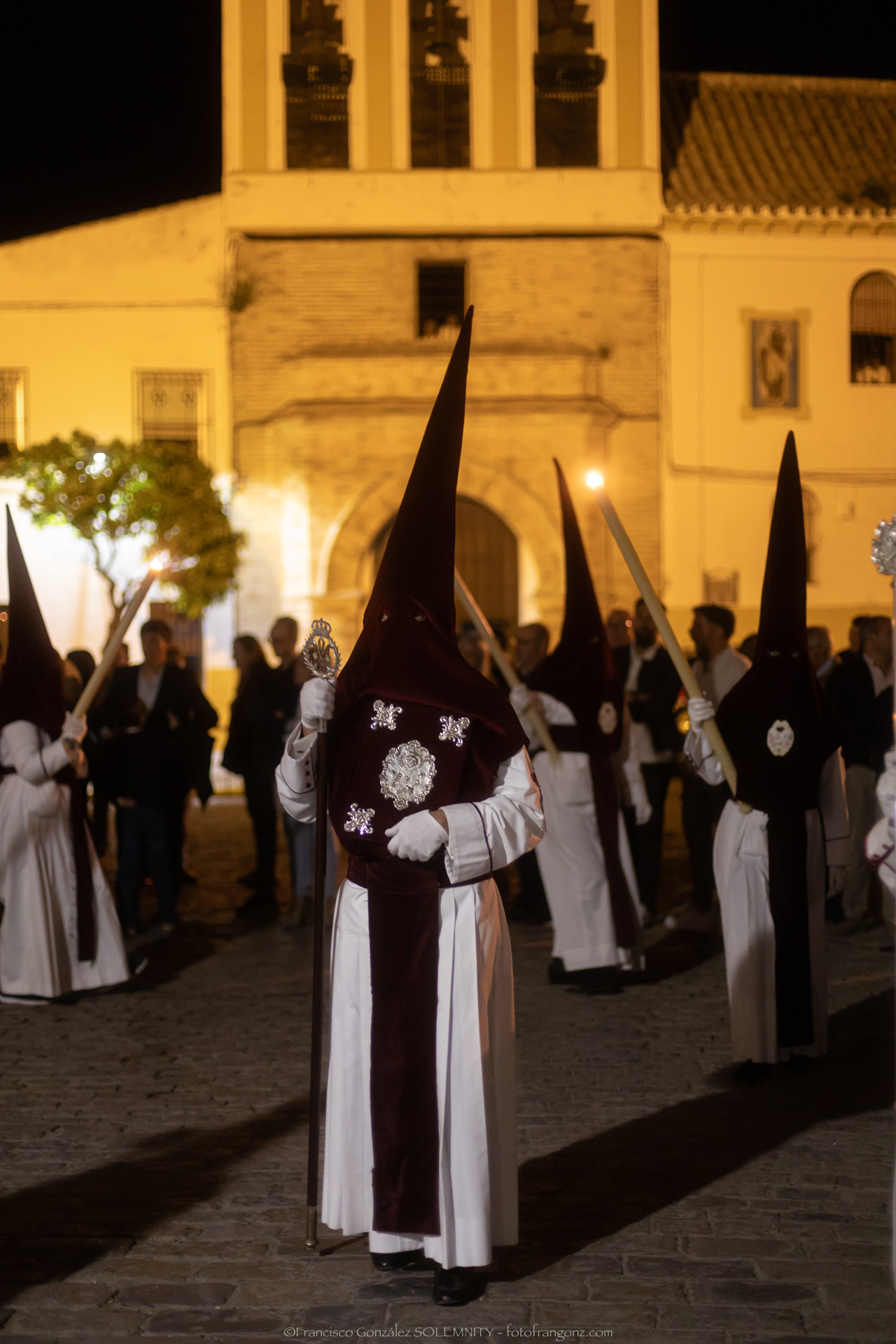
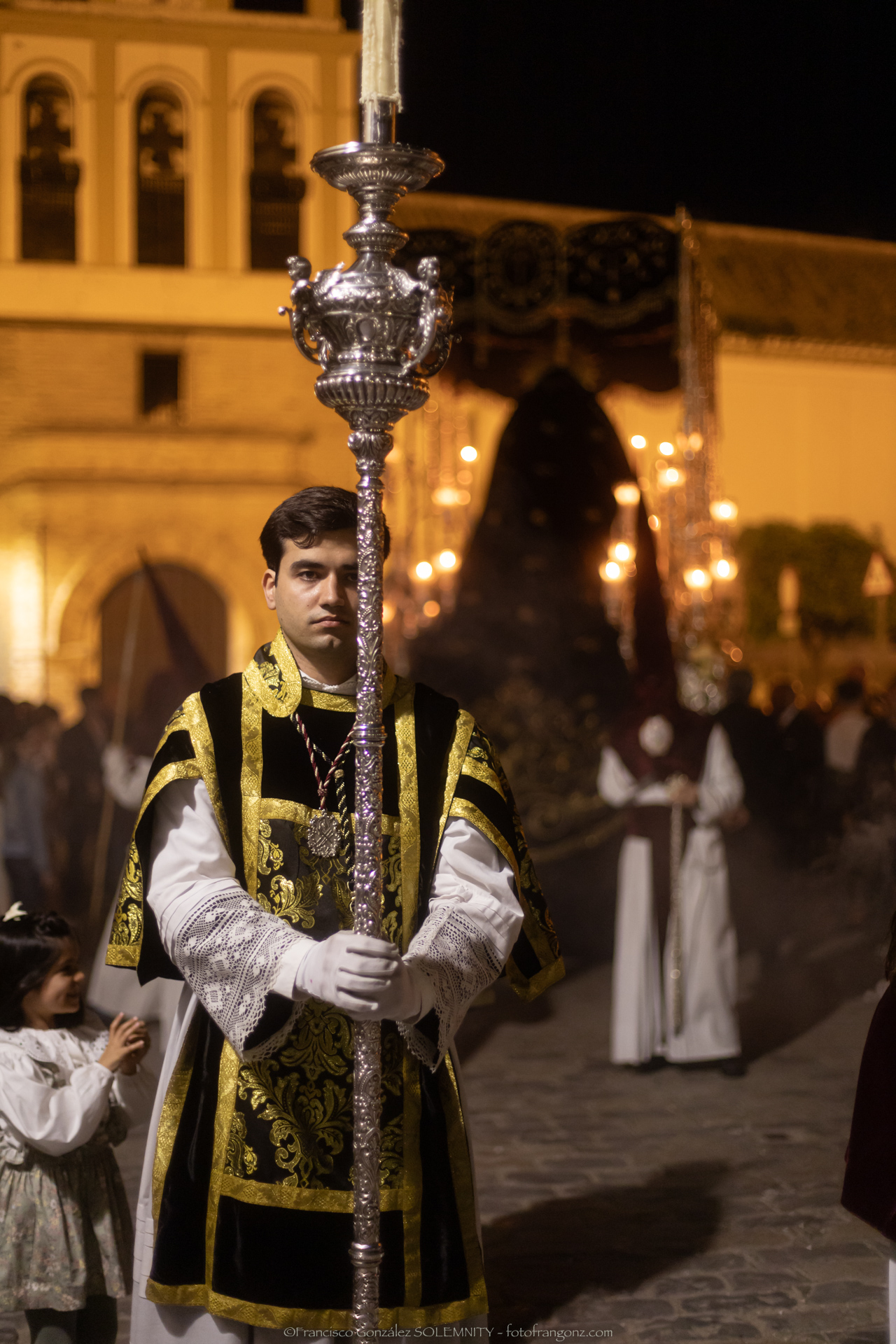
It is eight o’clock in the evening in Marchena when the Roman Century of the Brotherhood of Humility, which this year celebrates its 35th anniversary, takes over the courtyard of the Church of Santa Clara and the doors open, allowing the processional Cross to pass through and lead the cortege. Of the 1,140 members belonging to this brotherhood, 685 participation slips have been distributed this year, of which approximately 350 belong to Nazarenes. New vestments have also been made for the corps of acolytes, increasing the number of acolytes and thurifers to 10 for each float.
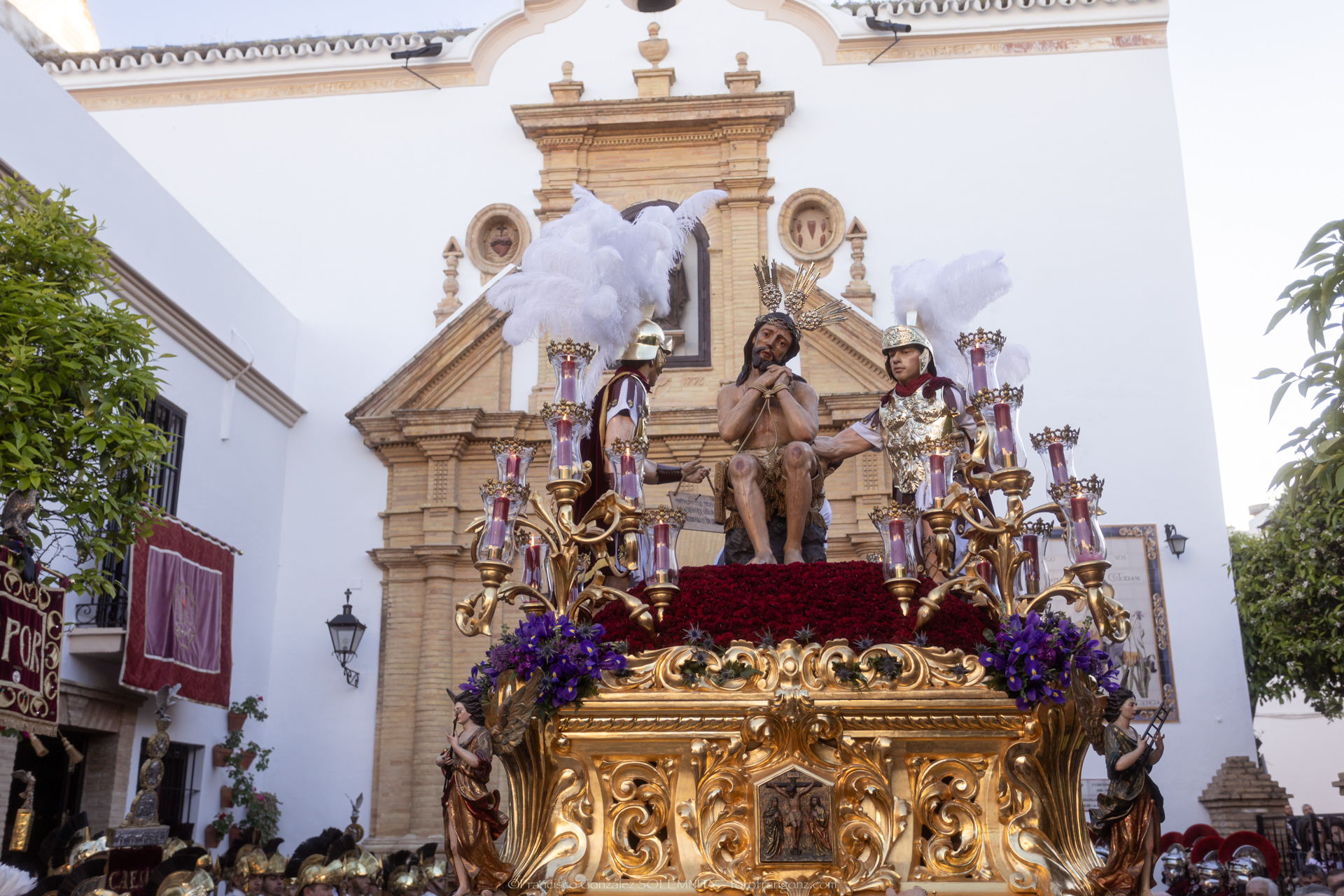
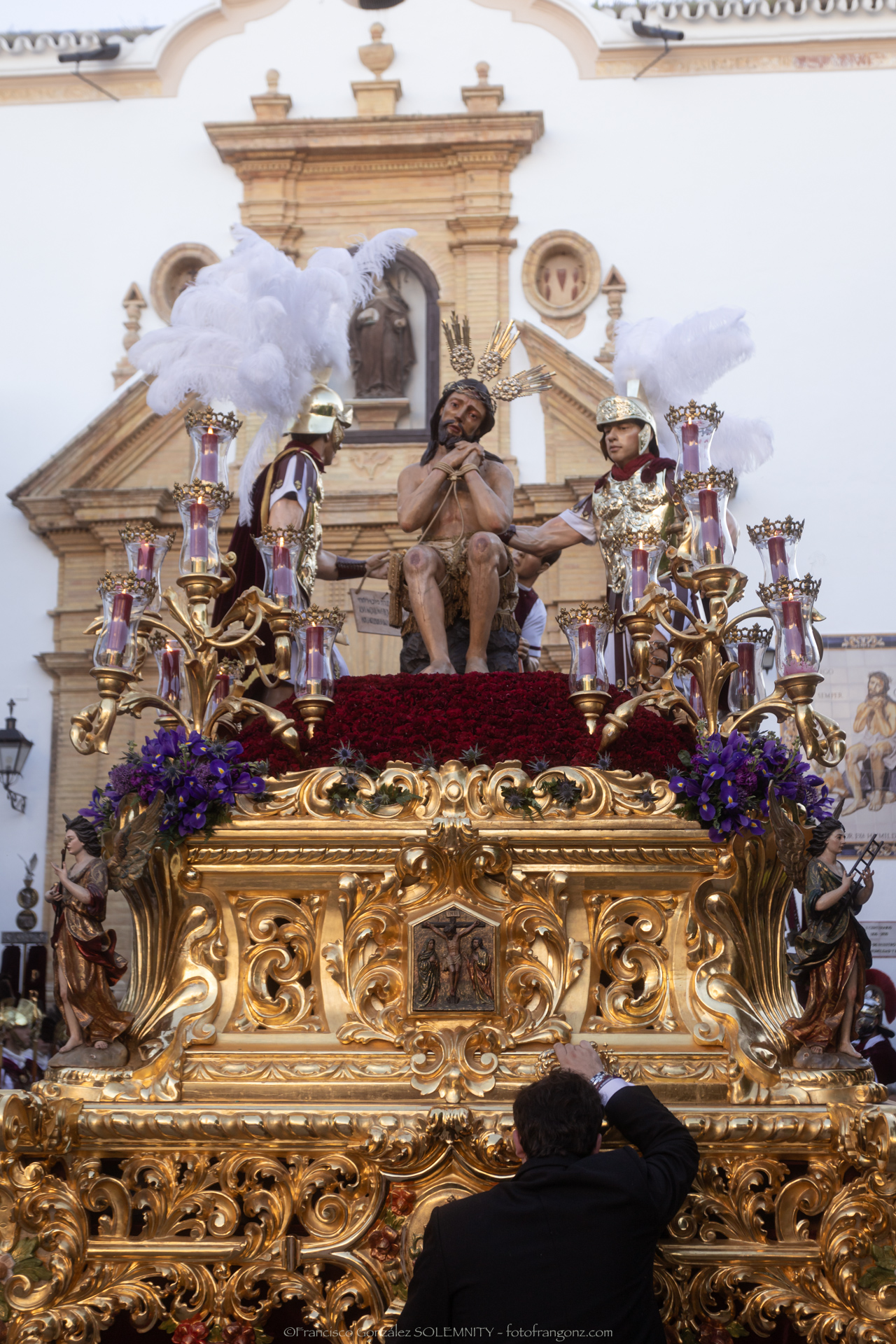
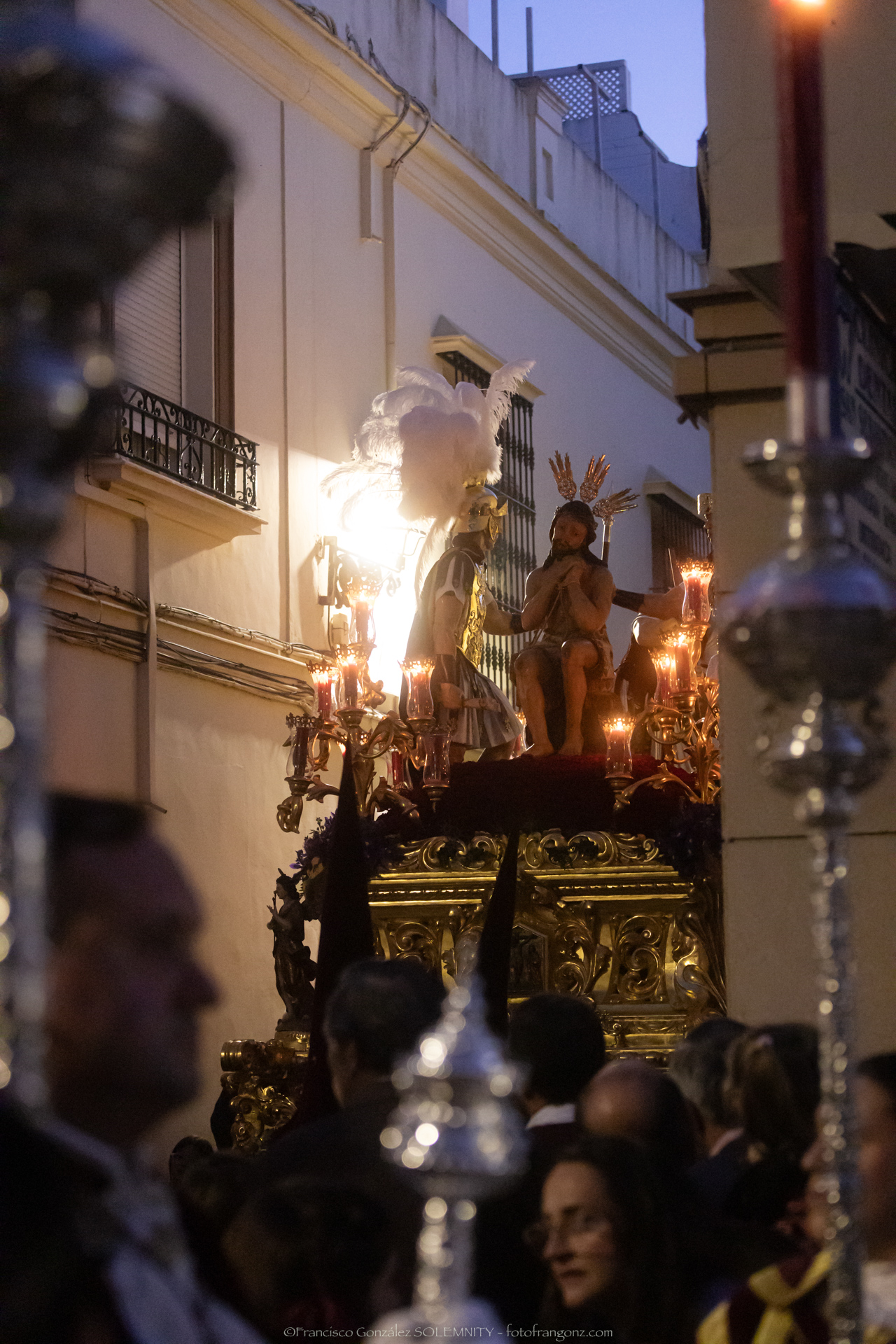
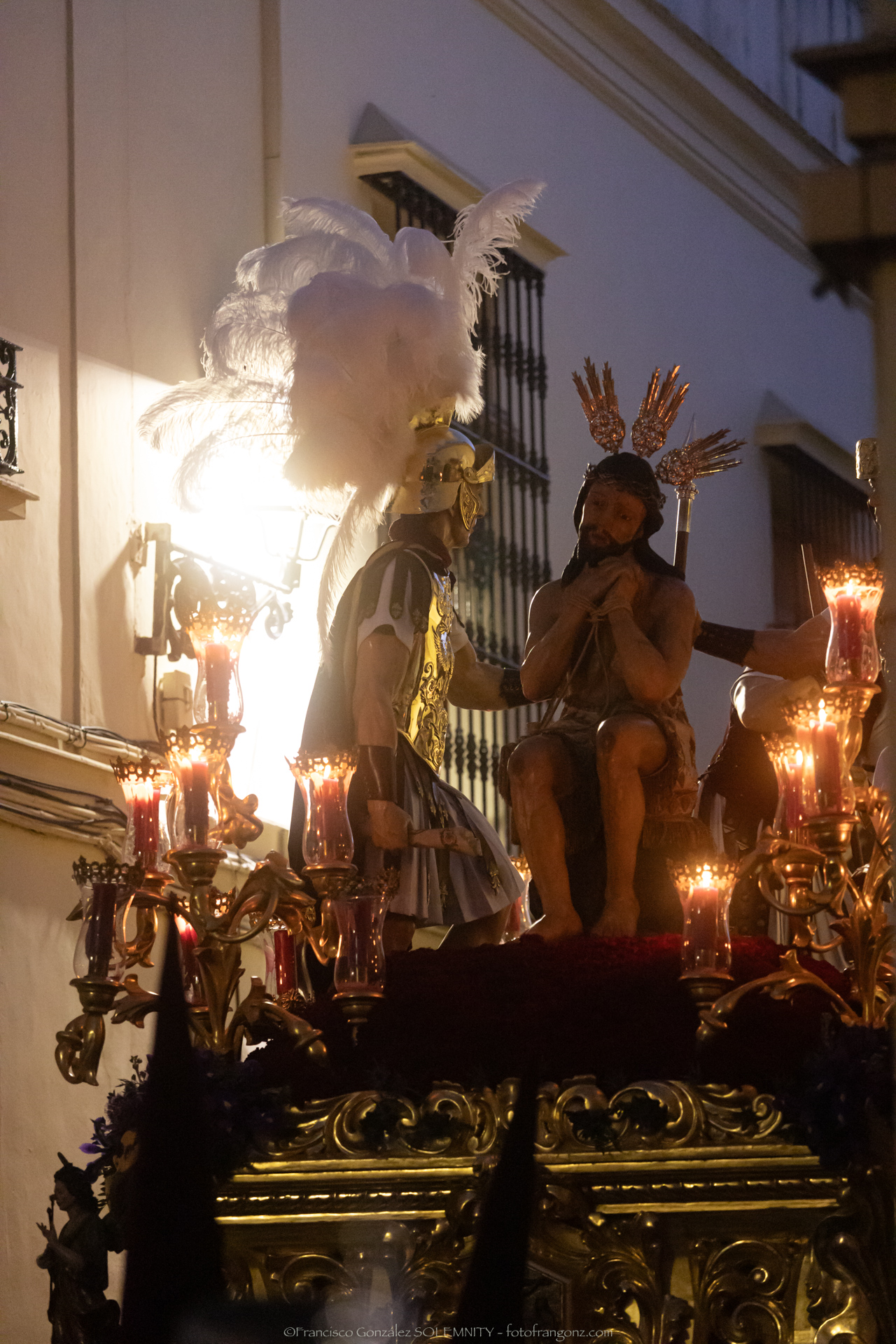
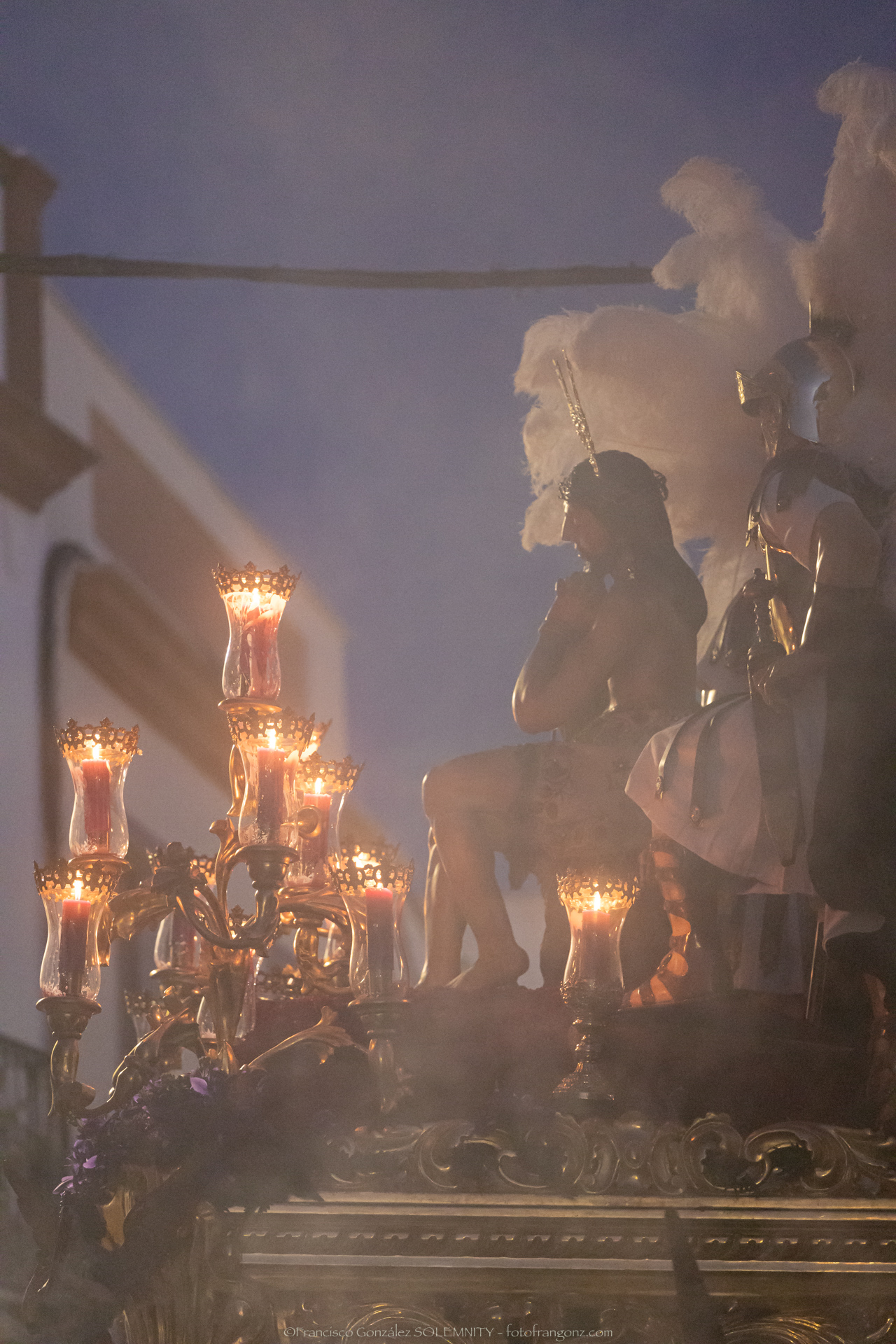
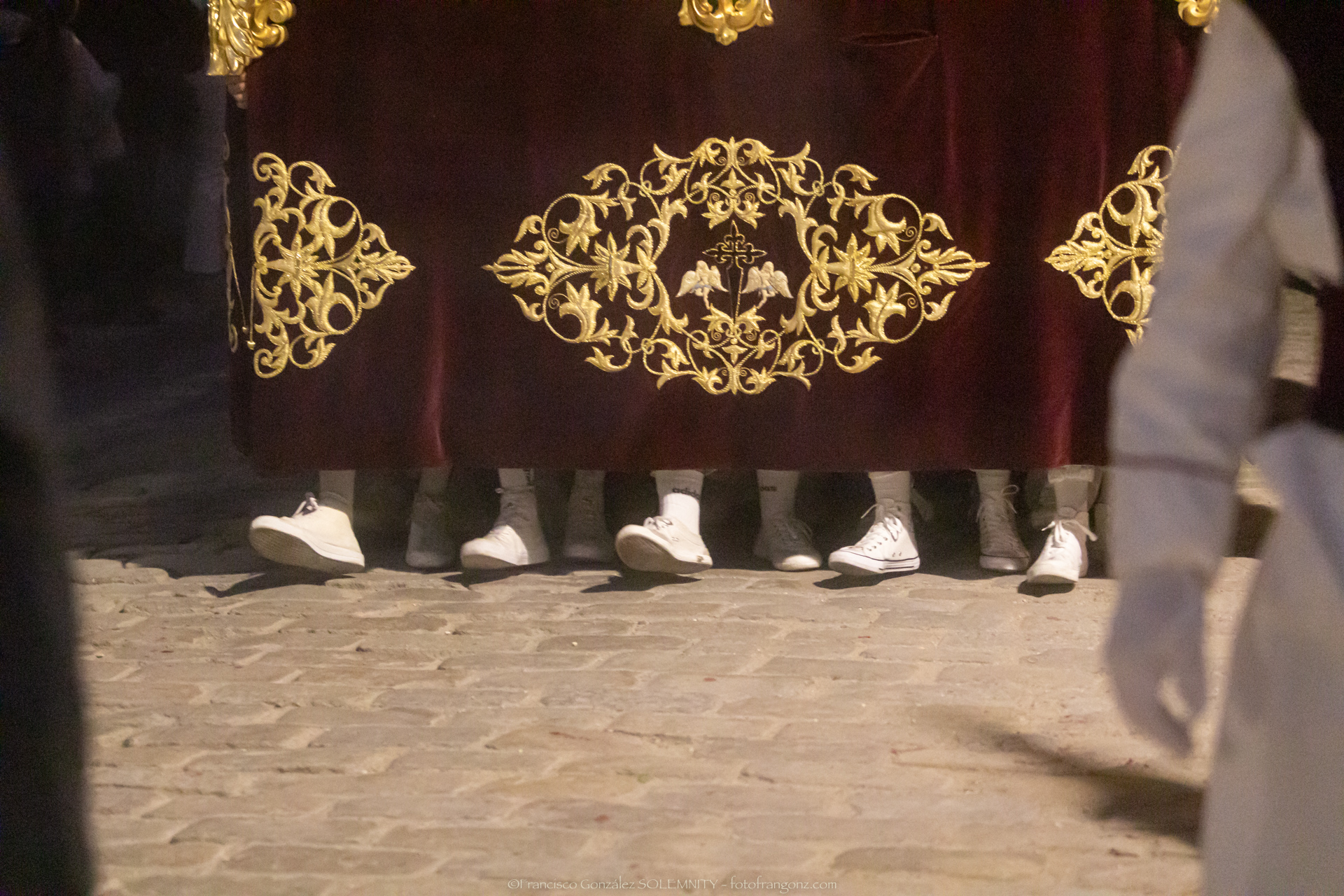
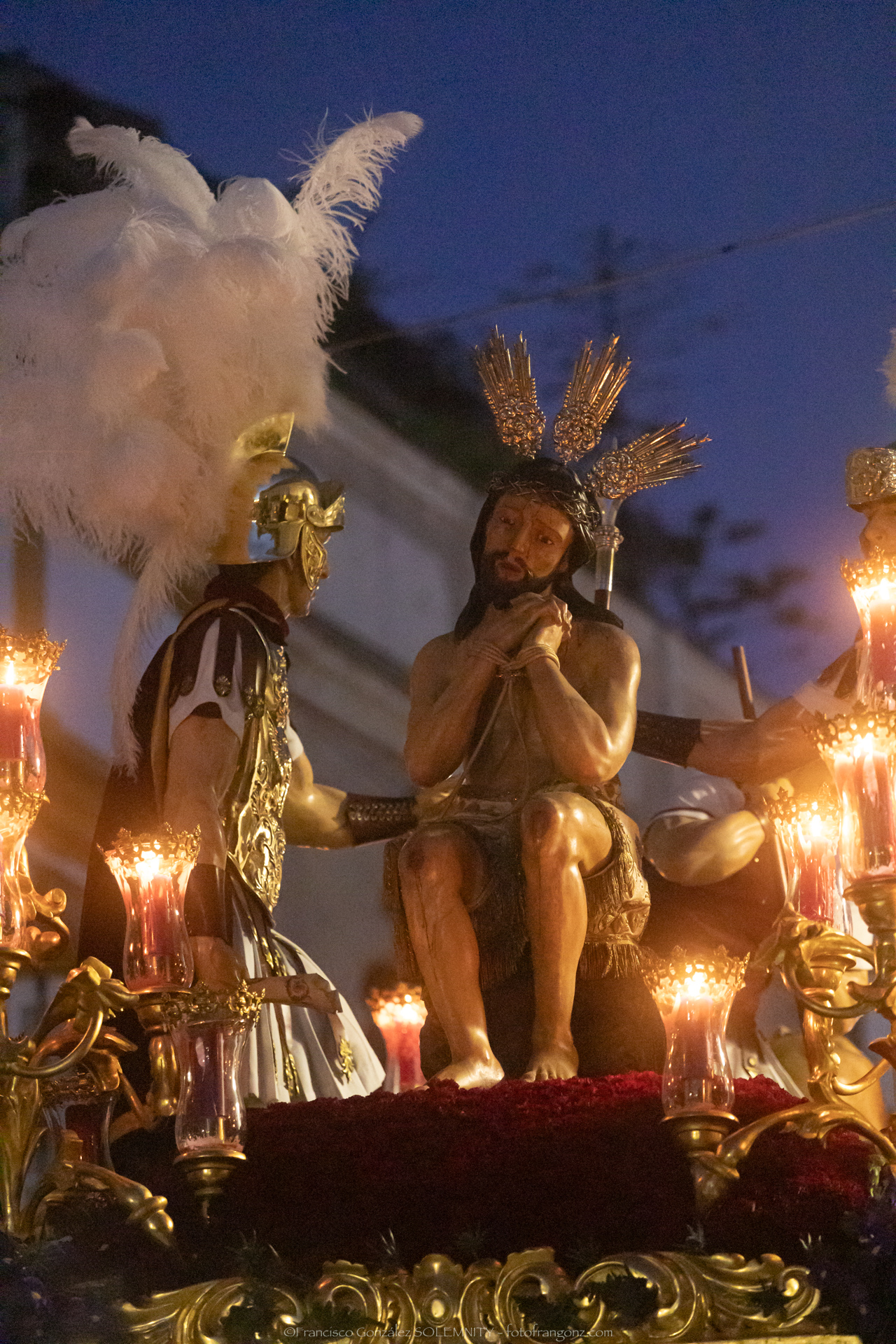
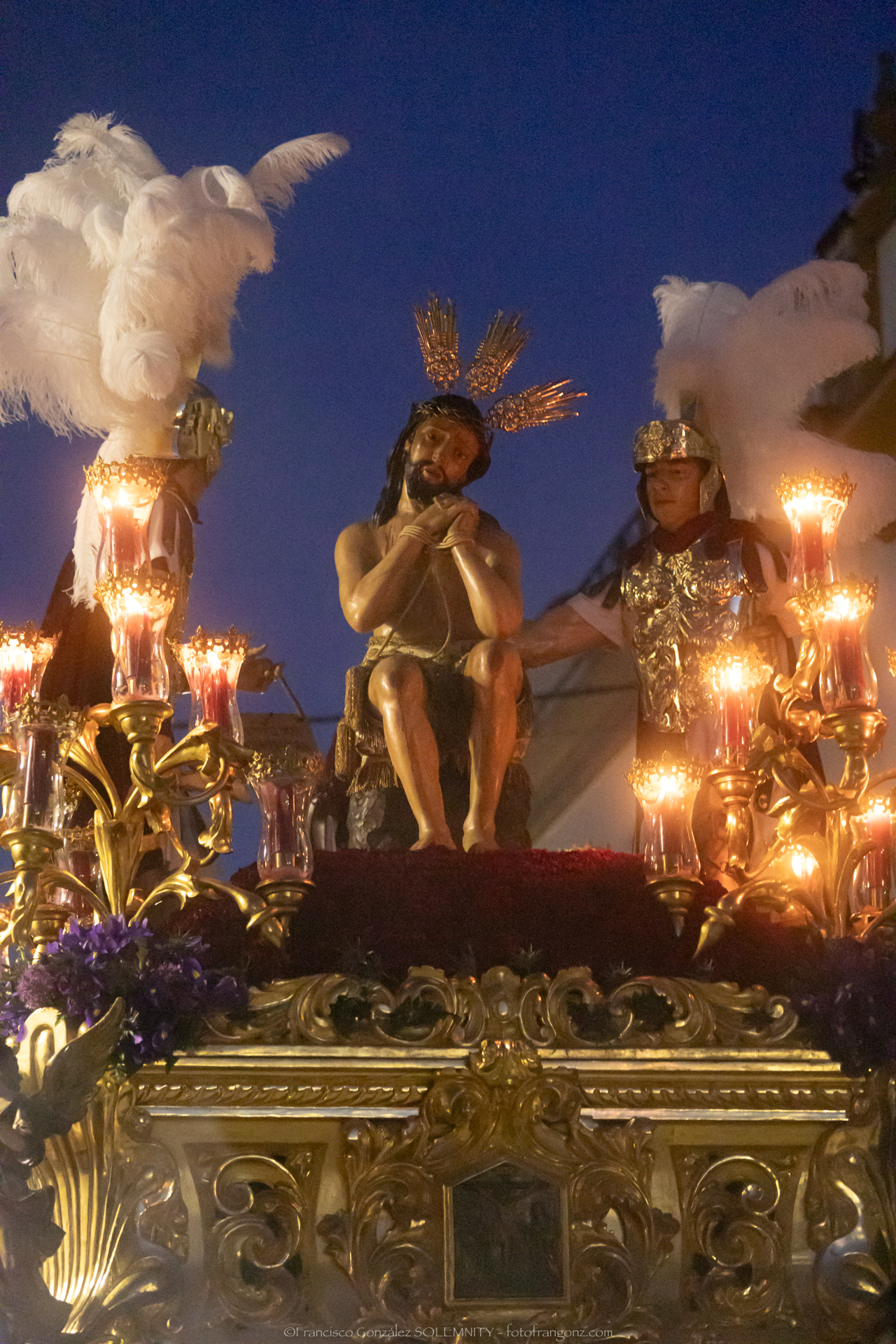
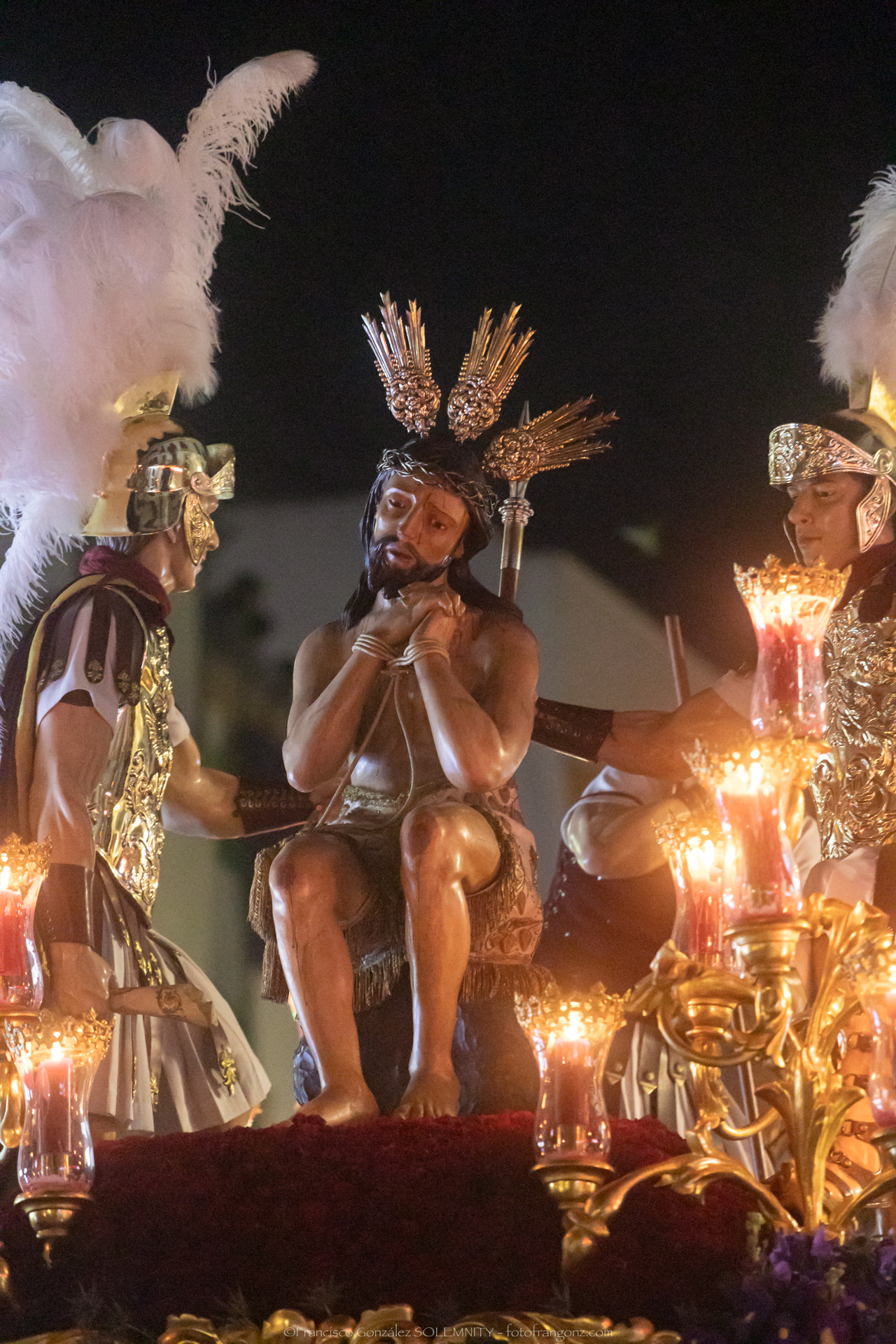
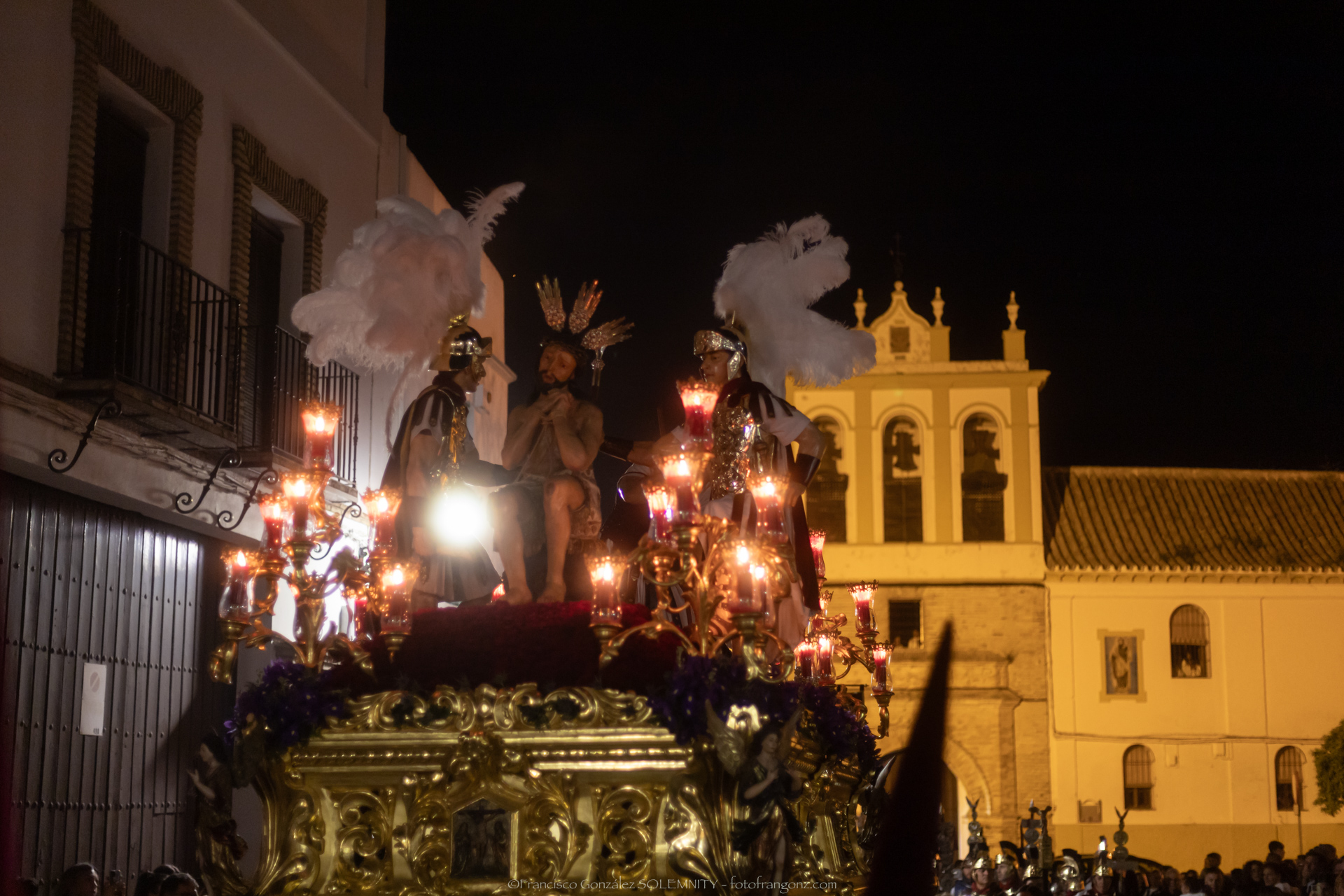
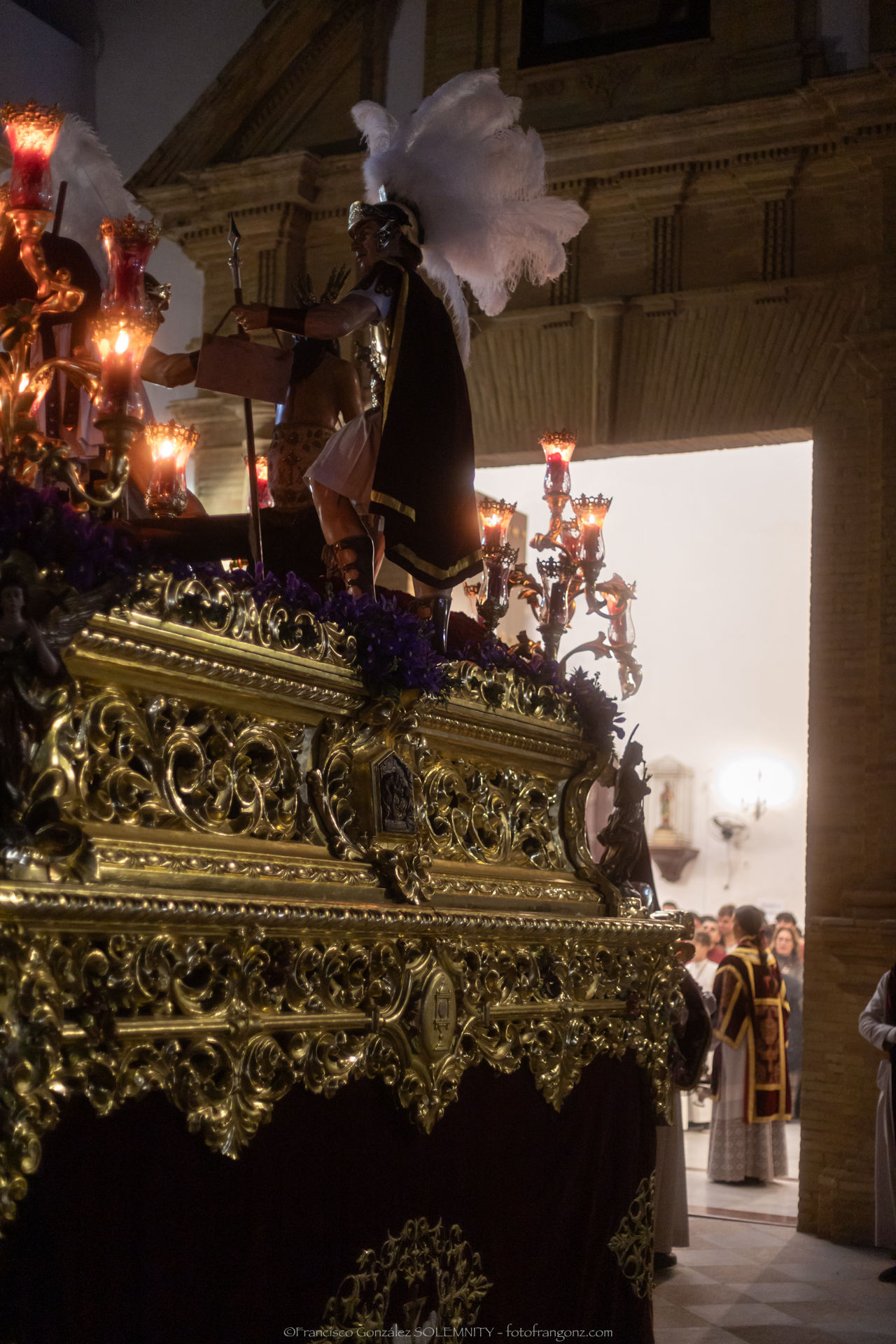
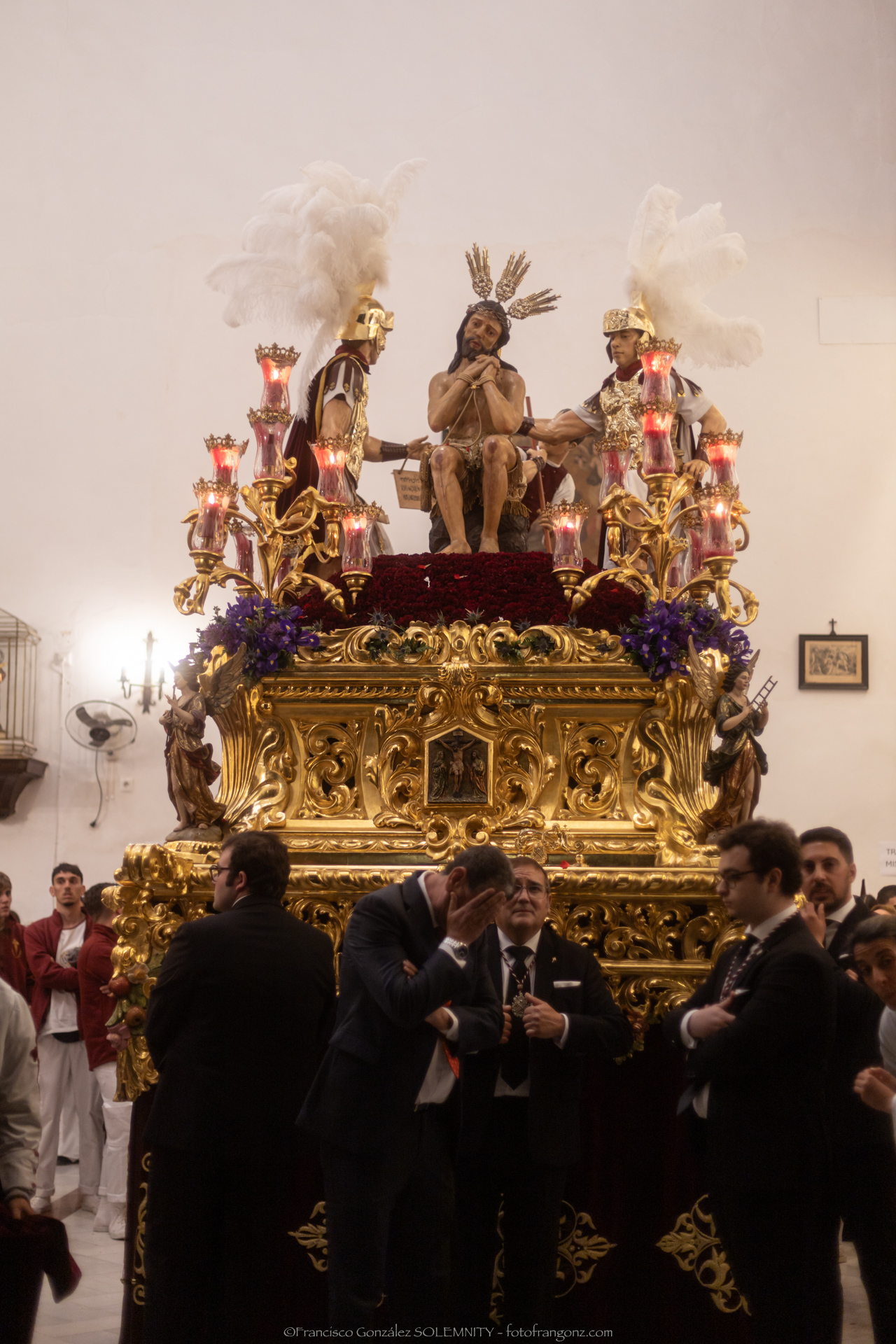
After the first group of acolytes, we see how the team of costaleros of Our Father and Lord of Humility and Patience, led by the new Elder Brother, Francisco Núñez “Kisco,” his son Ángel Núñez (who has been the youth herald this year), and Juan Antonio Pérez (son of the captain of the Roman century, José Antonio Pérez), carry out a delicate and difficult maneuver to pass through the portico of Santa Clara, which in the past formed part of the convent that once occupied the same site. After the Spanish national anthem is played by the Asociación Musical Arroquia Martínez of Jódar (Jaén), the mystery float passes through the gates and turns until stopping in front of the brotherhood house, at which point the Roman Century surrounds the float and the sentence of Pontius Pilate is proclaimed, in which Jesus of Nazareth is condemned to be crucified.
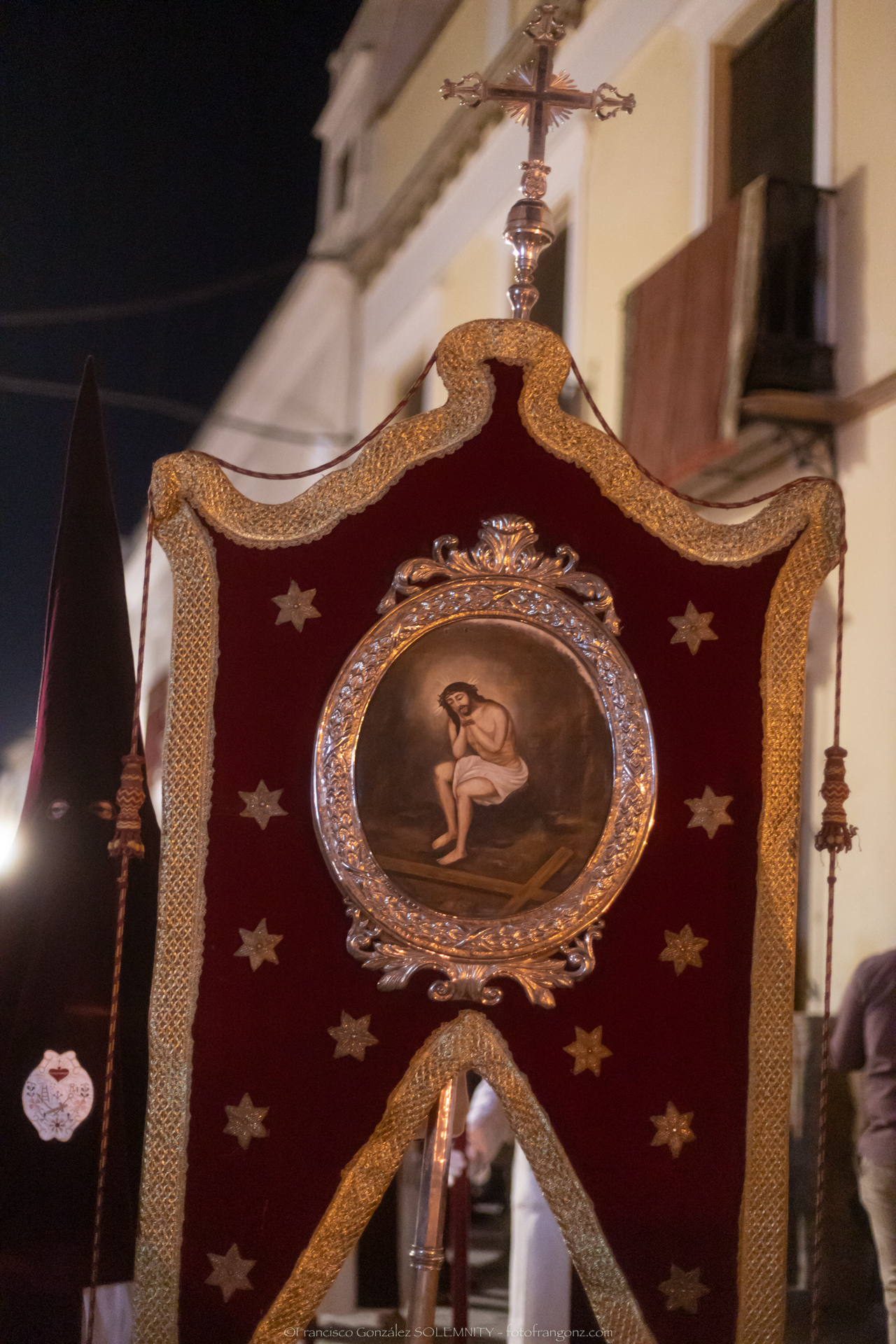
This proclamation is the act known as the Angel’s Proclamation, which was formerly carried out from the balcony and which the Association of Heritage Professors of Seville has recently requested to be declared intangible heritage of Andalusia. The text that is declaimed recounts the trial of Jesus, mentioning how he was taken before Caiaphas, questioned by Pontius Pilate about whether he was “king of the Jews,” and finally condemned for “false preachings” and for being considered a “wrongdoer and sorcerer.” The sentence also alludes to details of the Passion, such as the scourging, the weariness of Christ seated upon a stone, and the release of Barabbas. After the account of the condemnation concludes, the captain of the century raises his sword as a signal of command and confirms that the sentence dictated by Pilate must be carried out.
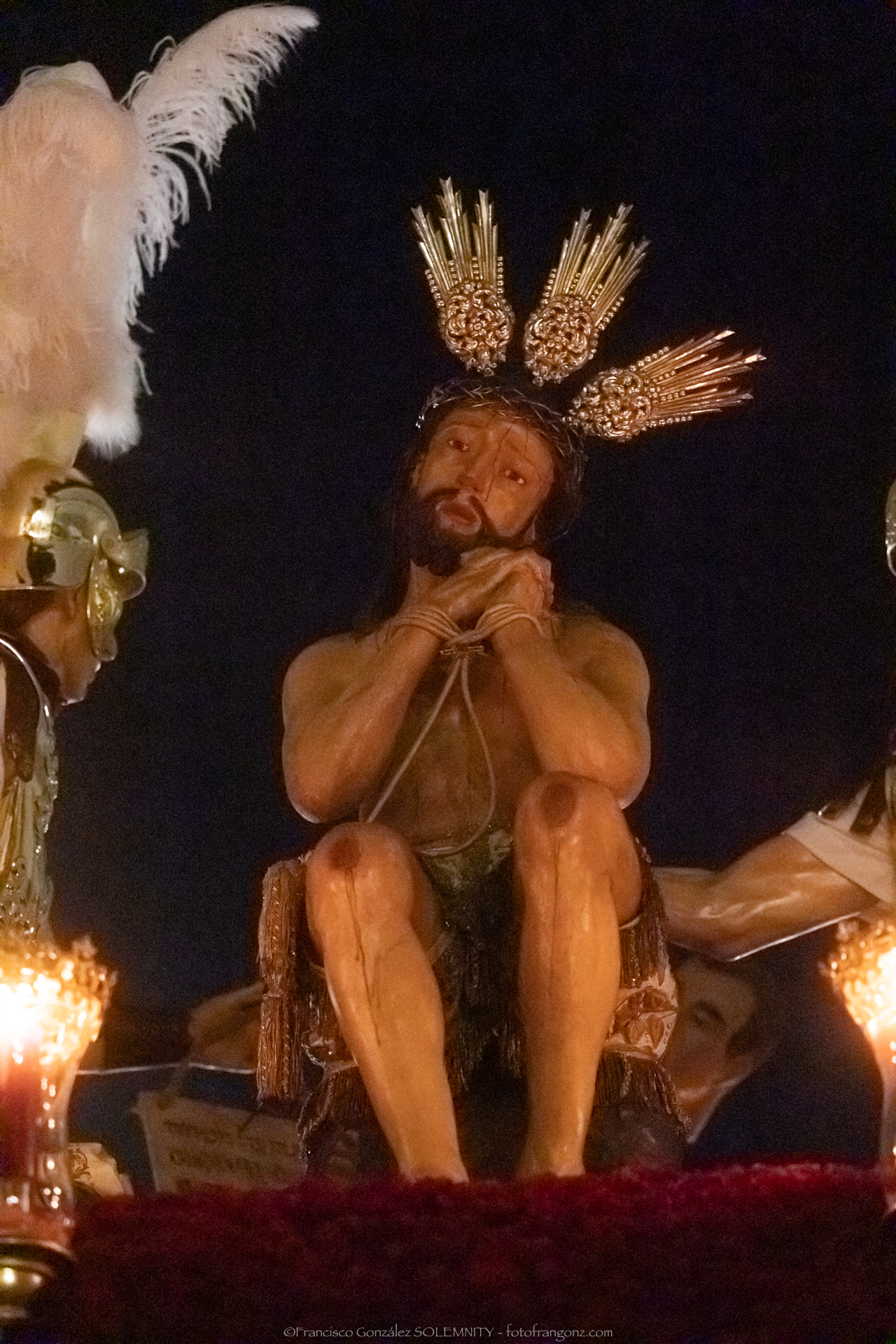
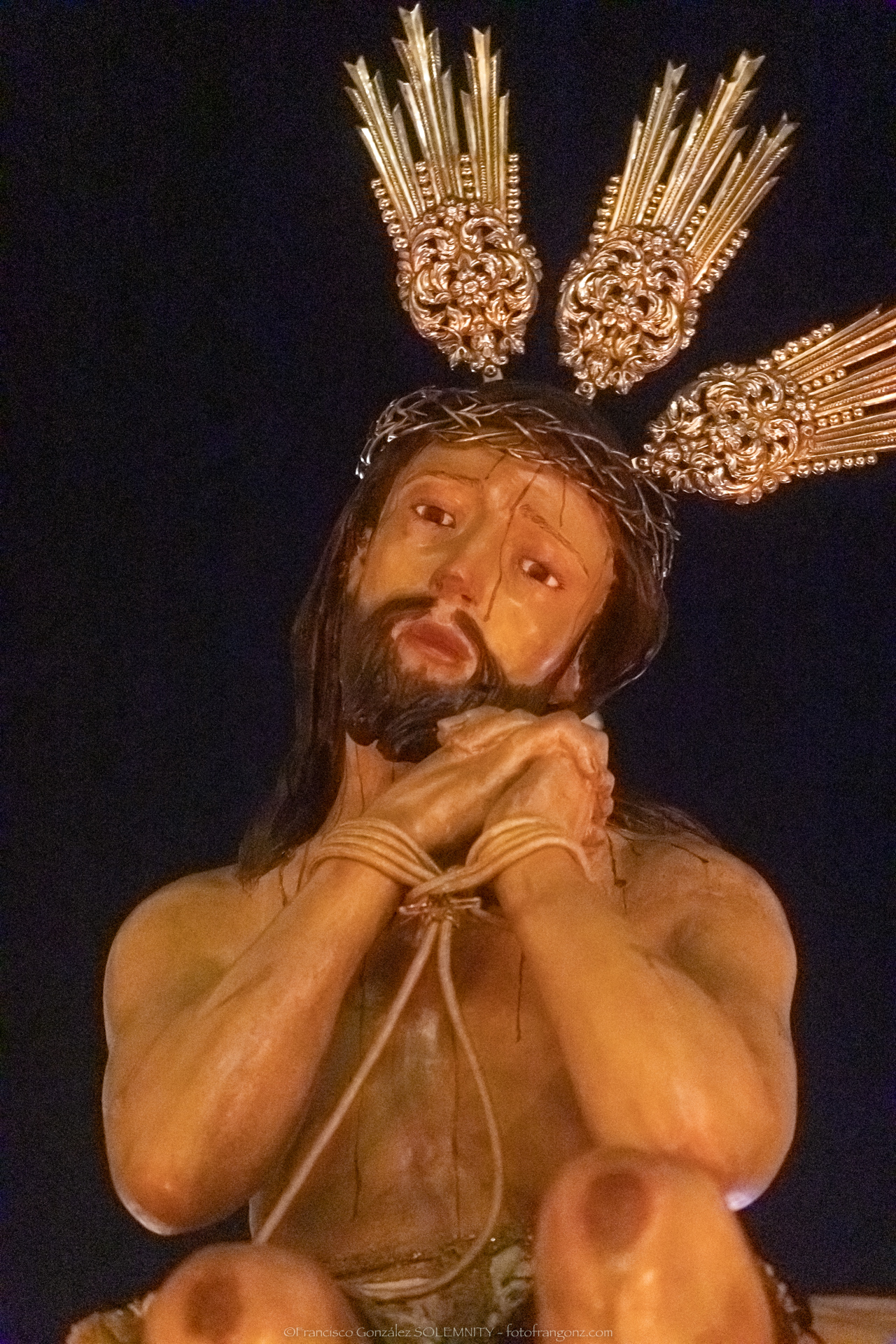
This year the Lord of Humility debuts a brooch bearing the JHS seal (“Jesus Son of the Lord” in Spanish) and recovers the old “crystal-beaded shroud” and the former silver crown of thorns, recreating the appearance it had in the 1960s.
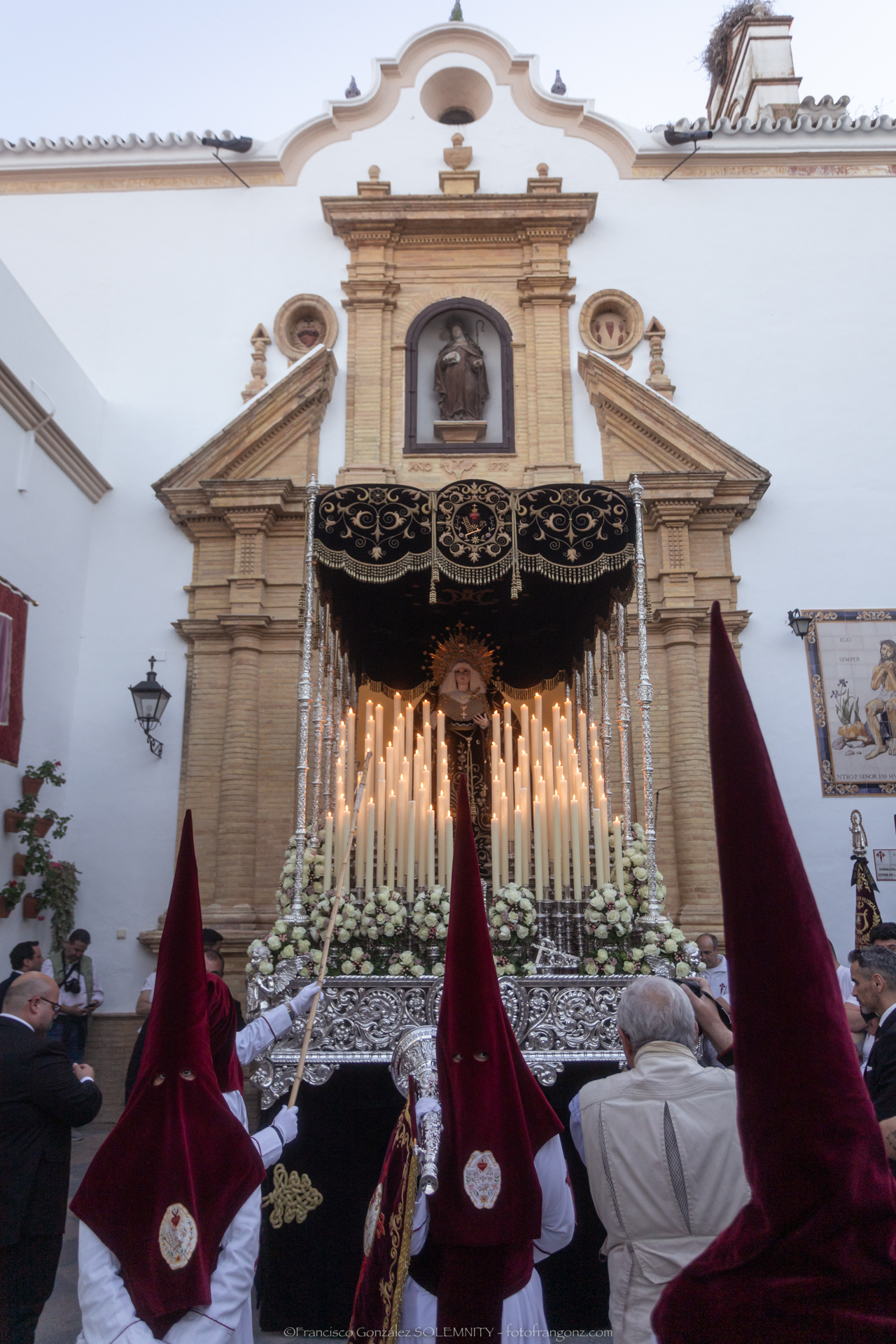
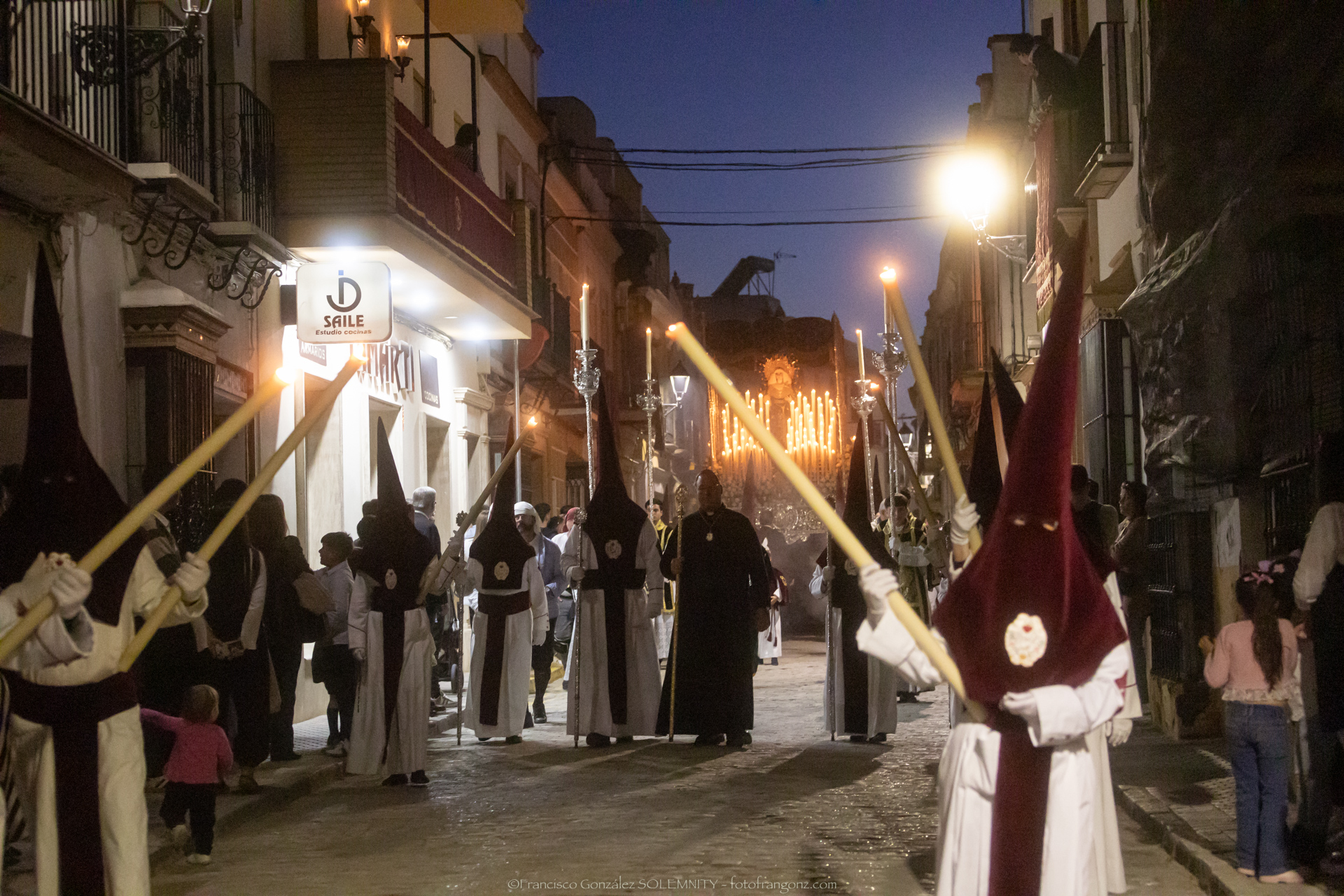
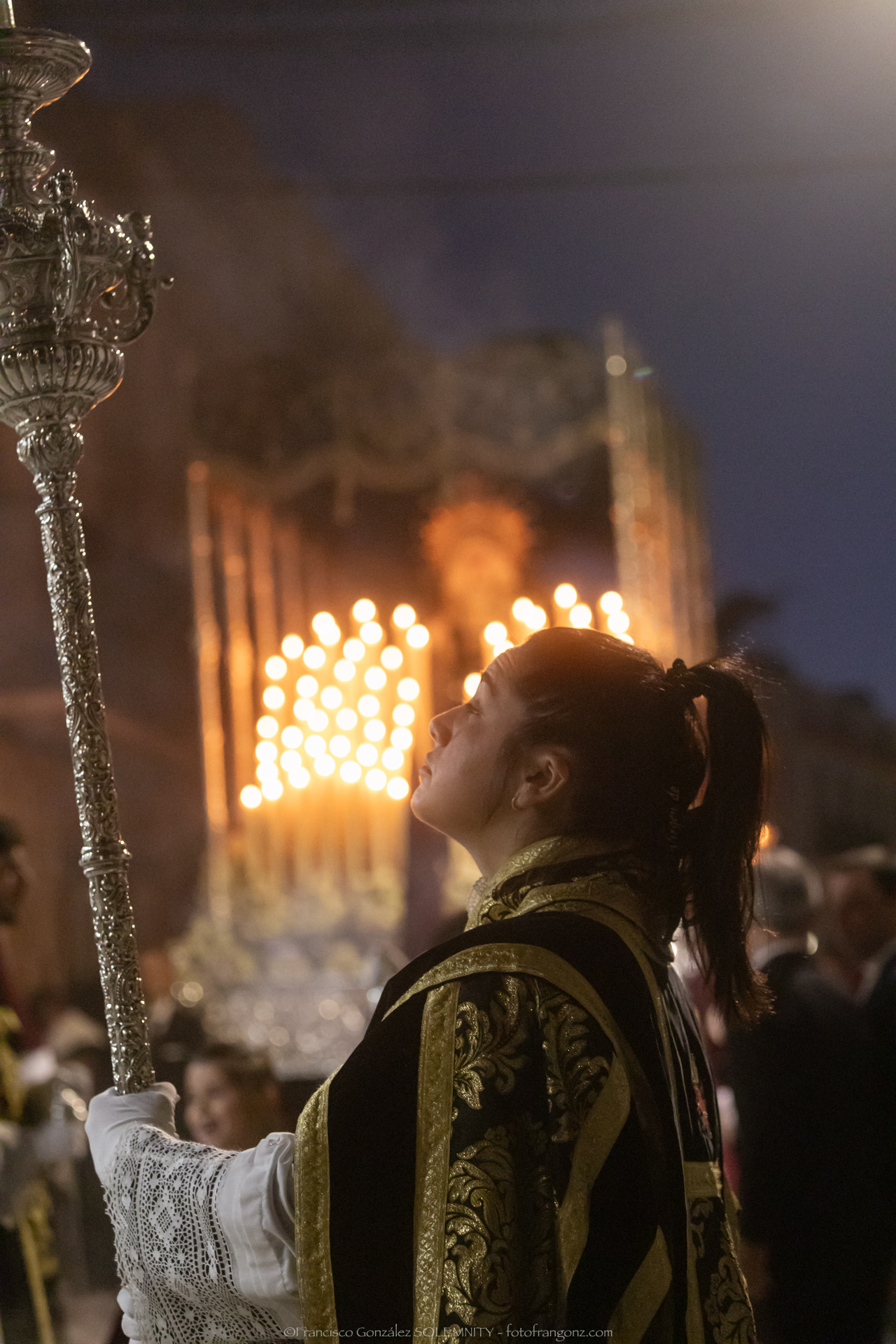
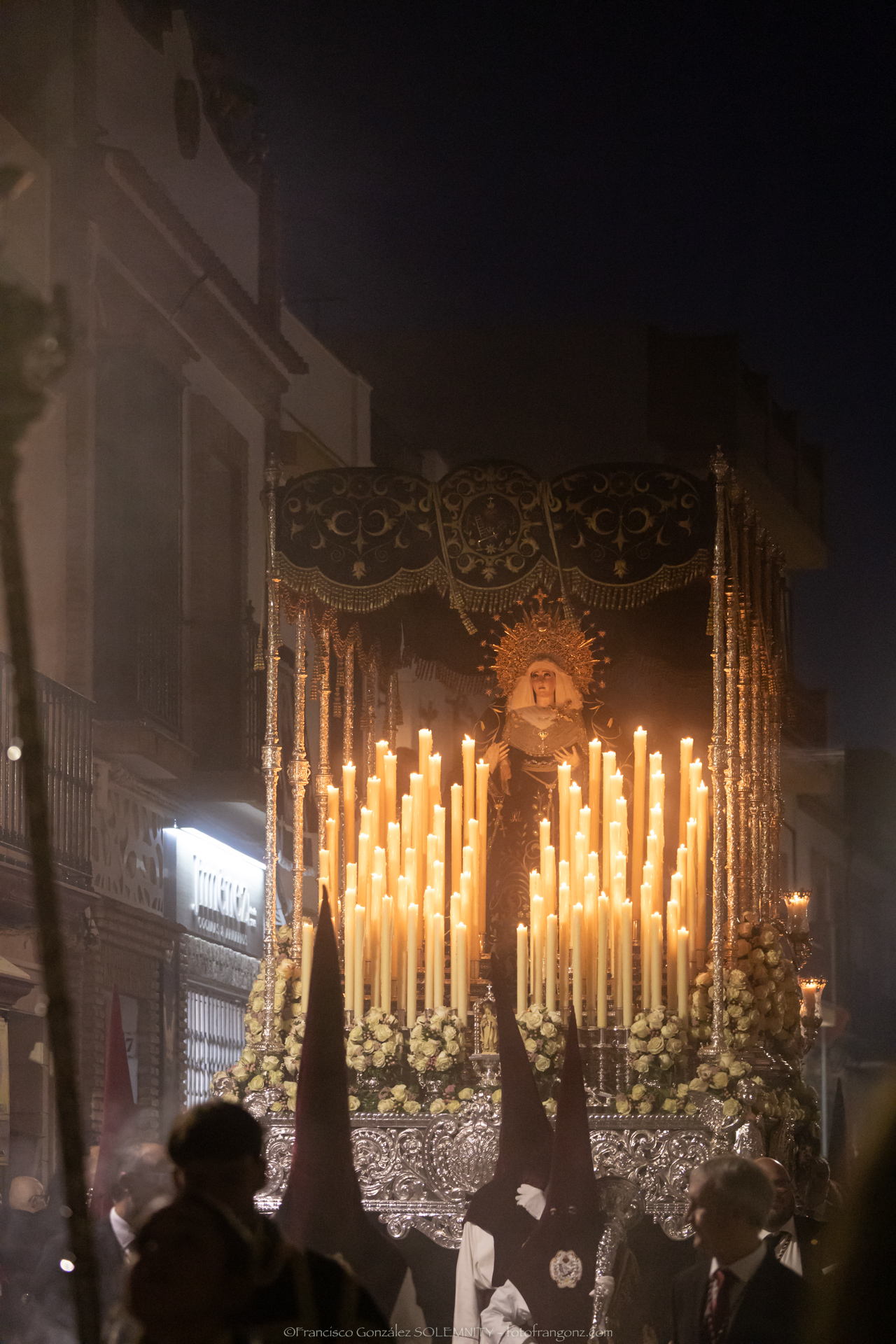
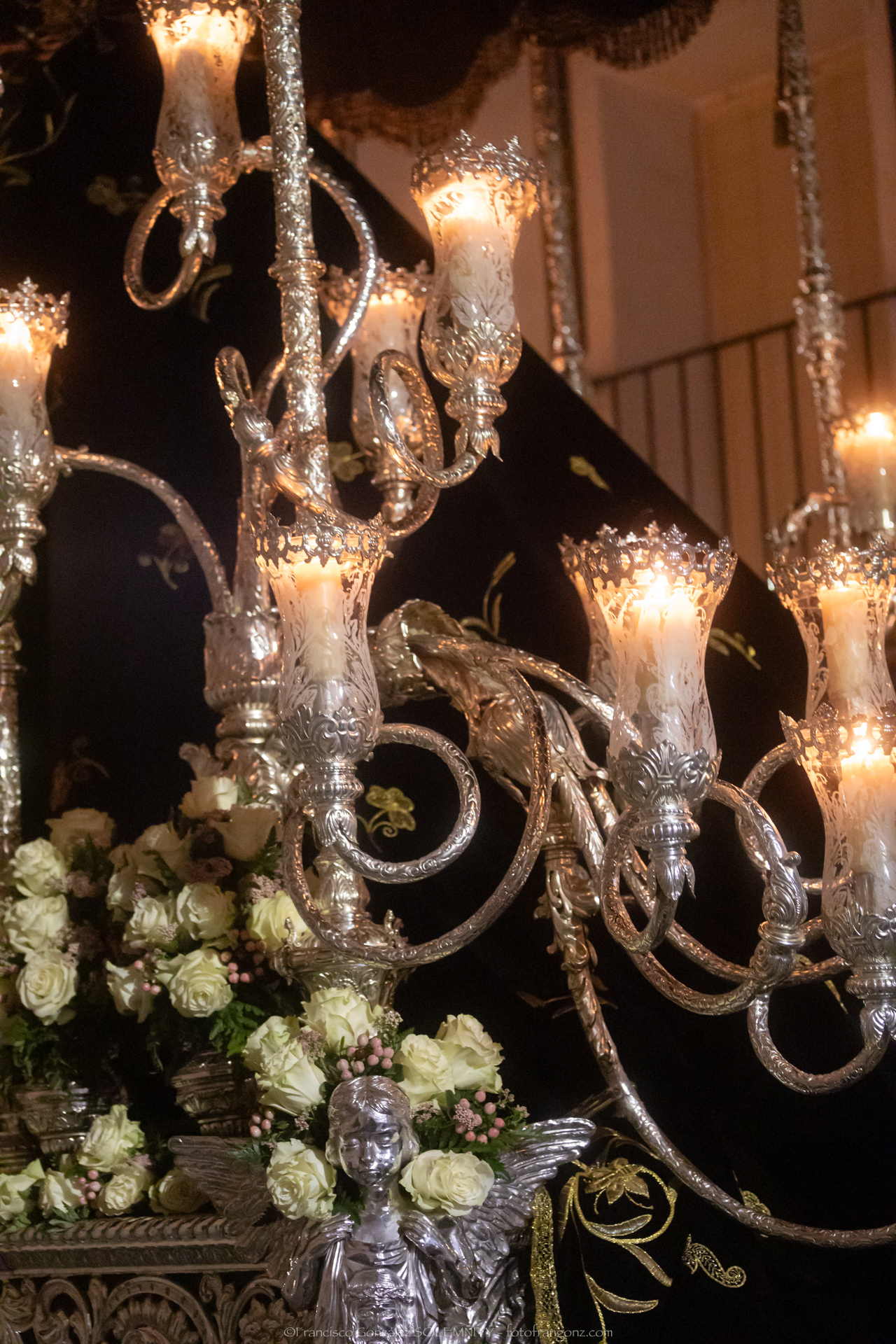
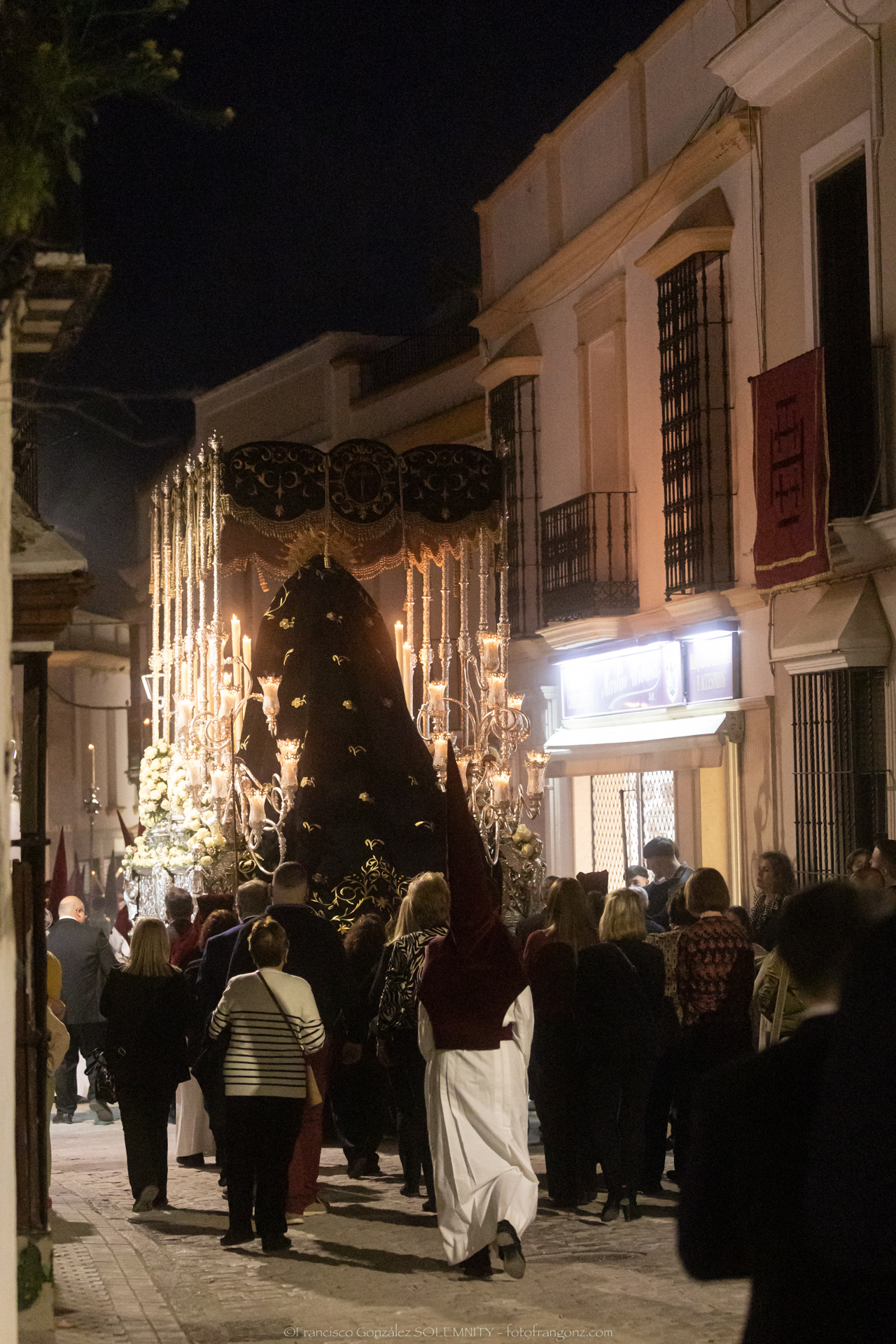
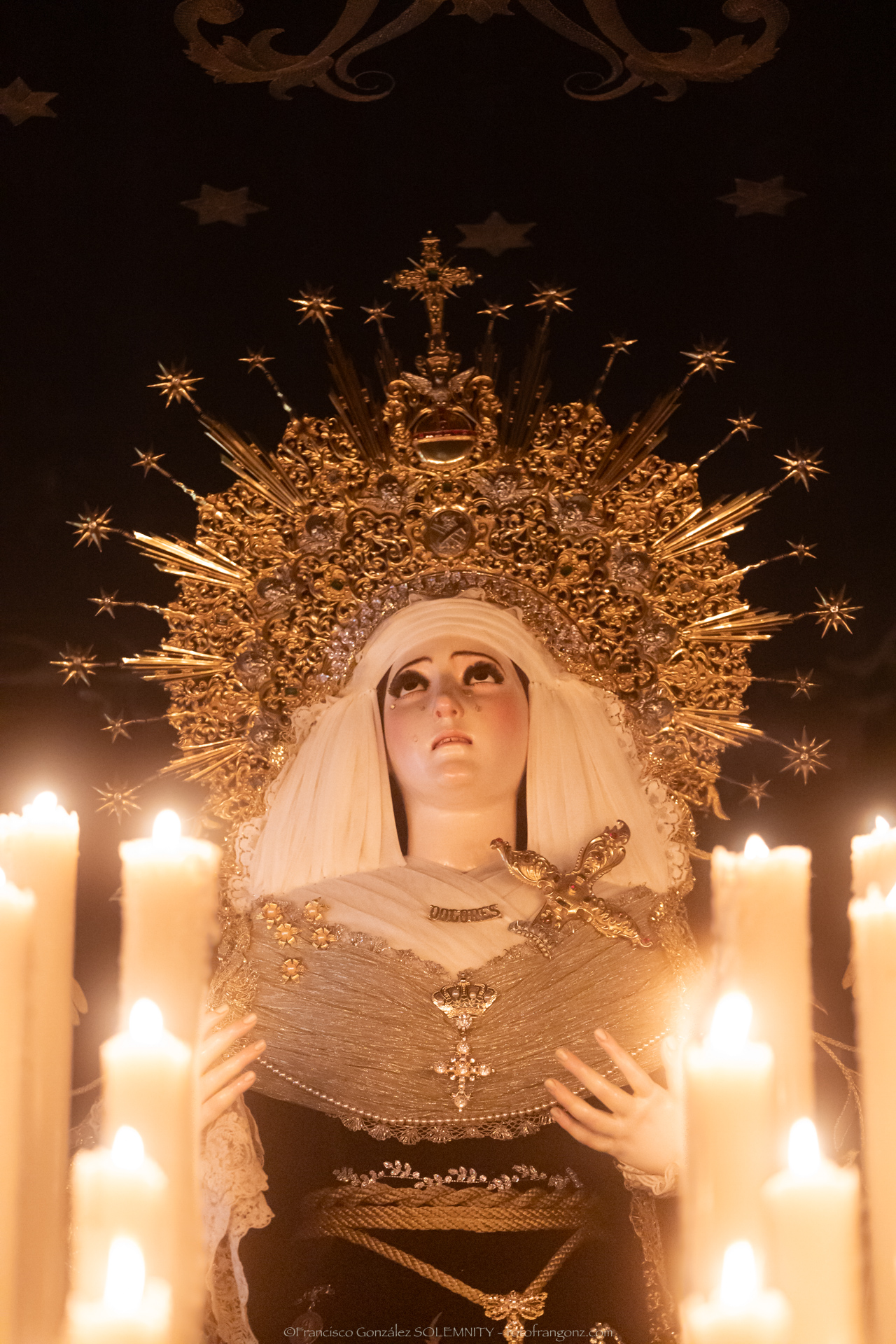
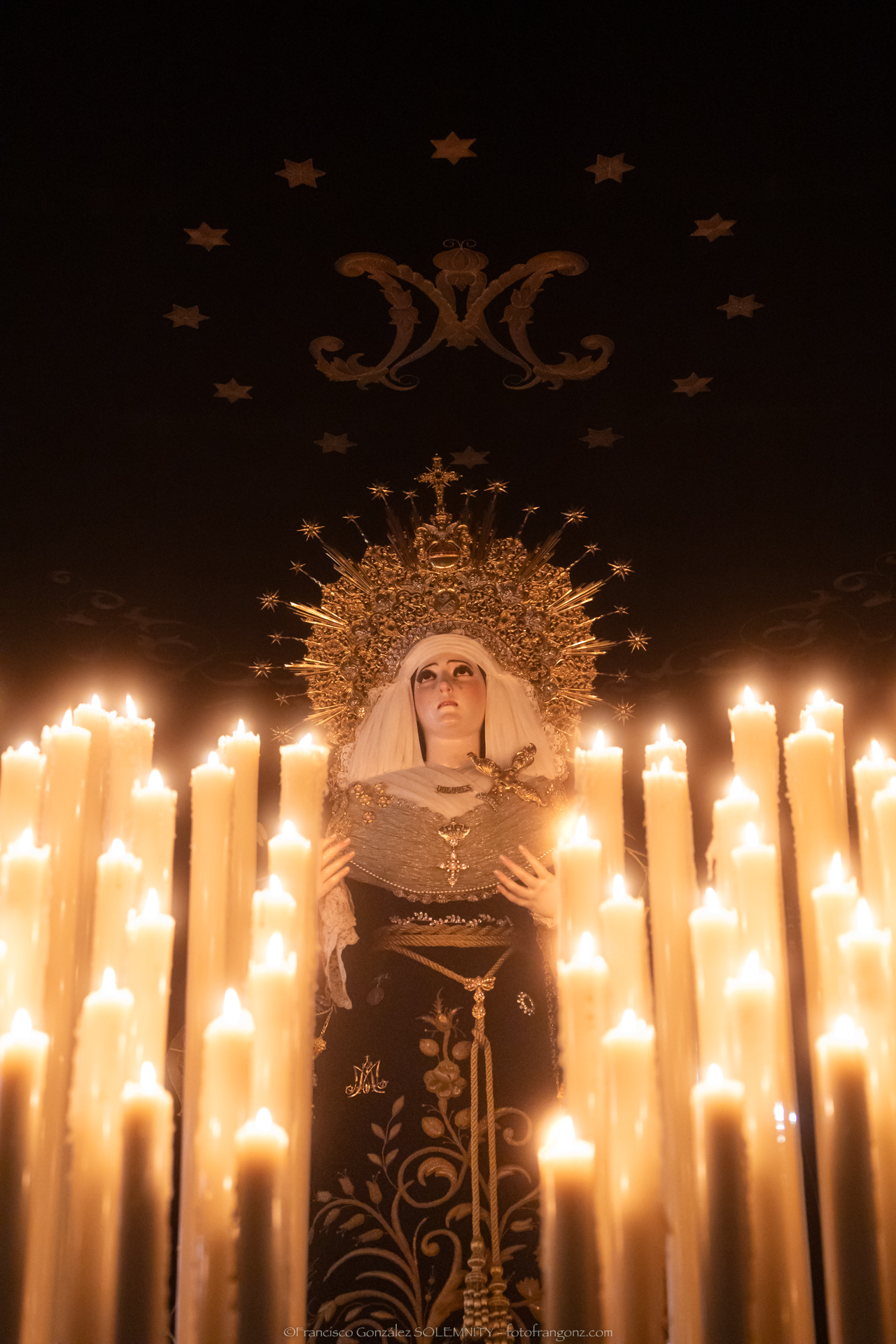
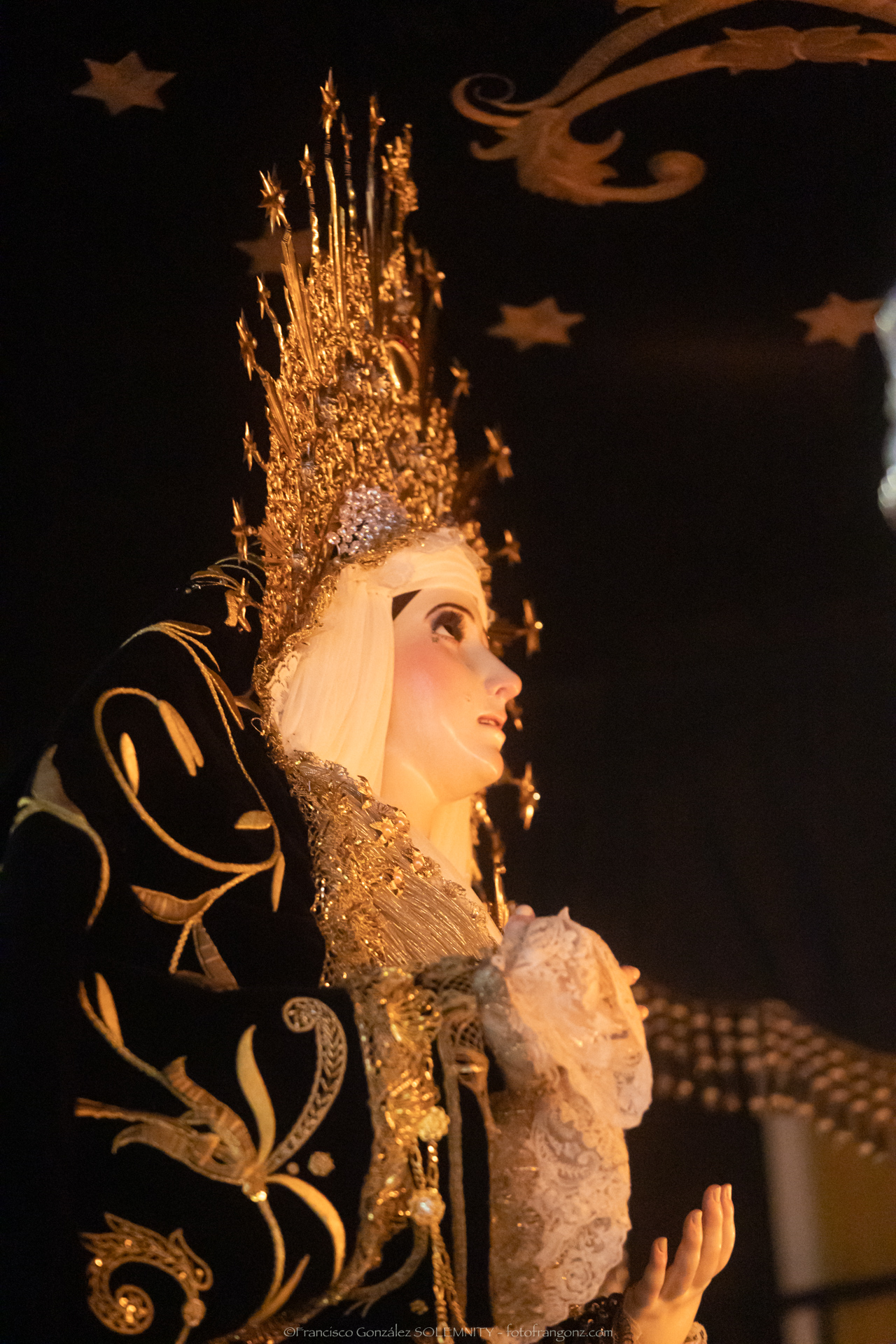
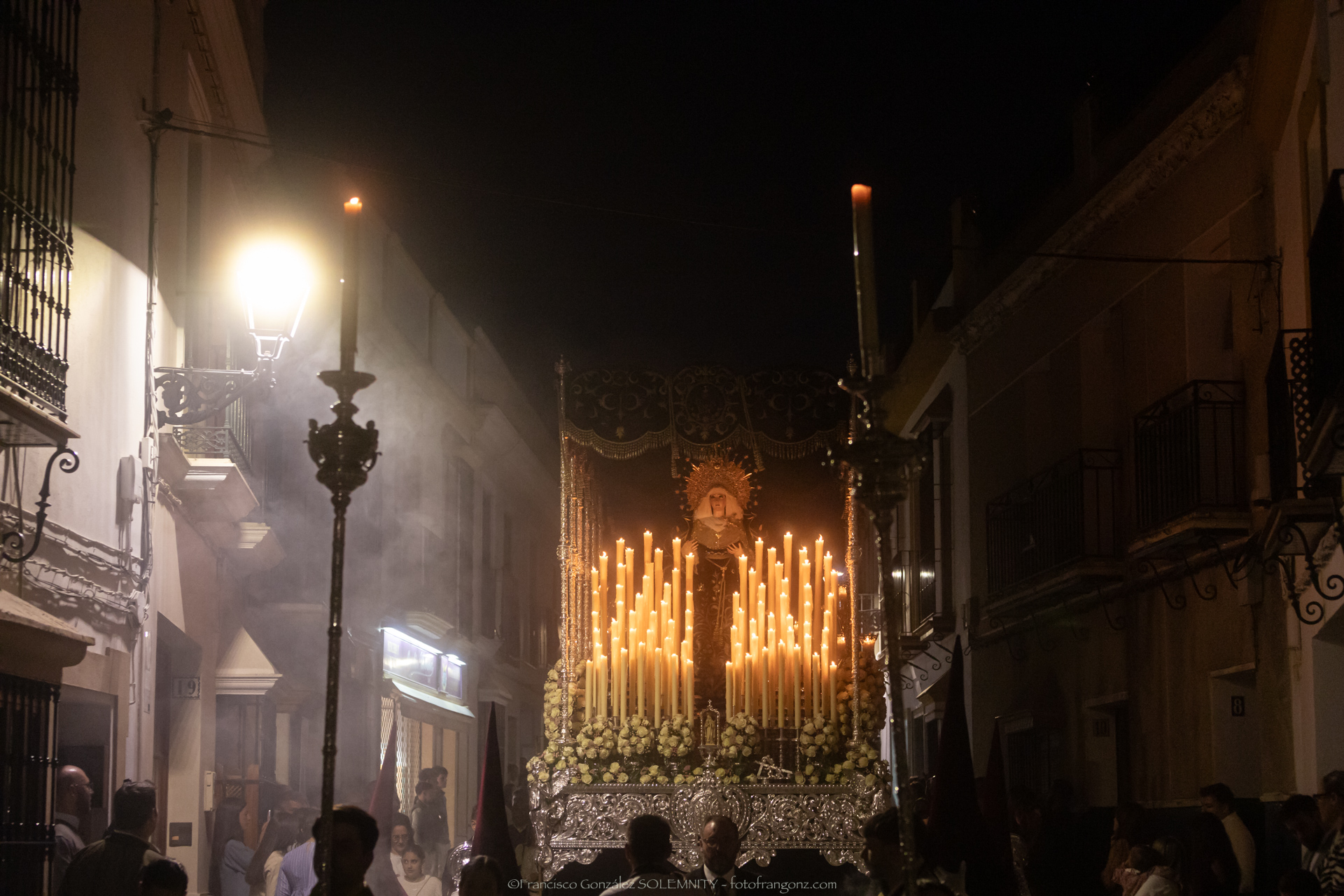
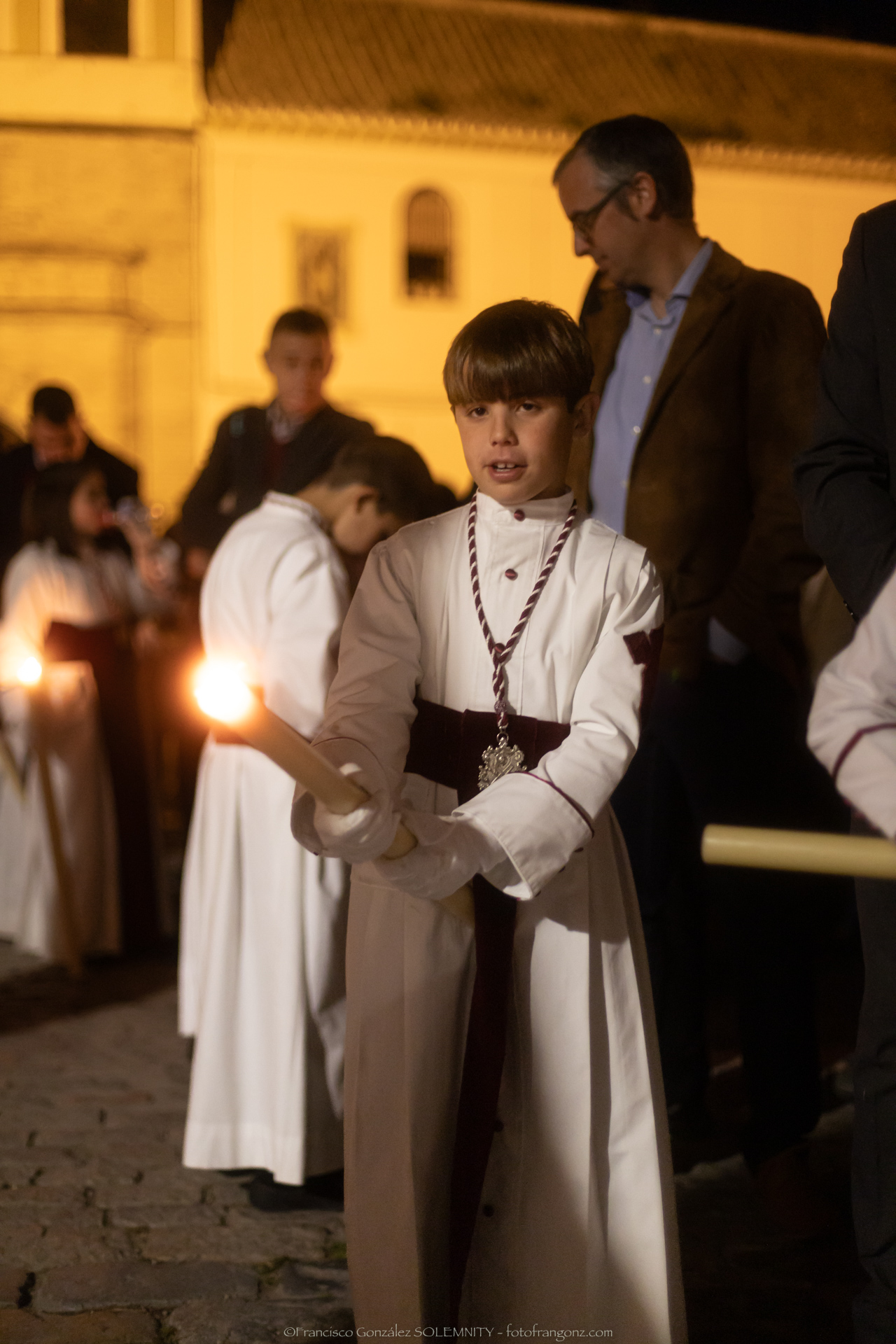
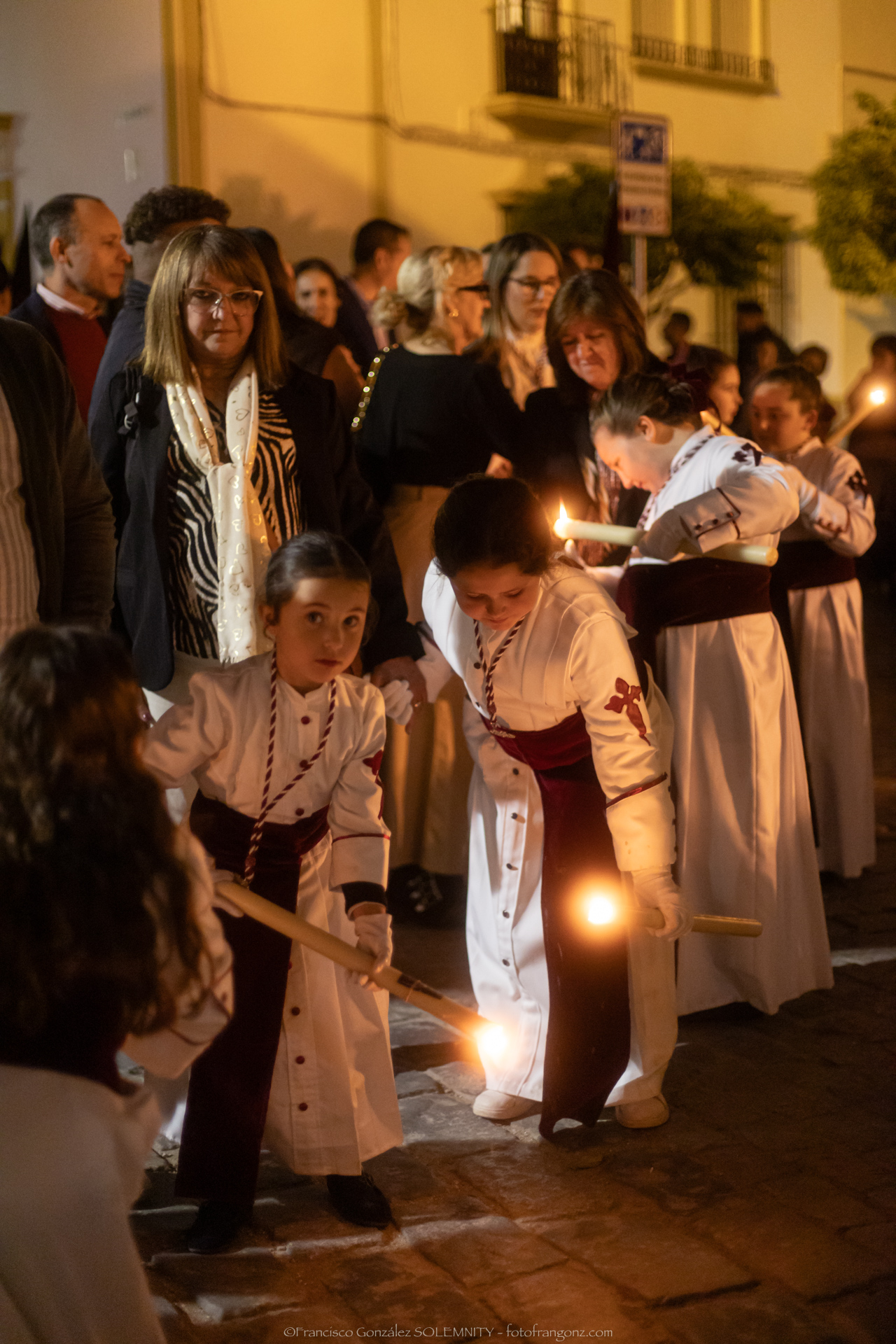
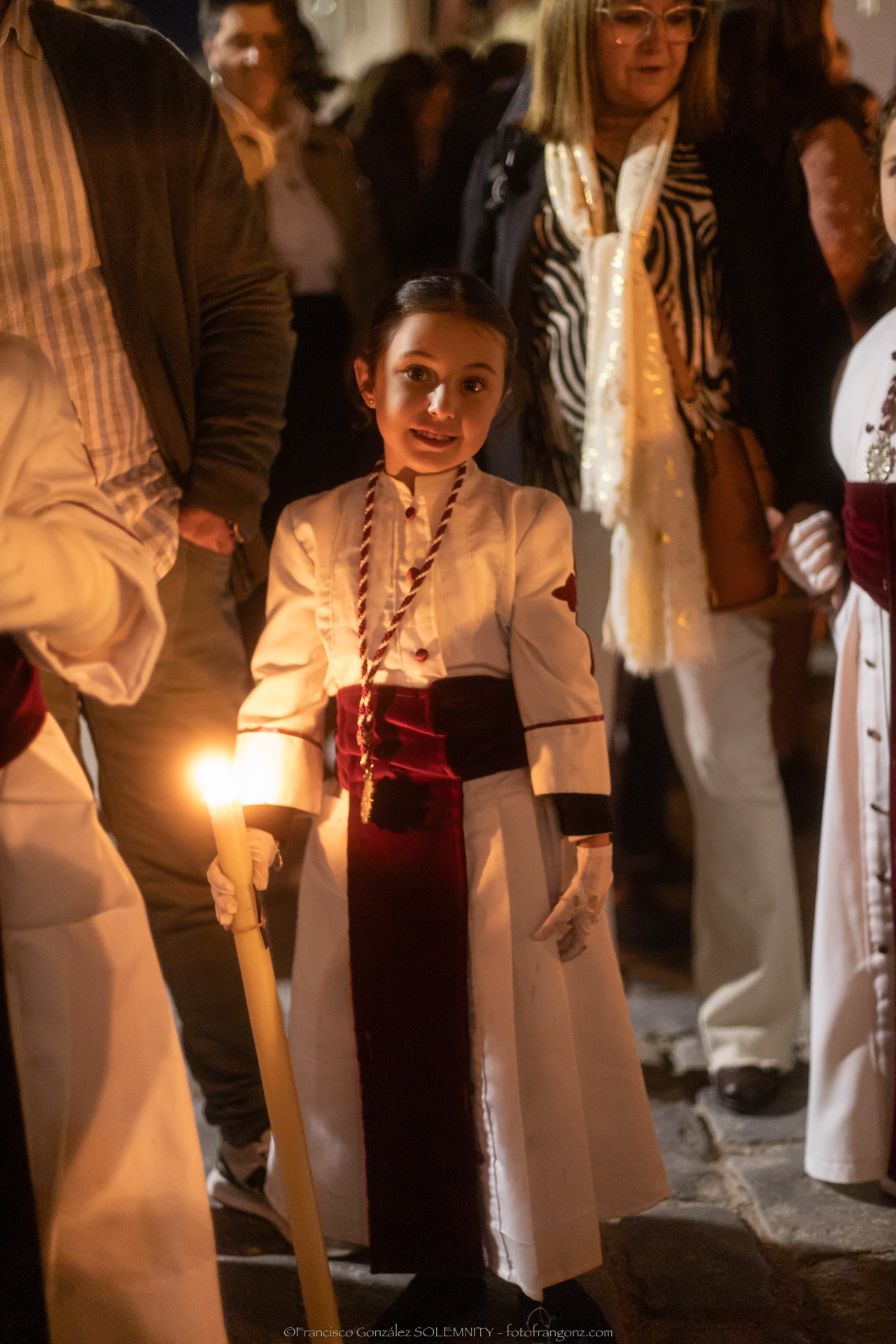
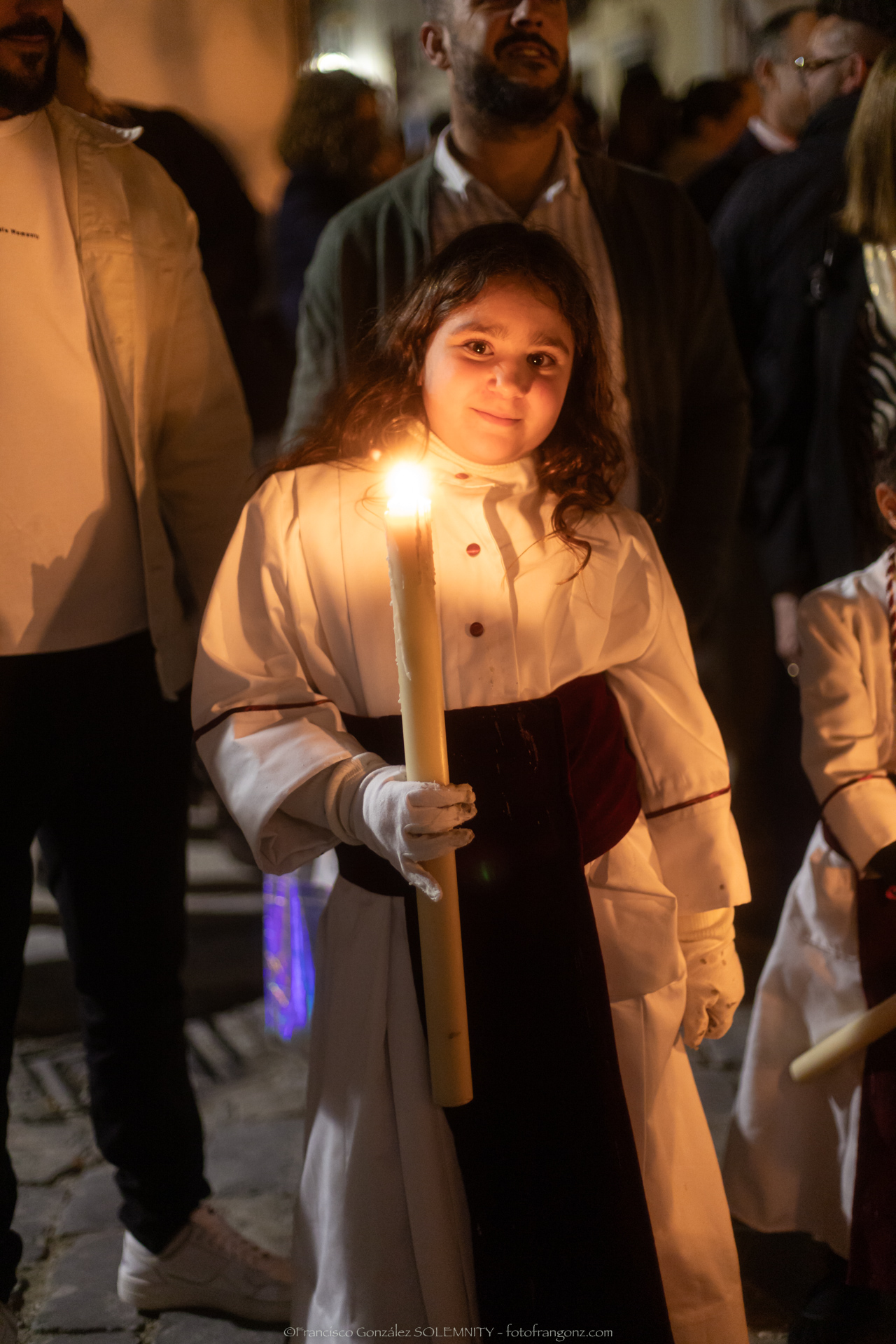
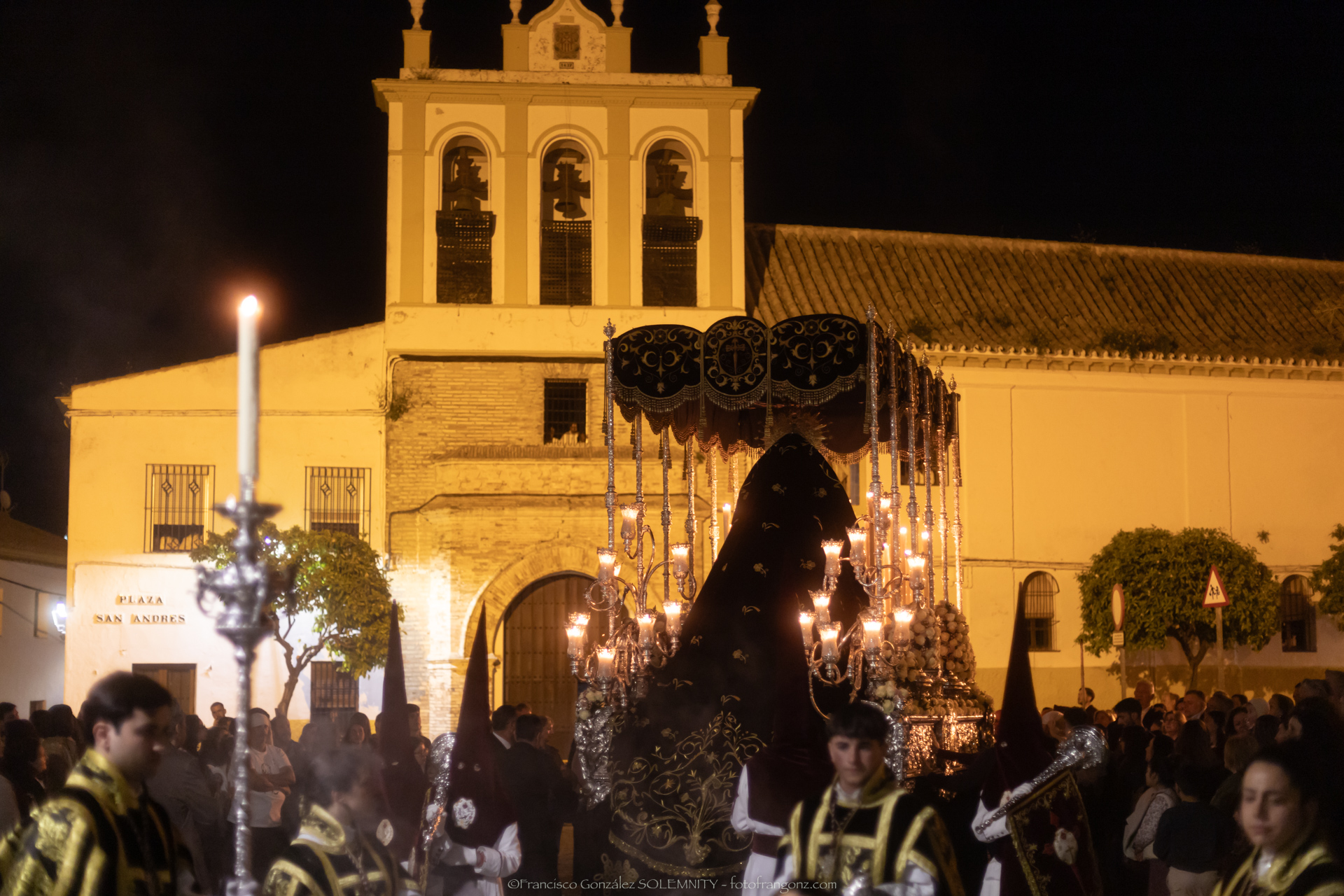
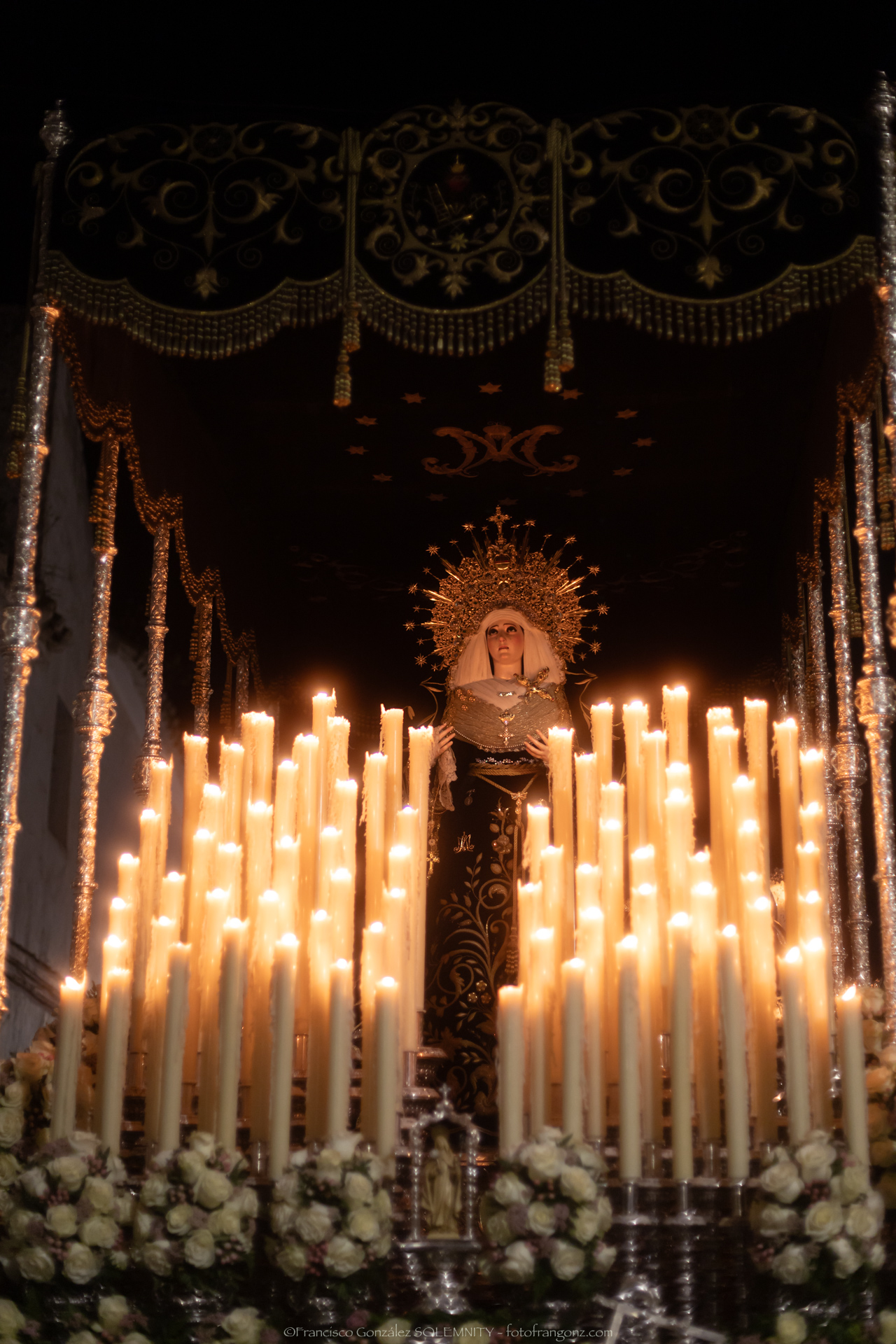
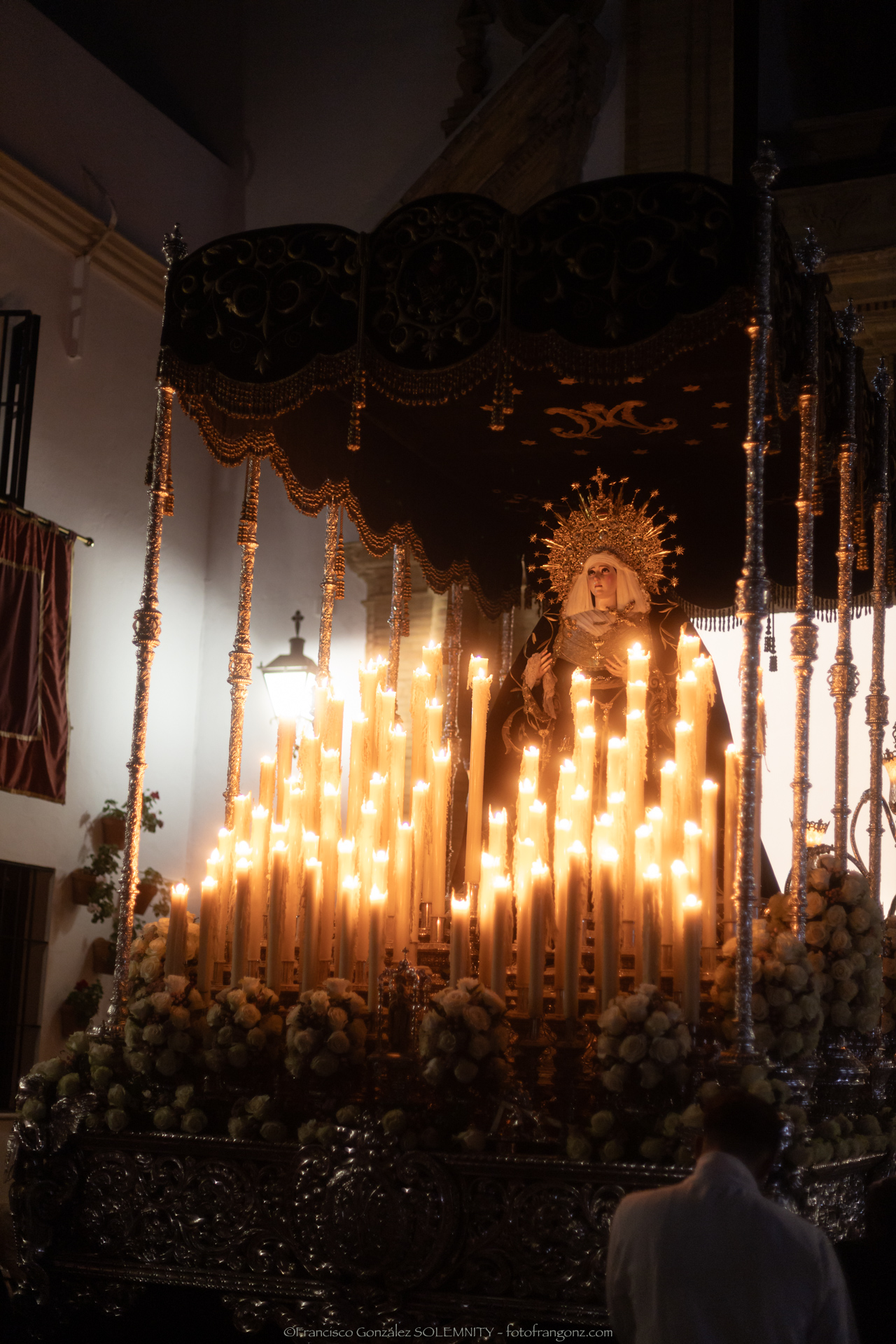
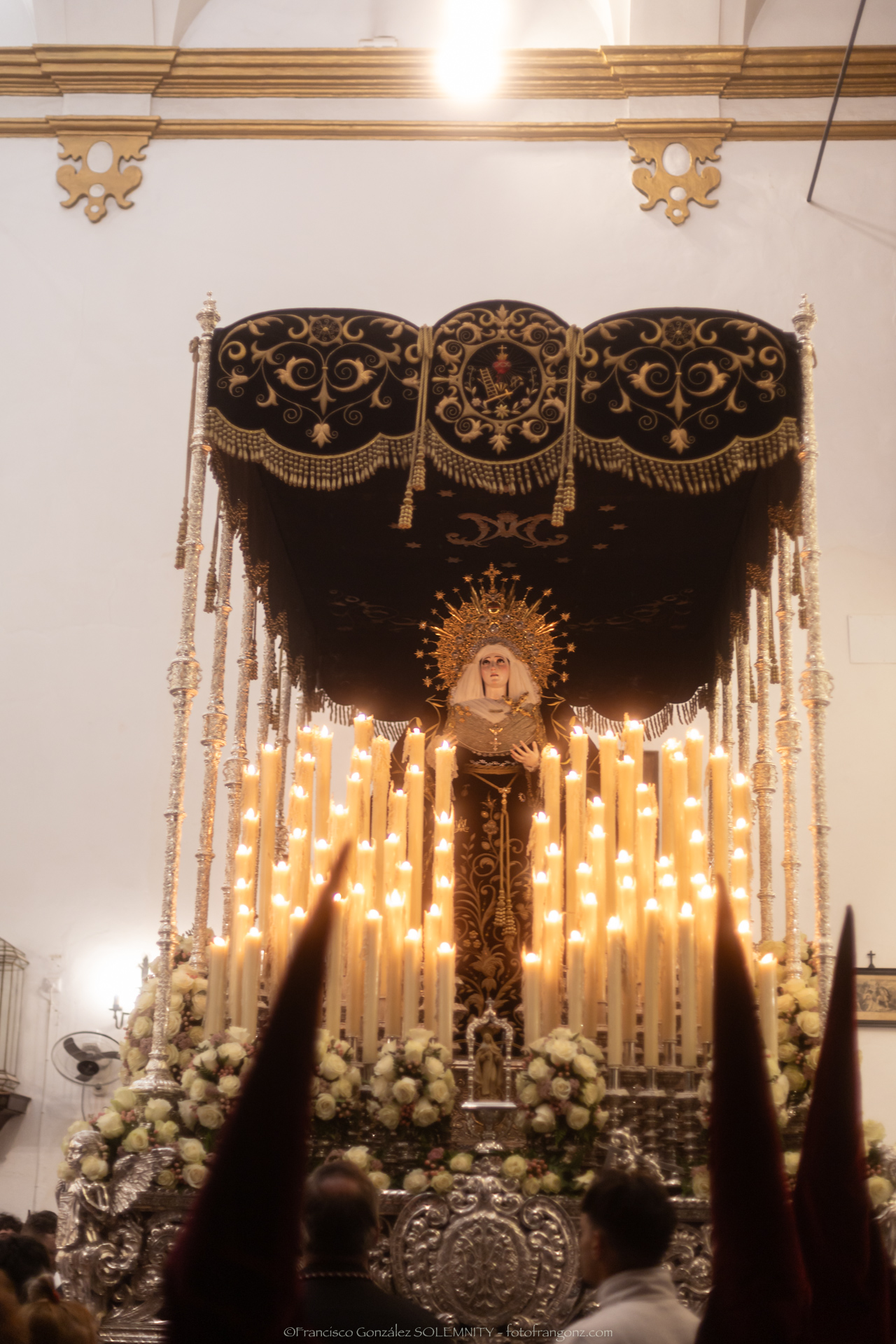
After the band’s float, we can see a new section of Nazarenes, the “section of illusion,” composed of the youngest members of the brotherhood, many of whom are performing their station of penance for the first time. This in turn gives way to the section of Our Lady of Sorrows, “the last novice of Santa Clara,” with her characteristic upward gaze in a gesture of supplication and the spectacular diadem. Originating from an old Servite community, this dolorous image wears this year the restored mantle that ceased to be used in 1996. The team of costaleros, “El Costal de Dolores,” led by foreman David Romero, performs a precise and laborious maneuver, on their knees, in order to pass through the church entrance with the enormous and majestic canopy float, composed of 12 silver poles, a fabric ceiling, ever-lit candelabra, and a floral arrangement made up of off-white mondial roses, hypericum, rice flower, and leather ferns.
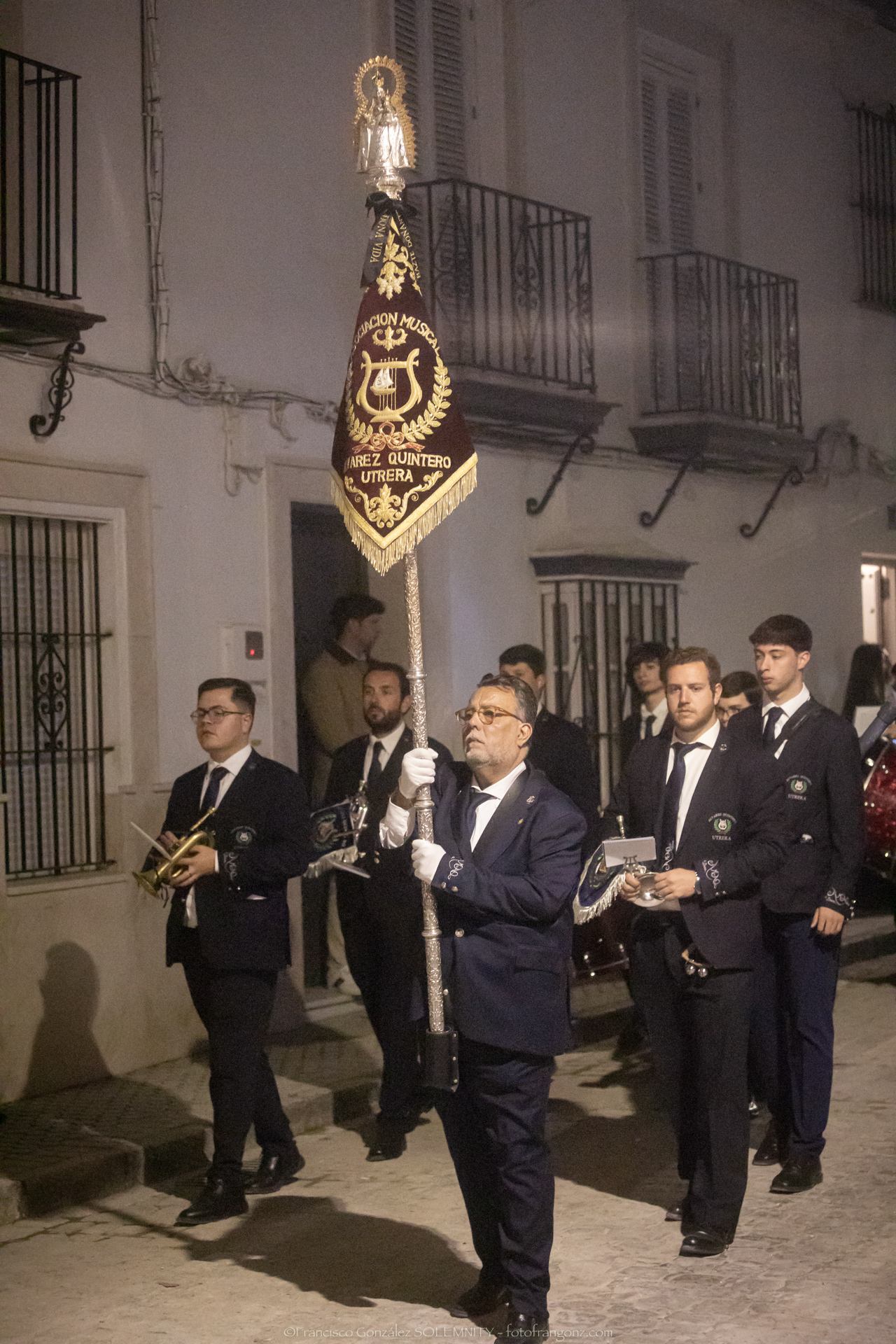
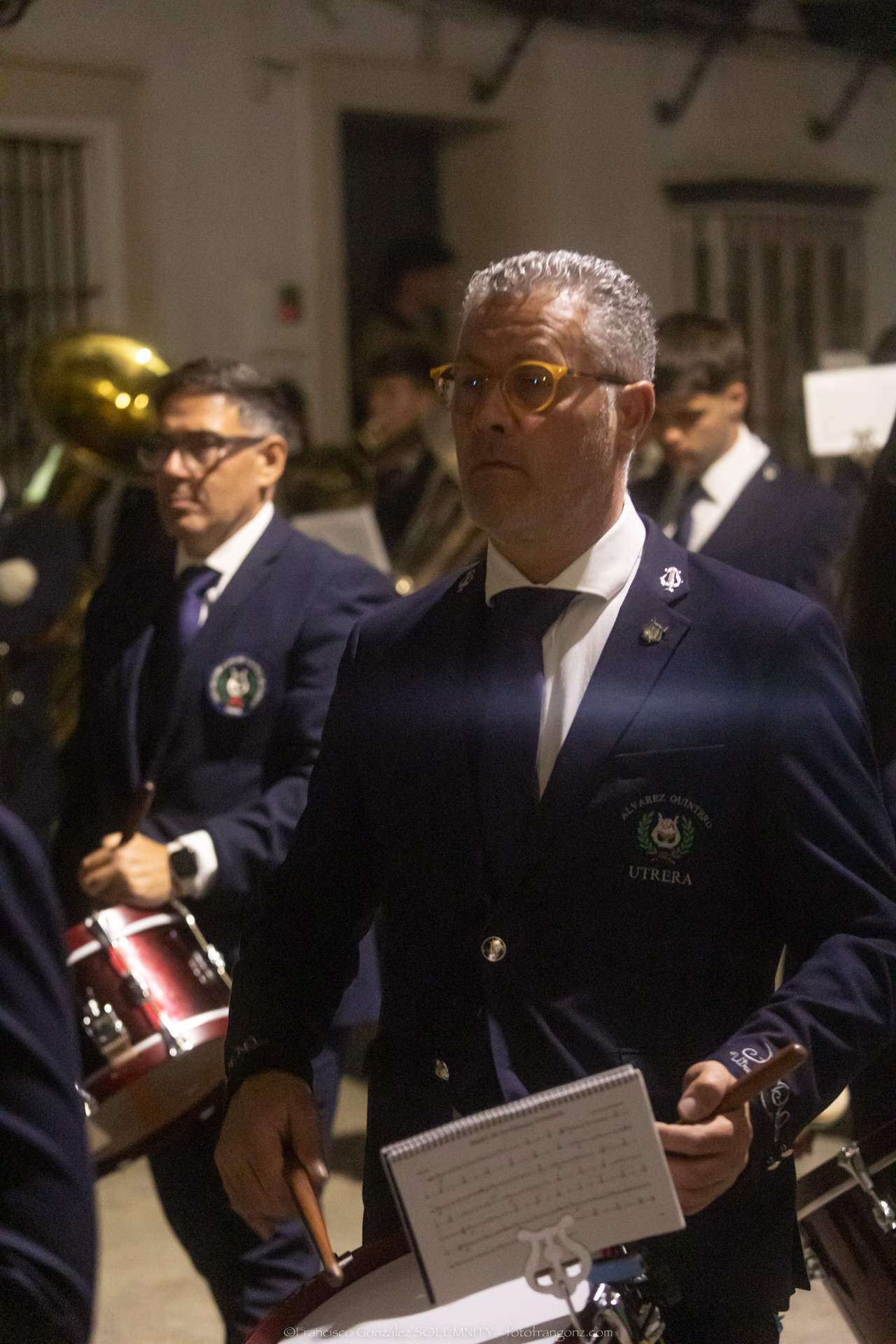
The Asociación Musical Álvarez Quintero of Utrera (Seville) has accompanied the Virgin of Sorrows for the first time, although it is not the first time it has performed in Marchena, as it had already accompanied the Virgin of Solitude on Holy Saturday in the 1990s.
The Brotherhood followed its traditional route: Santa Clara, Niño de Marchena (Guillermo Street), San Sebastián, Cantillos, San Francisco, Carrera, Plaza de San Andrés, Las Torres, Cantillos, San Sebastián, Menéndez Pelayo (also known as El Cura Street), Santa Clara (entrance).
The return under the light of the full moon was extremely moving. The Lord entered at 00:15 while the Arroquia Martínez band performed “La Esperanza de María” (by Alejandro Blanco) and “Costalero” (by Martín Salas), and the Virgin at 00:50 while the Álvarez Quintero band performed “La Madrugá” (by Abel Moreno). I recommend watching the full video because the entrance is truly sublime and moving. That said, as always, I recommend selecting 4K quality (2160p, in the gear icon) because YouTube compresses the video too much, causing it to lose too much quality, and it is a shame because I put a great deal of effort into making it look like a cinema film, only for YouTube to spoil it.

Related posts:
 Christ of Humility – Marchena Holy Week 2023
 Holy Wednesday – Humildad Marchena 2022
 Procession of Humility and Patience Marchena 2025
 Our Father Jesus Nazarene and Mary Most Holy of Tears Marchena Seville Holy Week 2022
 Procession of True Cross and Mary Most Holy of Hope Crowned in Marchena Seville Holy Week 2022
 Holy Thursday – Sweet Name of Jesus Marchena Seville Holy Week 2022
 Sweet Name of Jesus – Holy Week Marchena 2023
 Christ San Pedro – Marchena Holy Week 2023
 Via Crucis of the Holy Burial Marchena 2025
 Holy Thursday in Marchena: The “Dulce Nombre” Procession 2025