

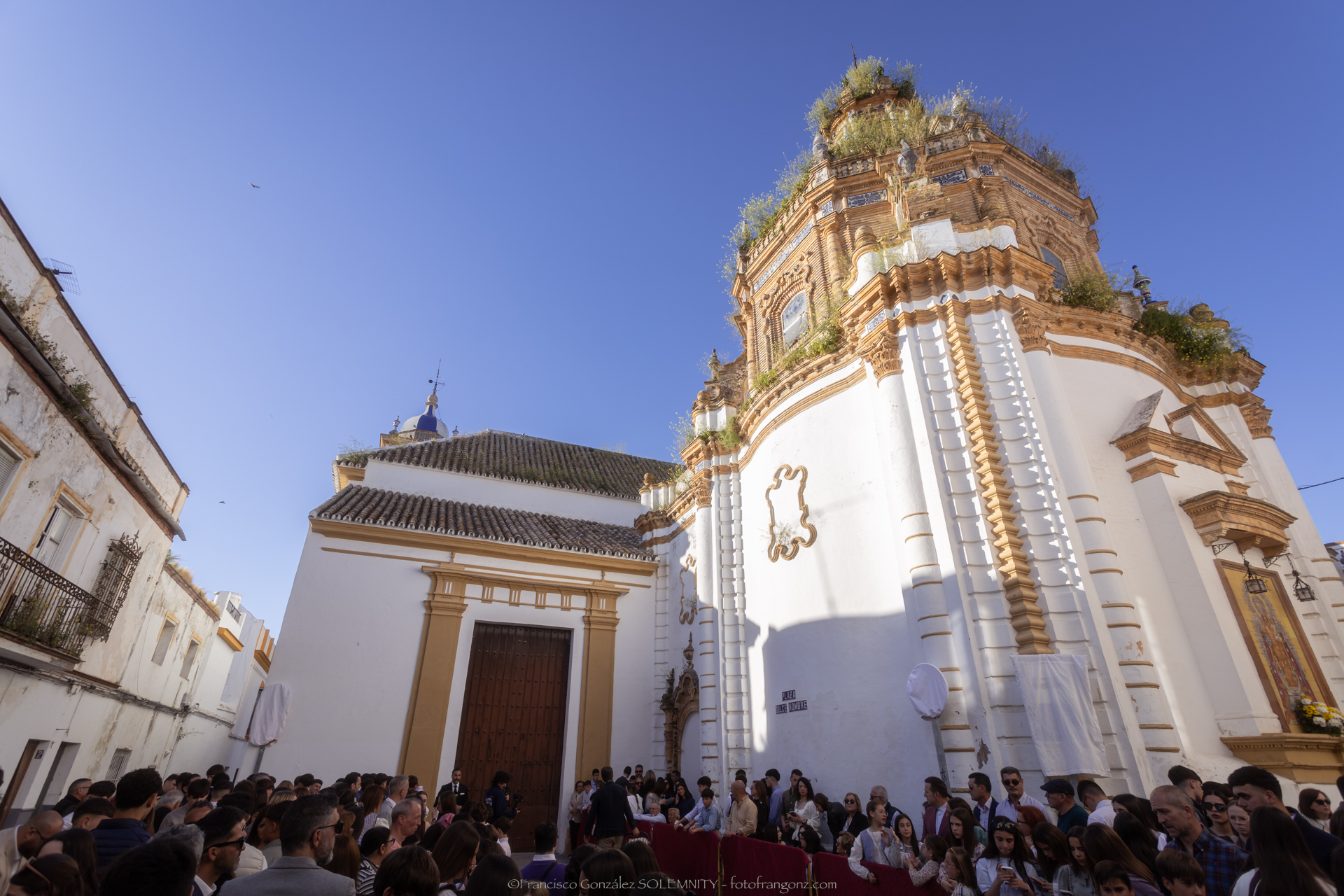
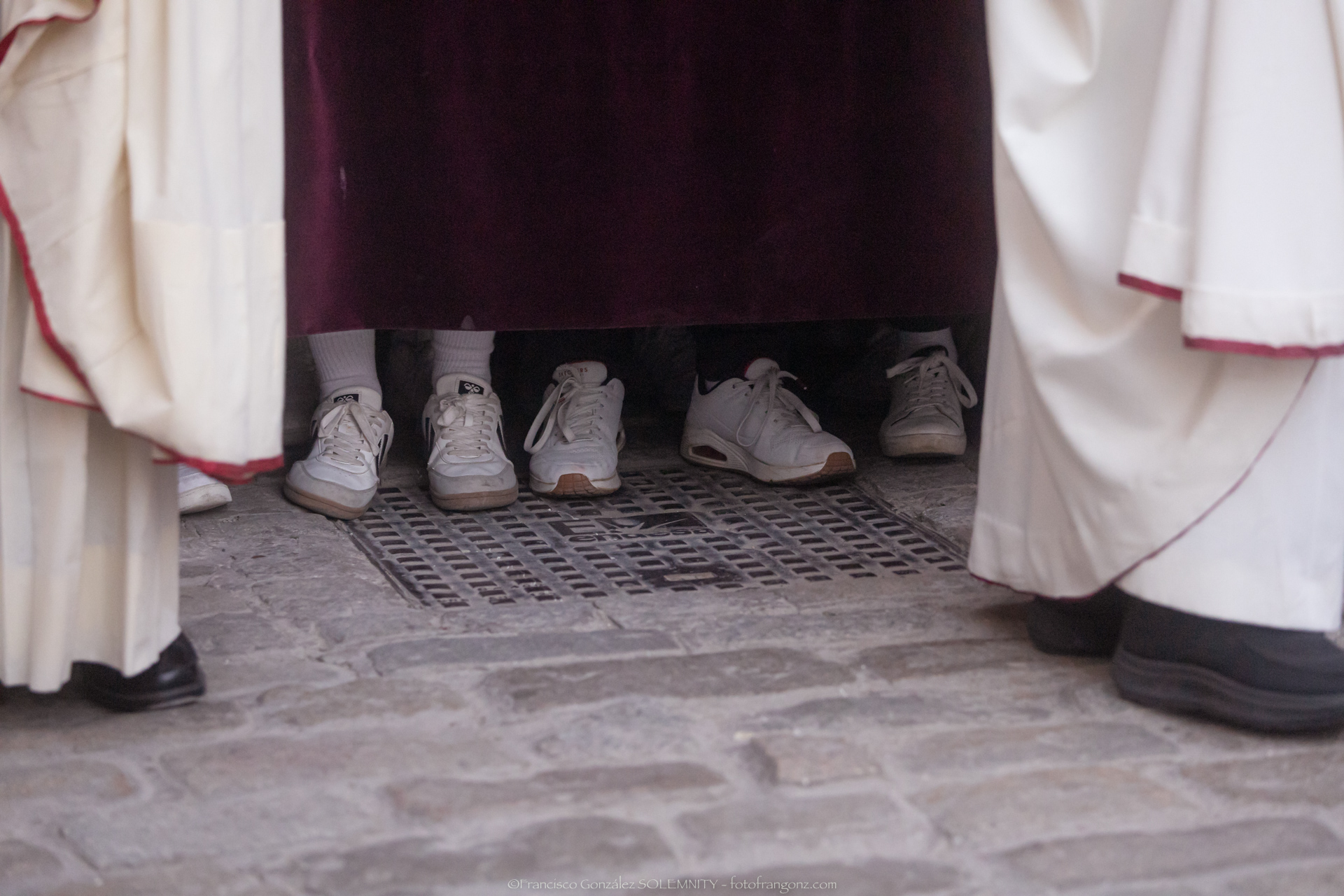
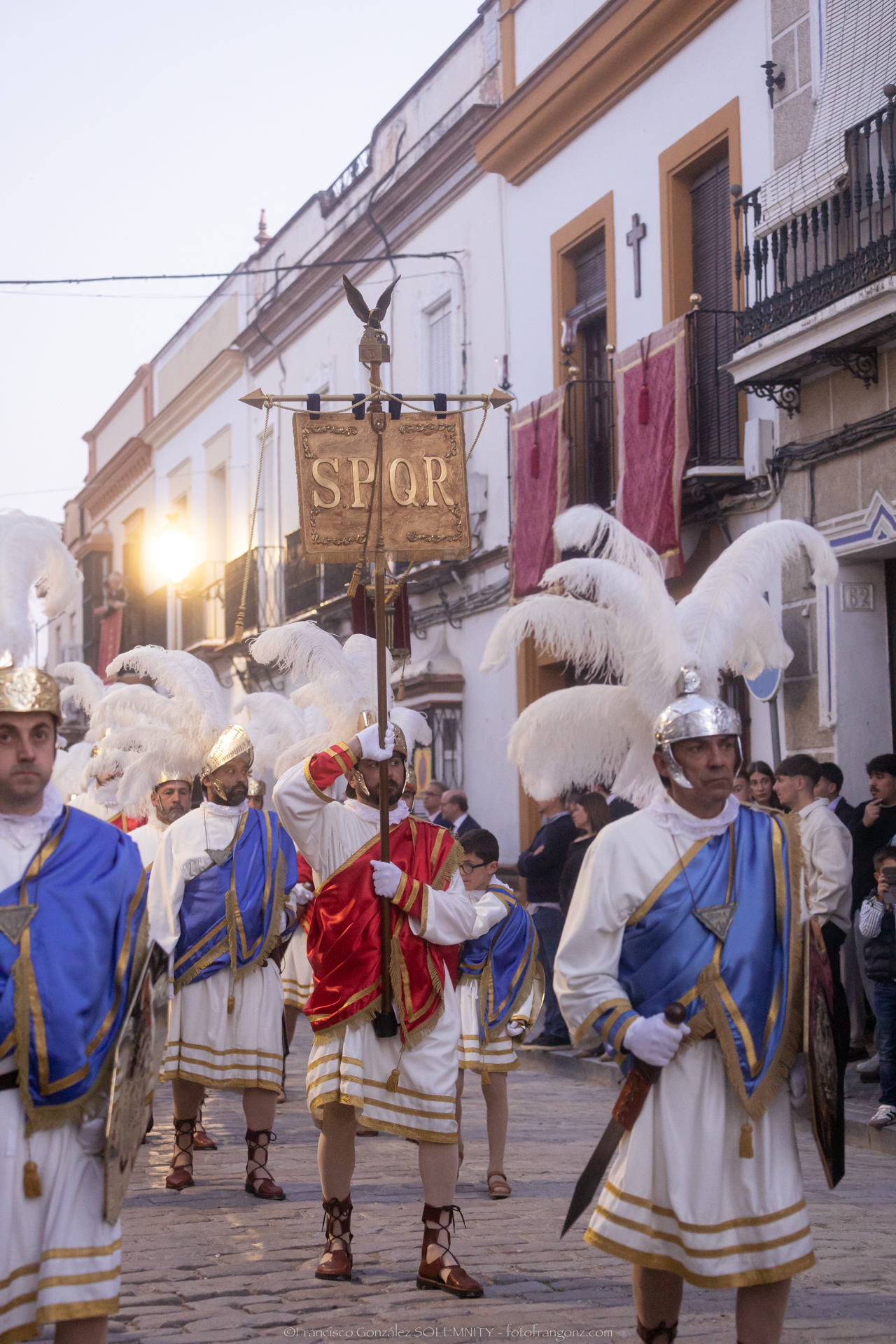
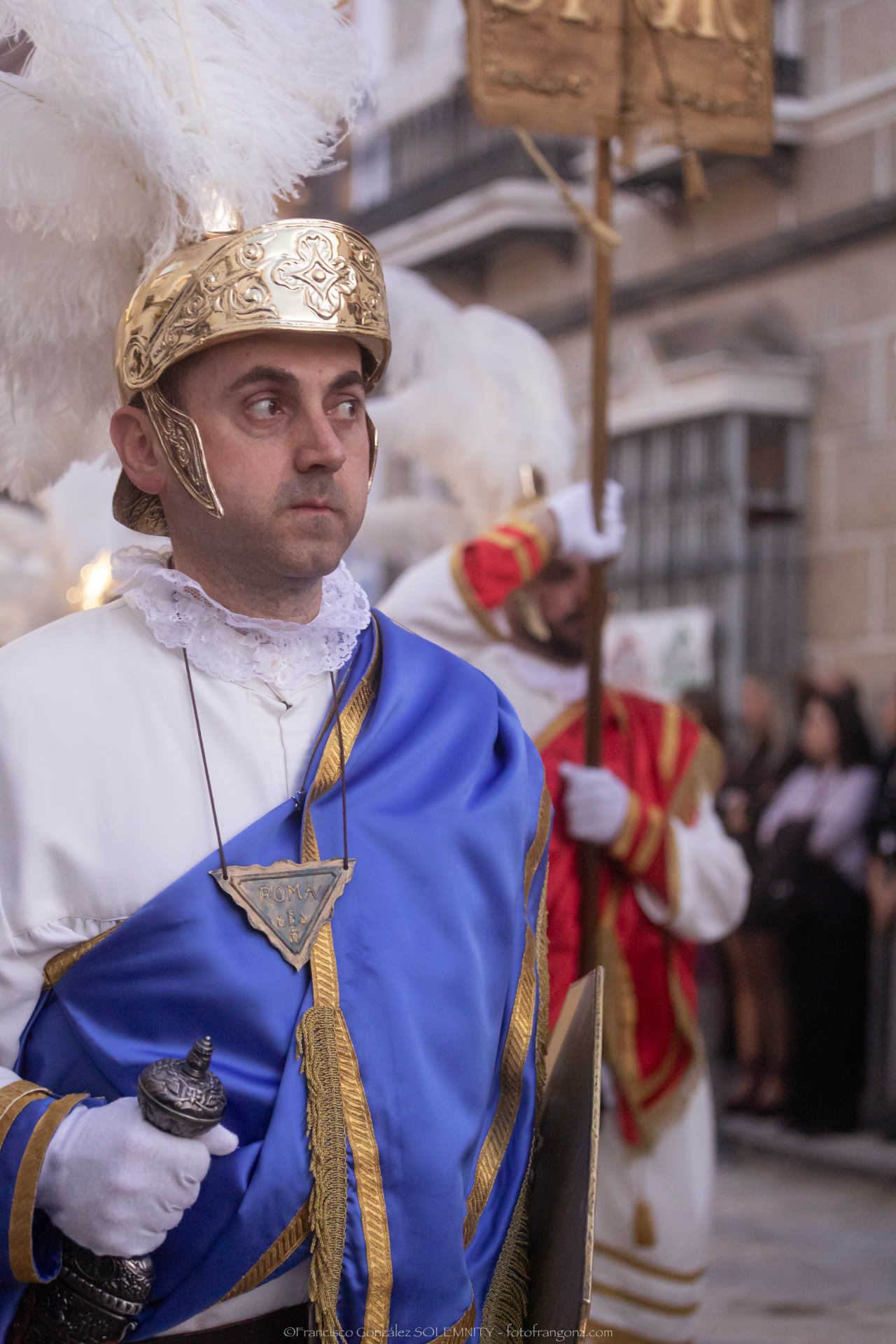
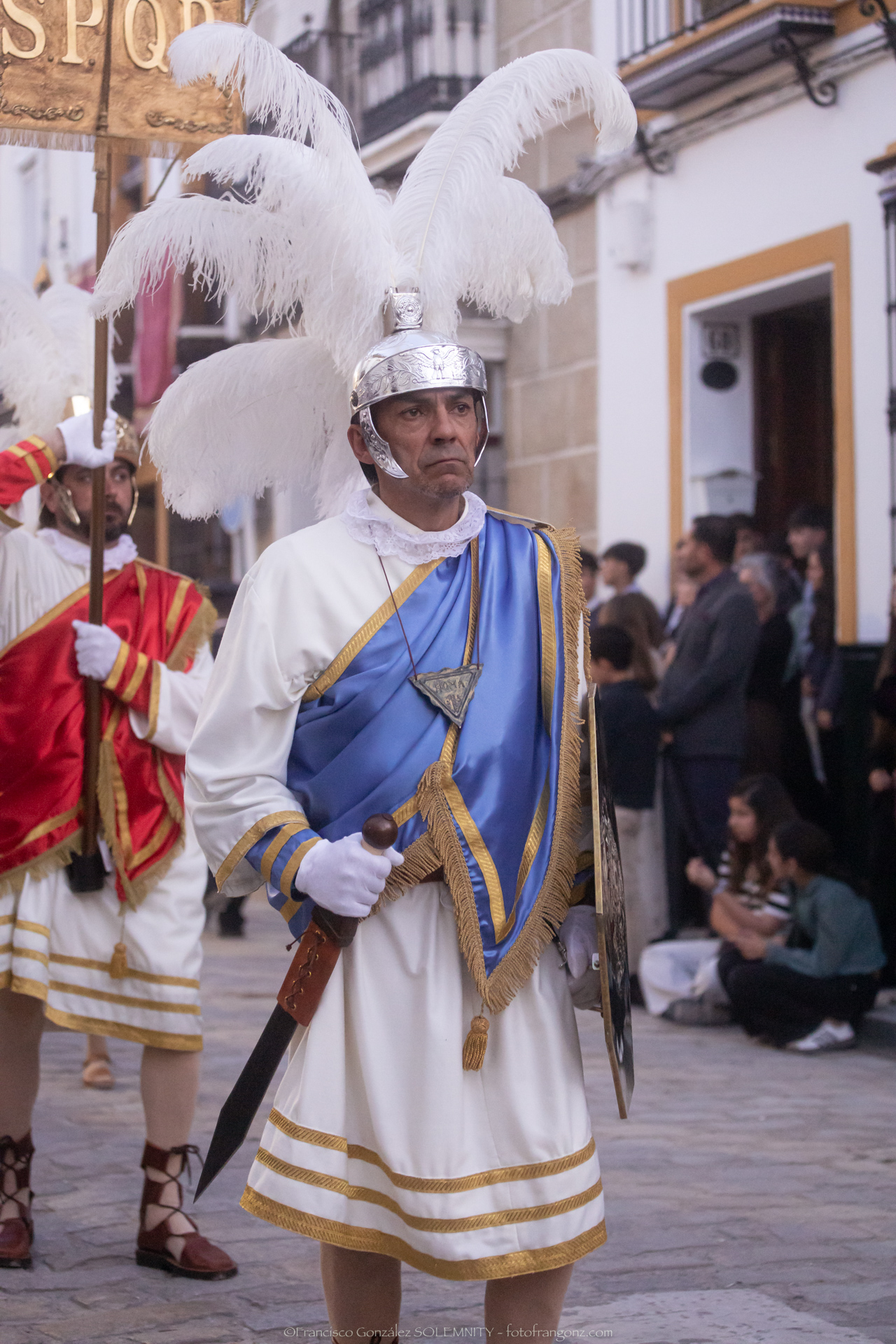
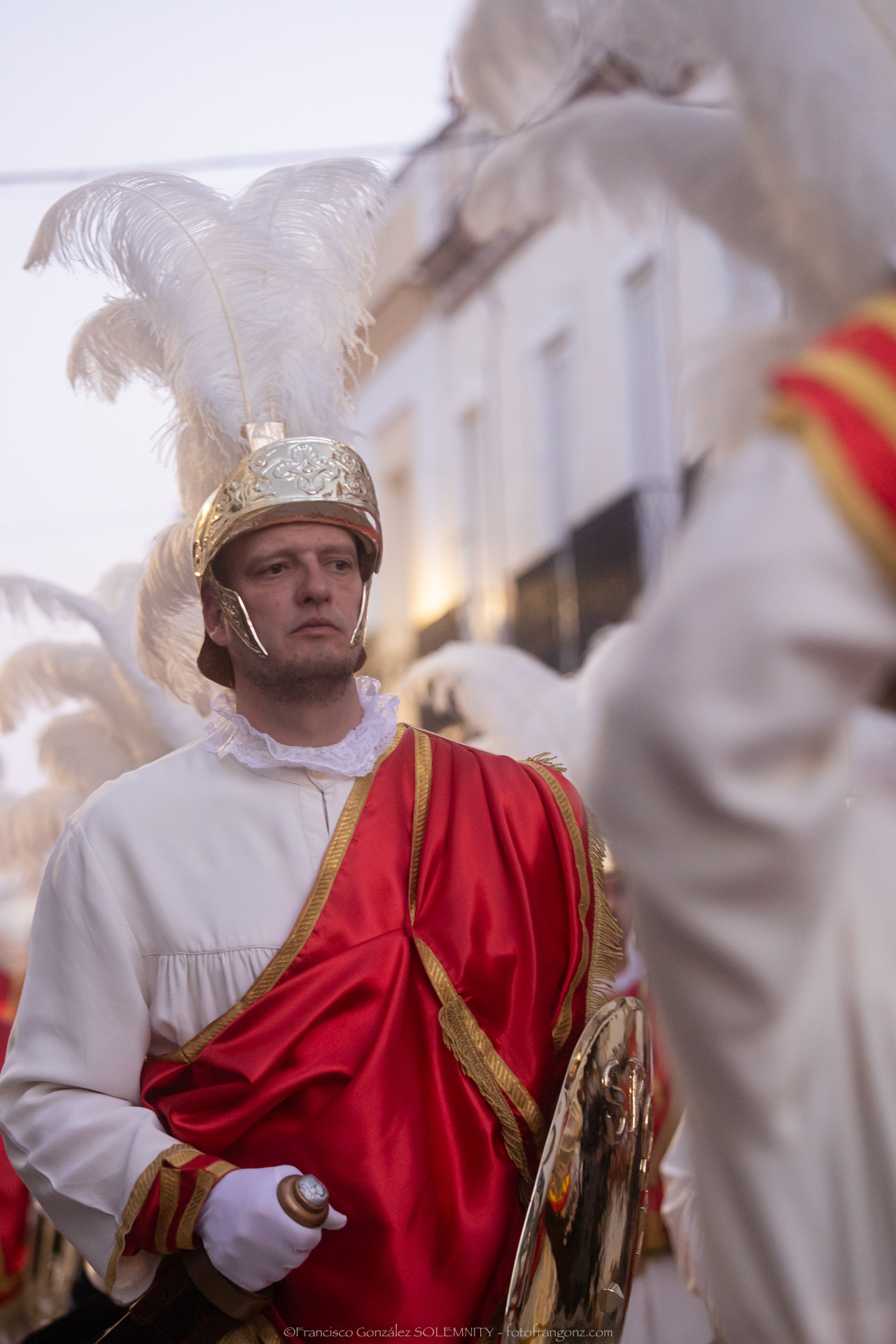
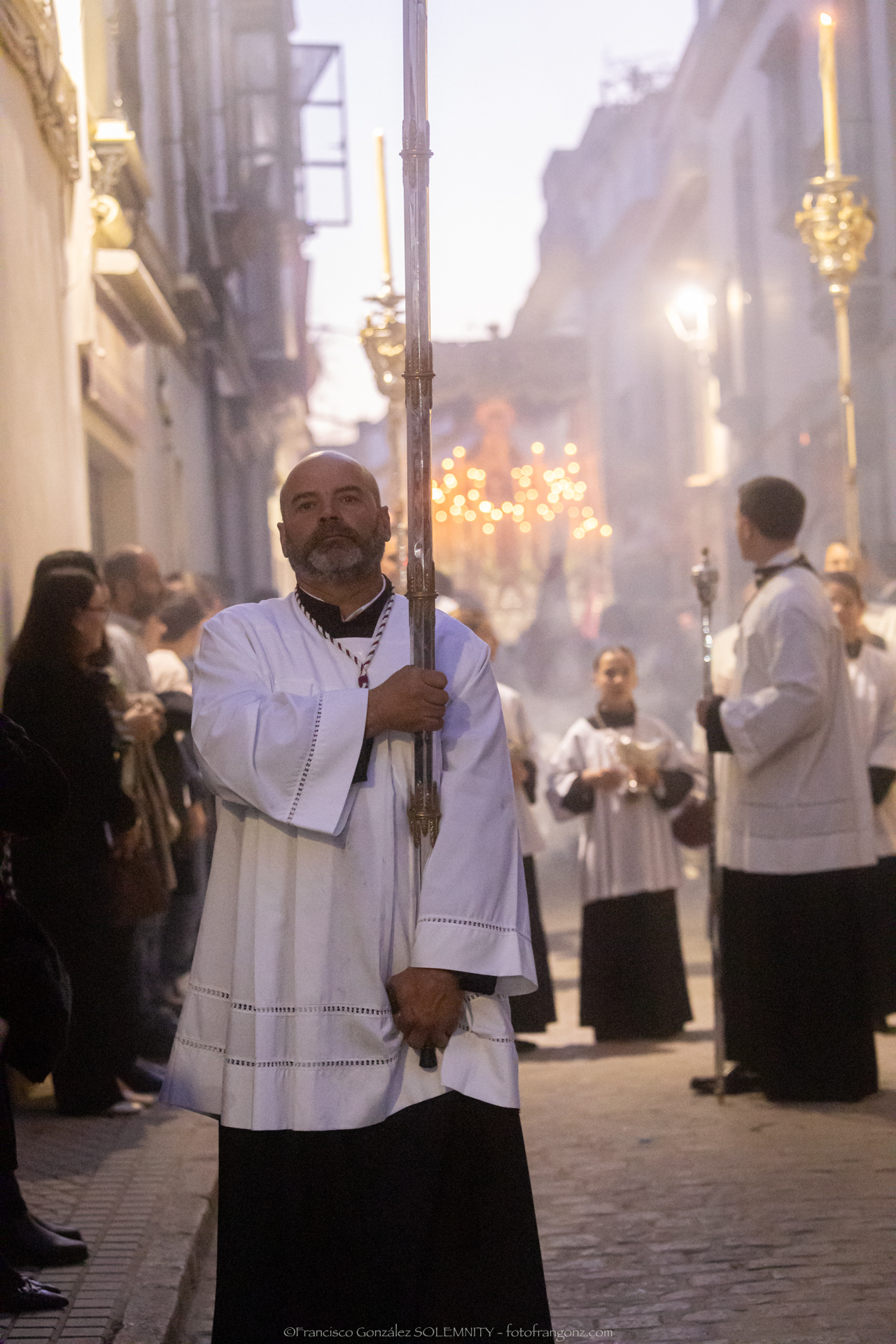
Under a radiant sun and in a bustling square on 2 April 2026, Holy Thursday, the Hermandad del Dulce Nombre de Jesús y María Santísima de la Piedad (Brotherhood of the Sweet Name of Jesus and Mary Most Holy of Mercy) of Marchena (Seville, Andalusia, Spain) carried out its station of penance. This year the brotherhood had a total of 772 members in the streets, which obliged the Roman Guard to form up directly in the street due to the lack of space inside the church.
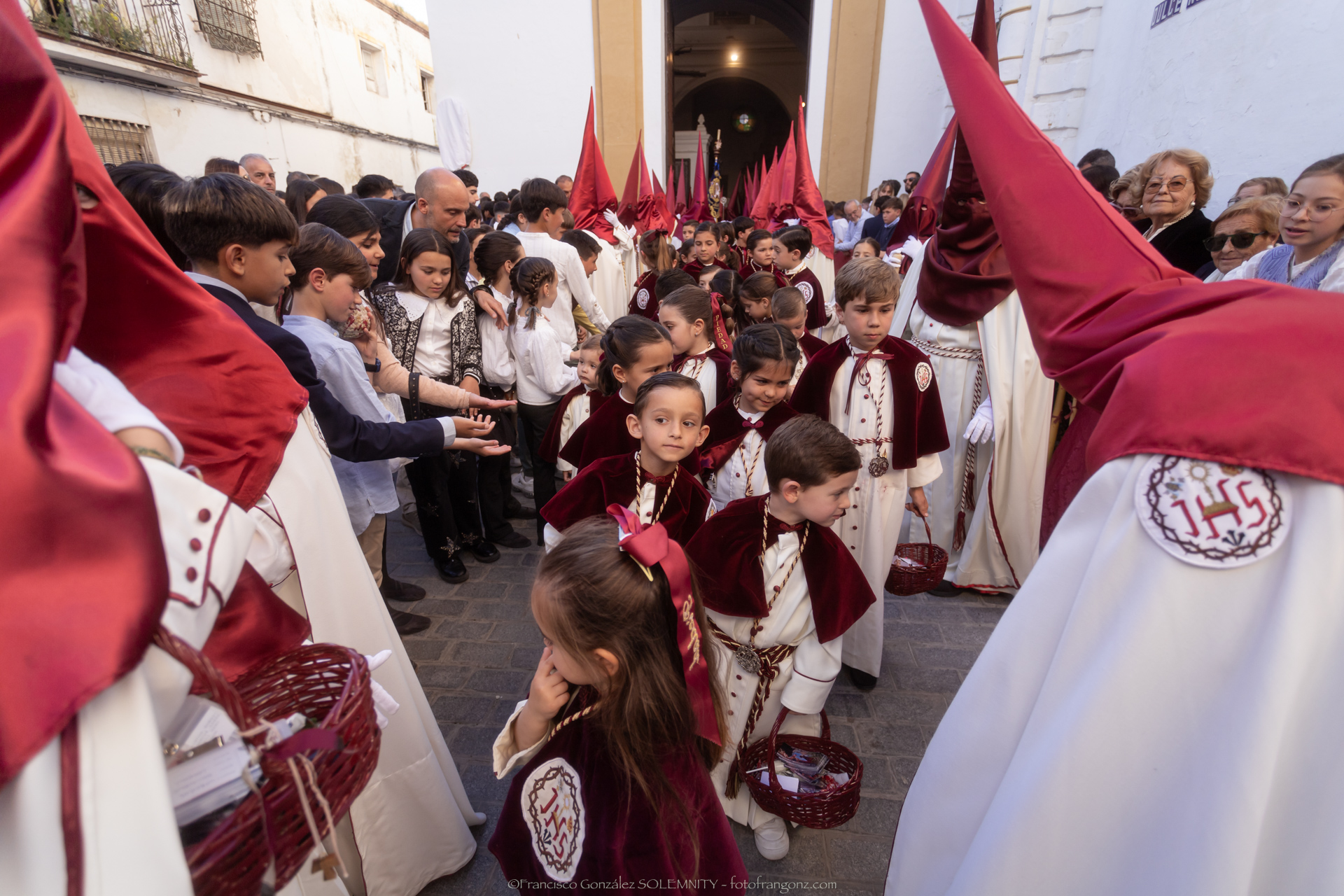
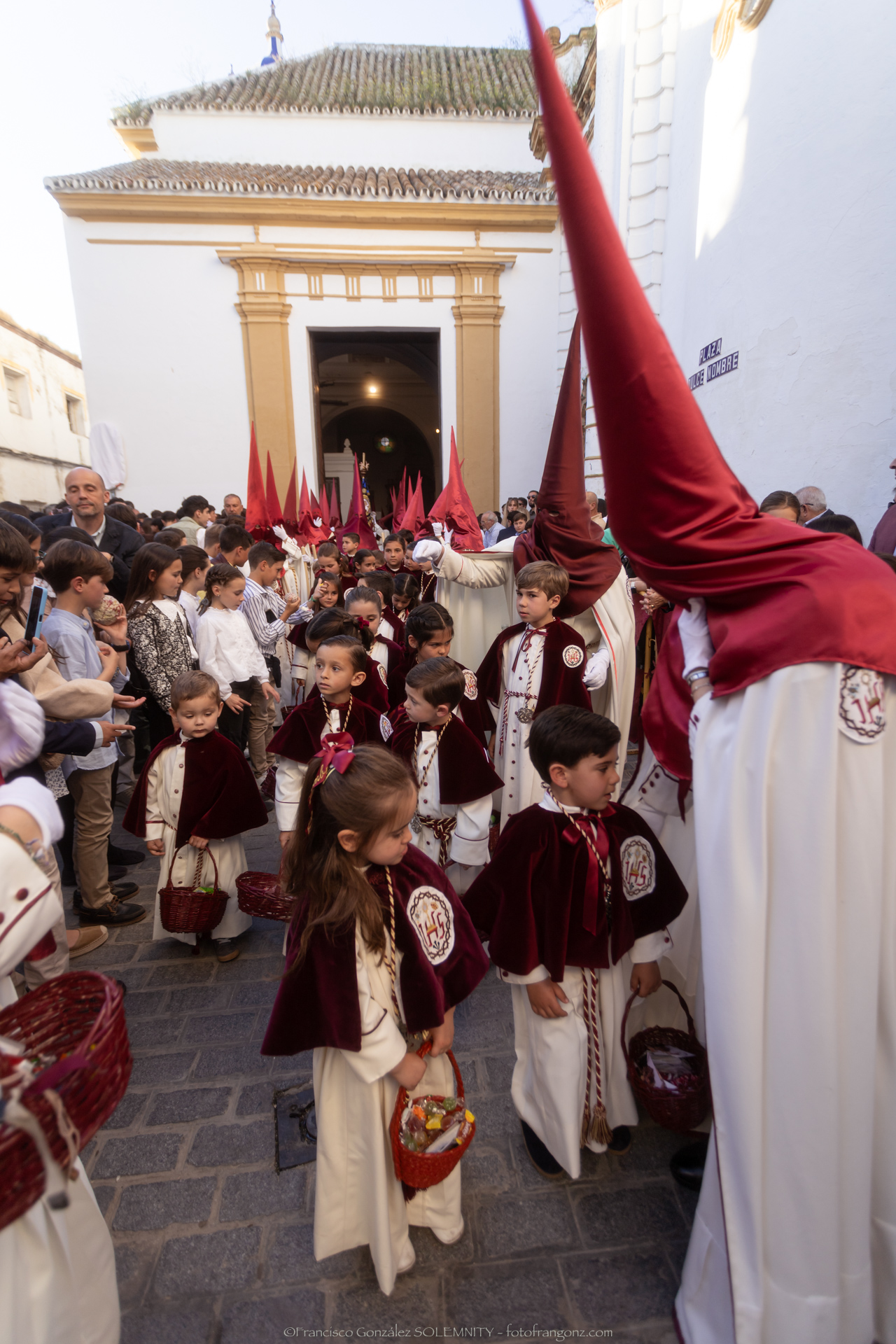
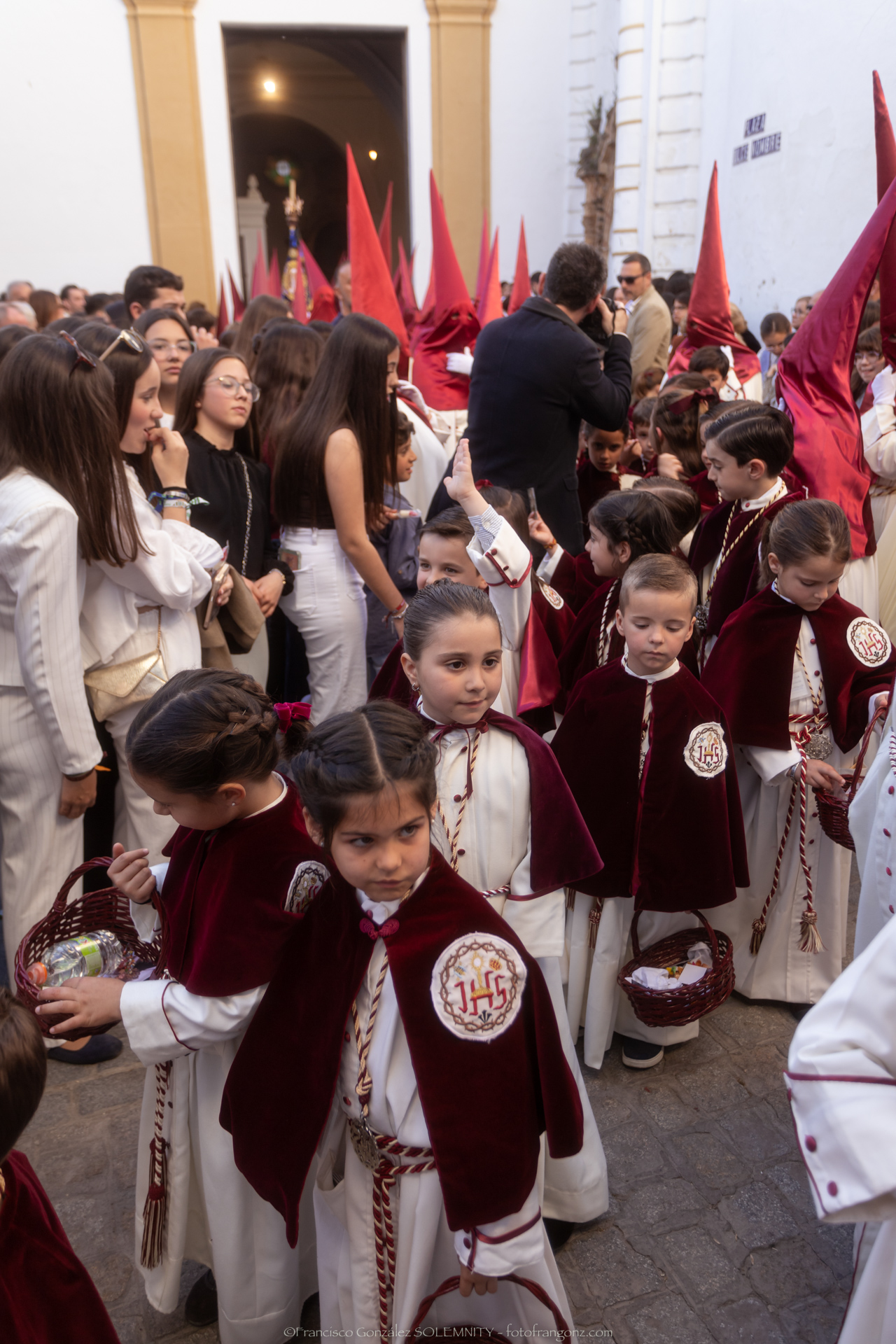
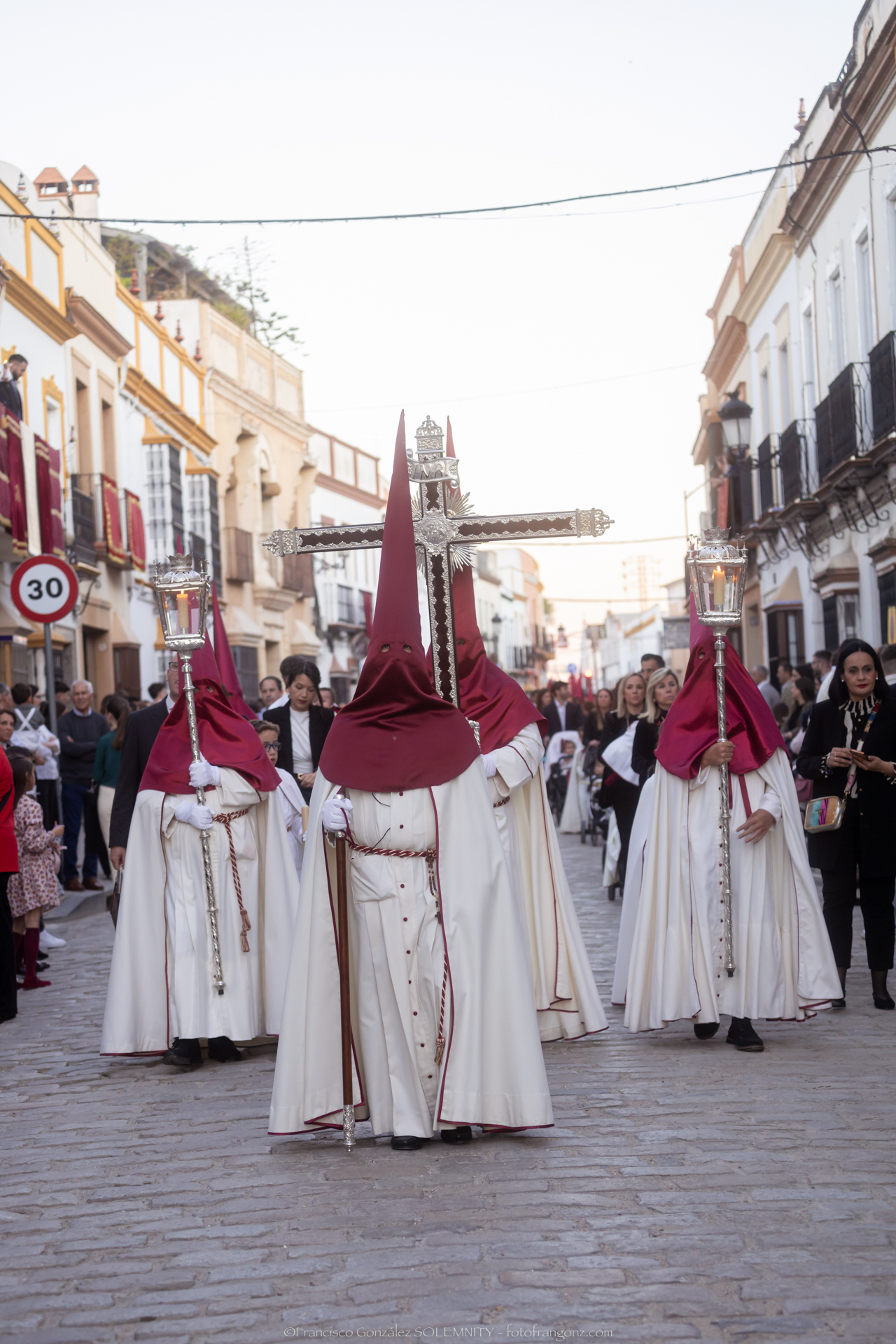
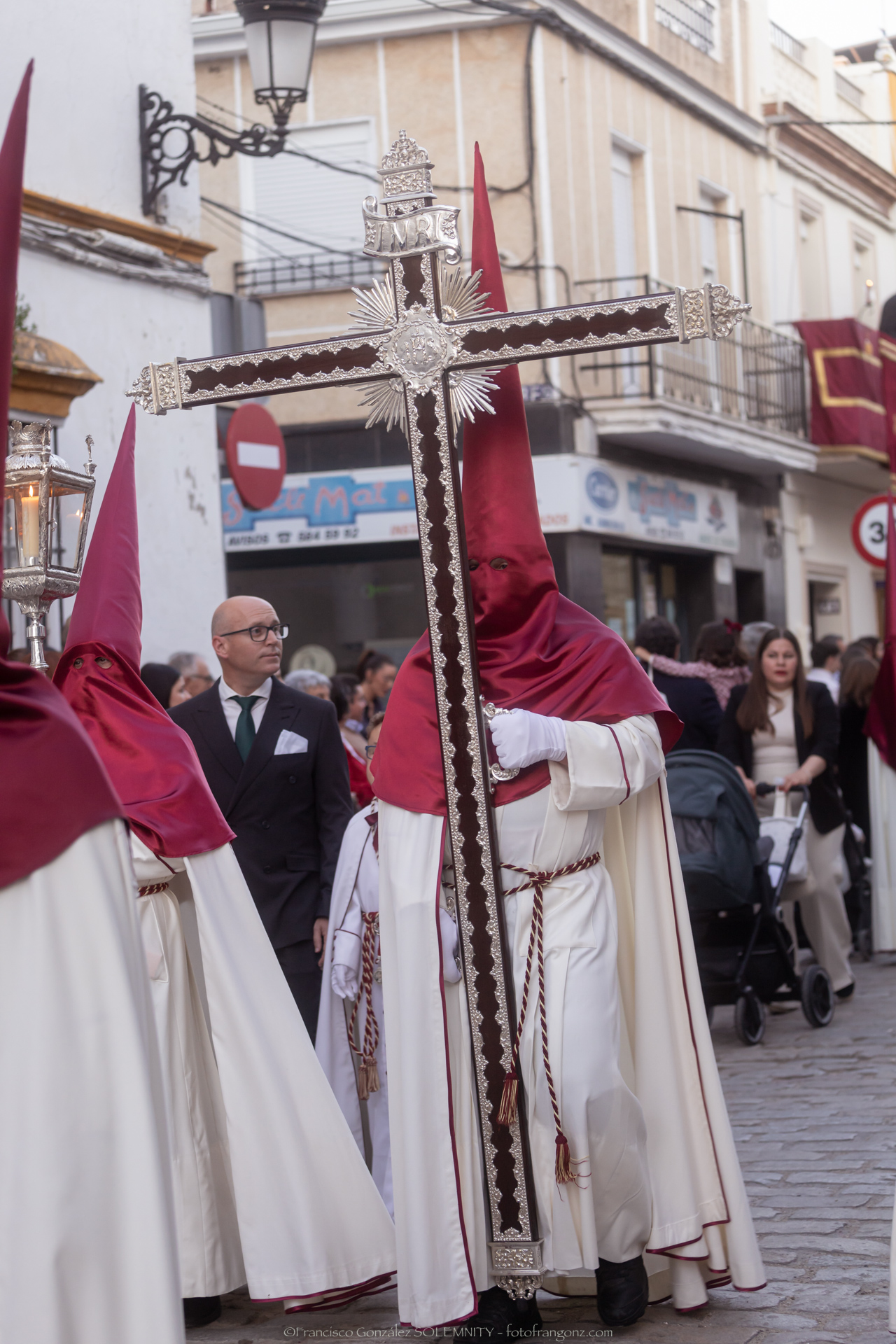
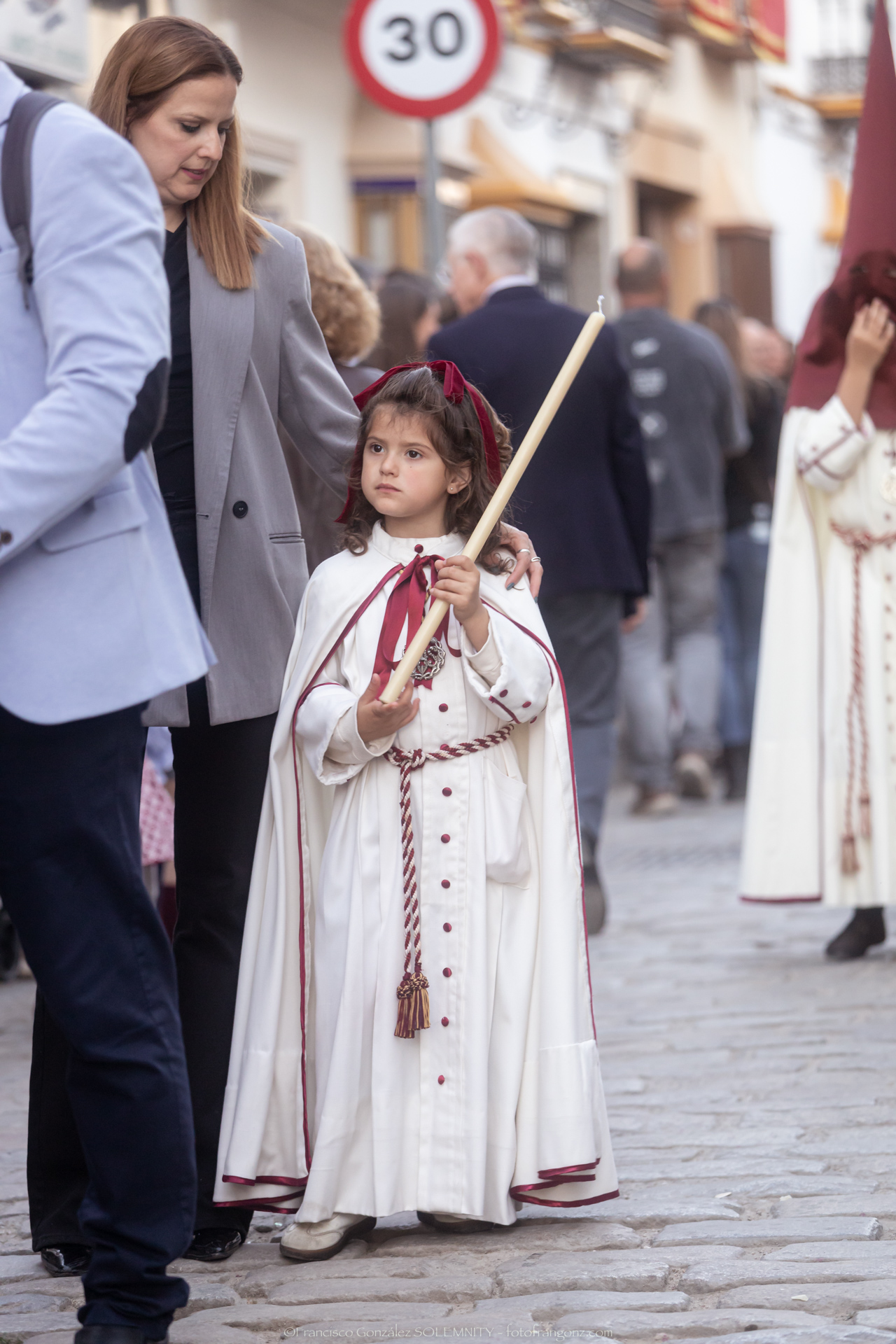
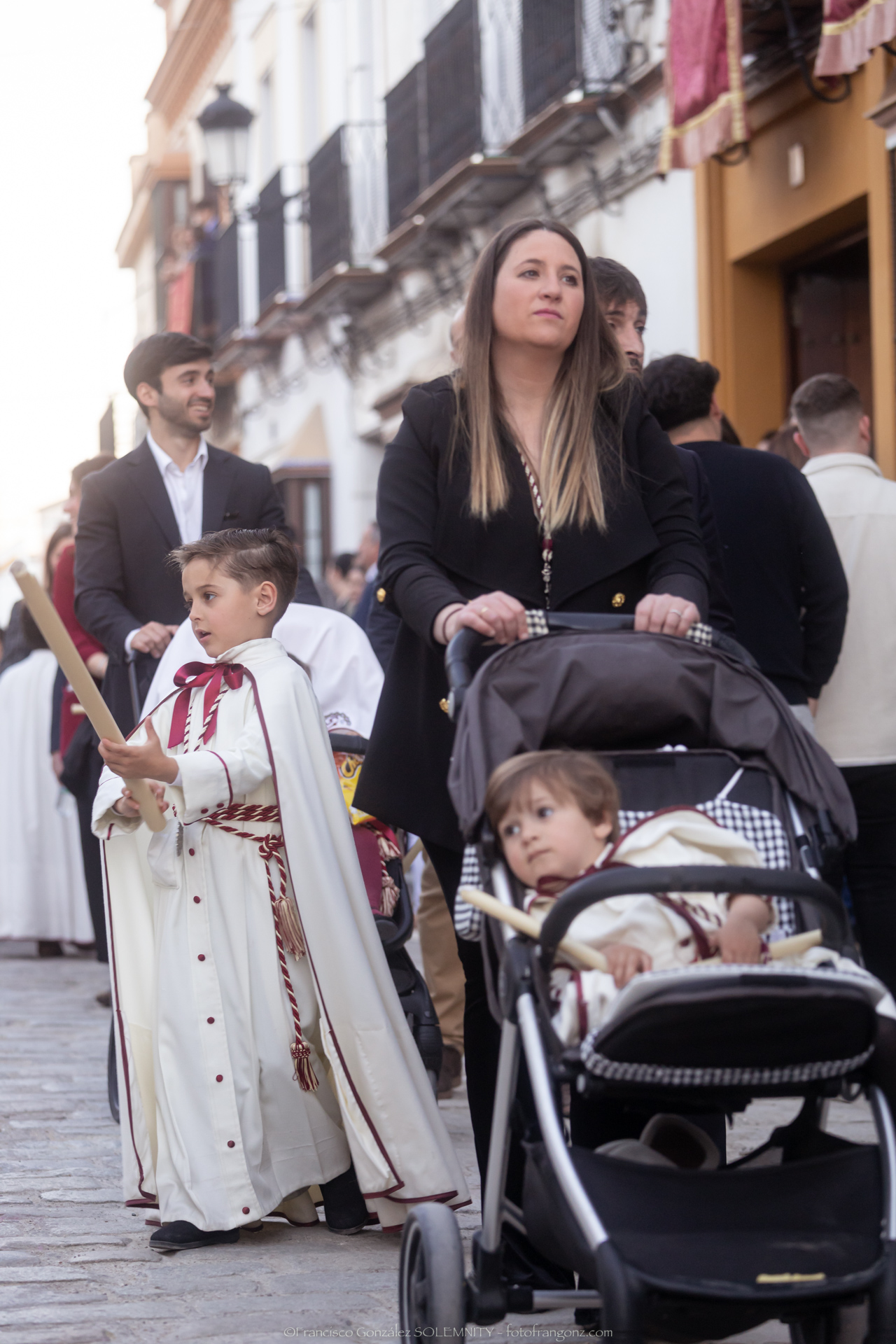
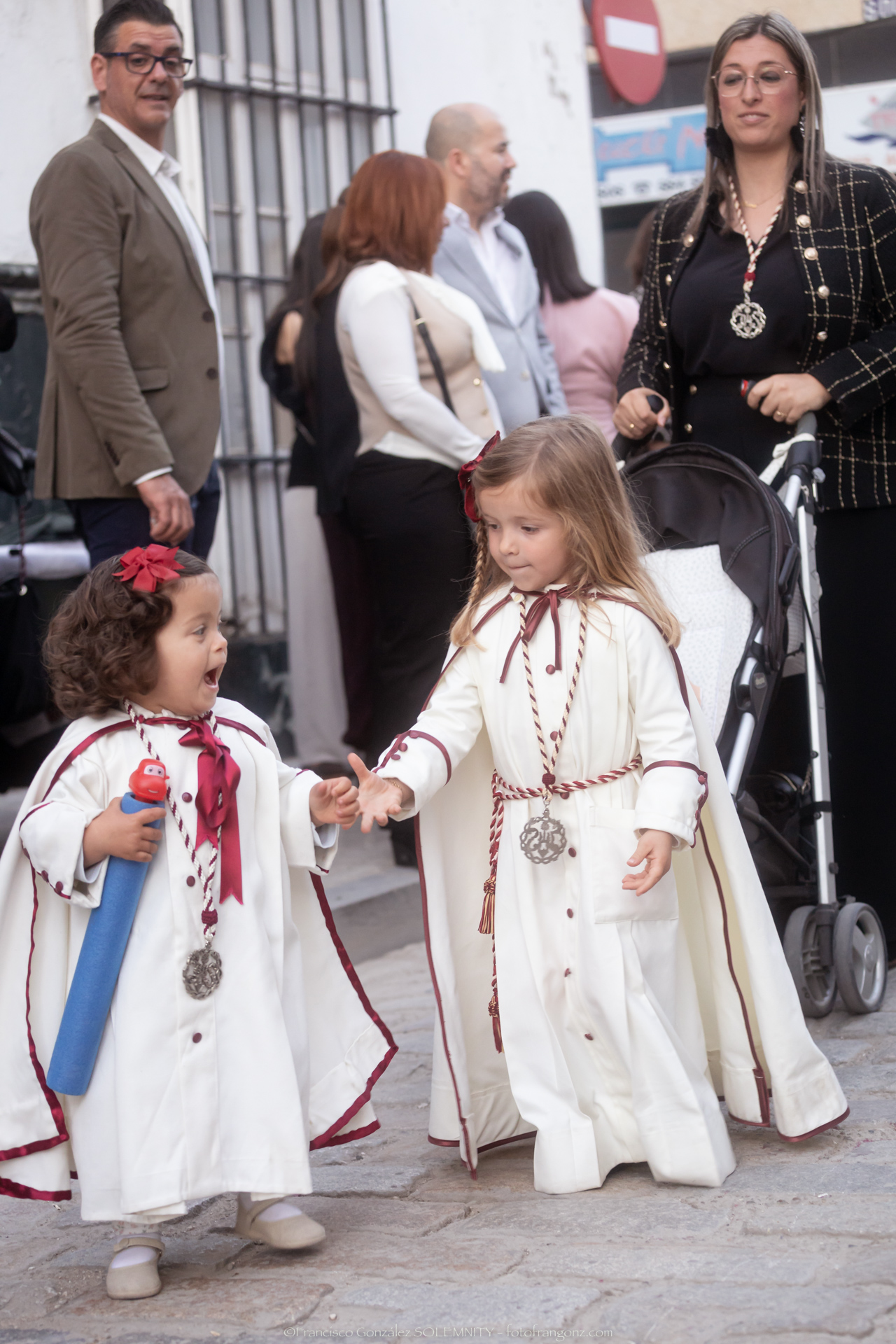
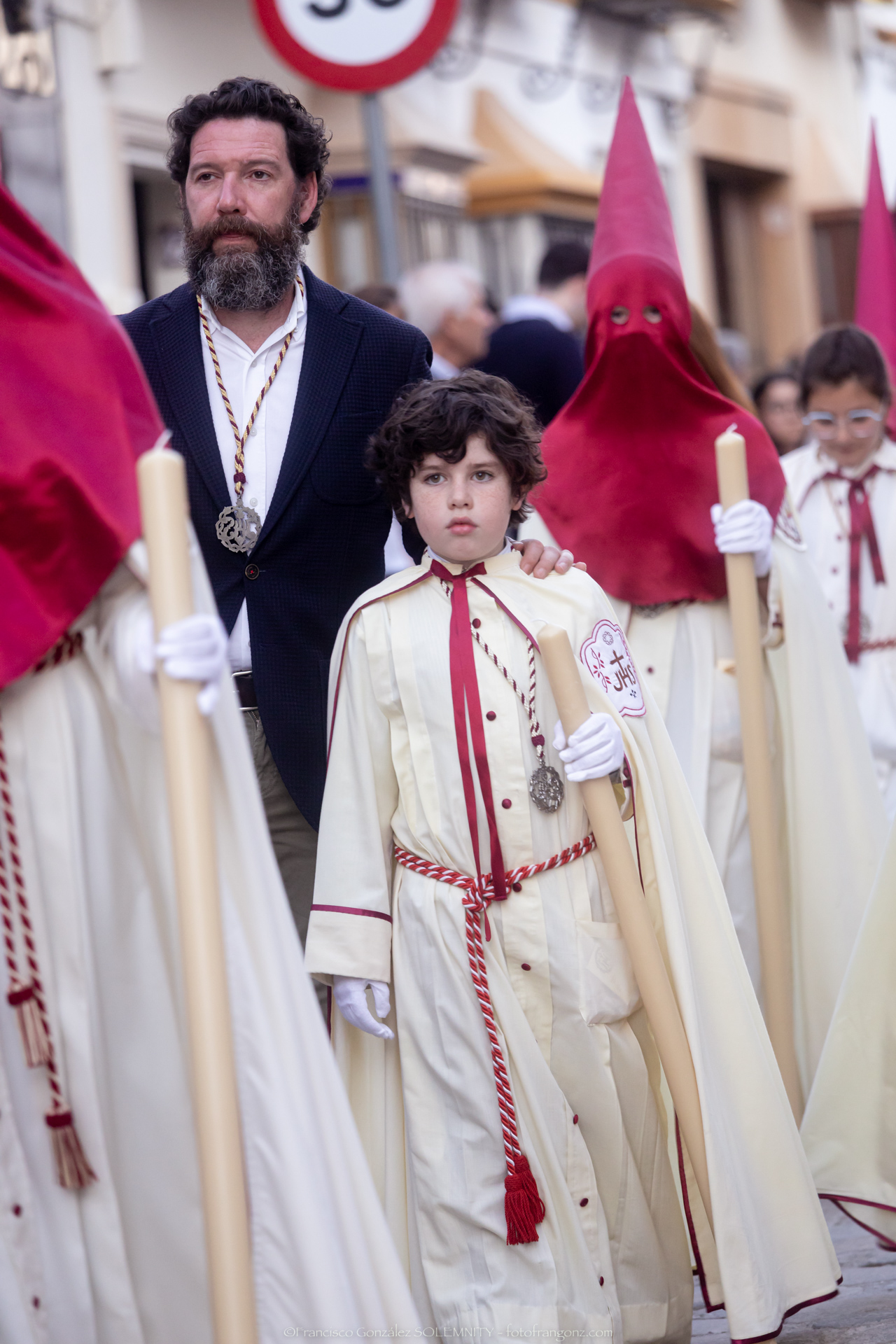
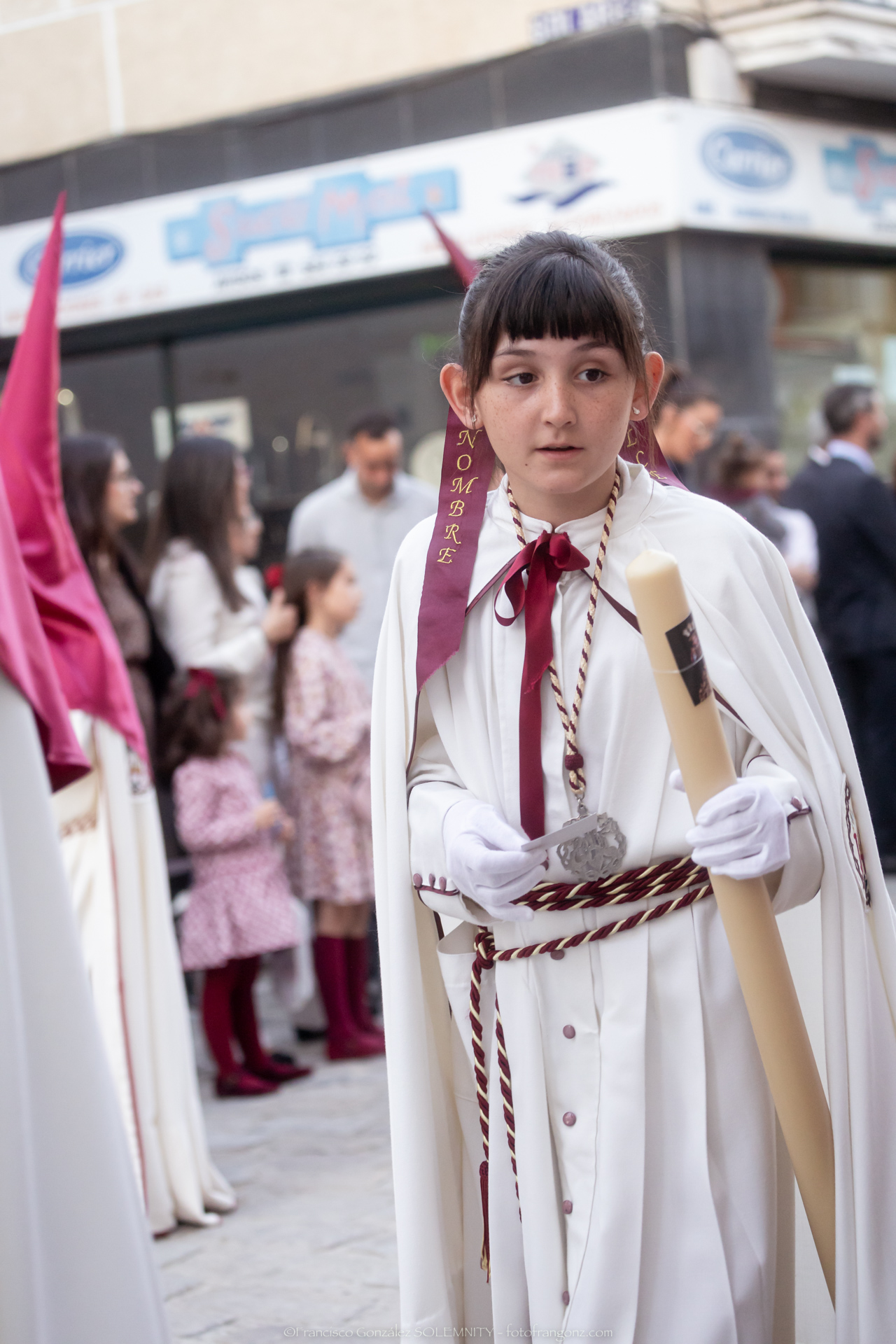
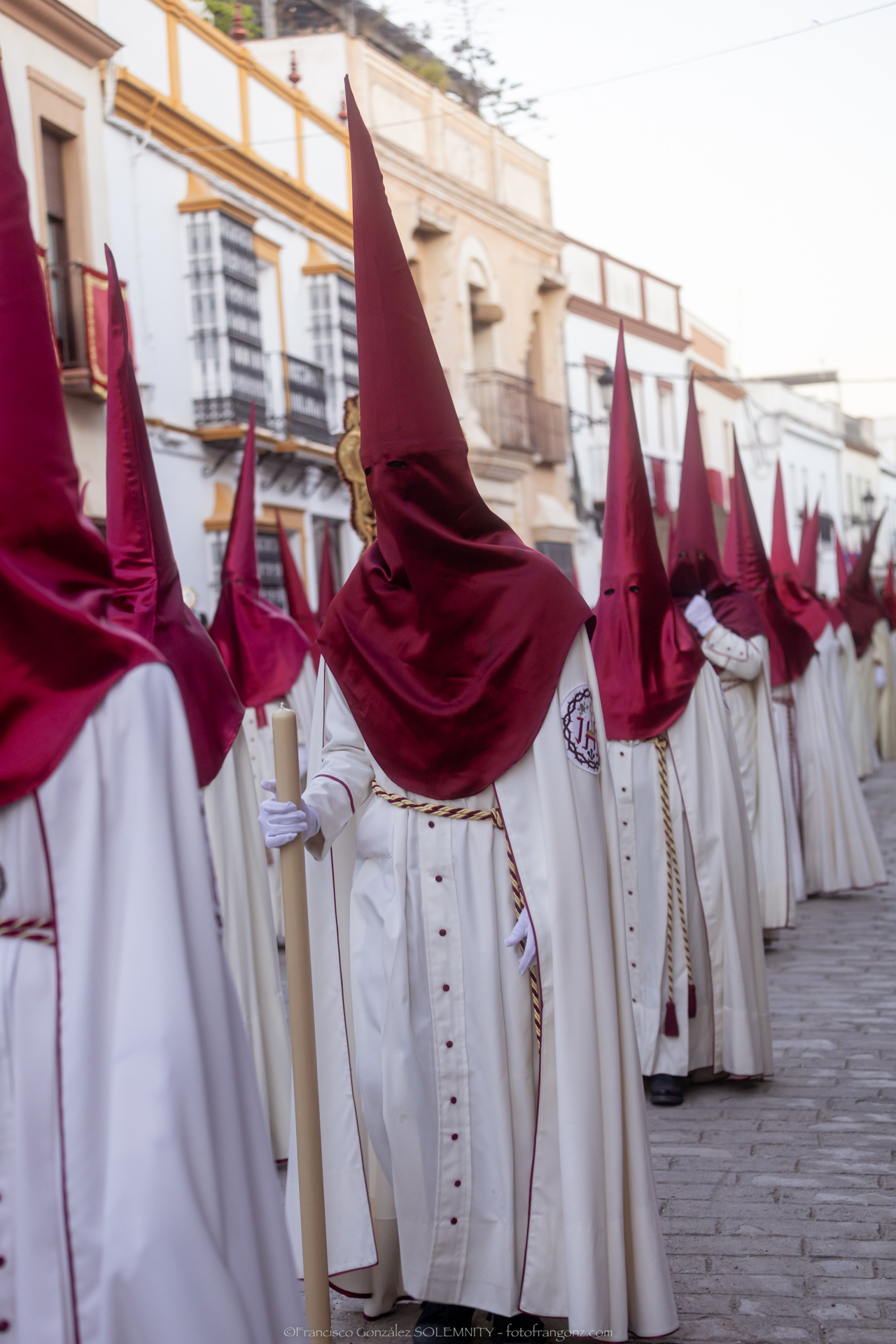
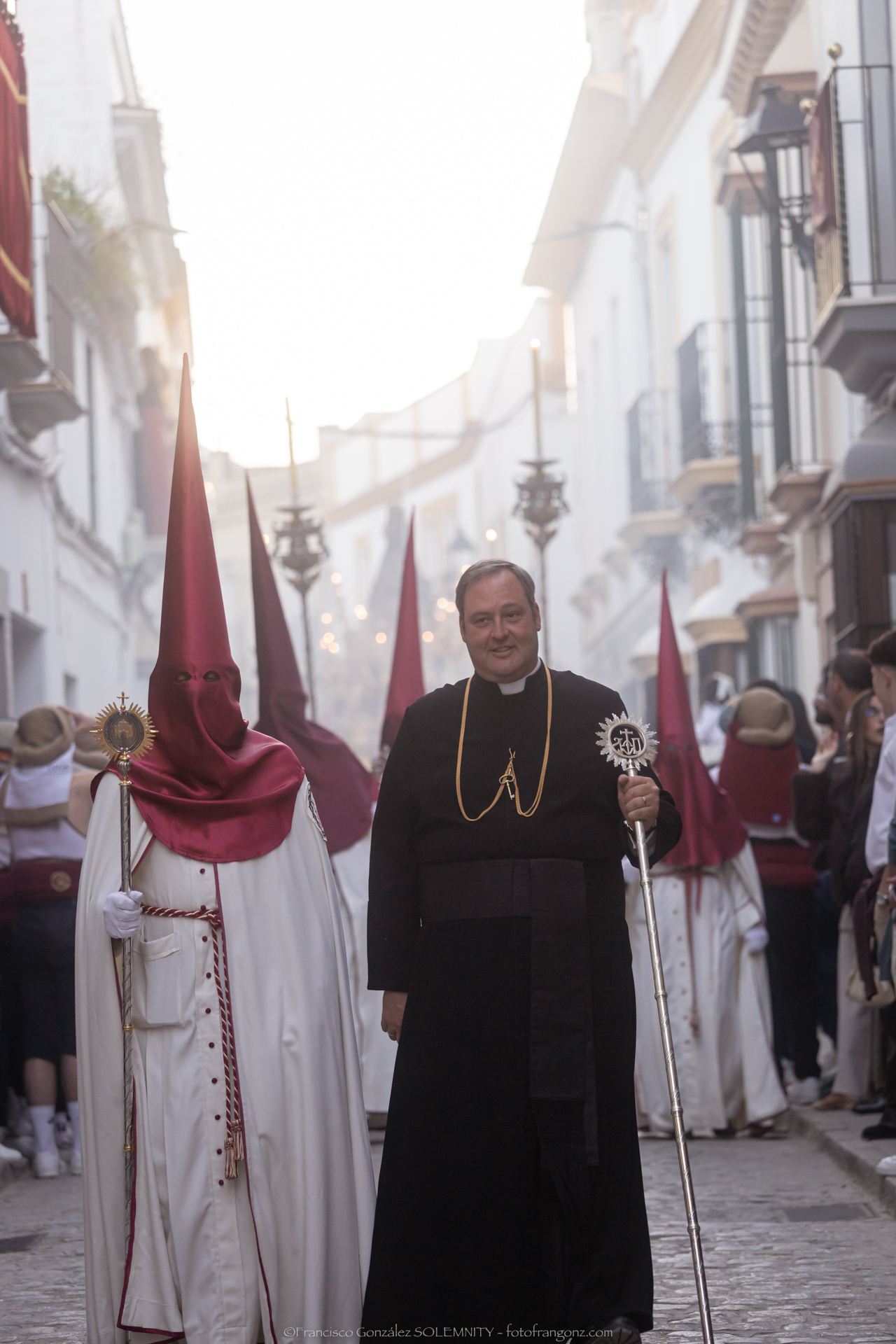
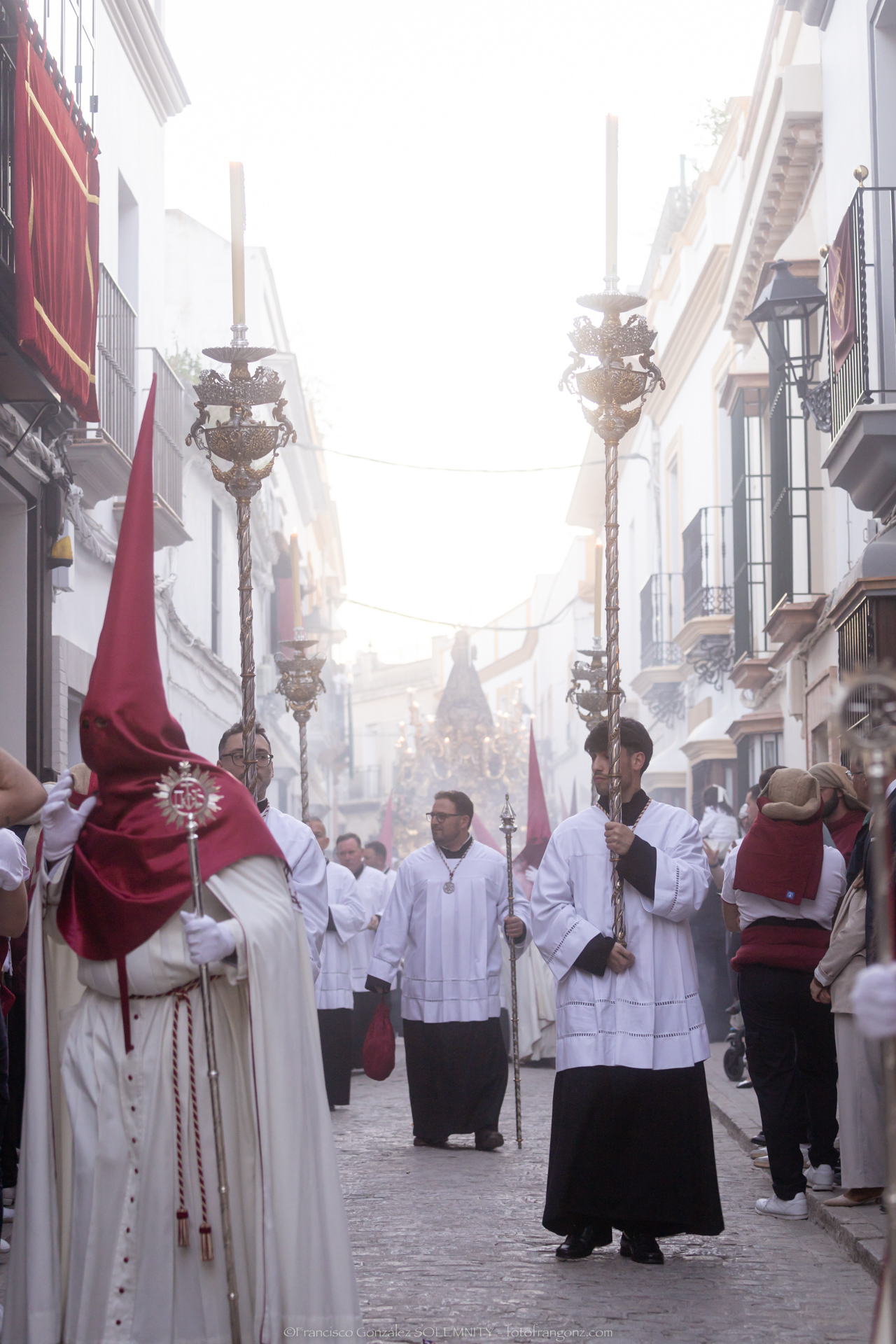
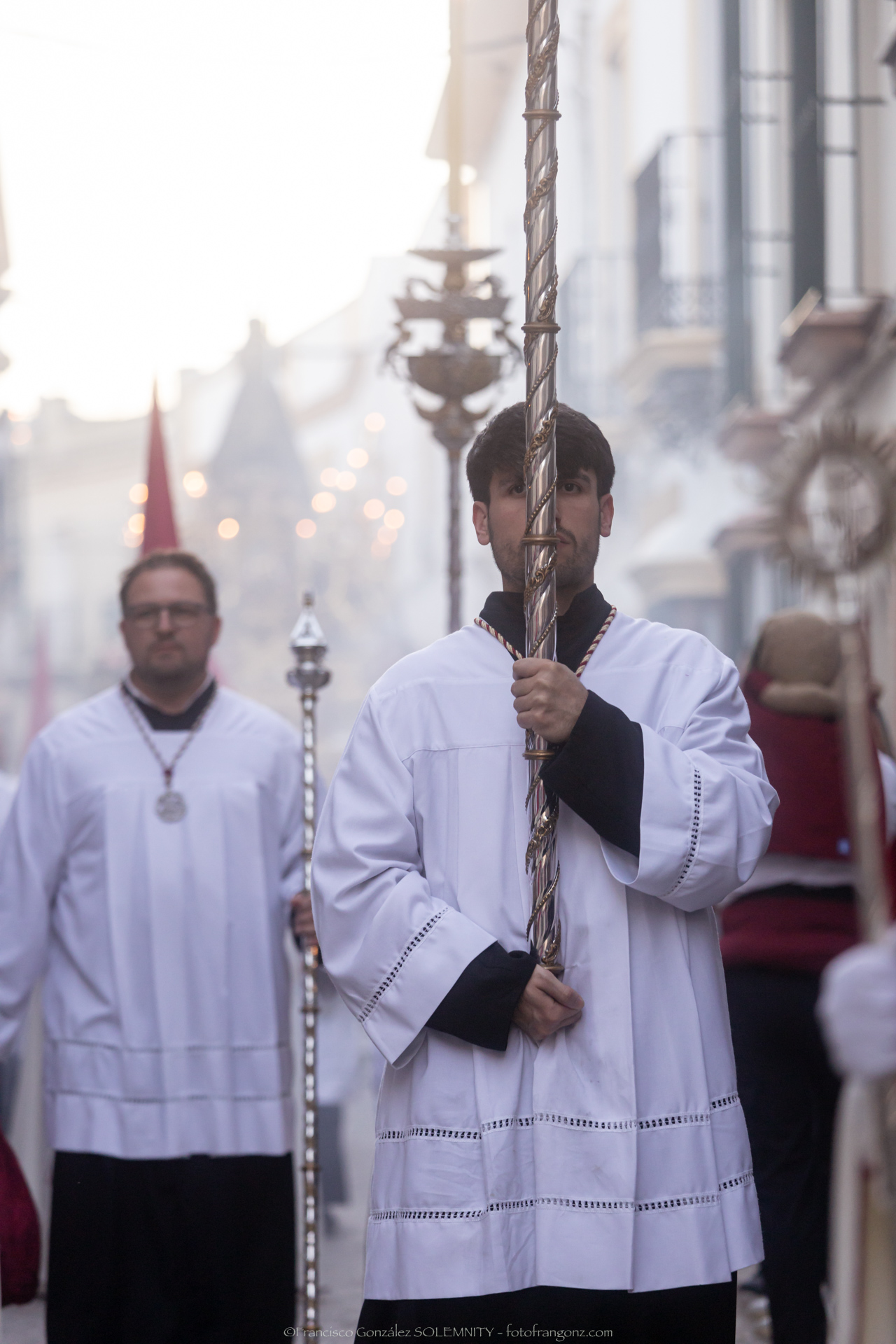
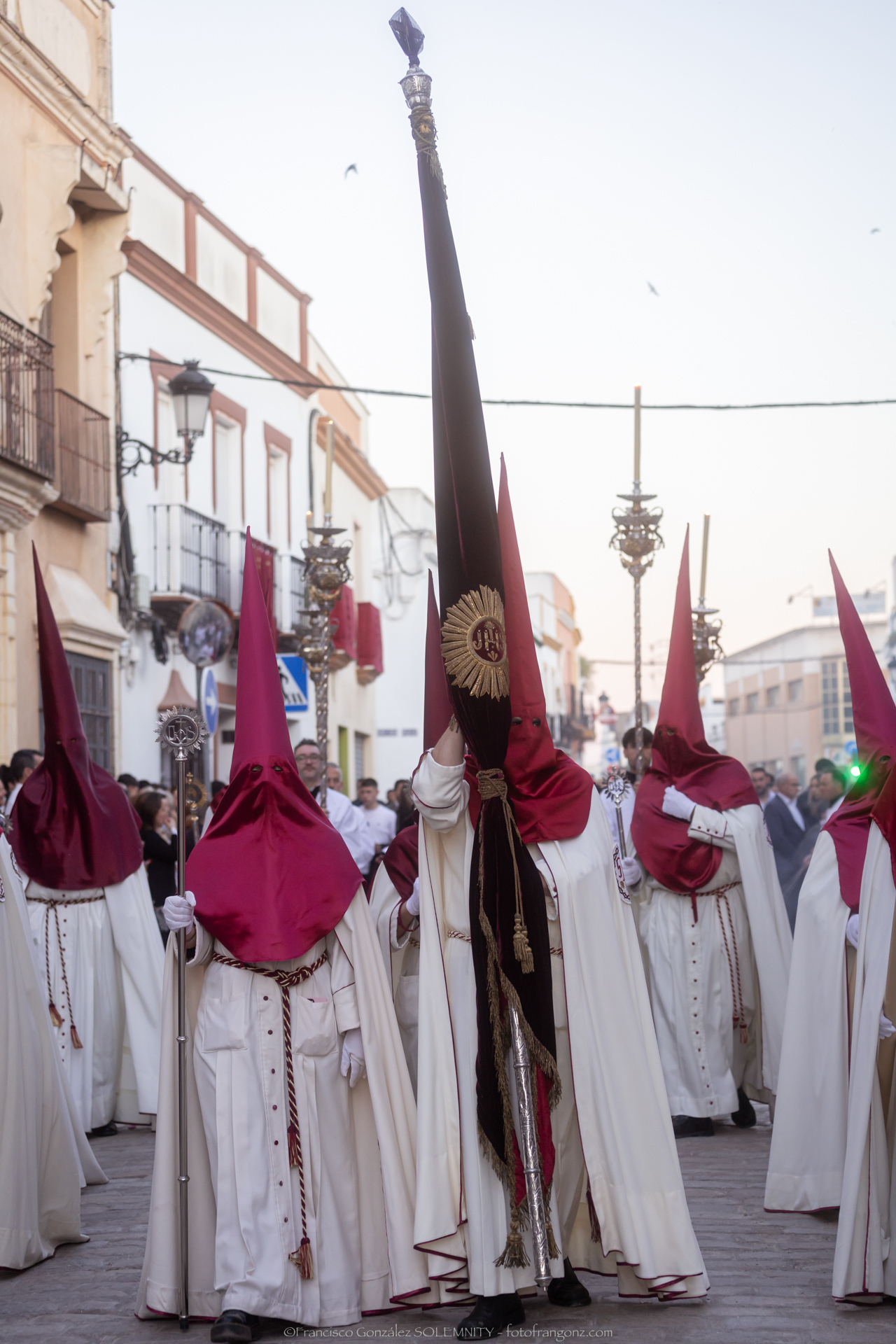
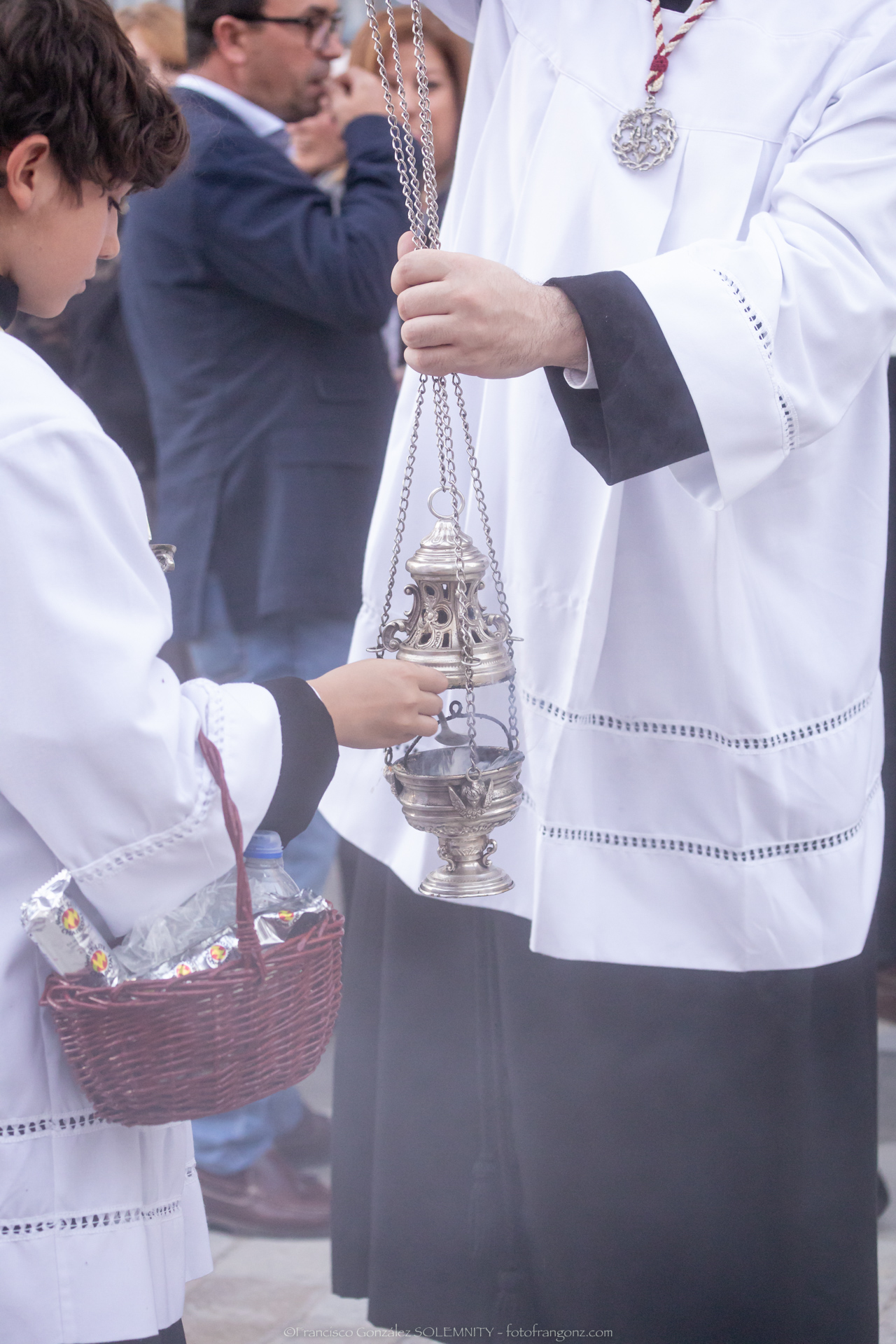
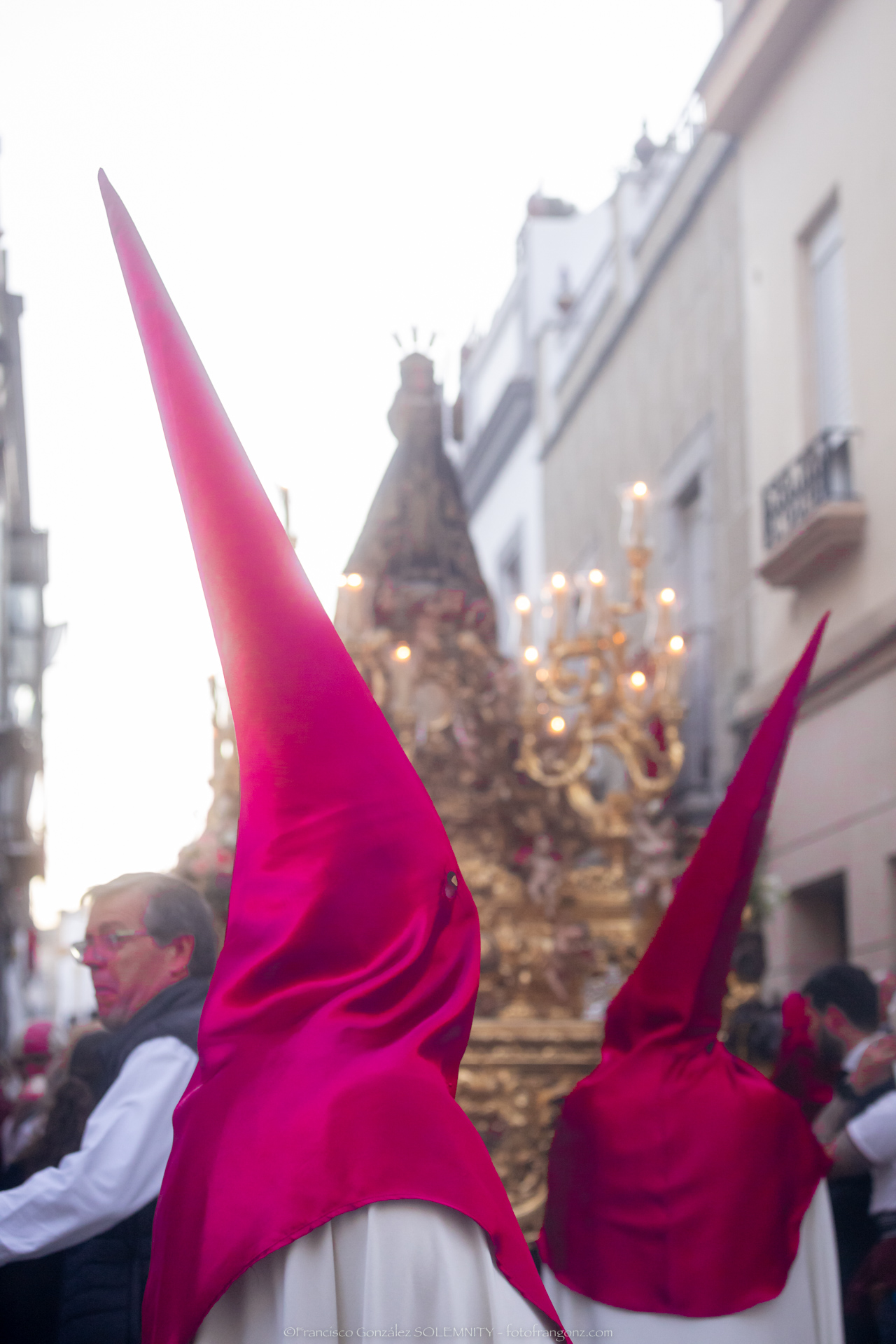
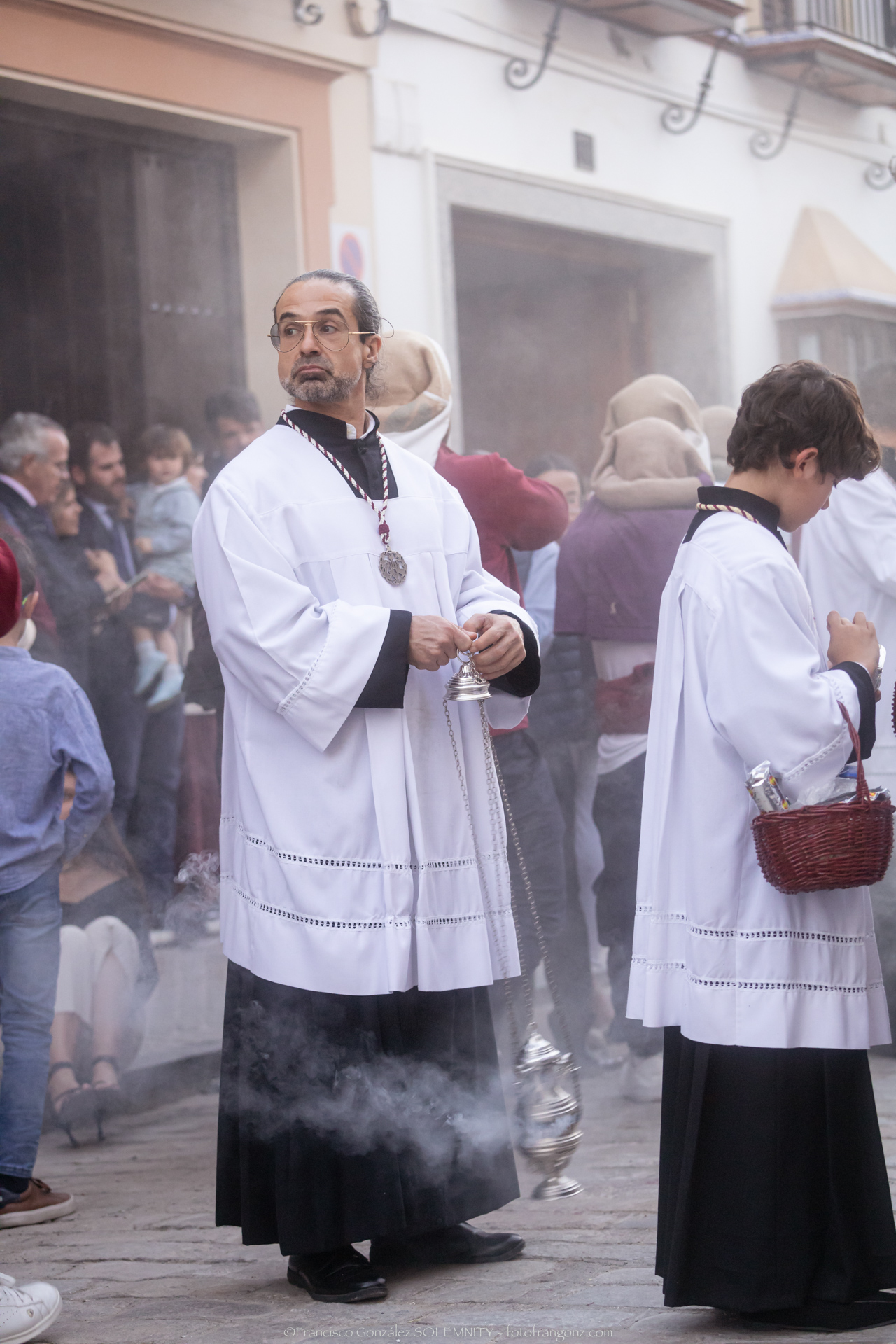
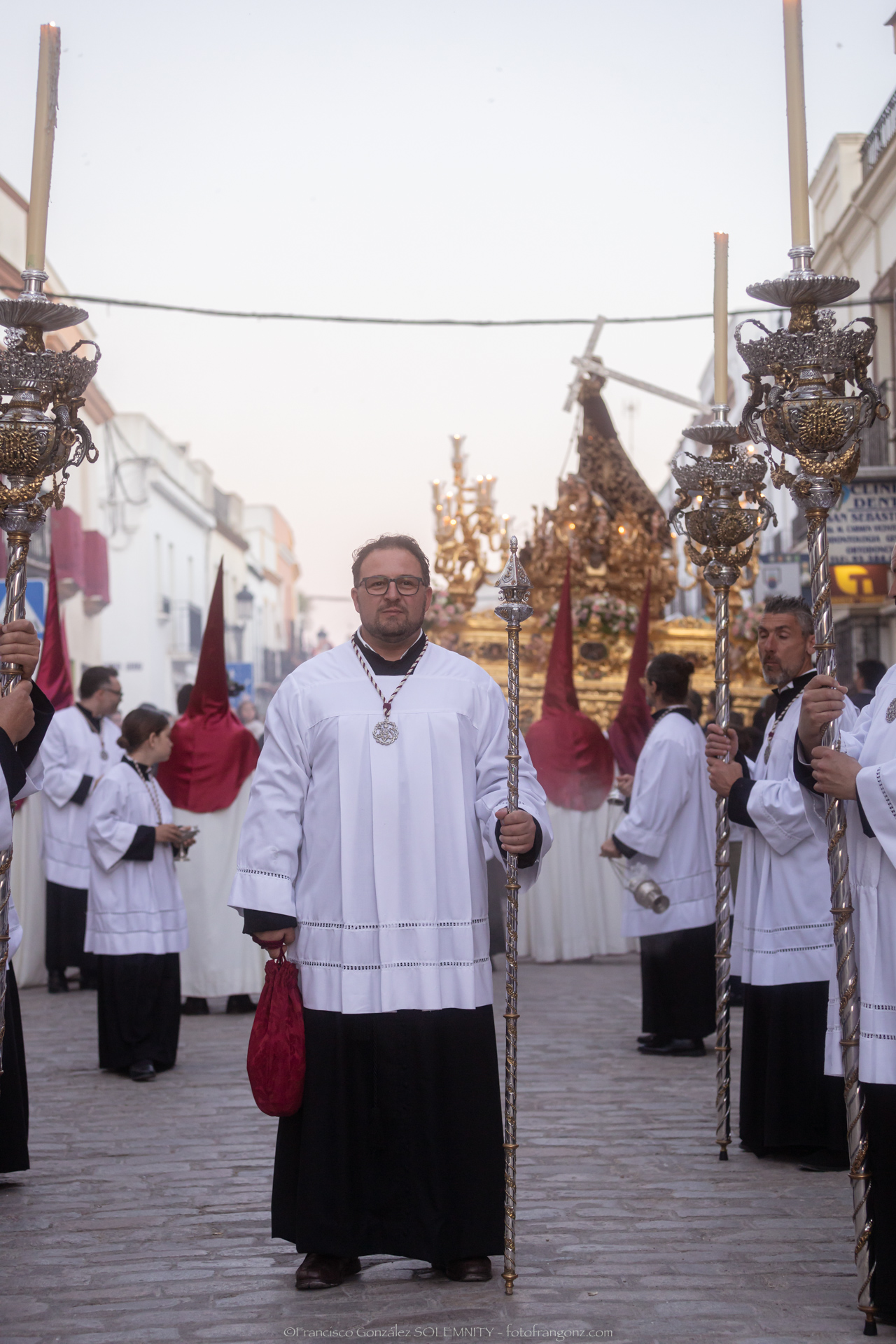
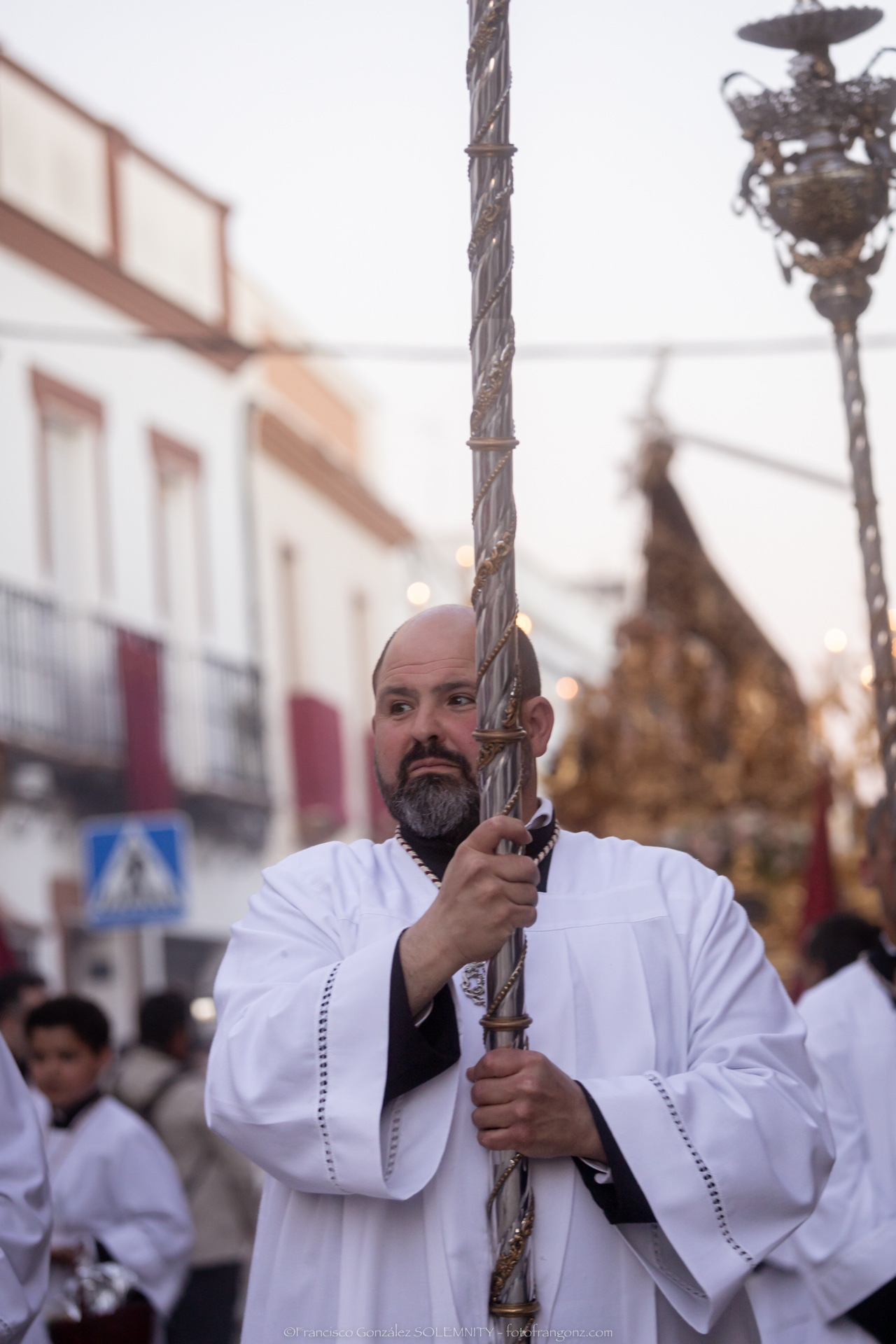
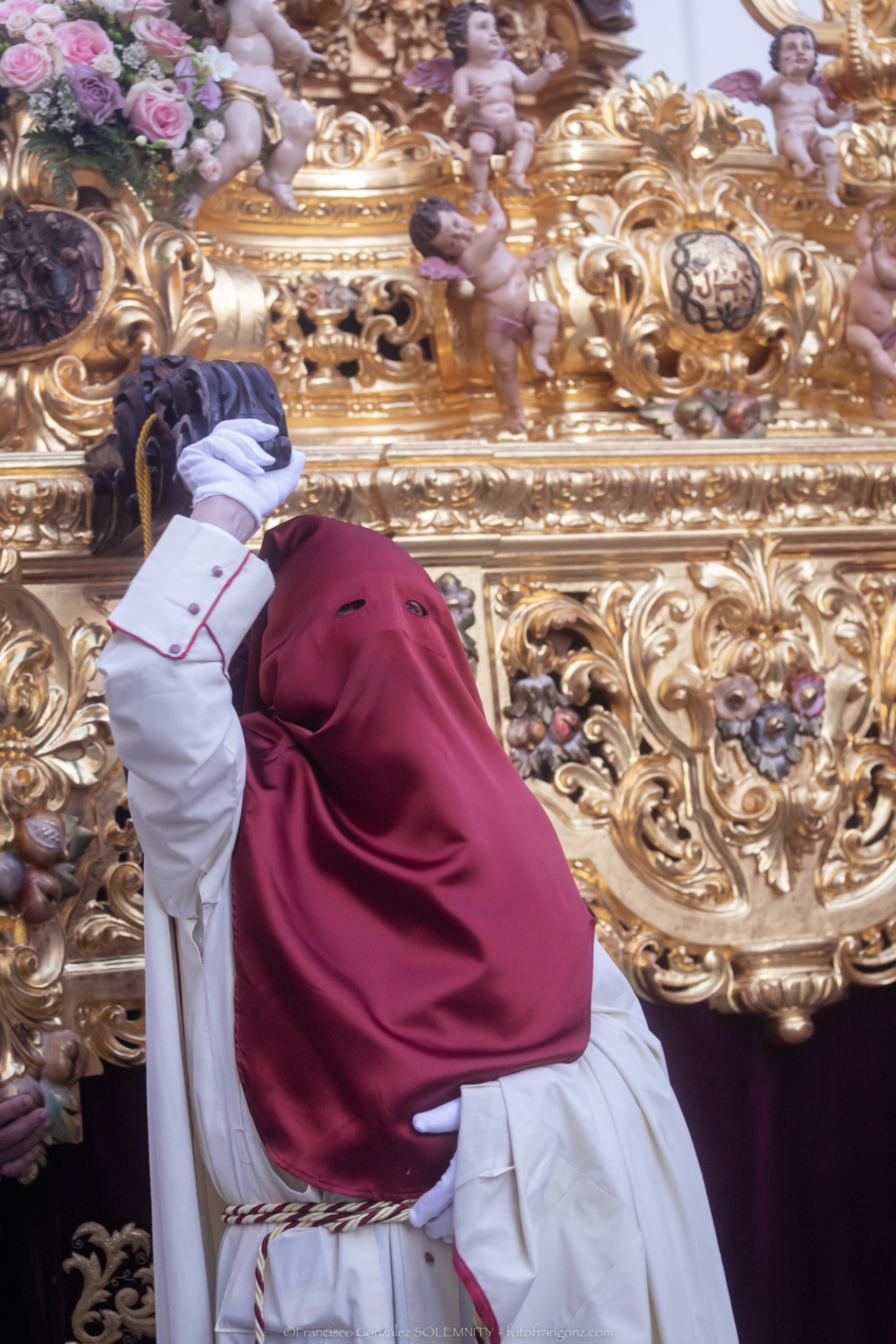
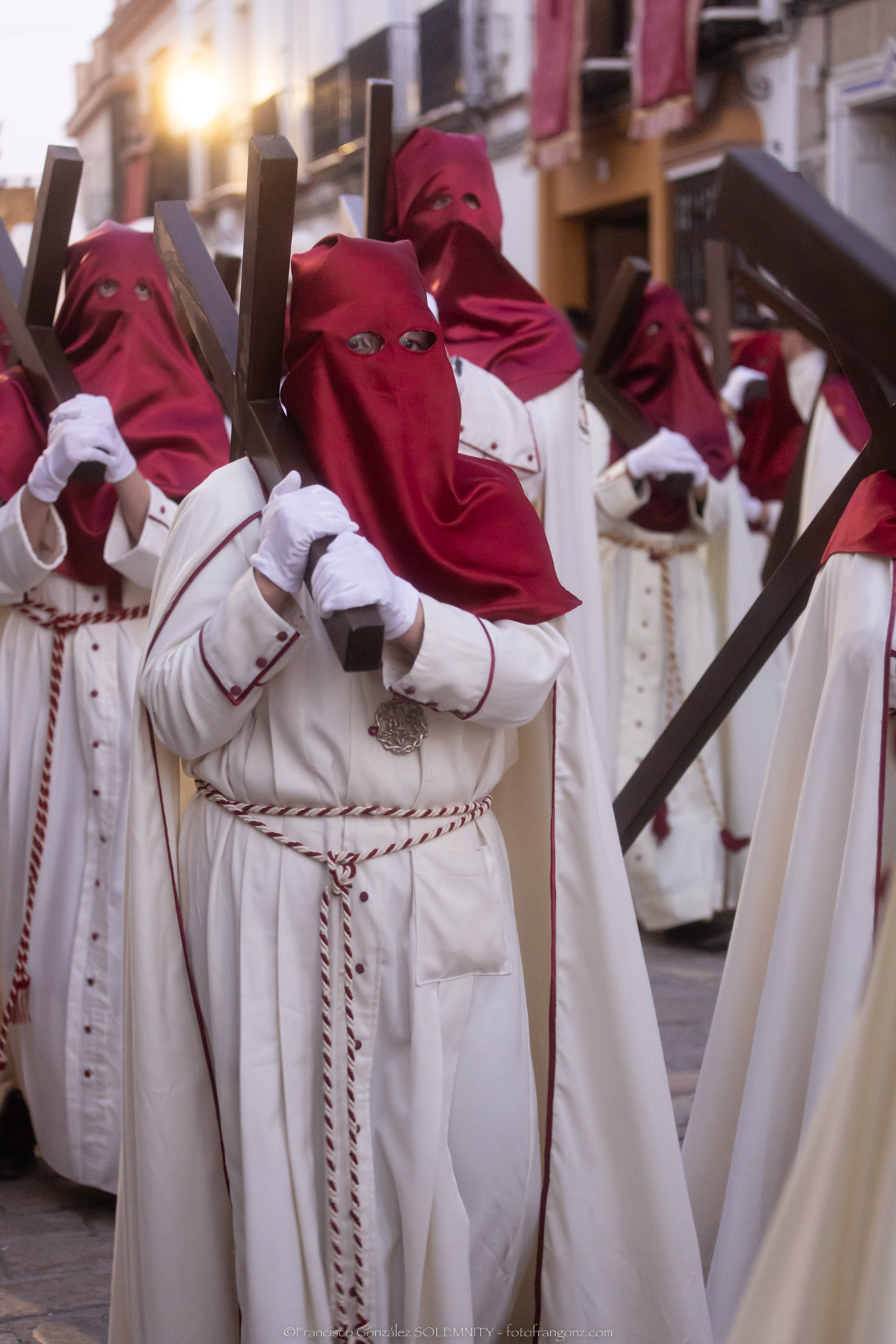
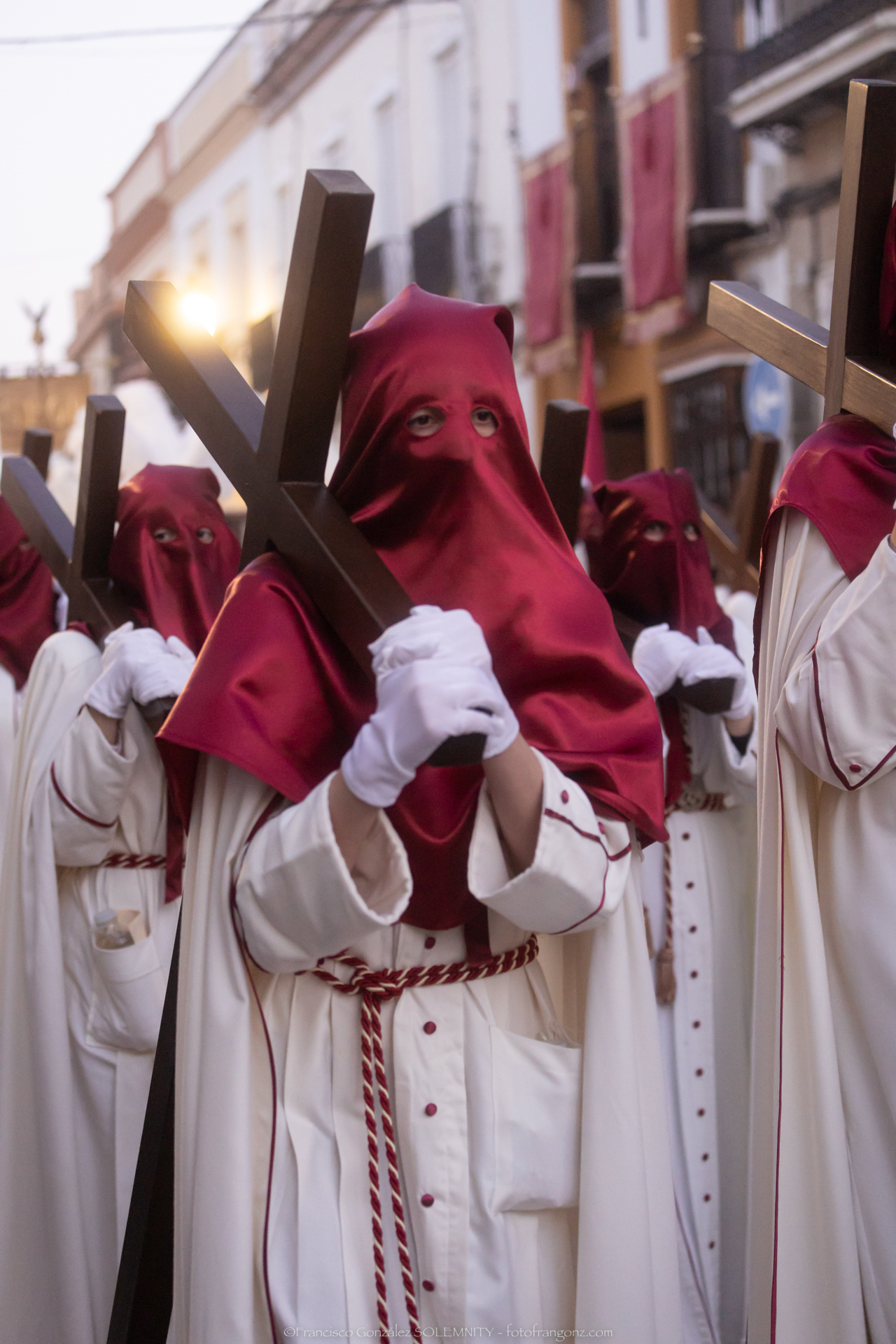
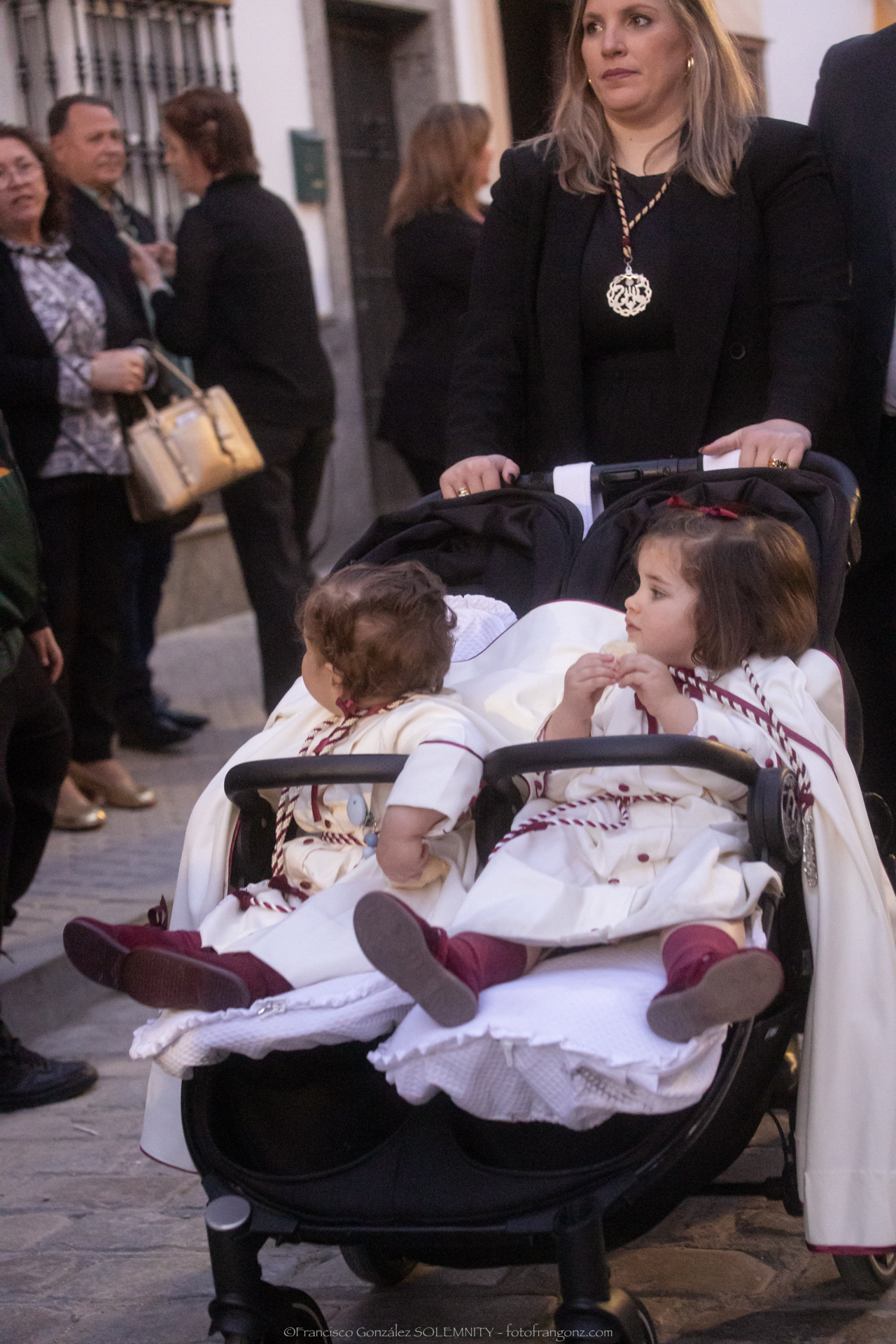
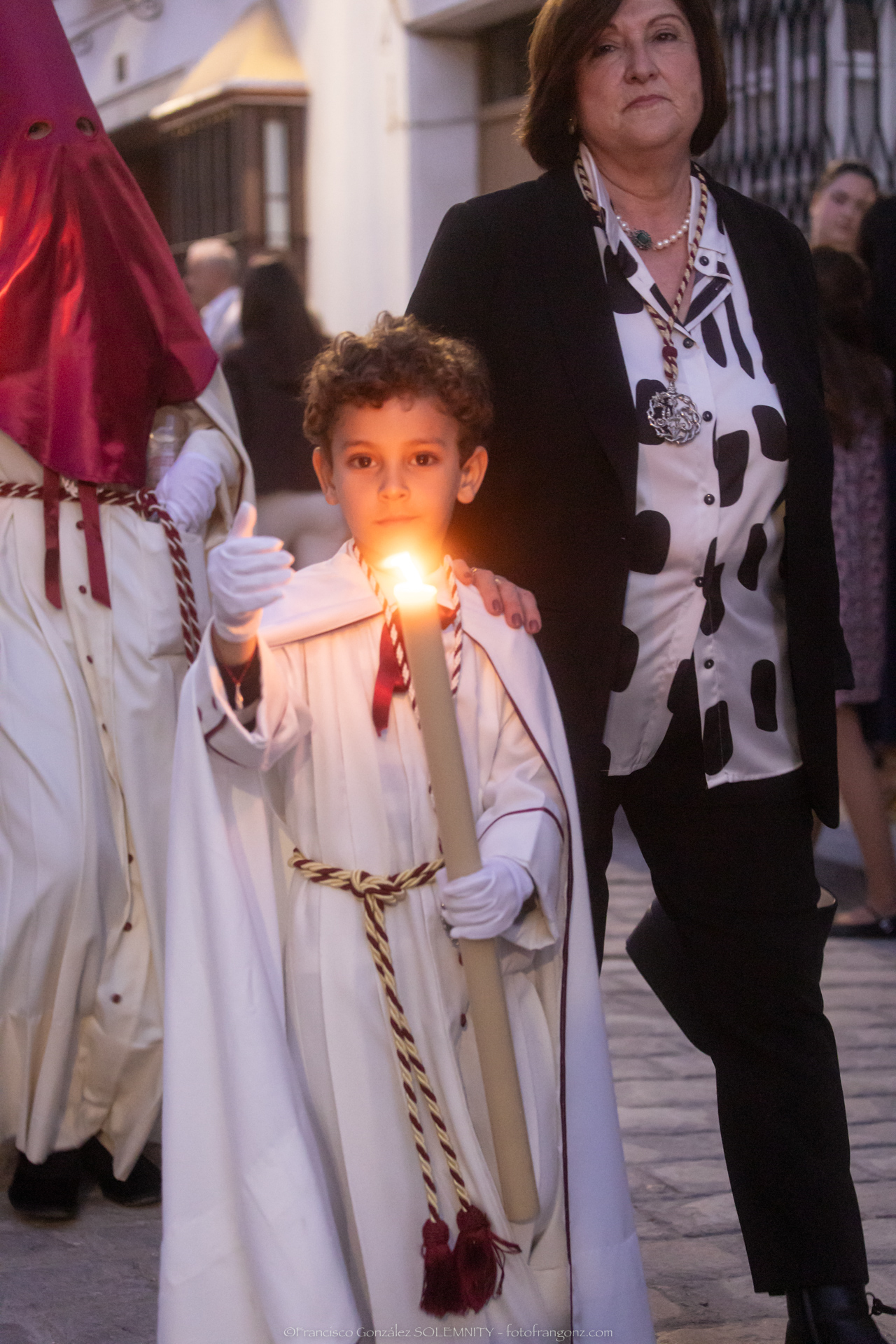
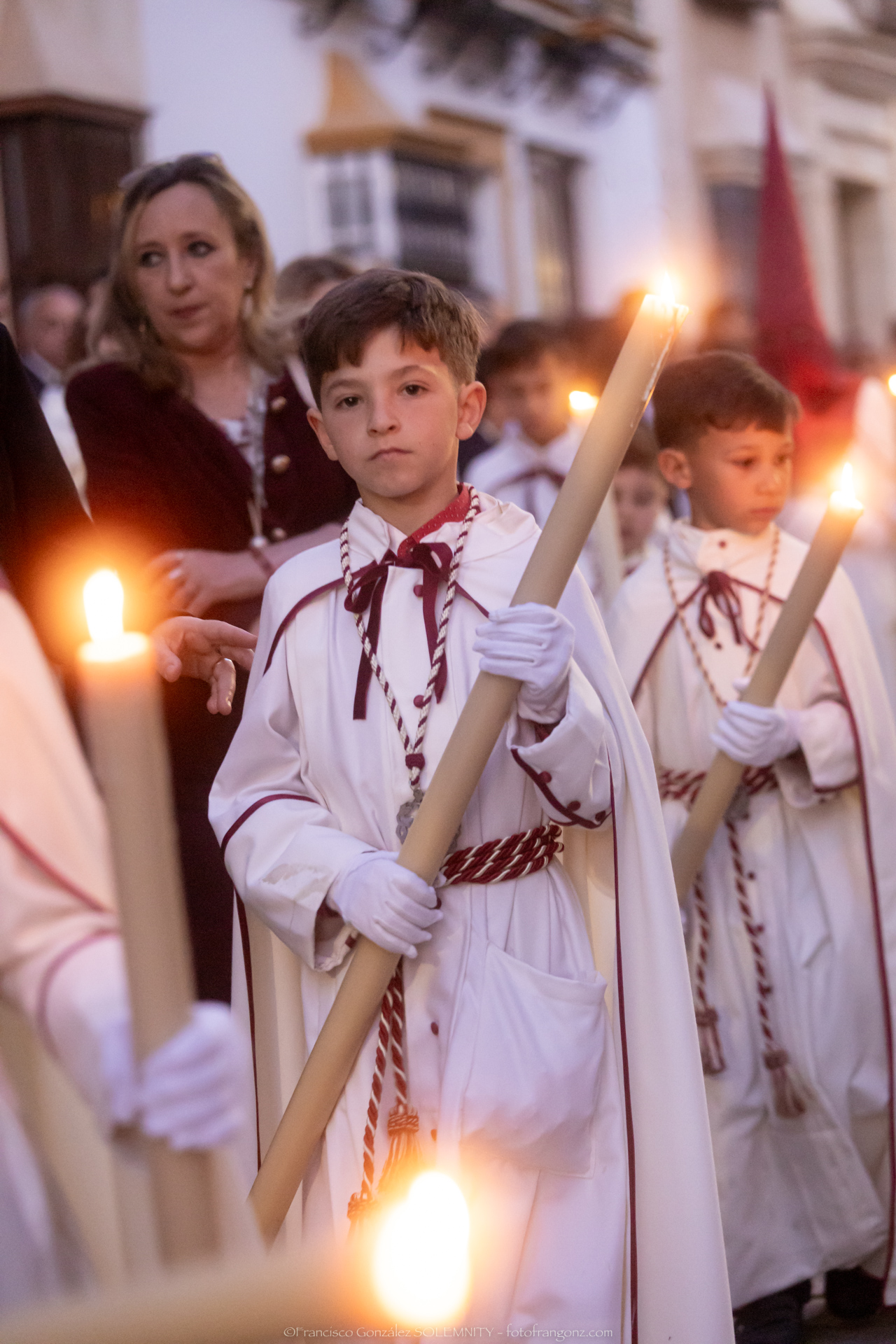
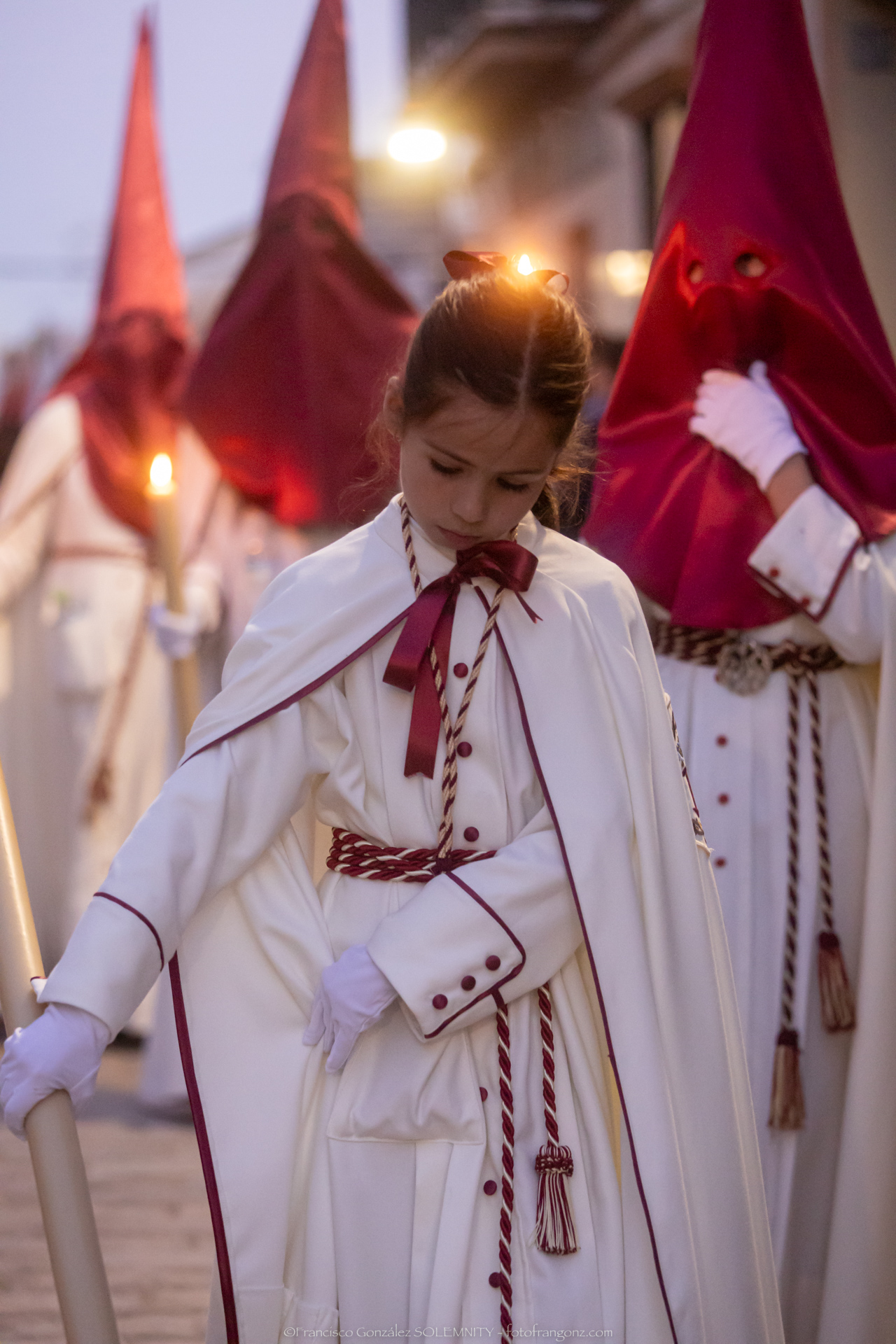
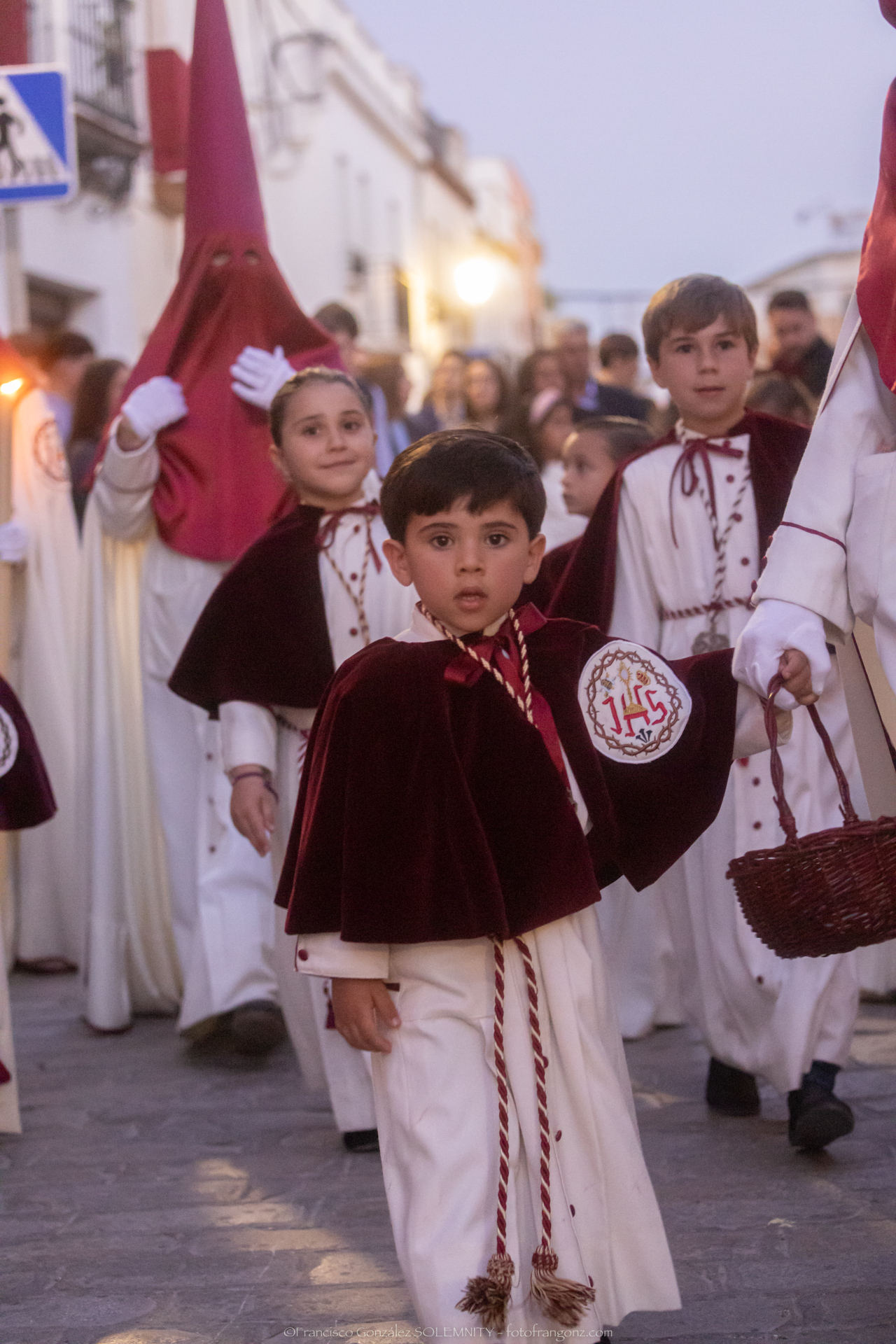
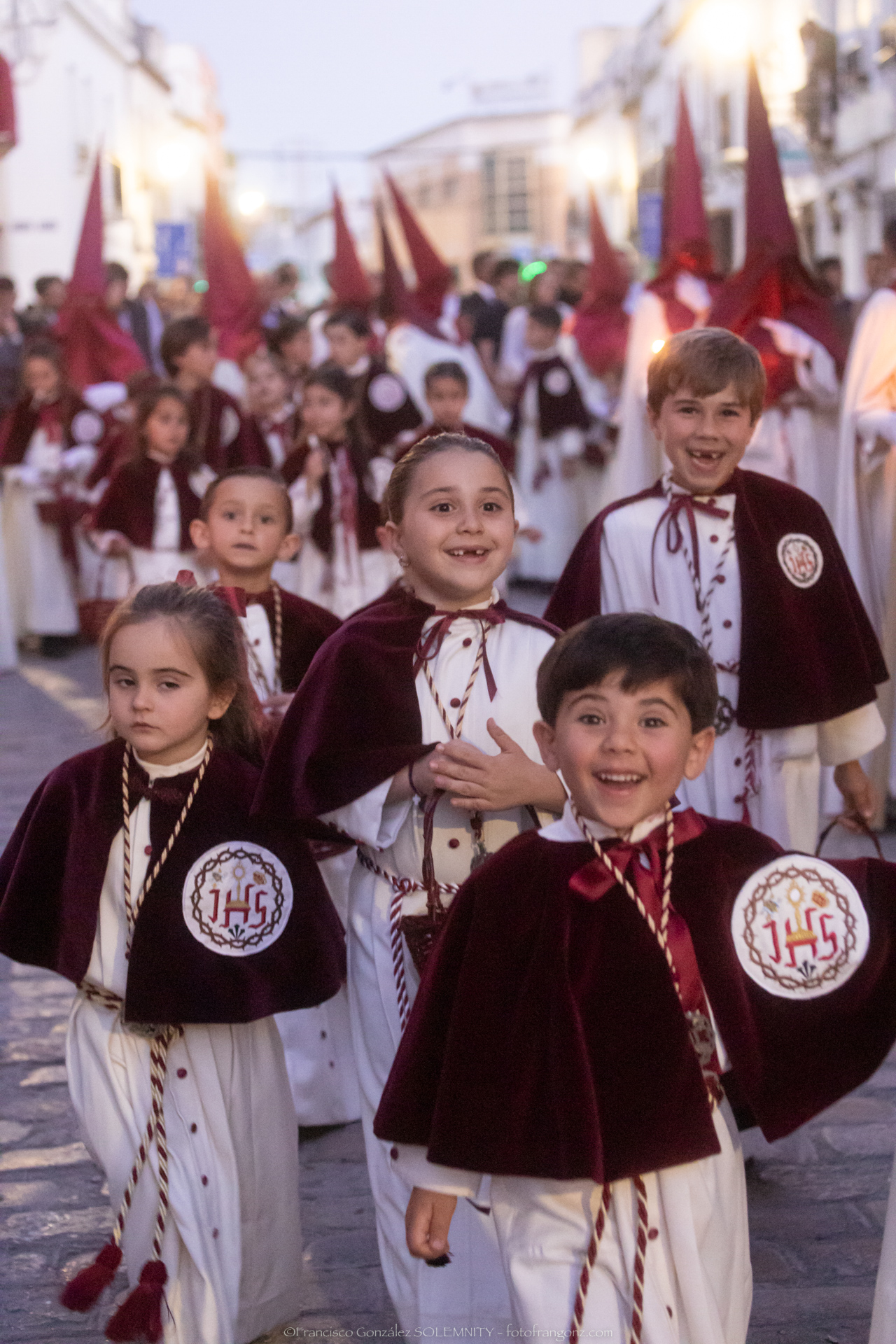
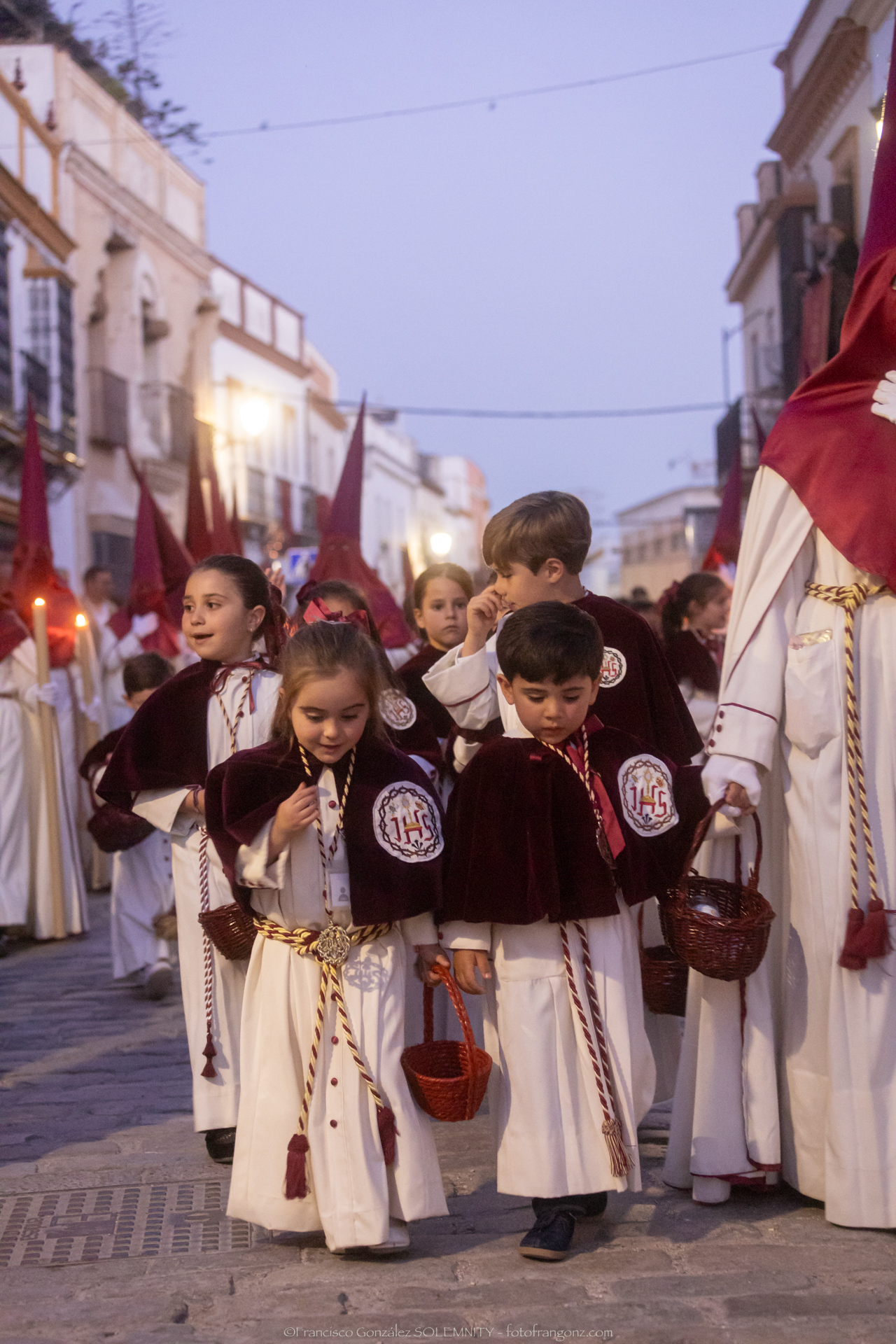
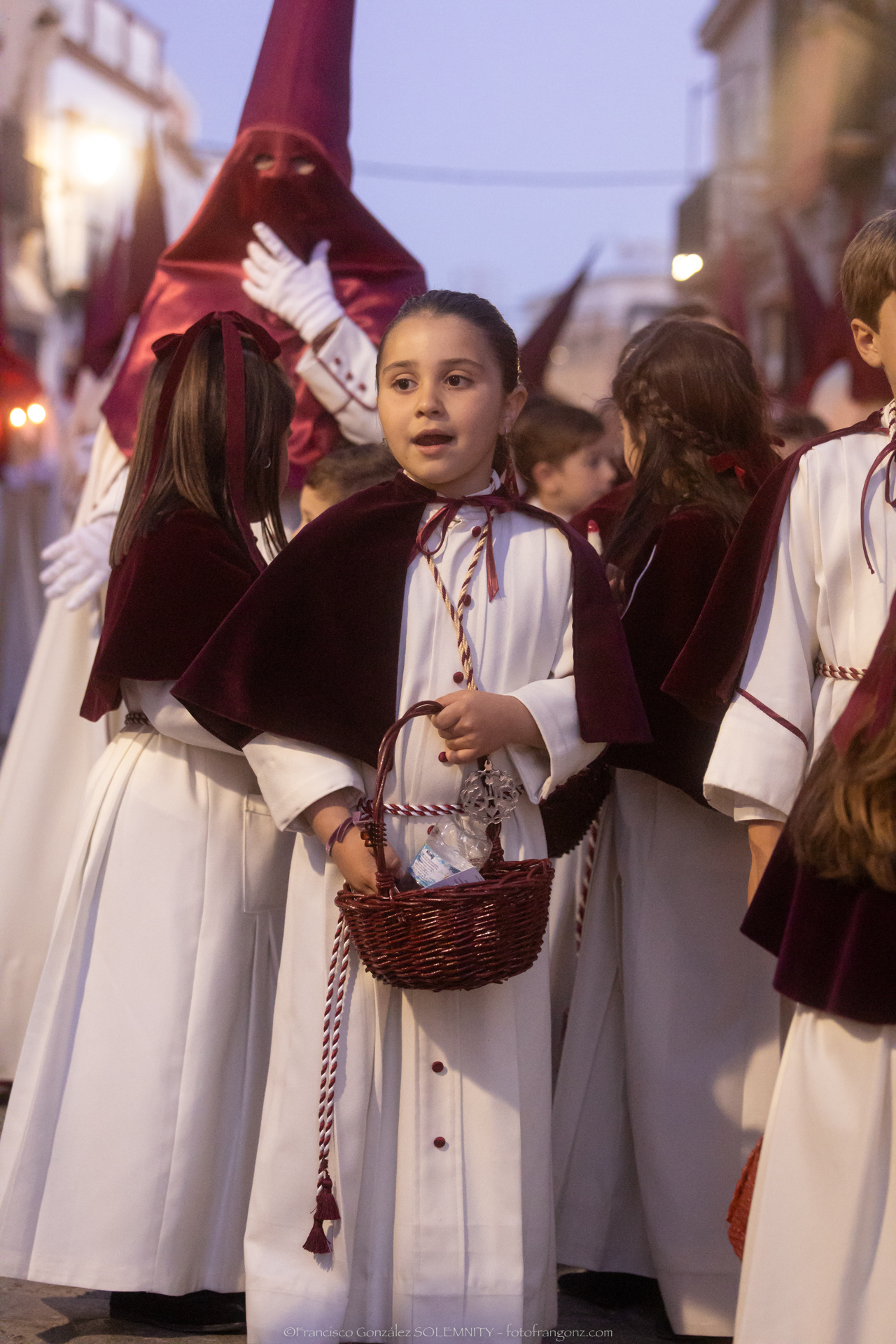
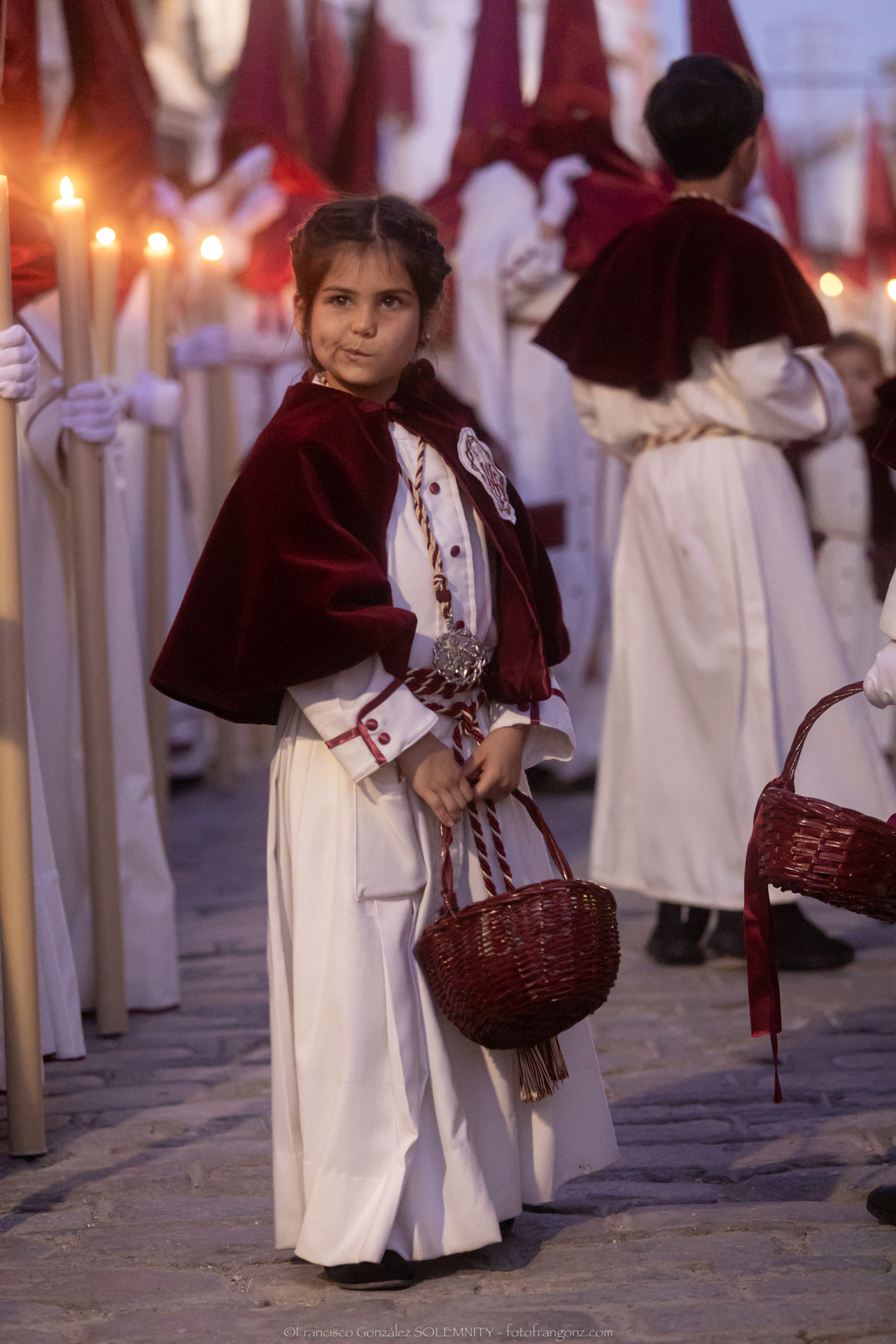
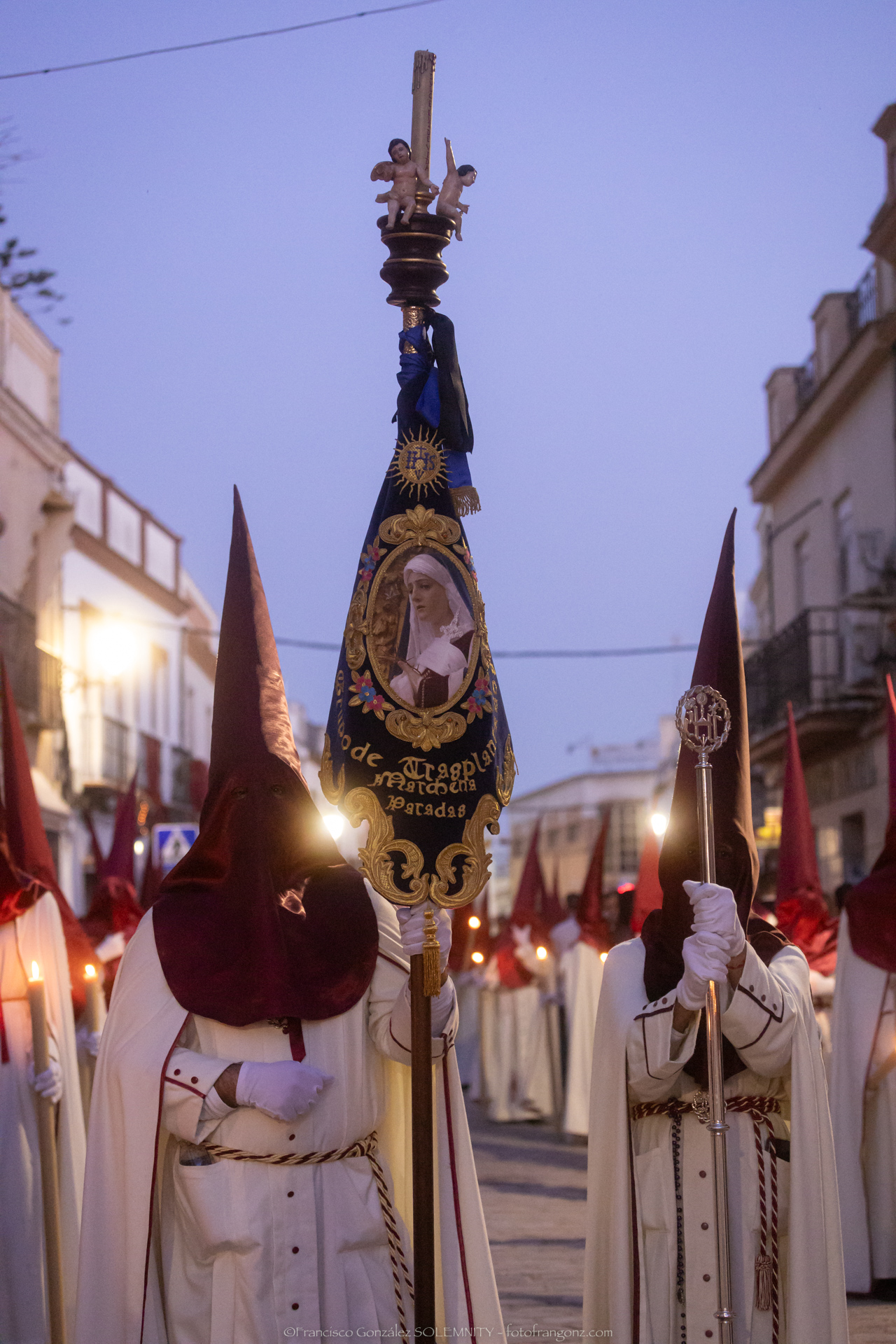
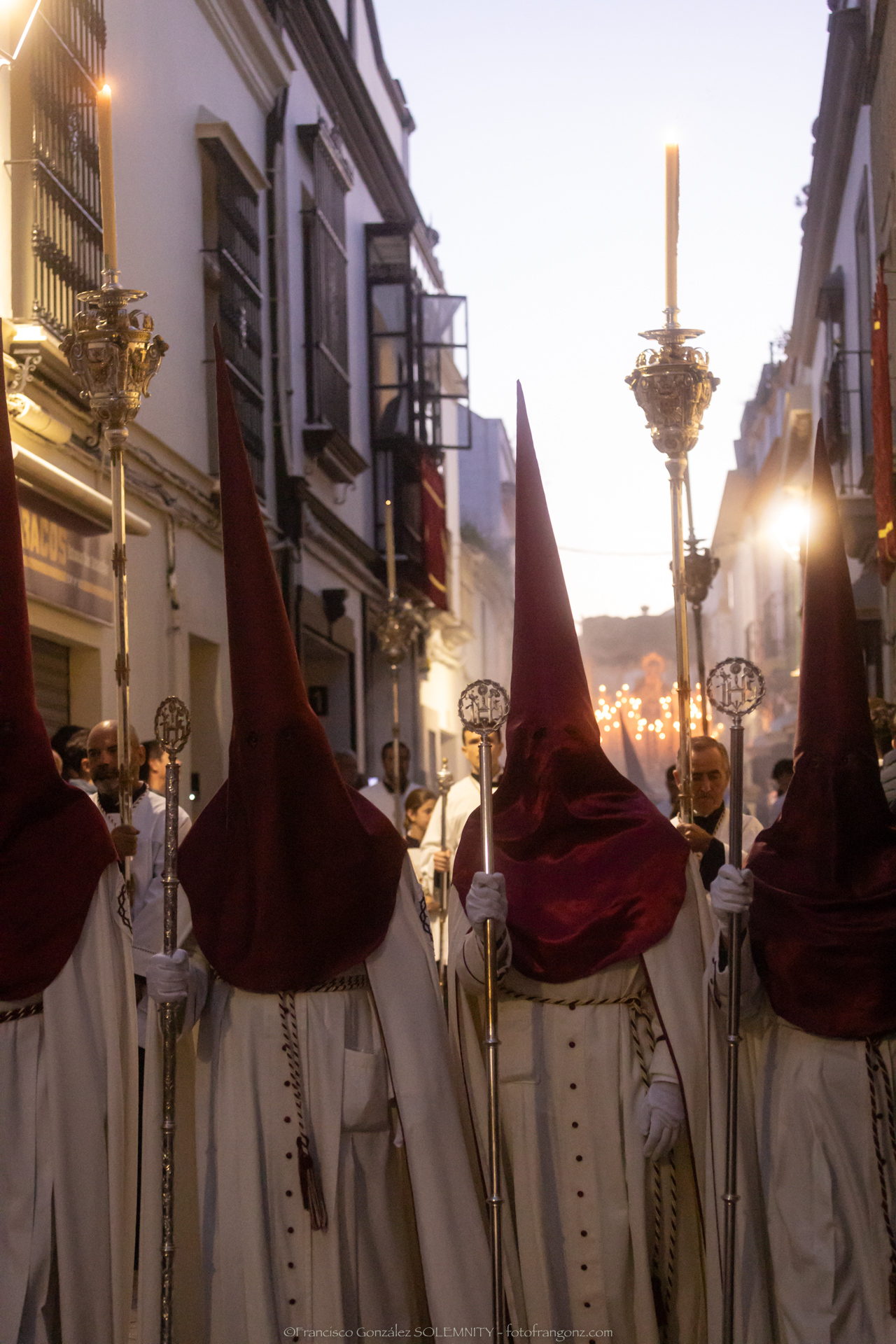
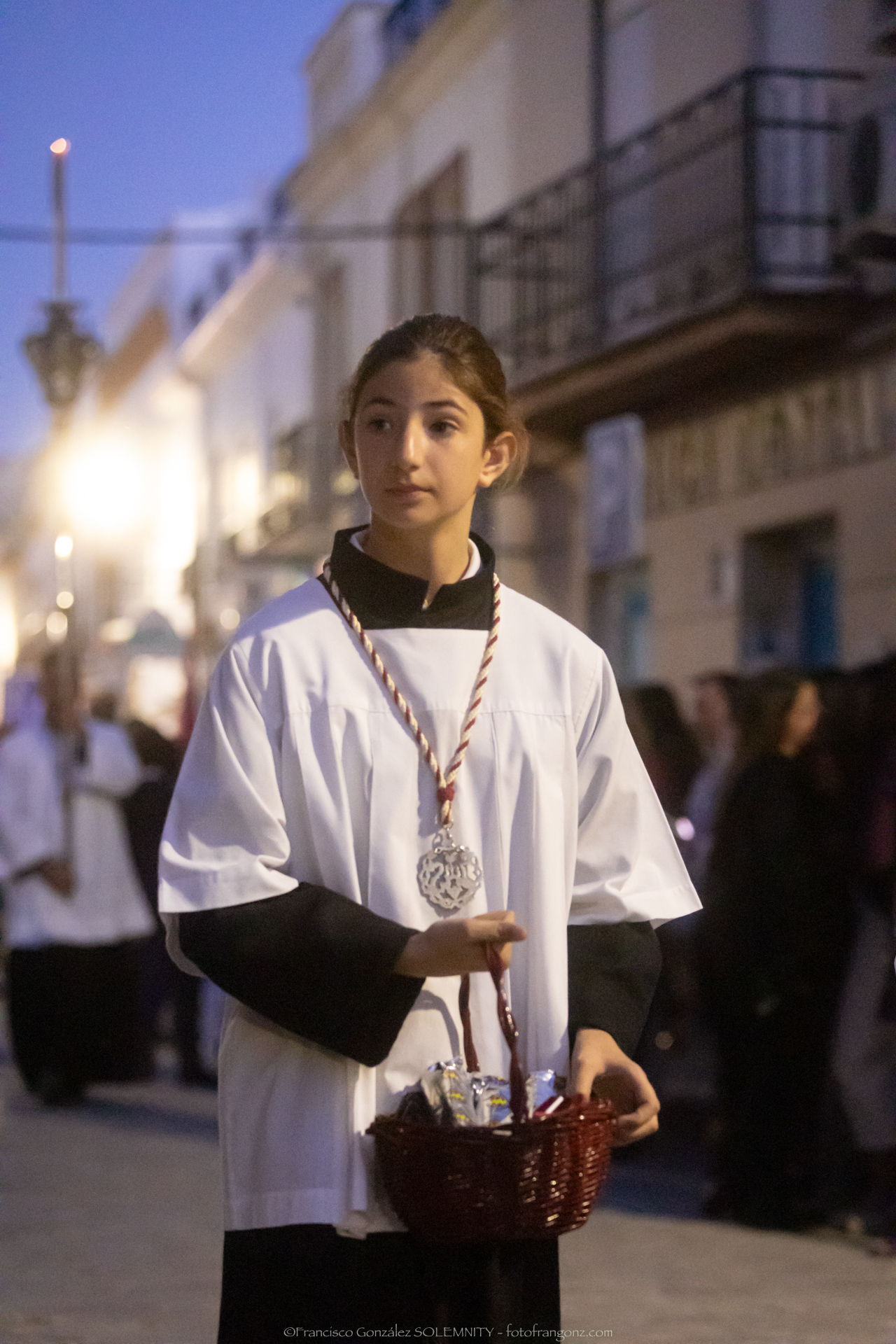
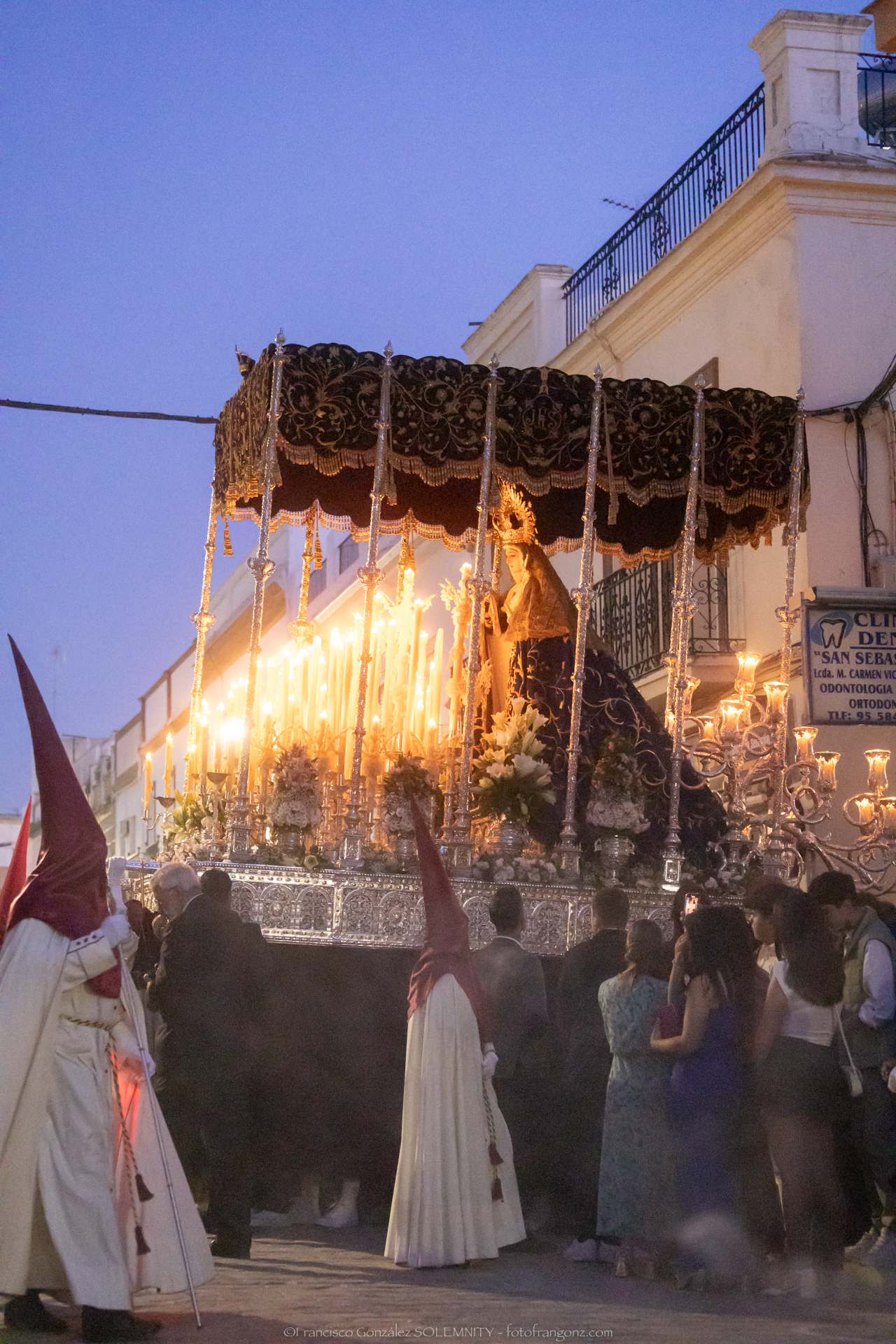
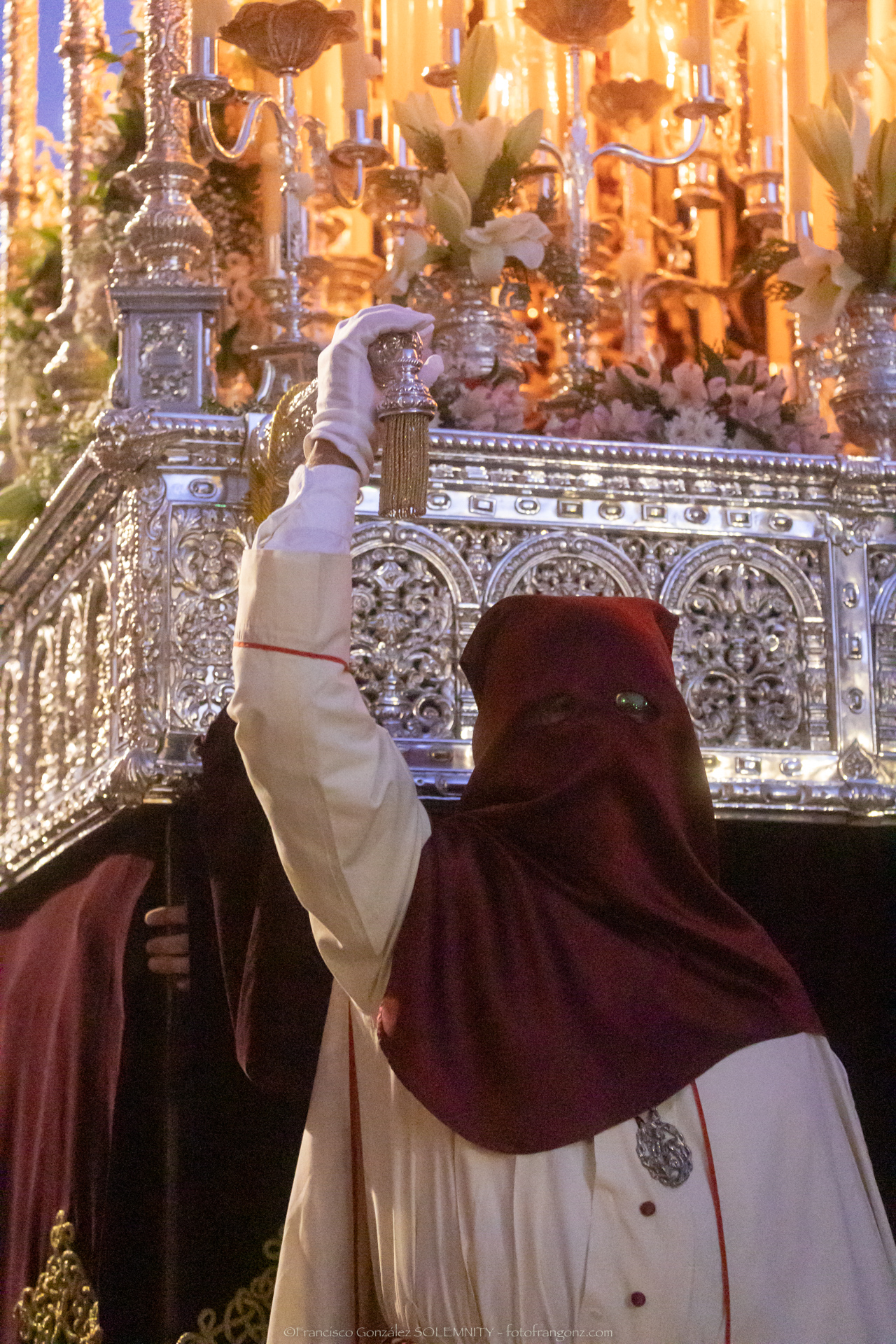
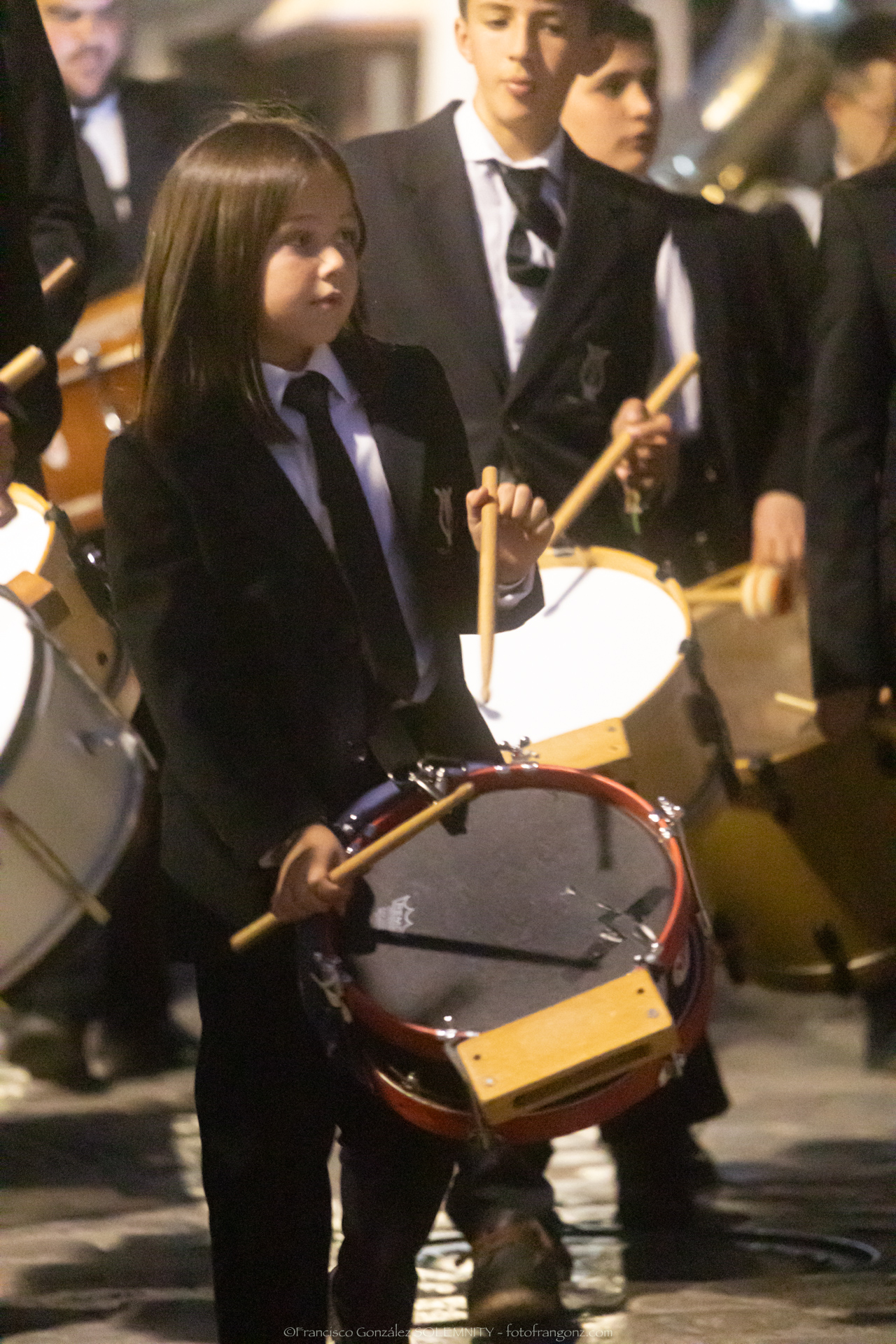
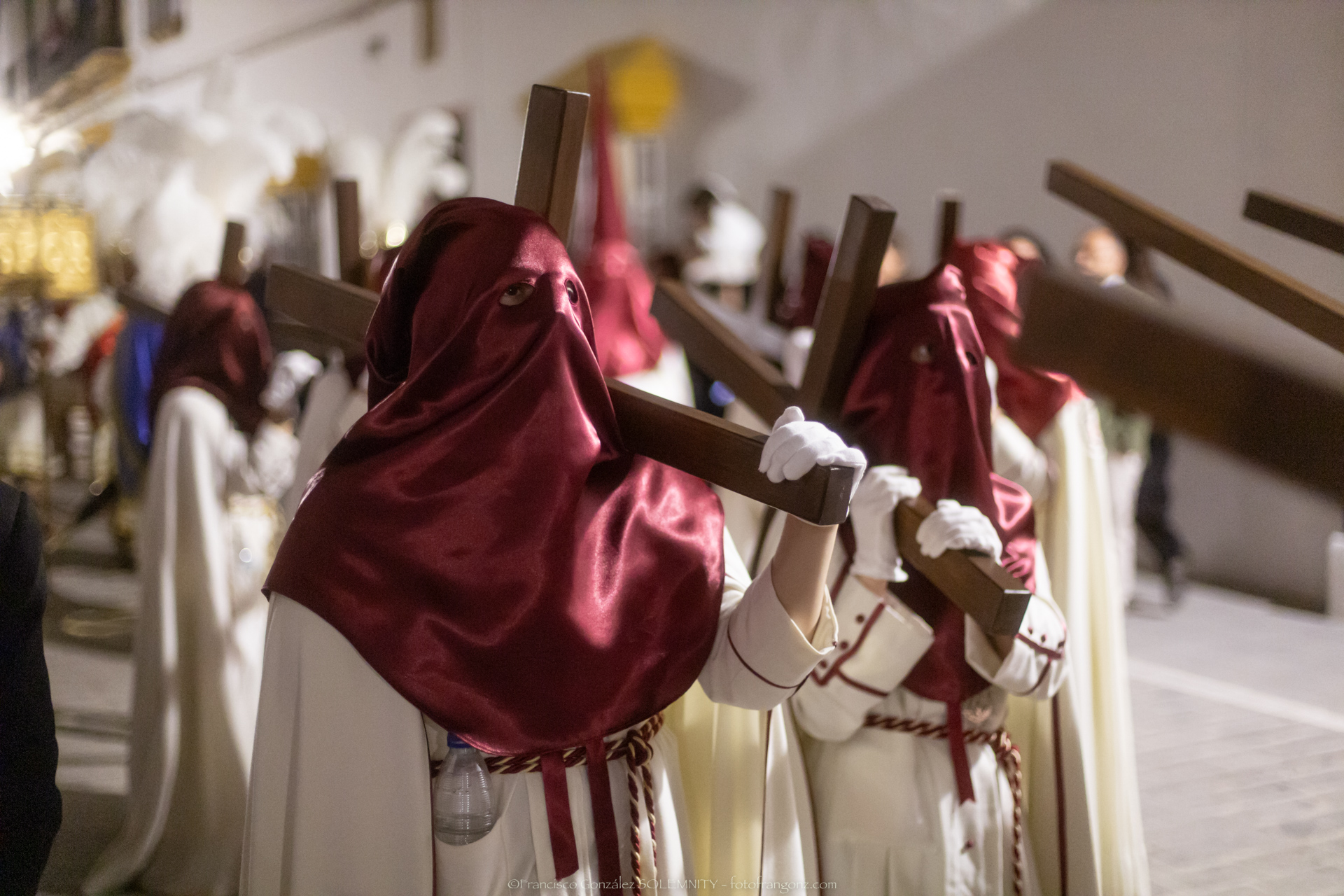
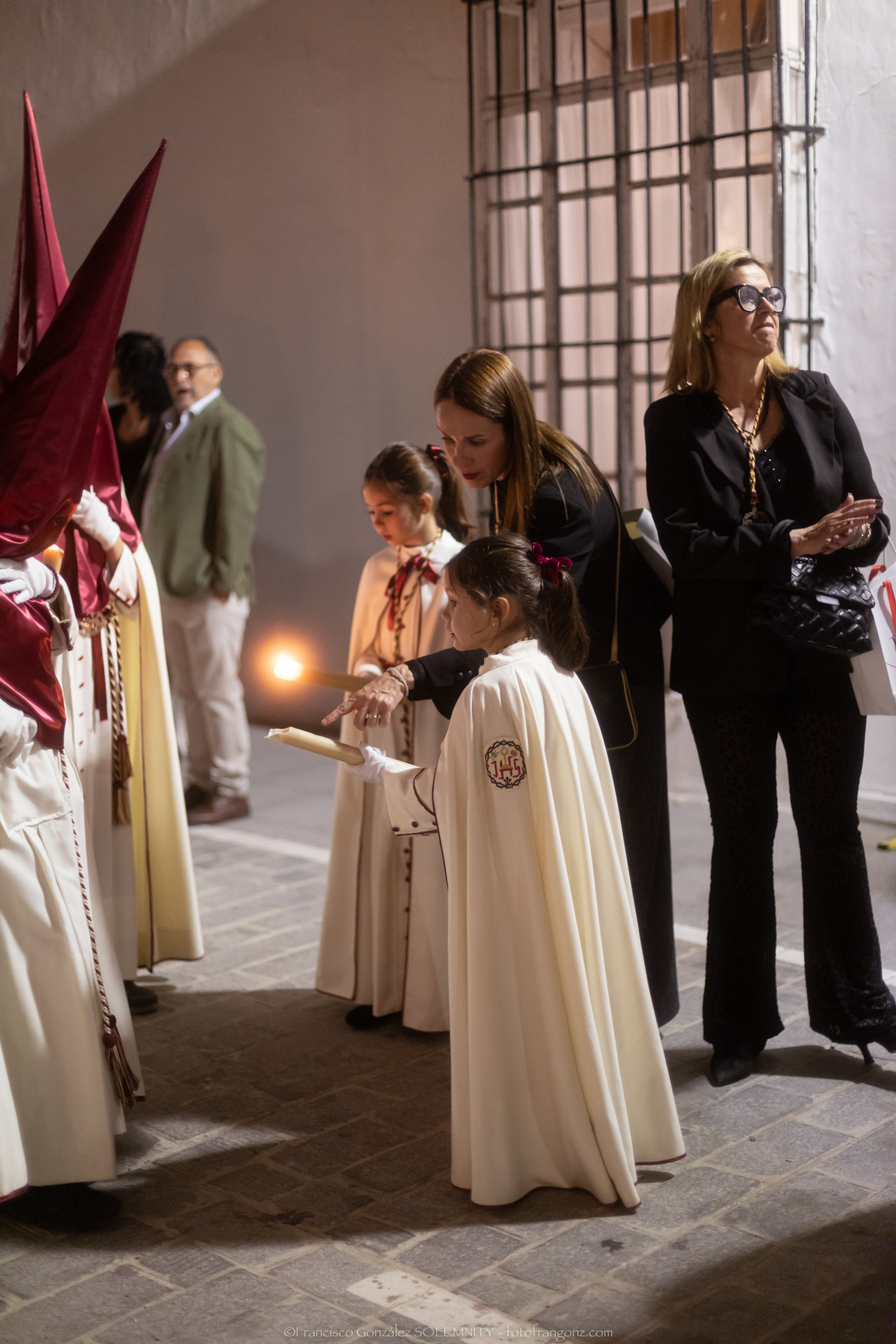
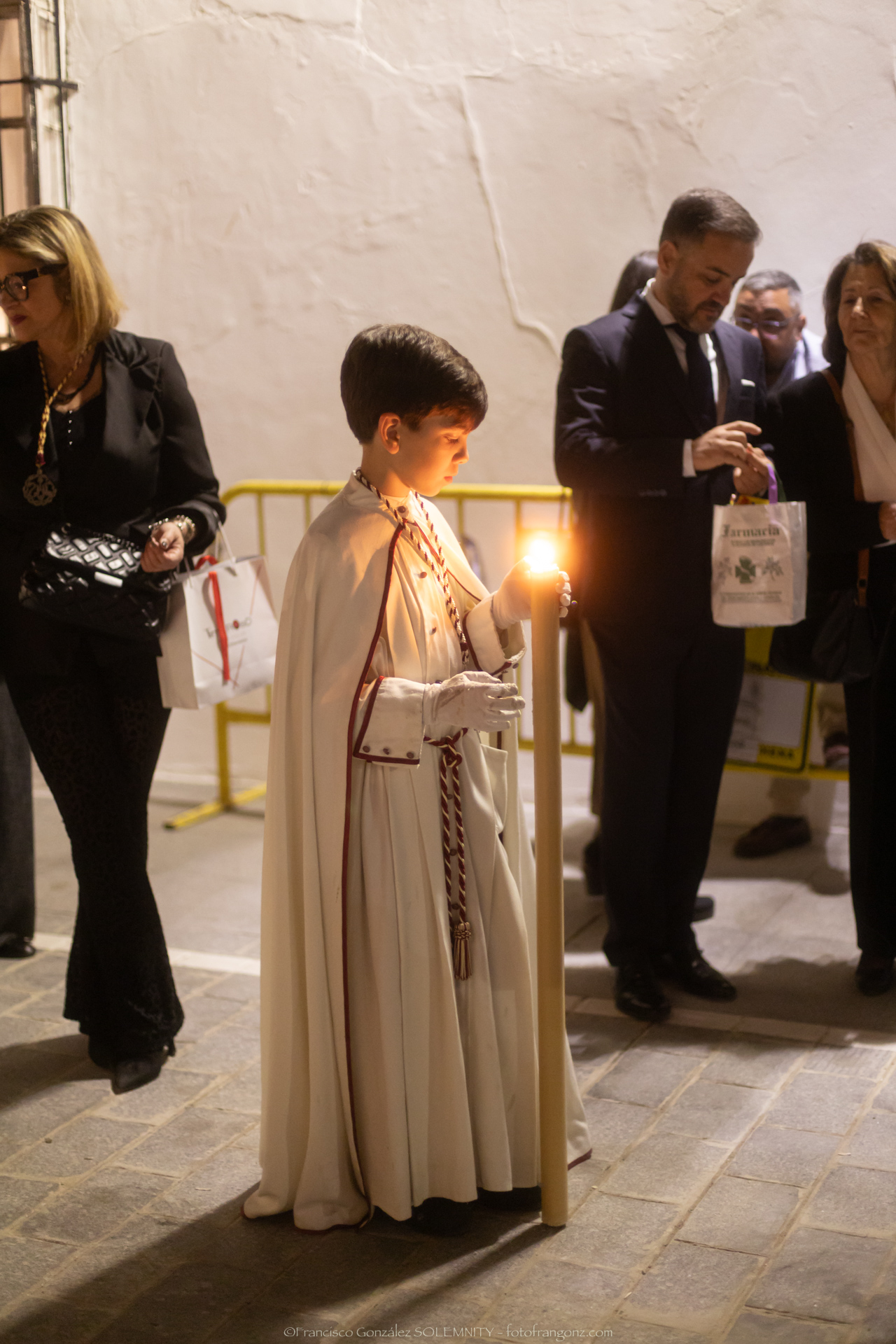
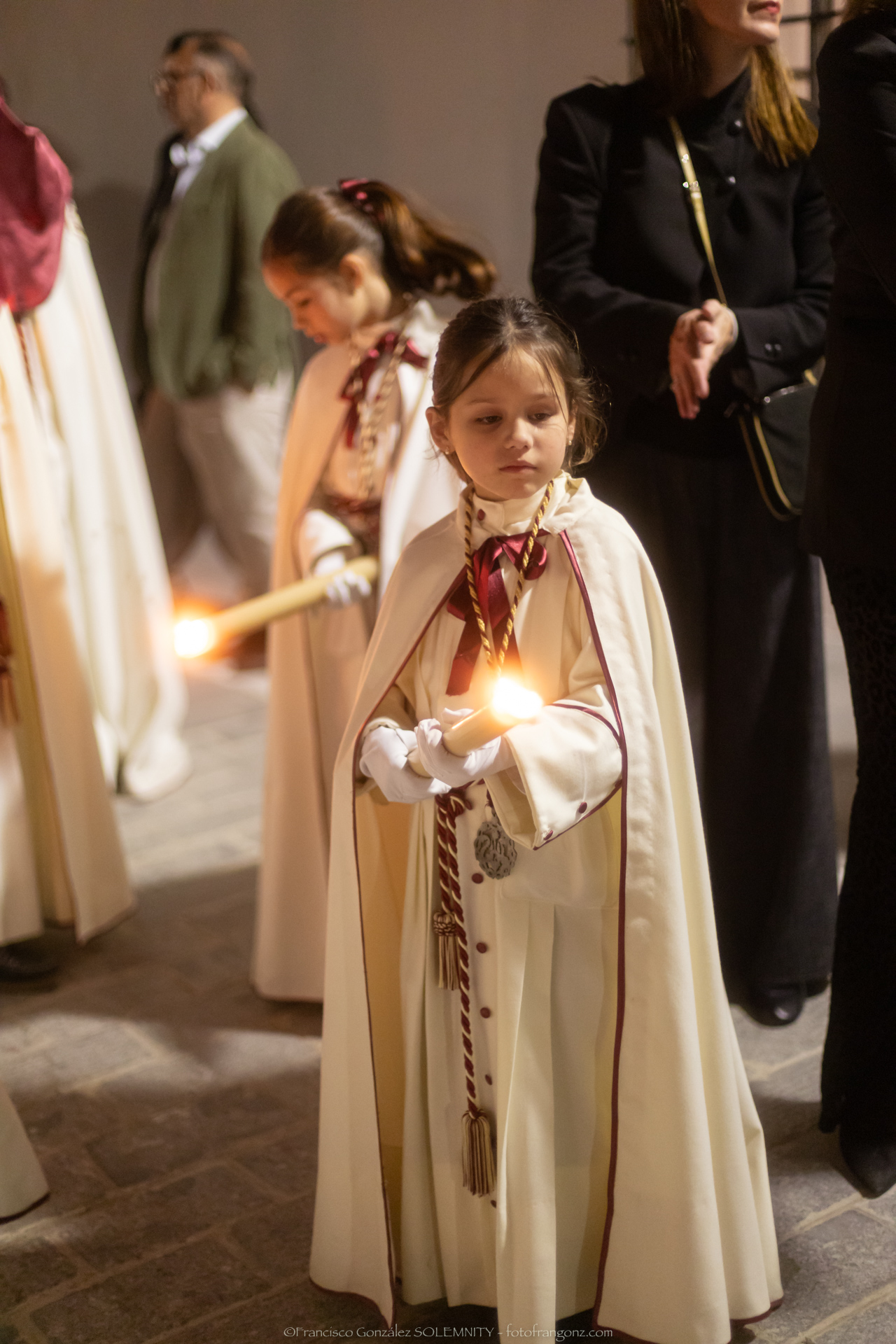
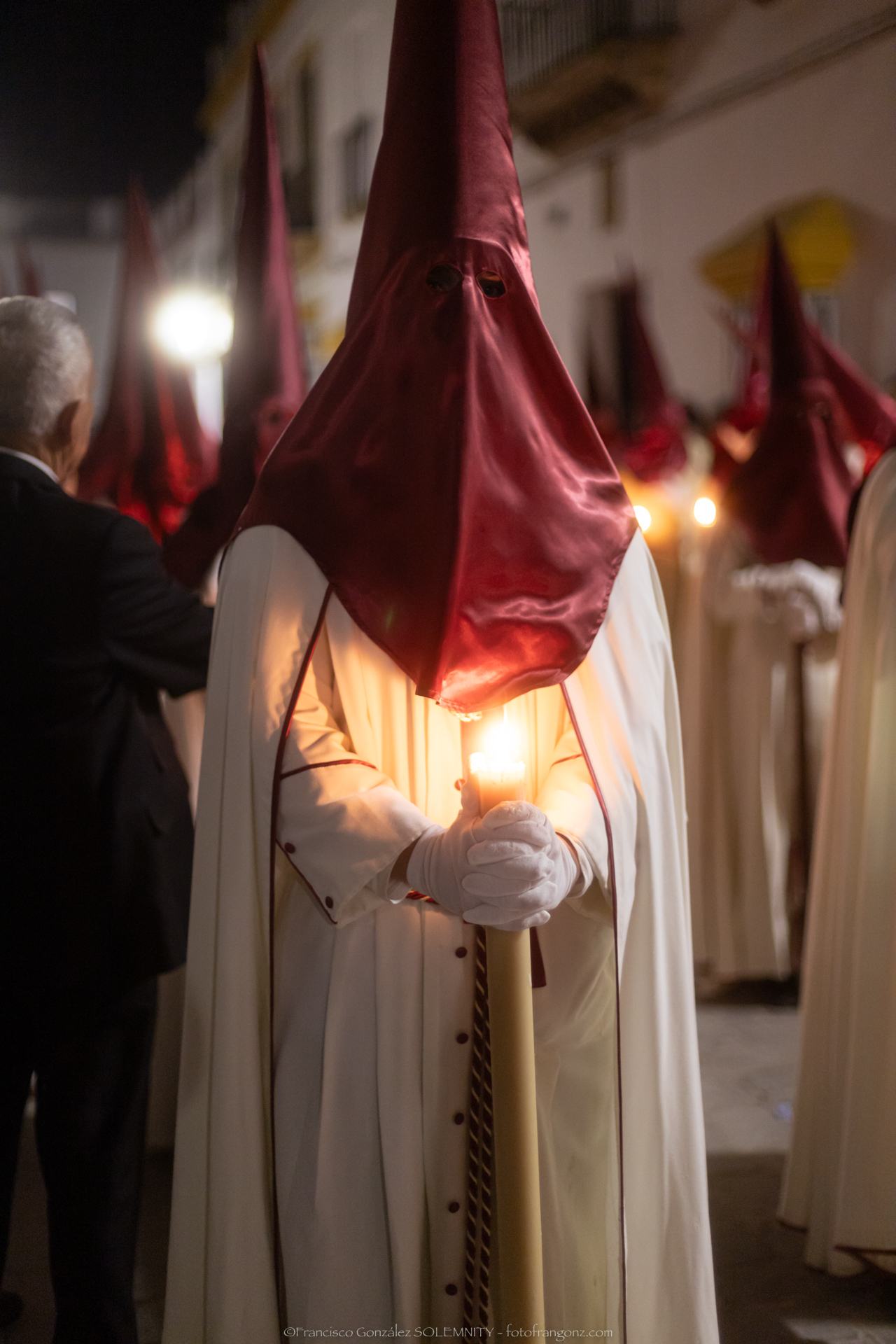
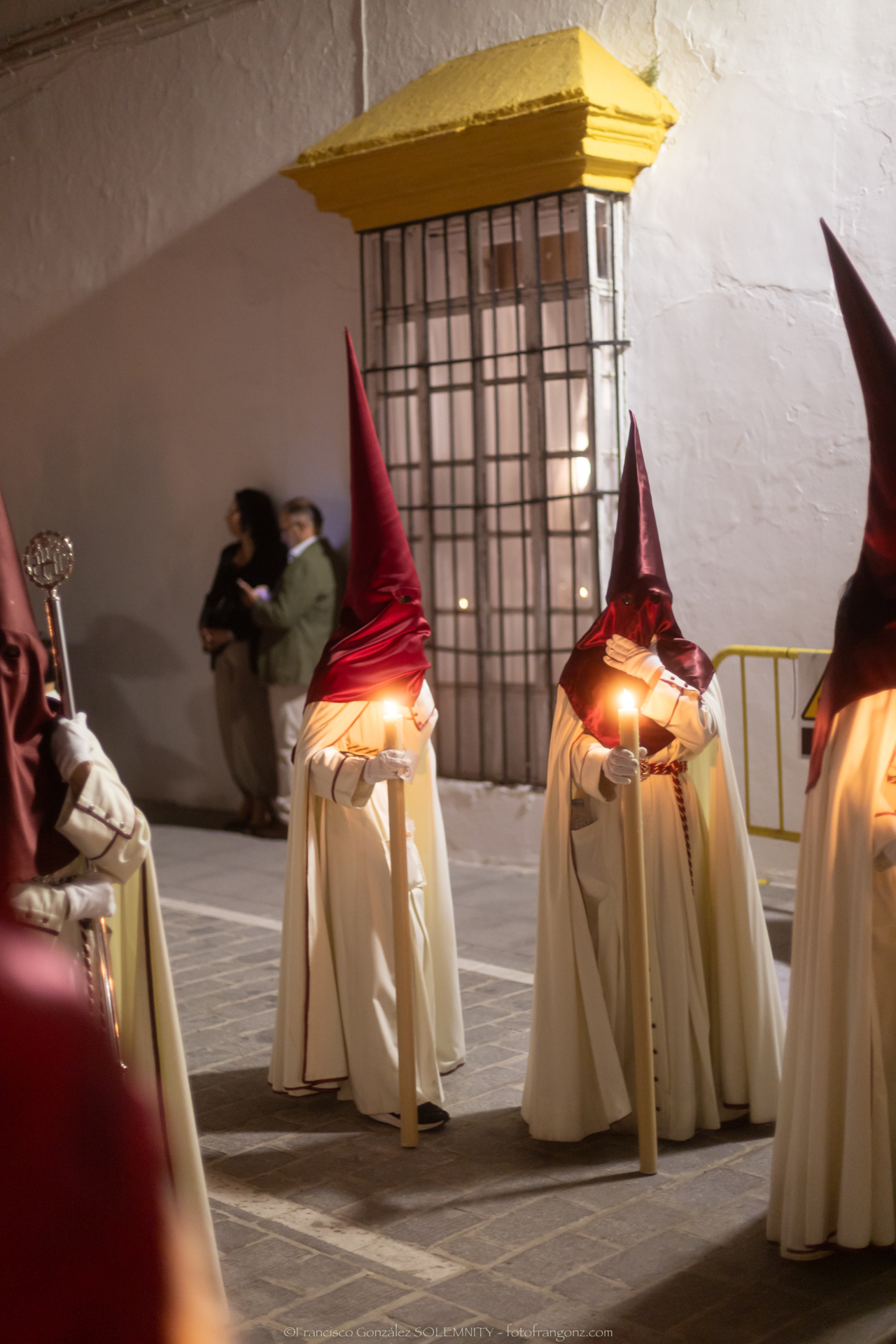
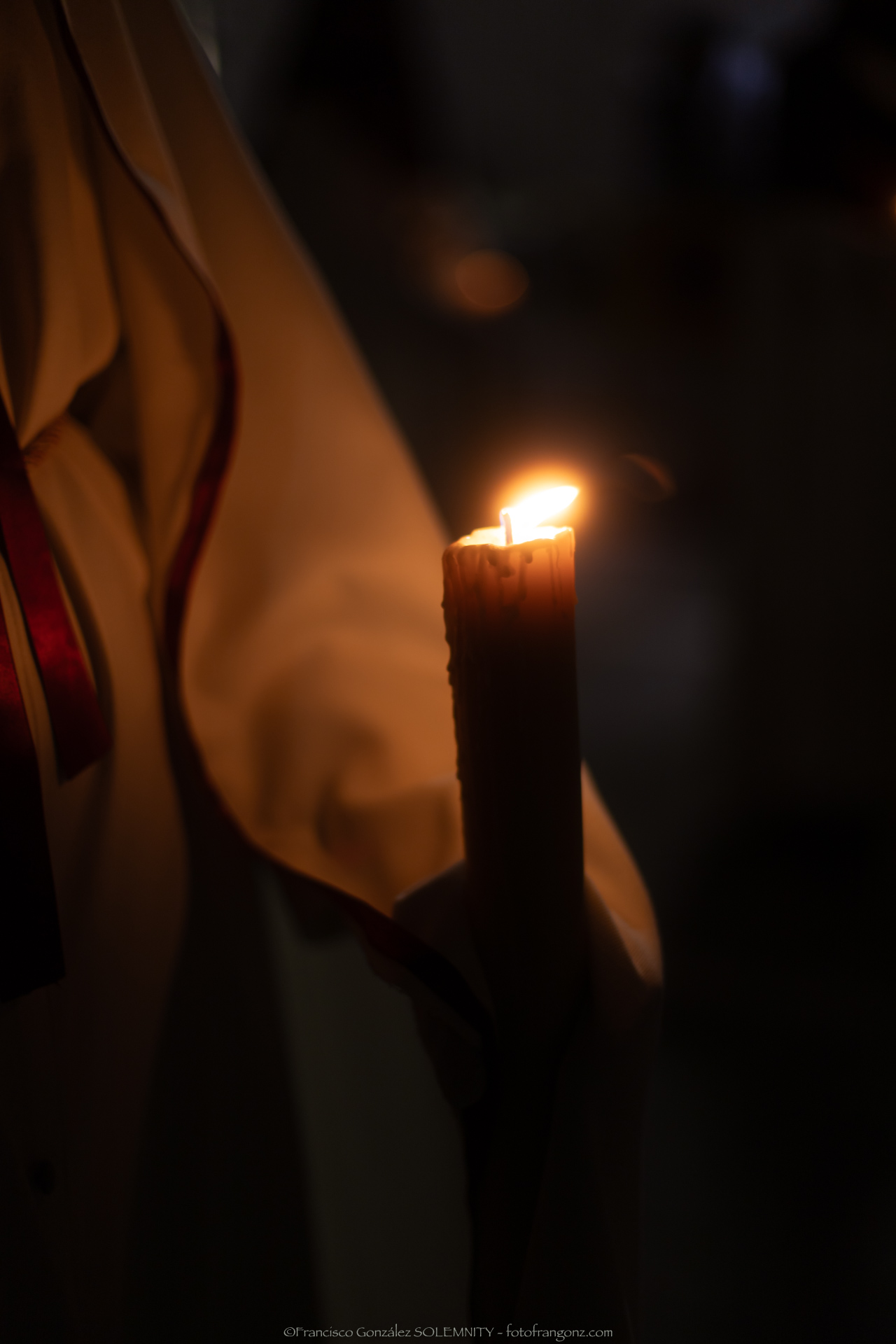
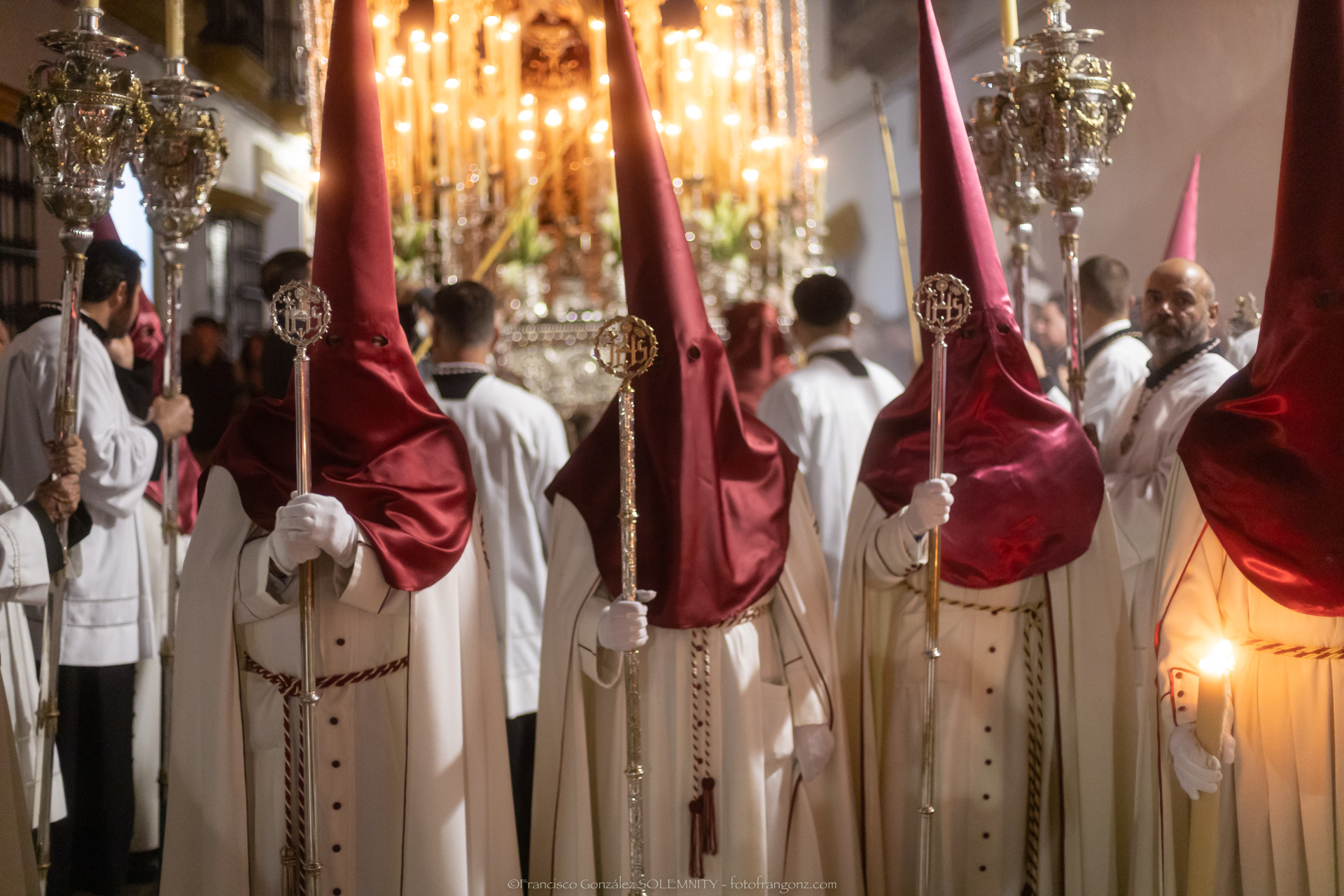
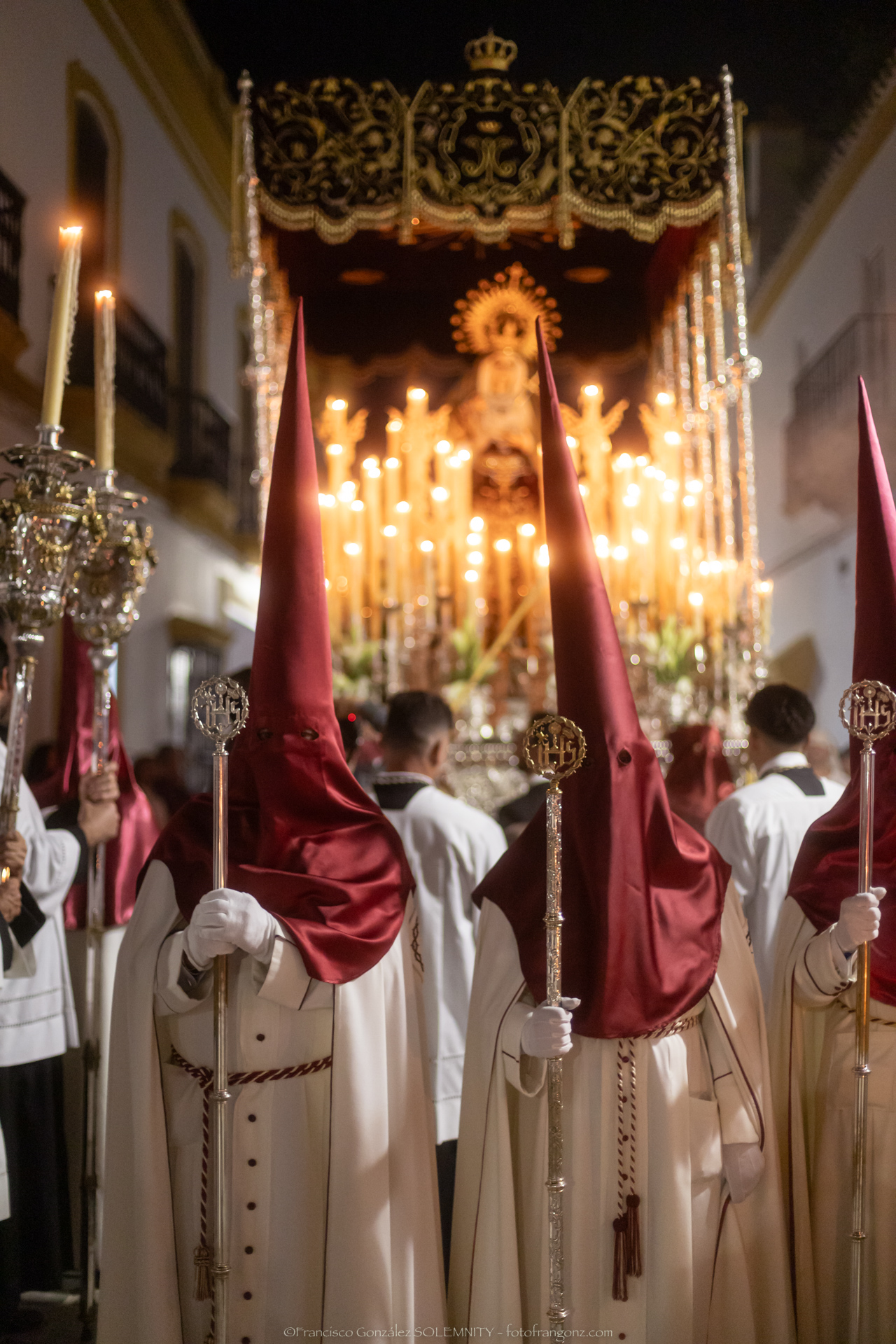
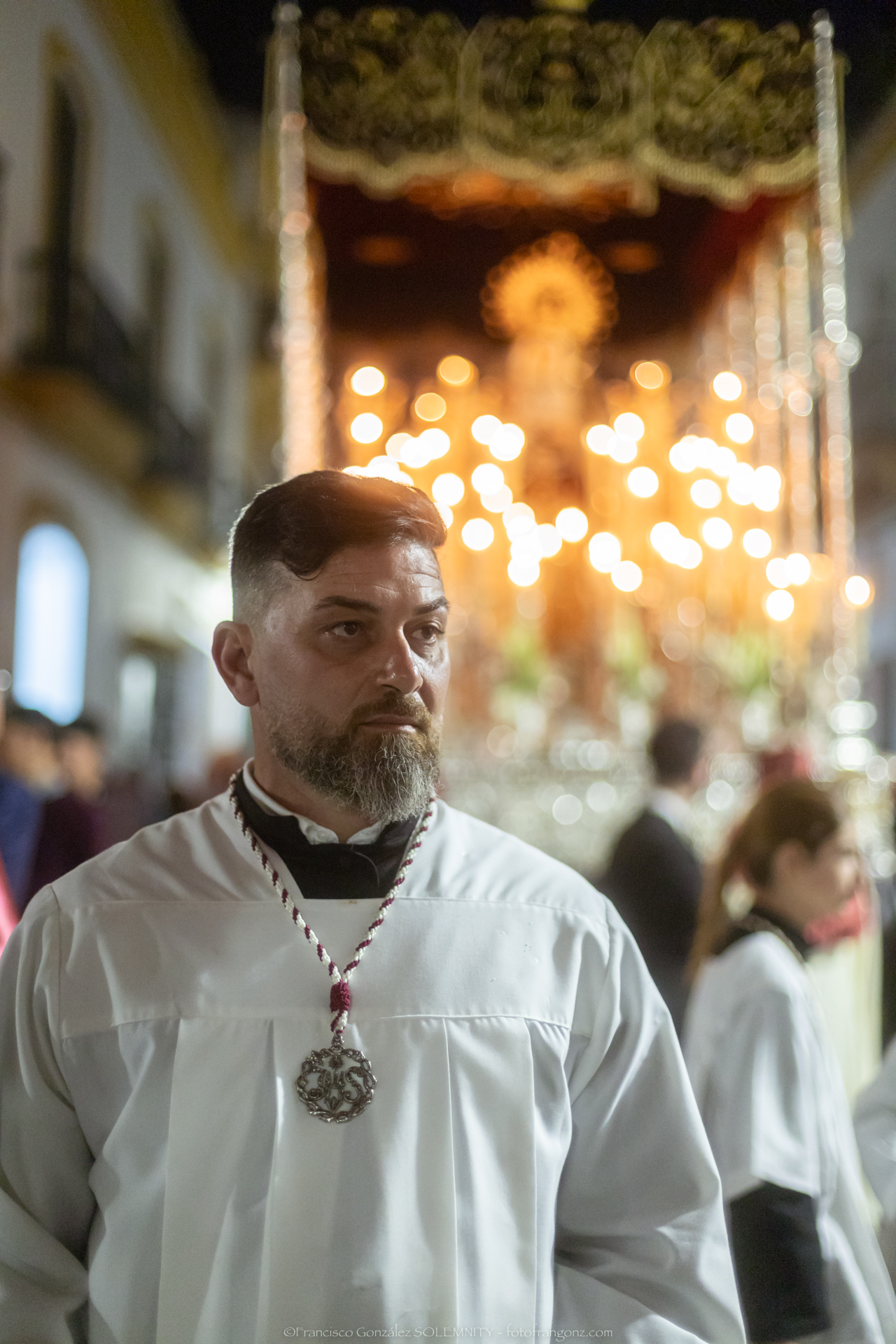
At half past seven in the evening, the doors of the parish church of San Sebastián opening onto Plaza del Dulce Nombre were opened, and the processional cross stepped into the street, marking the beginning of the procession. A total of 445 Nazarene penitents in cream-coloured tunics and burgundy hoods took part, along with numerous children, honouring the nickname of this brotherhood, “the brotherhood of the children”, with special mention to the group of paveros.
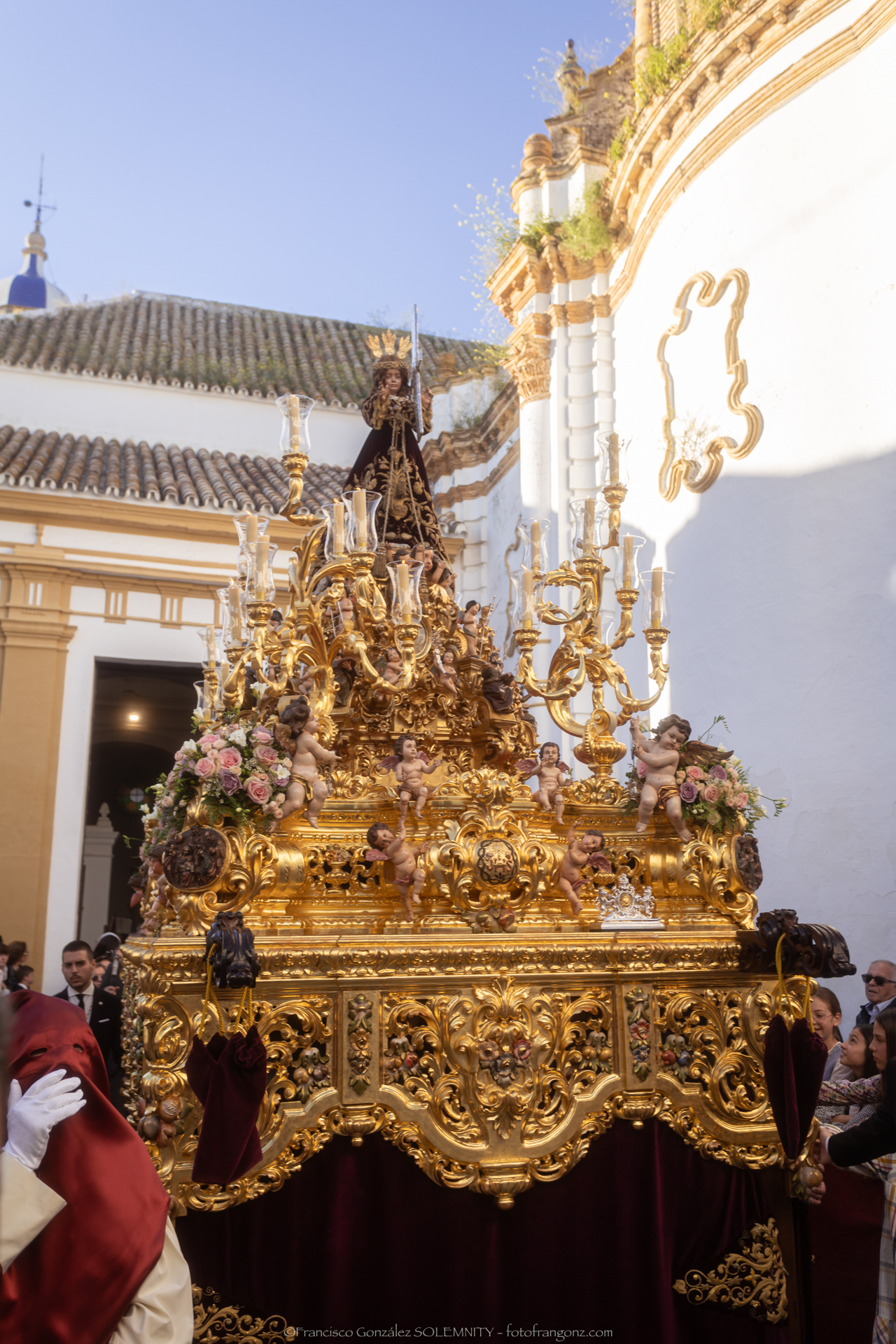
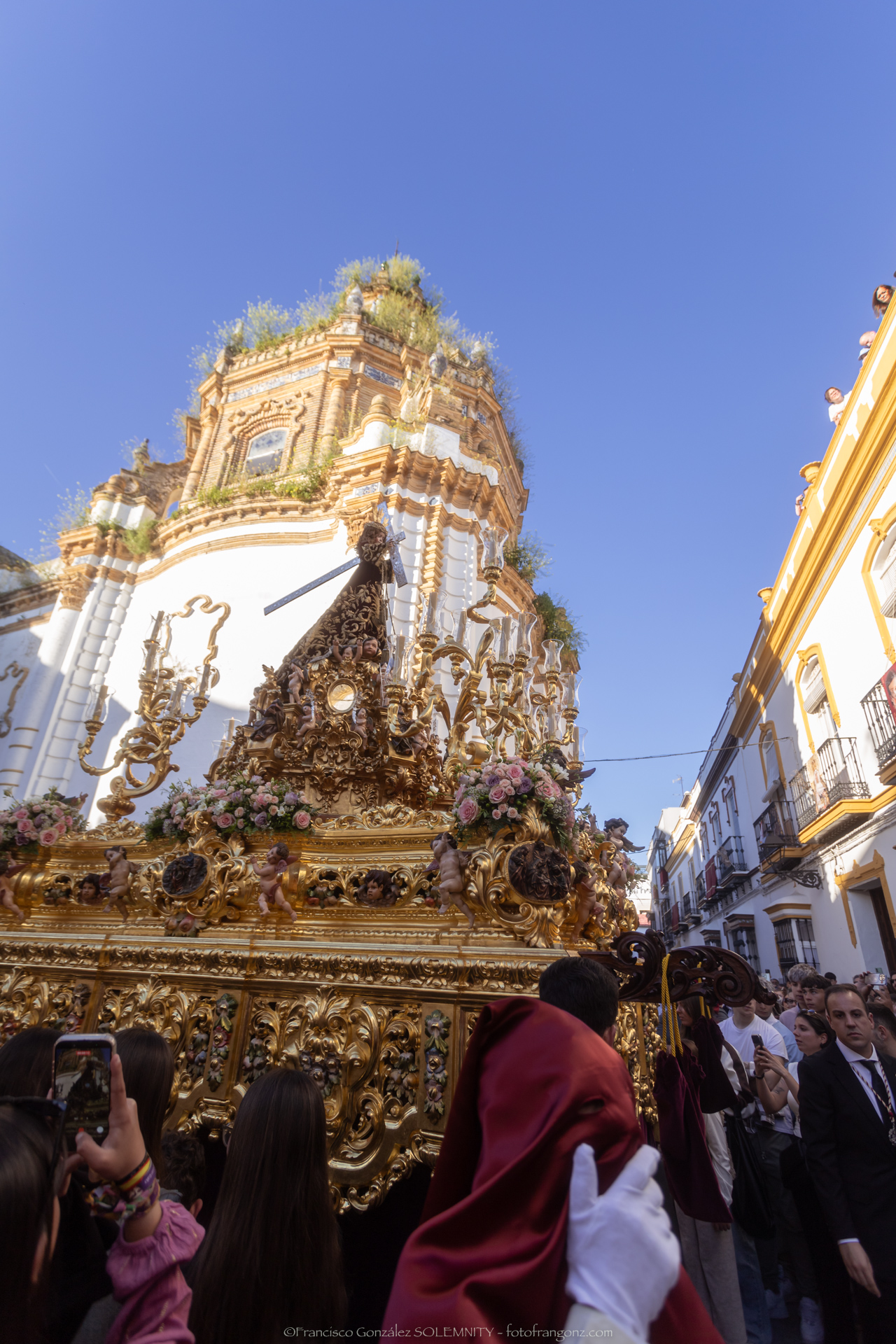
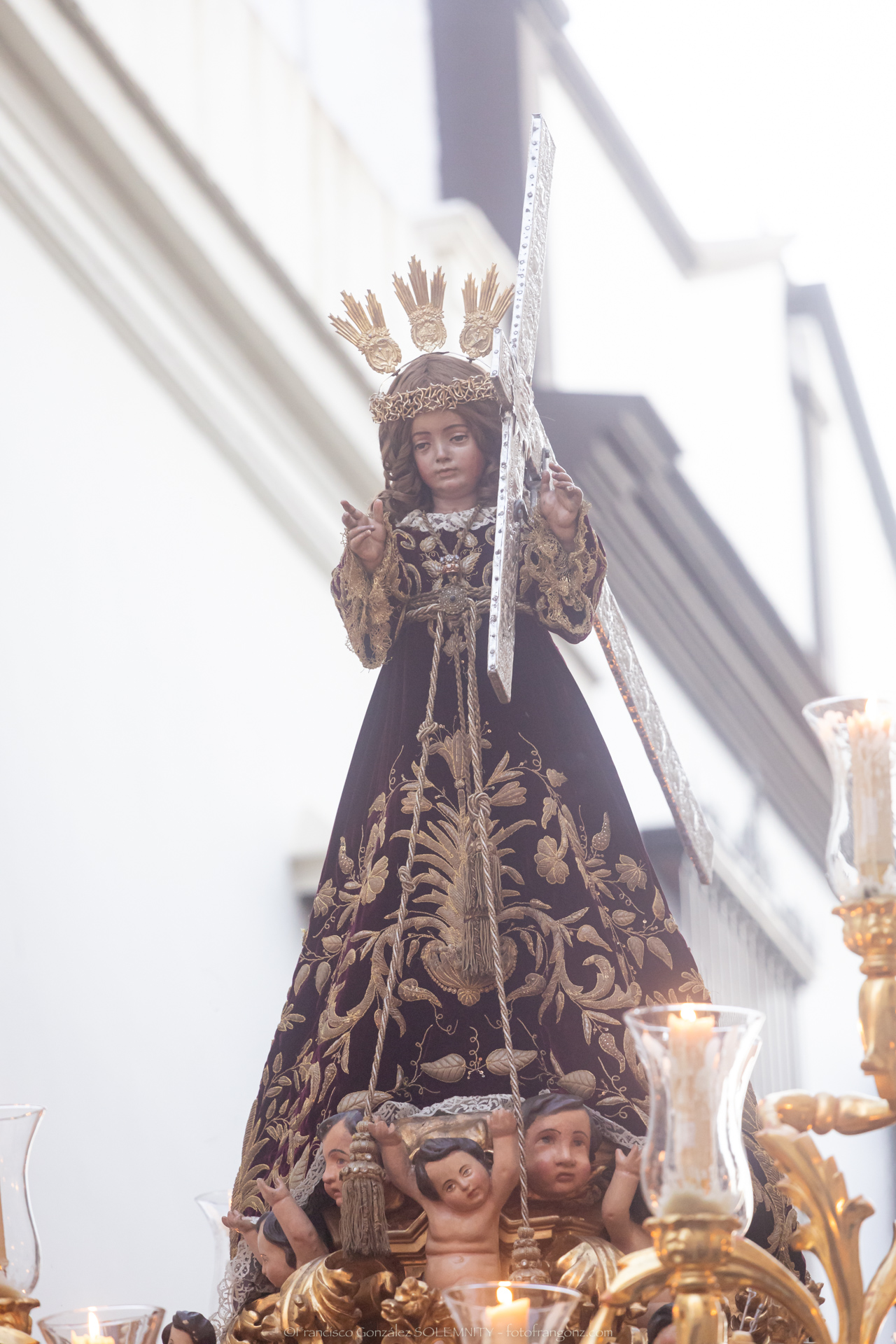
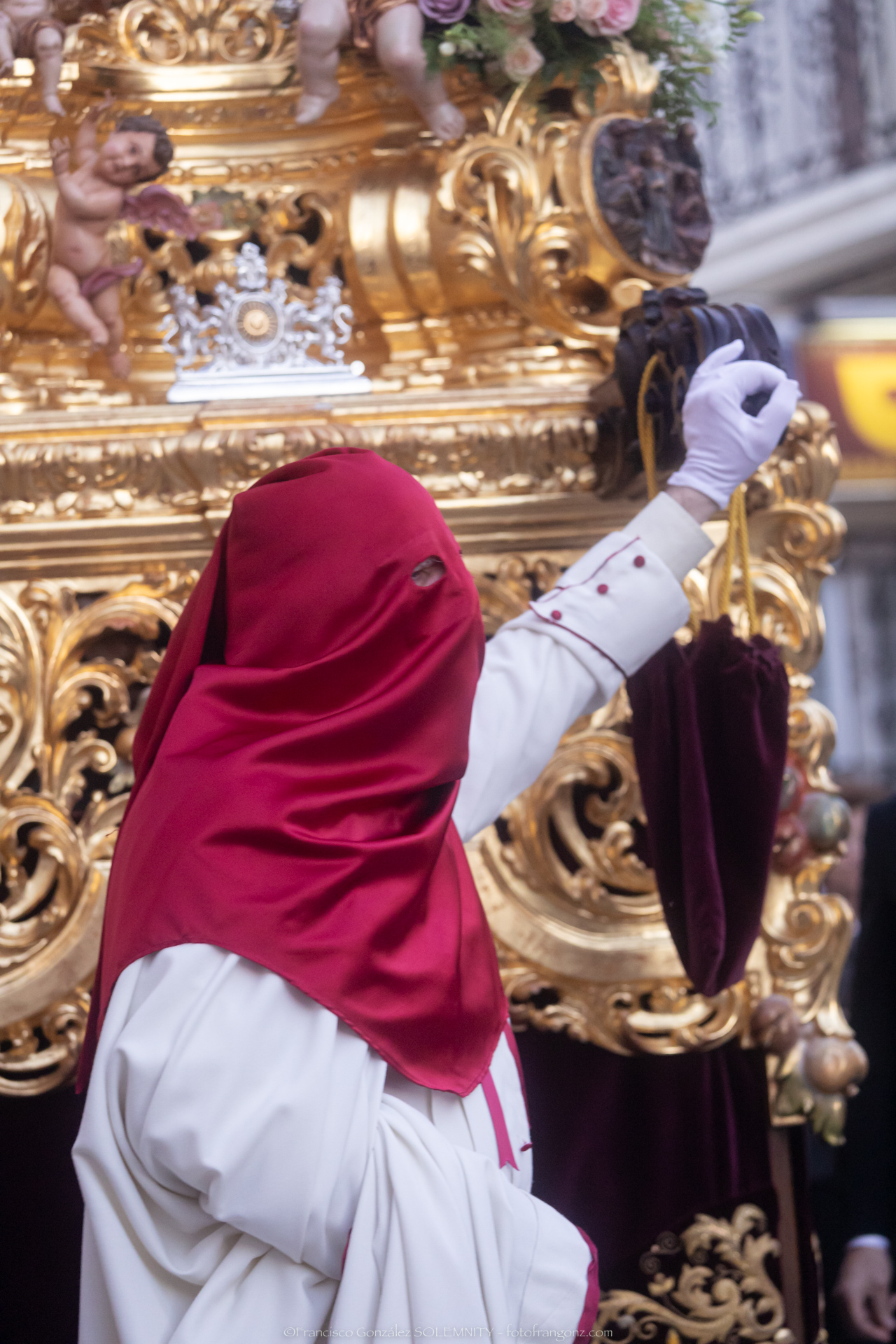
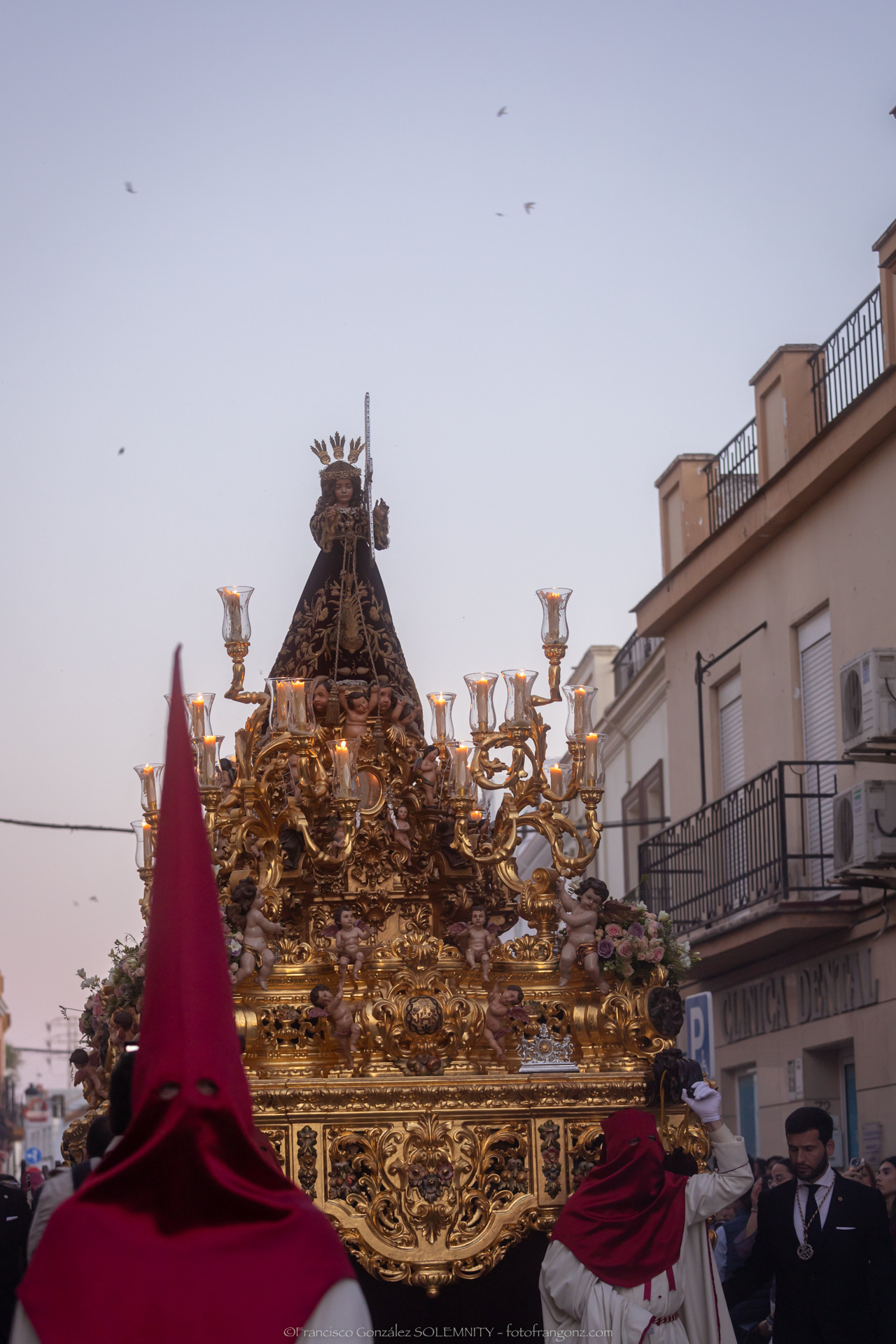
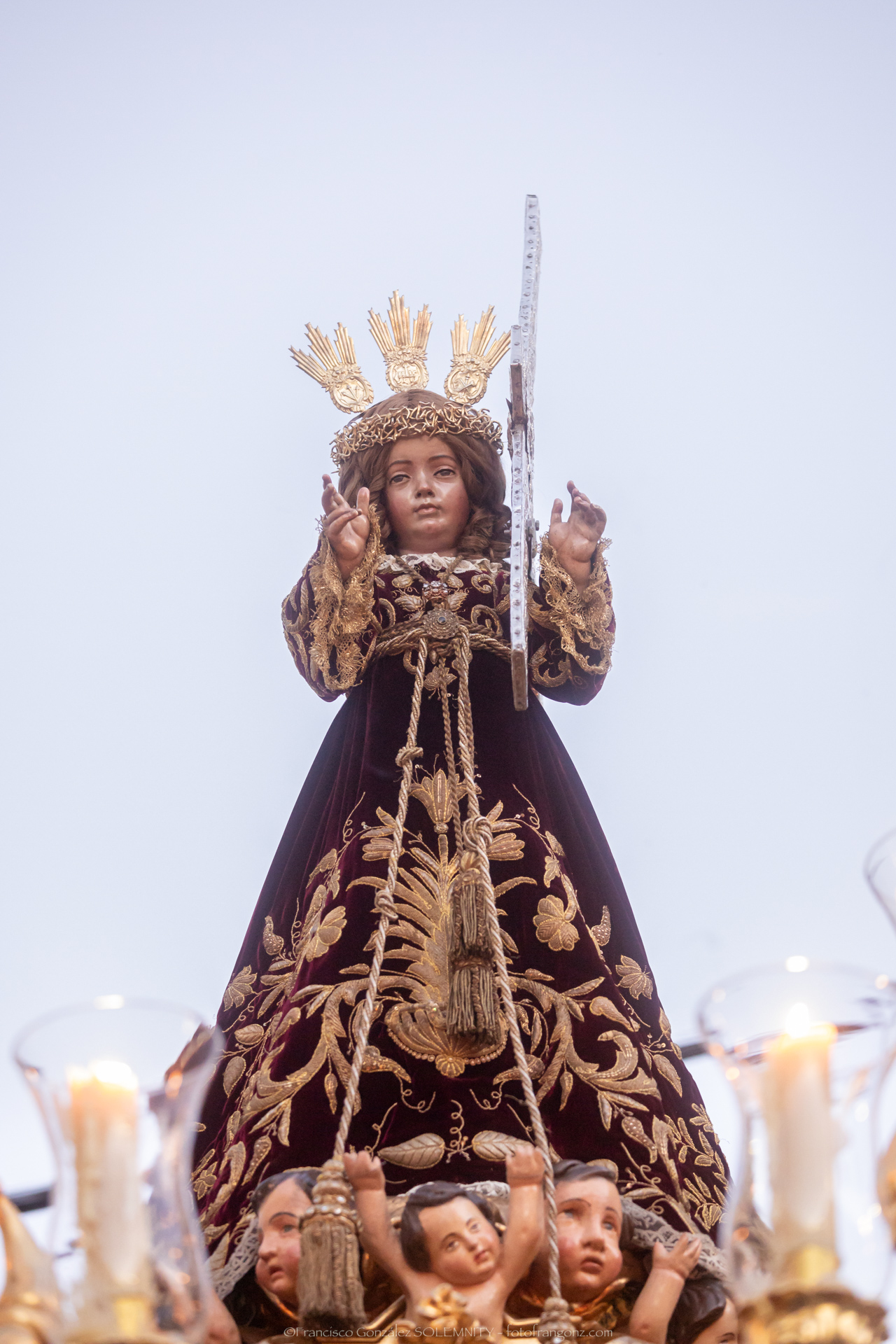
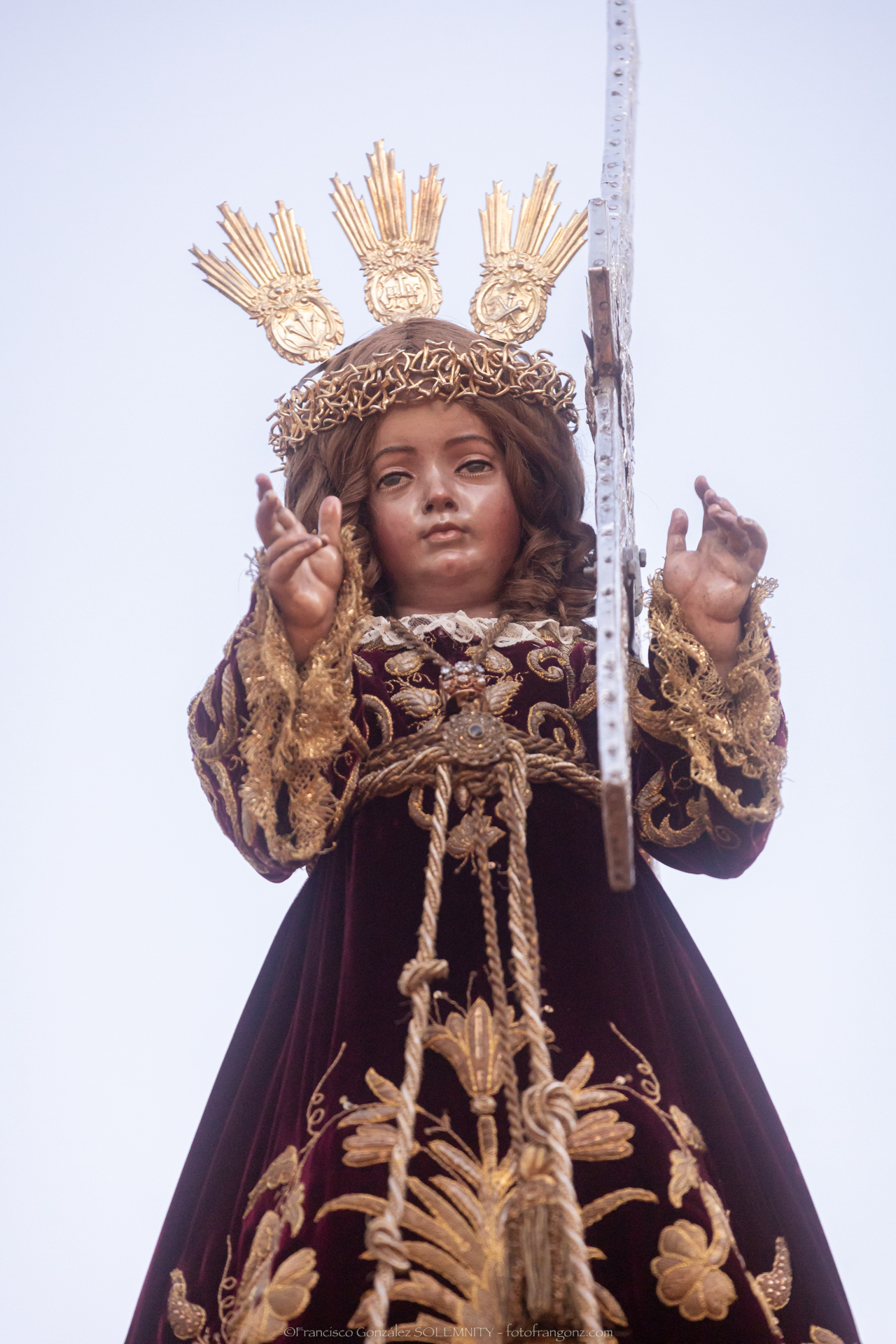
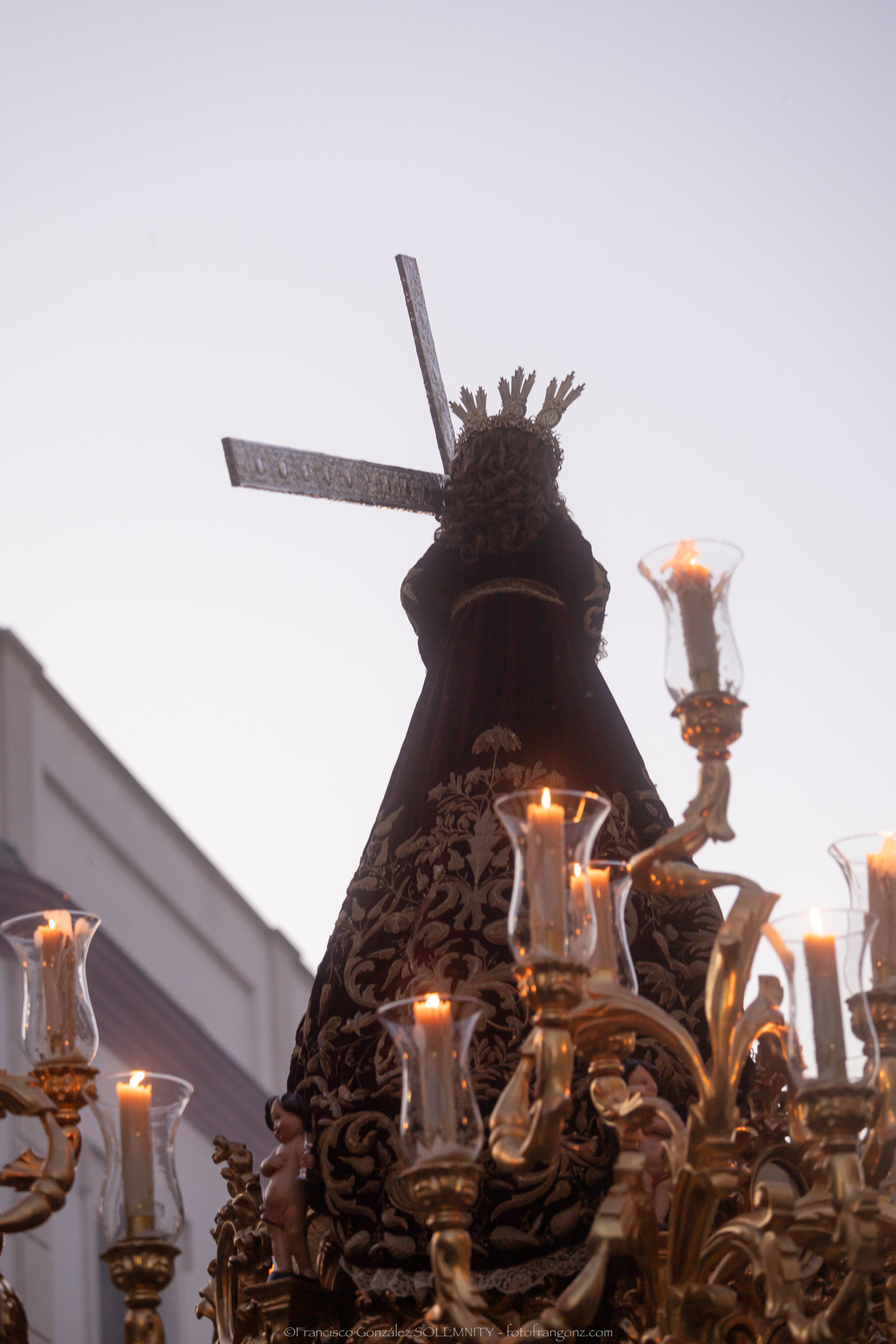
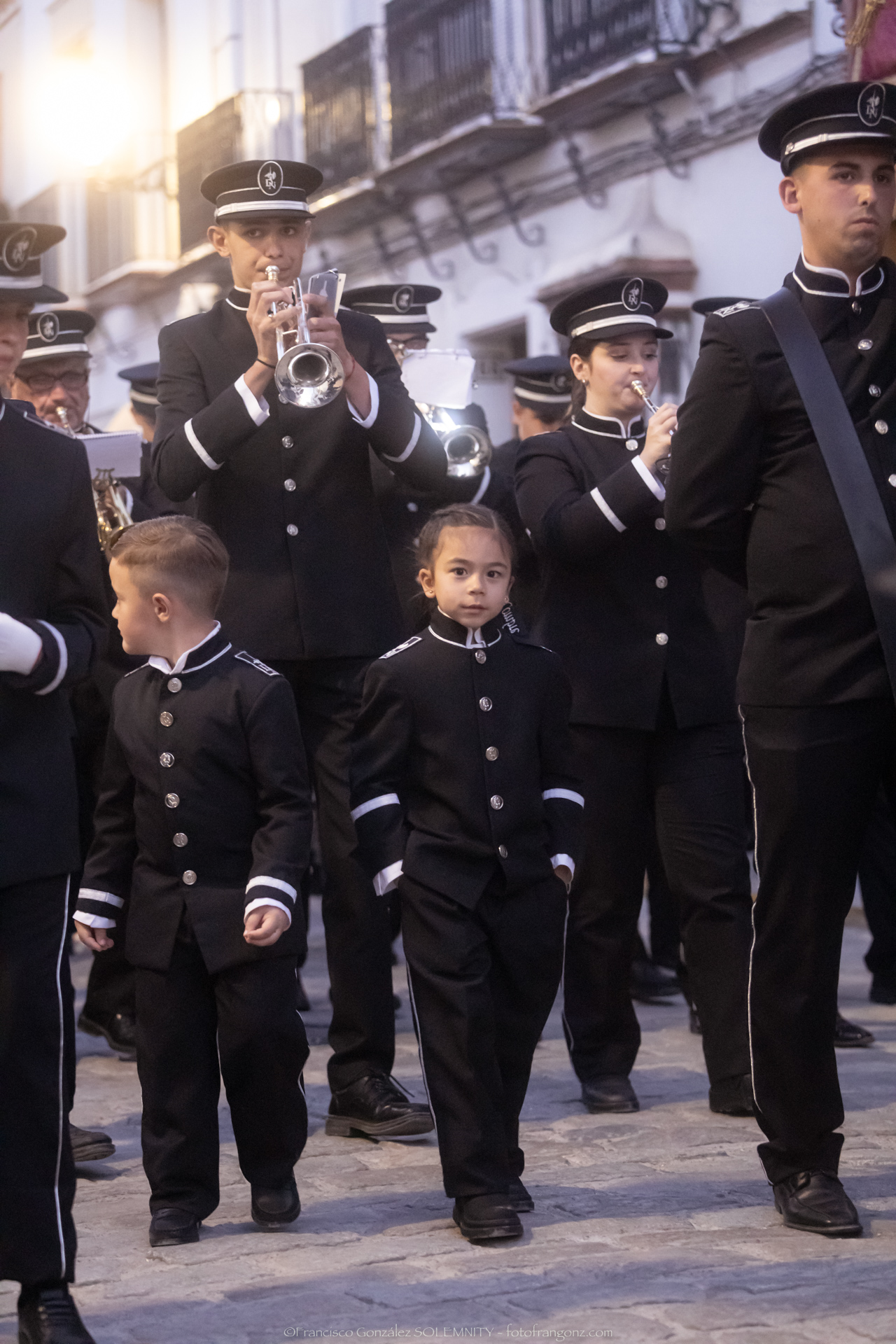
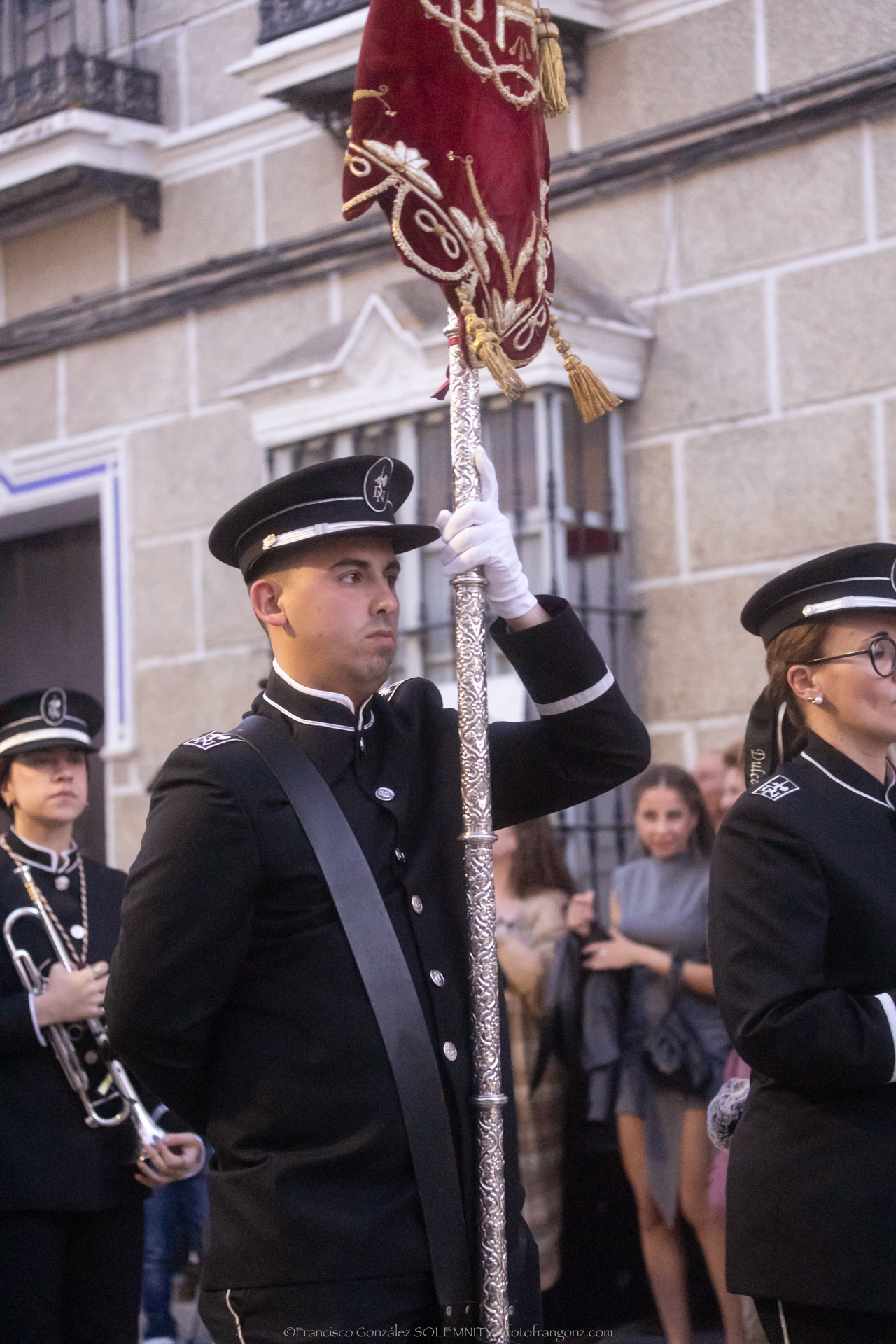
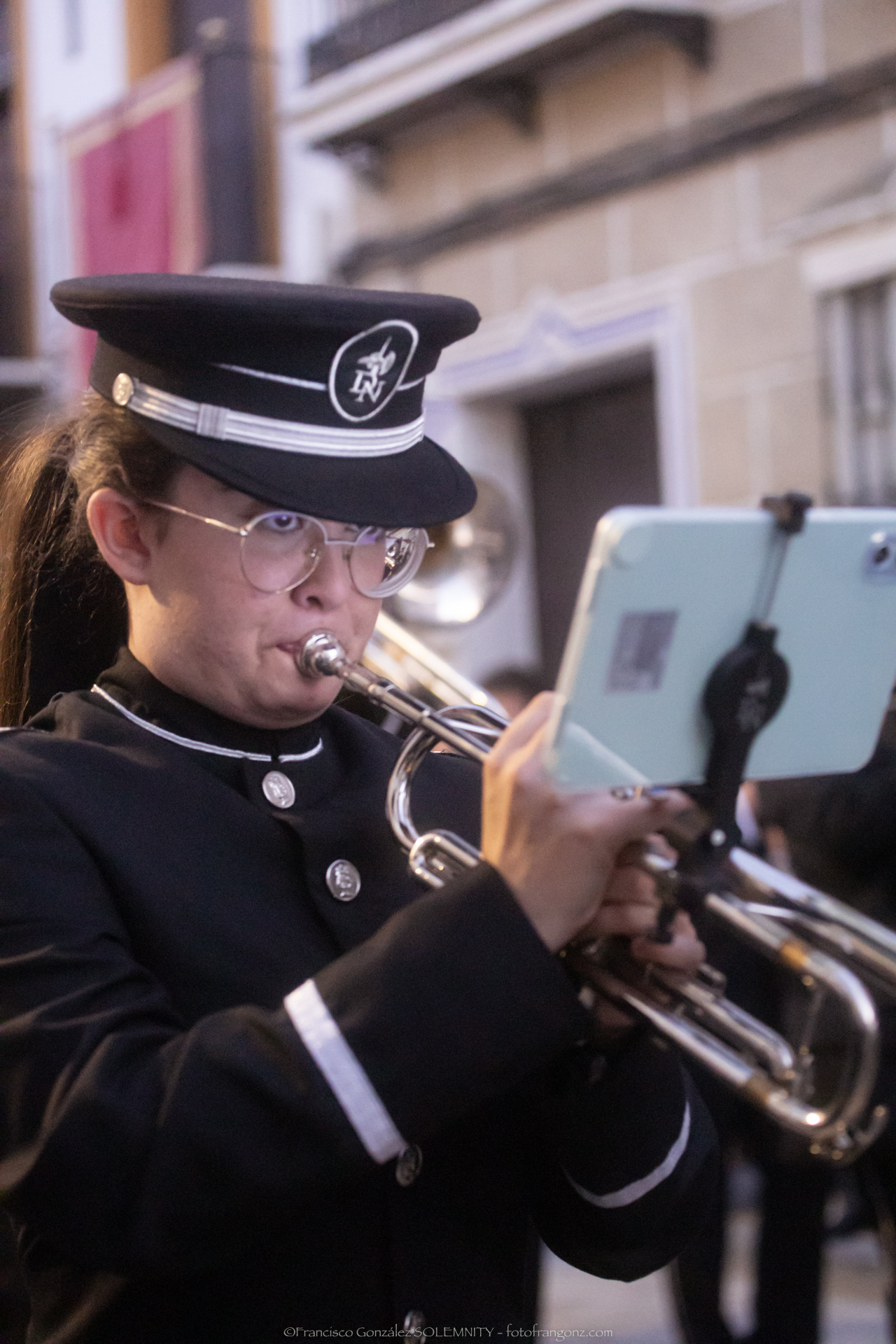
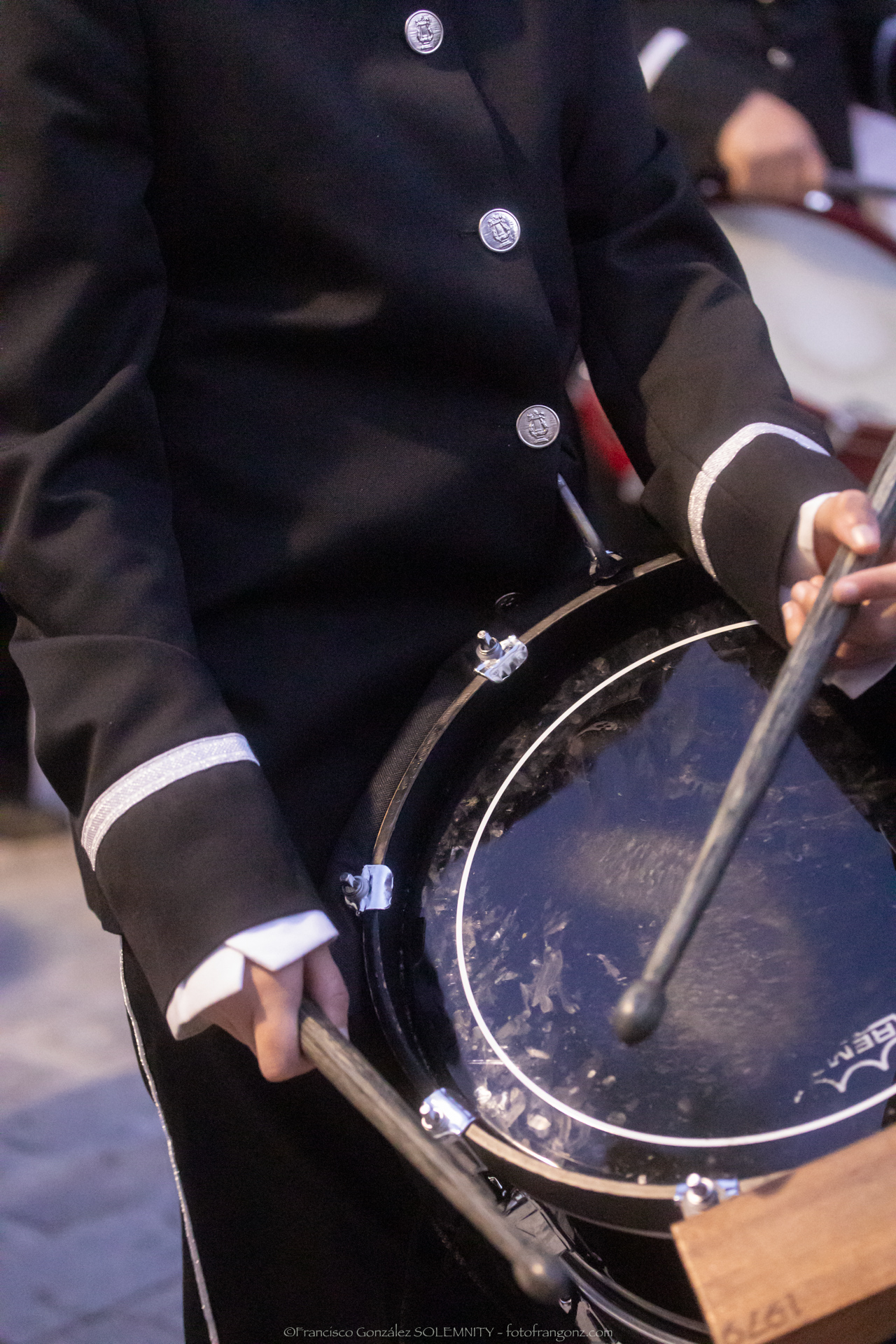
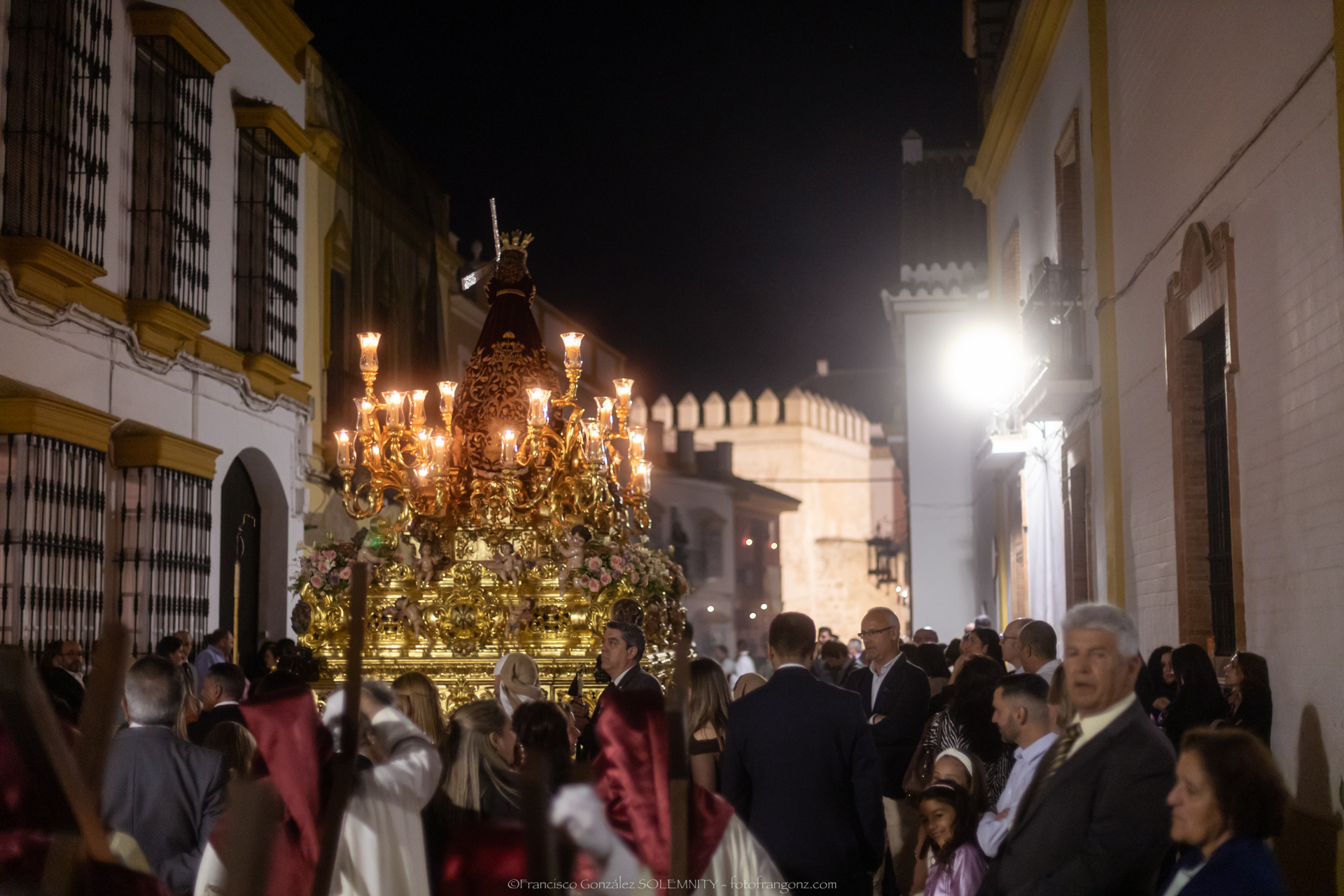
The Child’s float, a gilded “pinecone” in Baroque style, decorated with mirrors and angels, and whose candelabra has been modified this year to make it more compact, folded inward into the float, constitutes what is known as an “allegorical” float, since it represents a metaphorical image of the Child Jesus carrying the cross, referring to dreams he had as a child. This carved and polychromed wooden figure is supposedly attributed to Juan de Oviedo or Martínez Montañés and dates from the 16th century. During its processional outing, the Child wears a train tunic embroidered in gold and carries over his left shoulder a sterling silver cross, as well as the wig placed on him for this purpose together with a crown of thorns and golden rays. The float of the Sweet Name is escorted by the Guardia Romana del Dulce Nombre (Roman Guard of the Sweet Name), and by the Asociación Musical Dulce Nombre de Jesús (Musical Association Sweet Name of Jesus), which performed Sempiterno before the national anthem and later Renacer, a march belonging to this musical association.
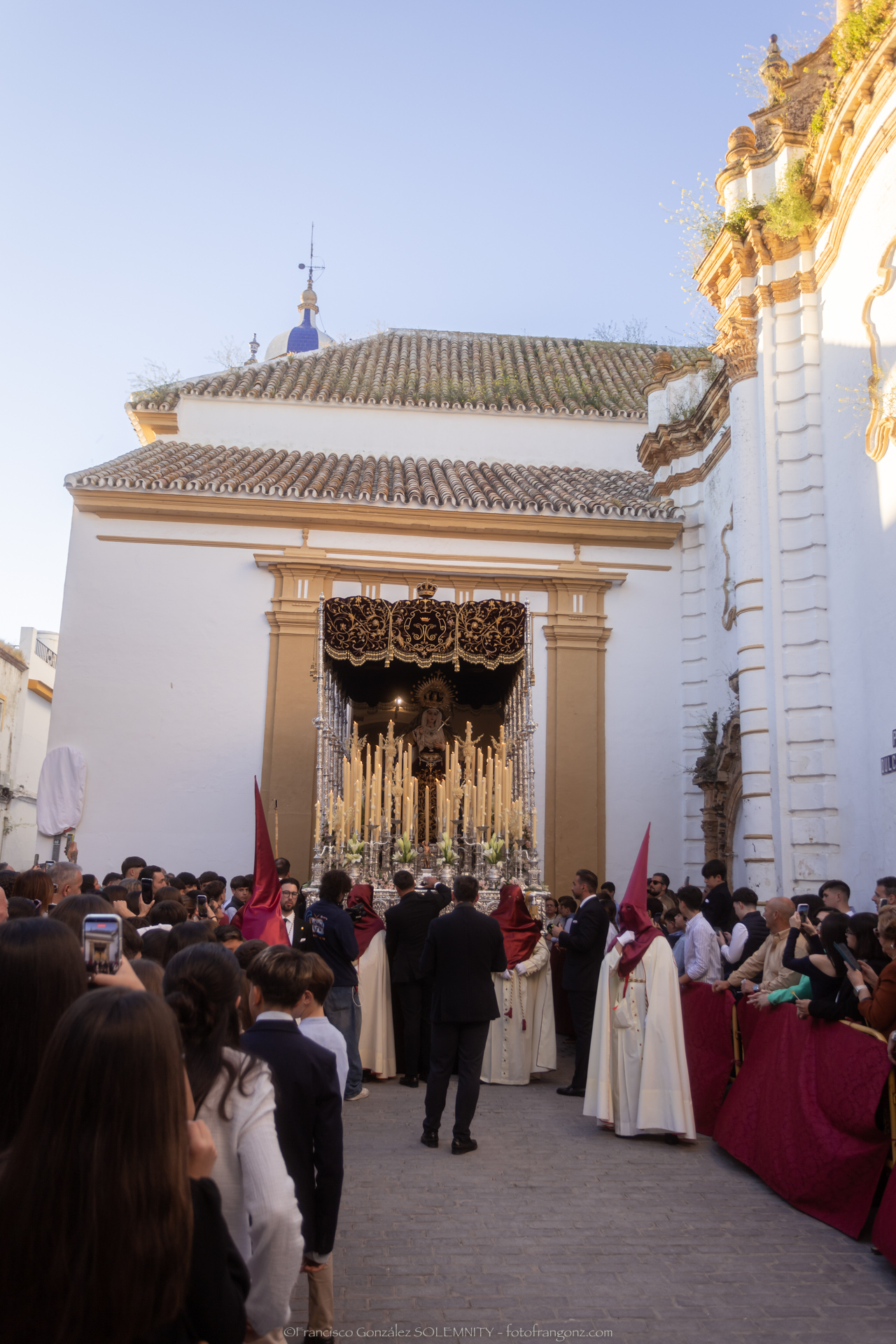
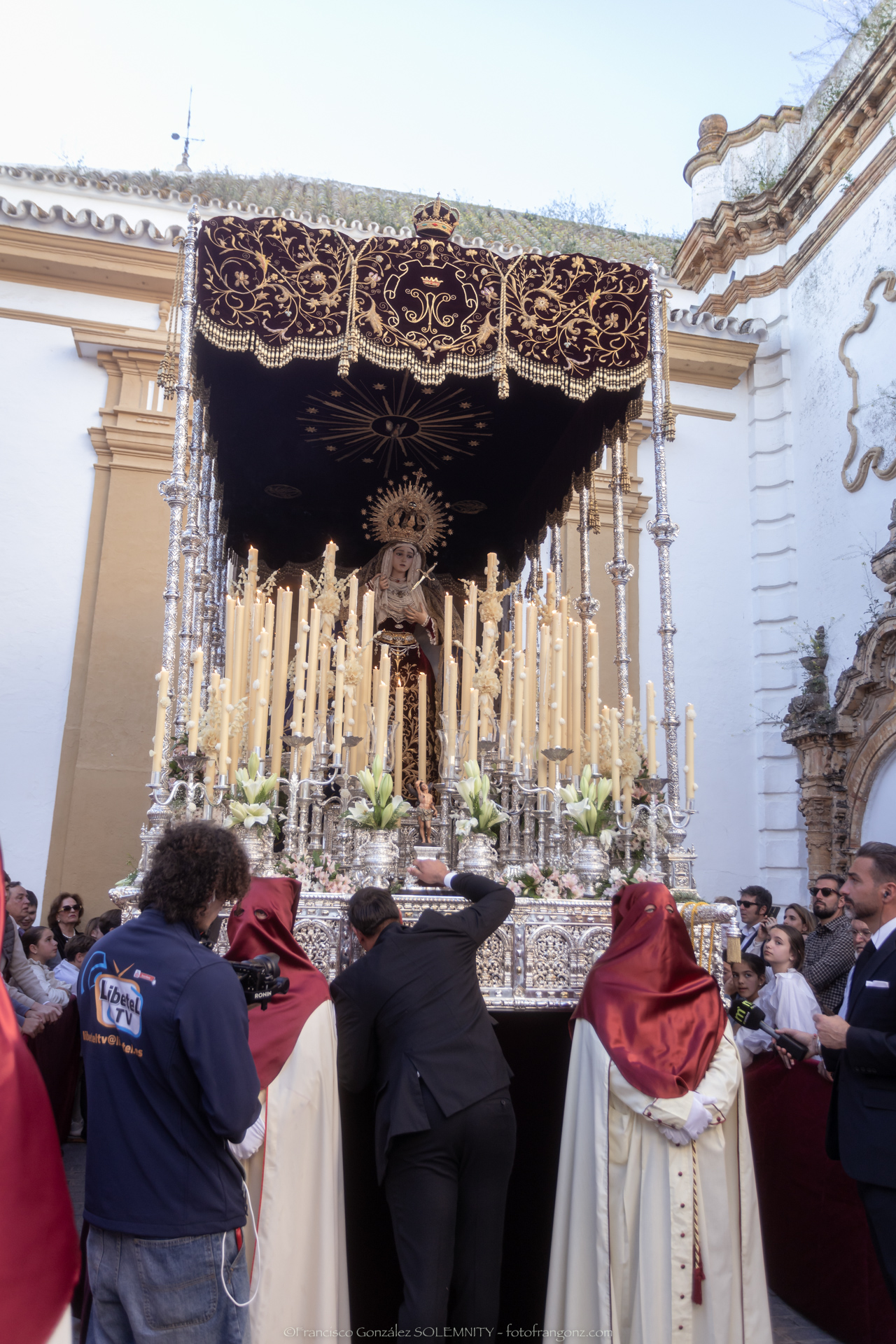
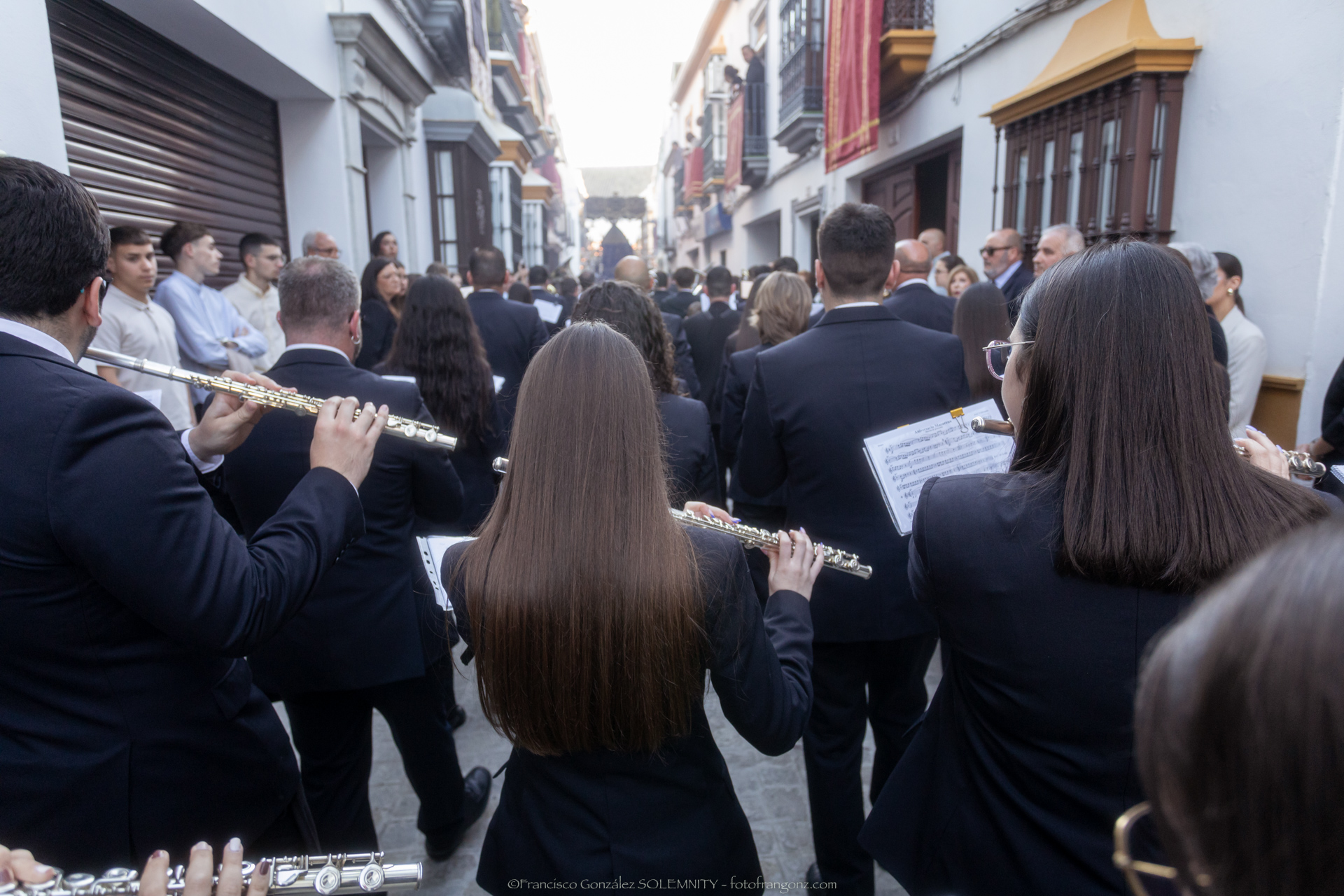
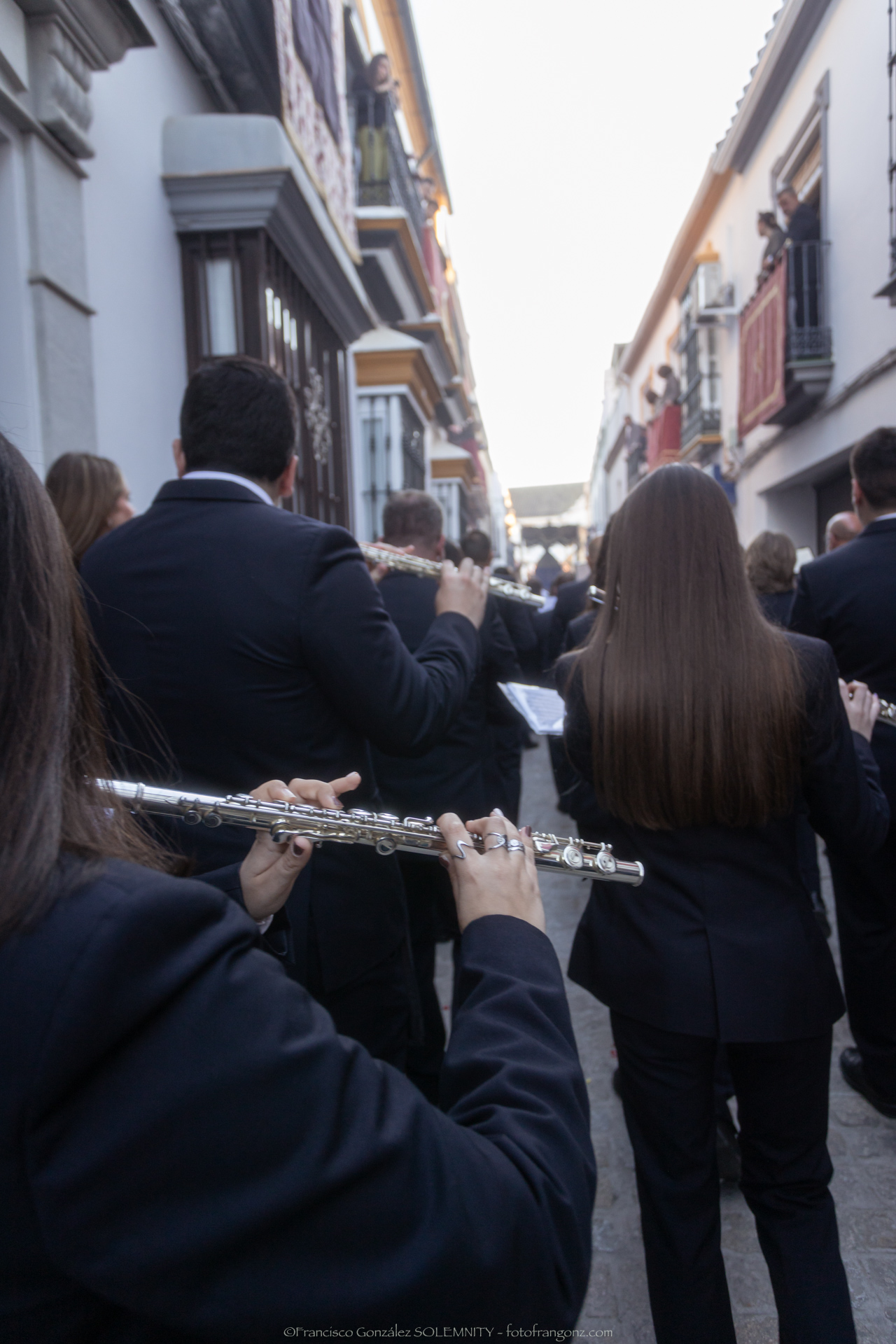
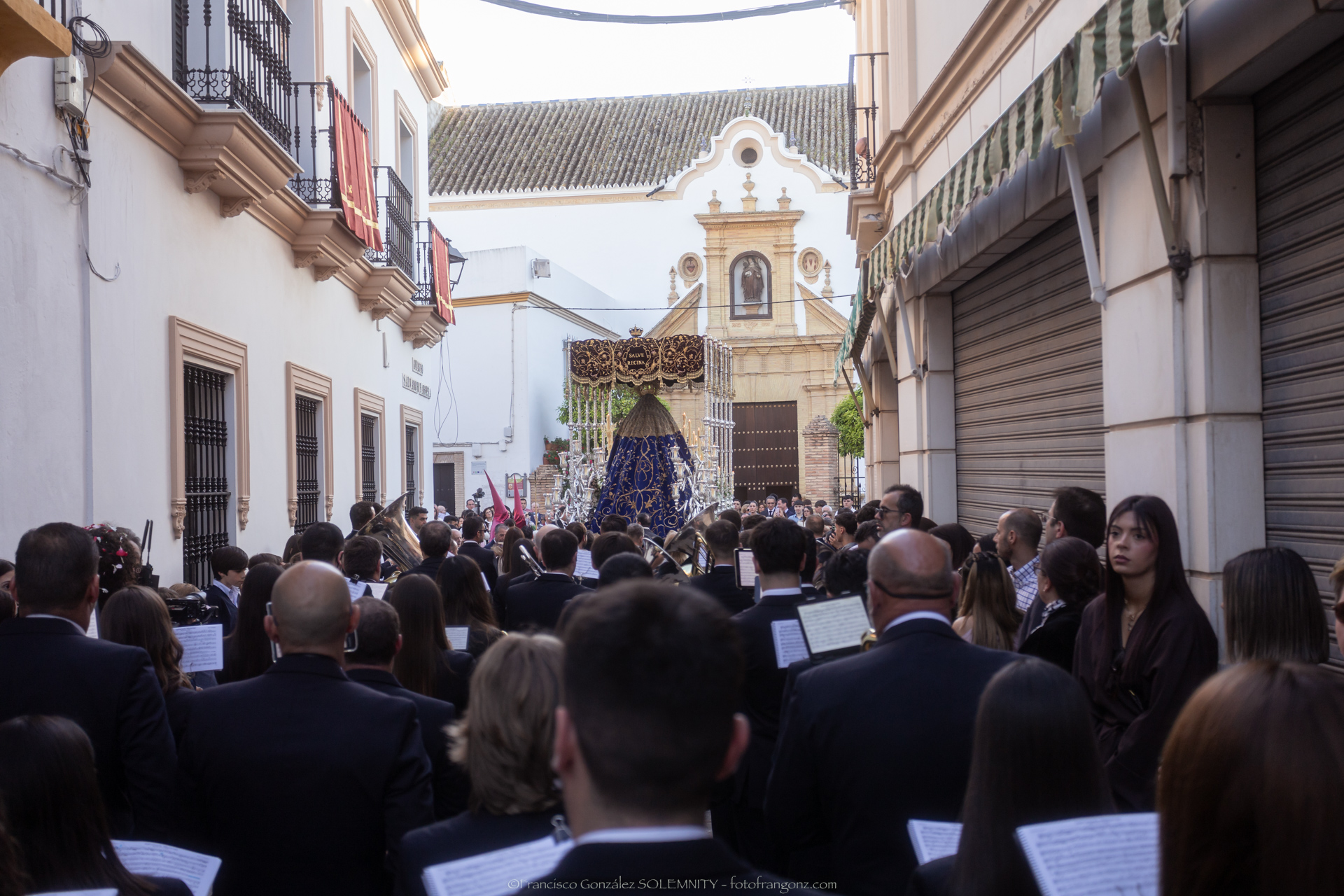
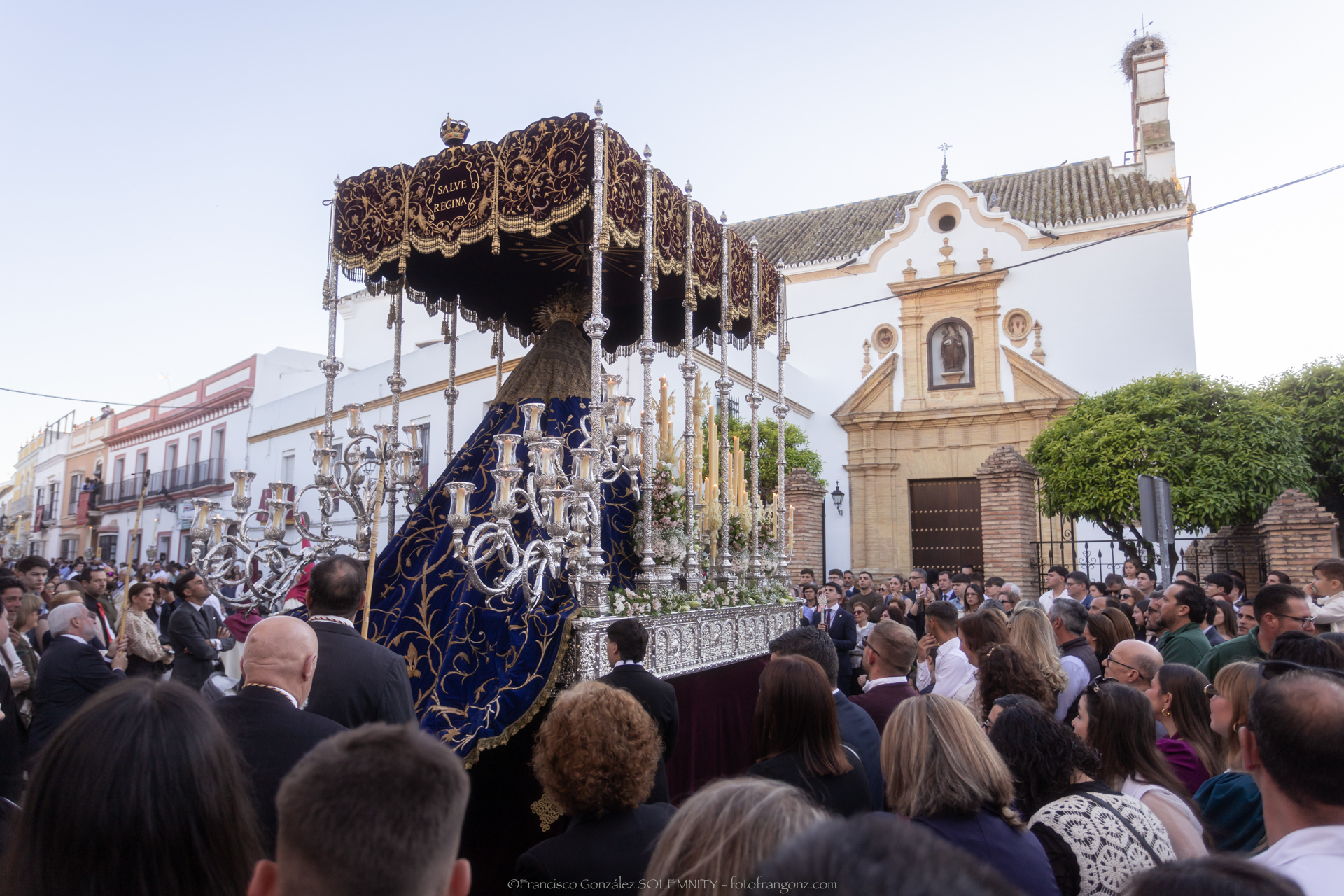
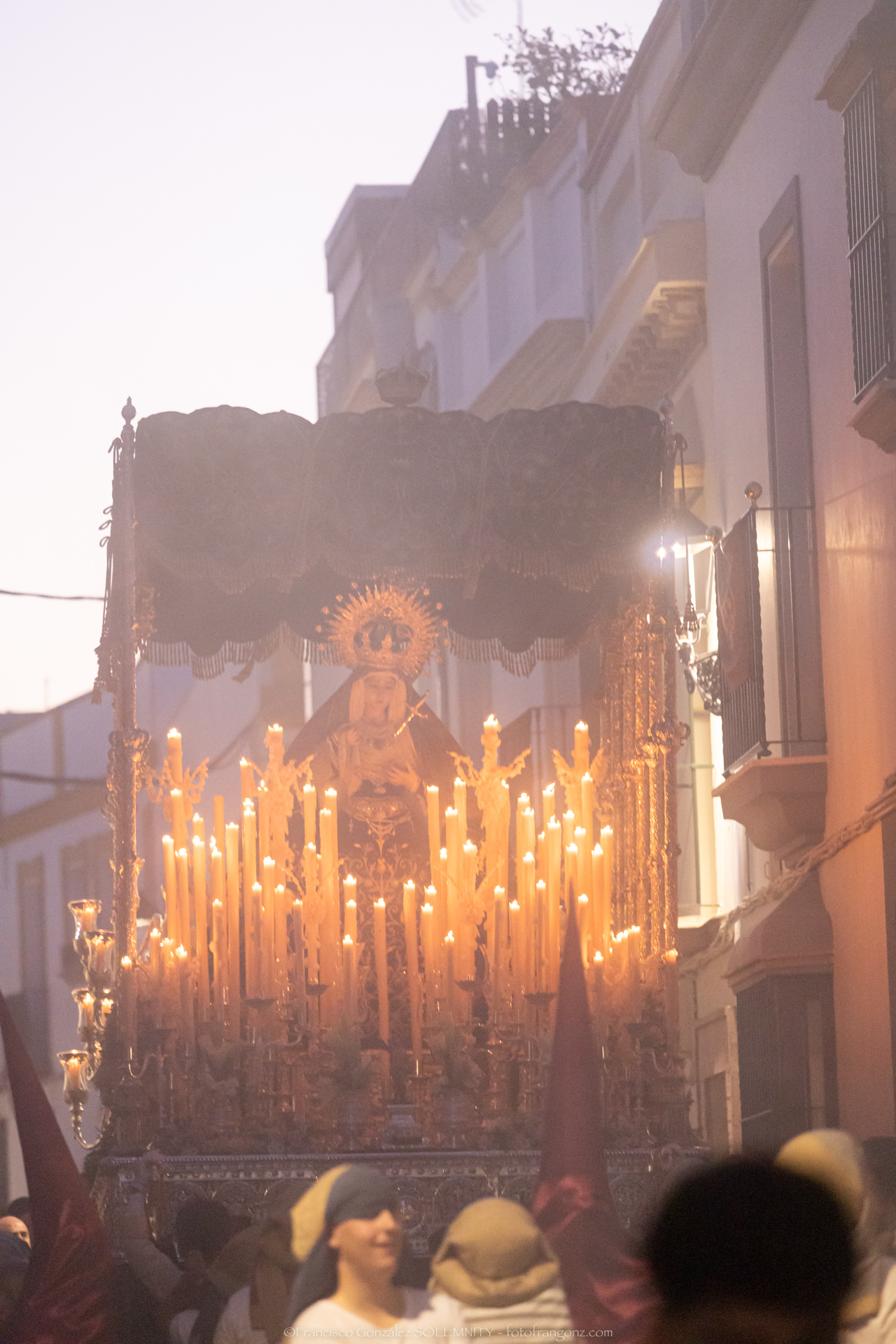
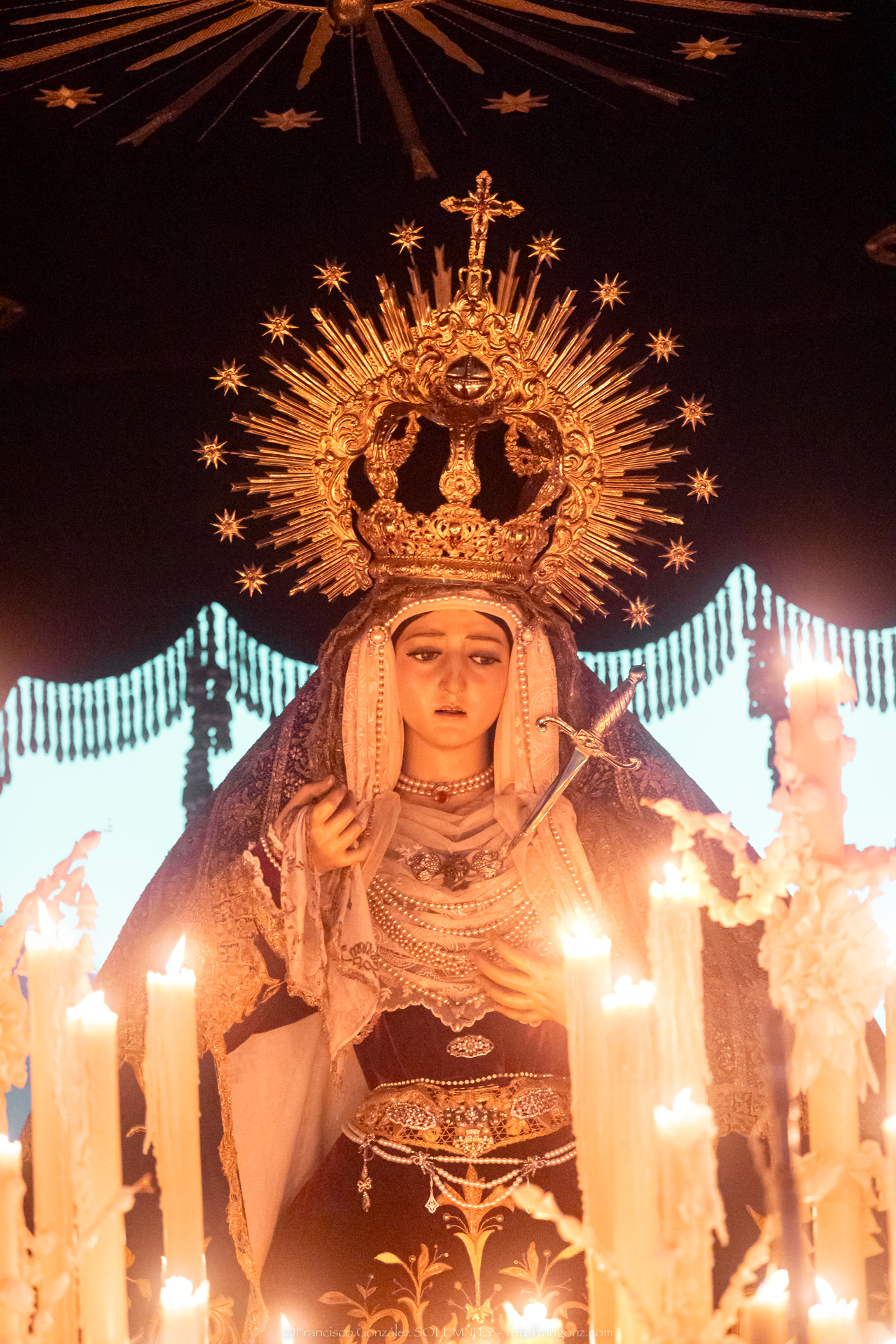
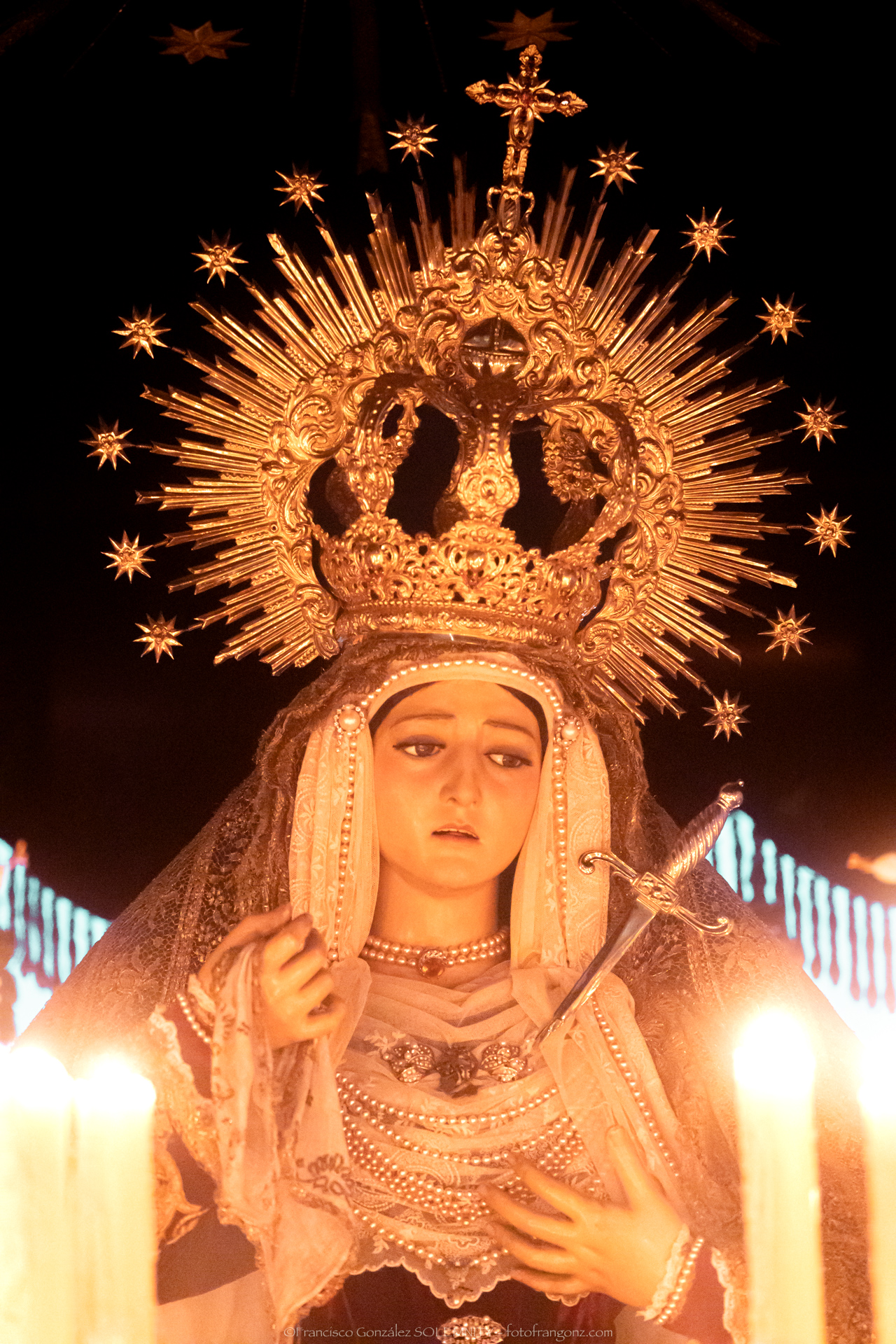
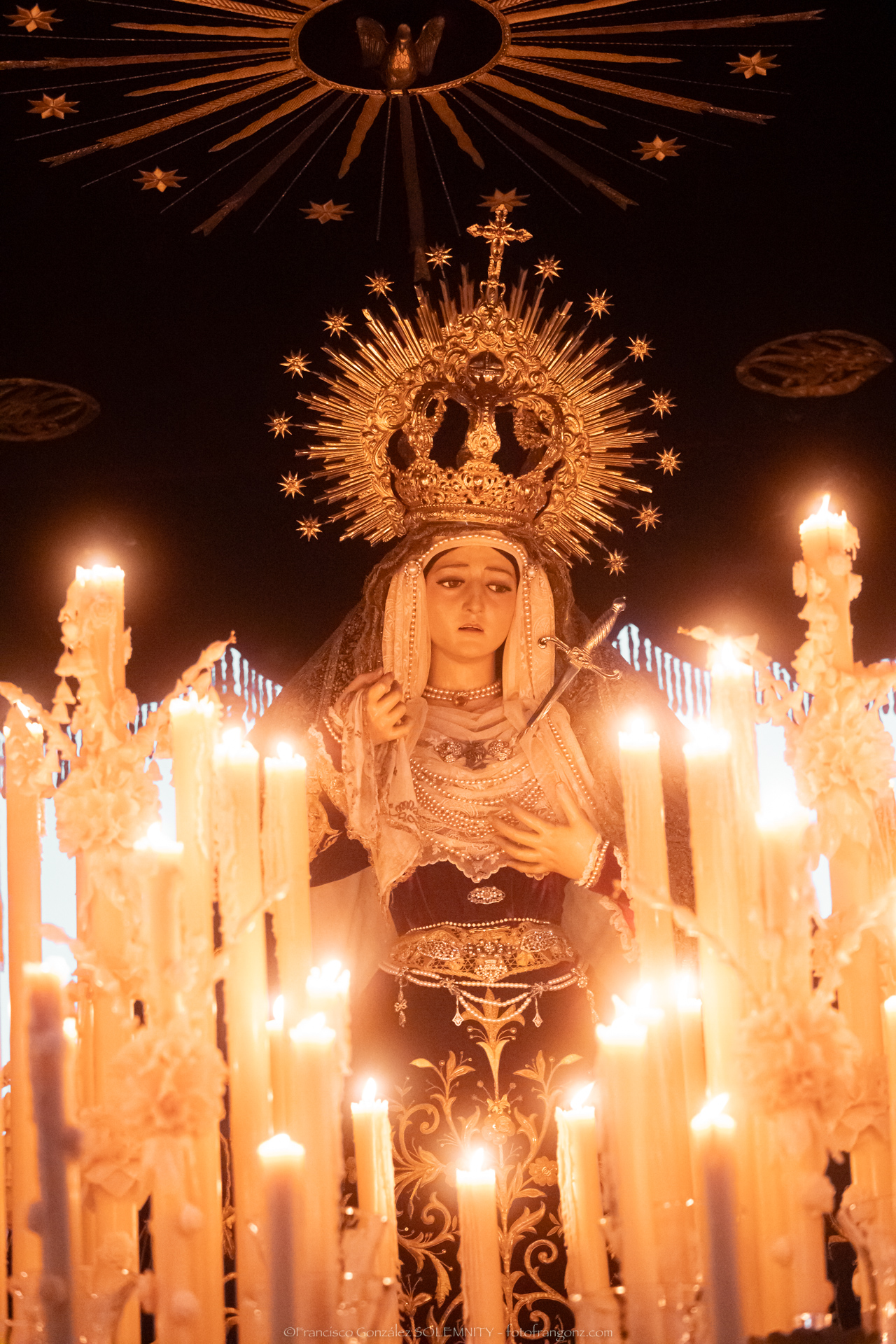
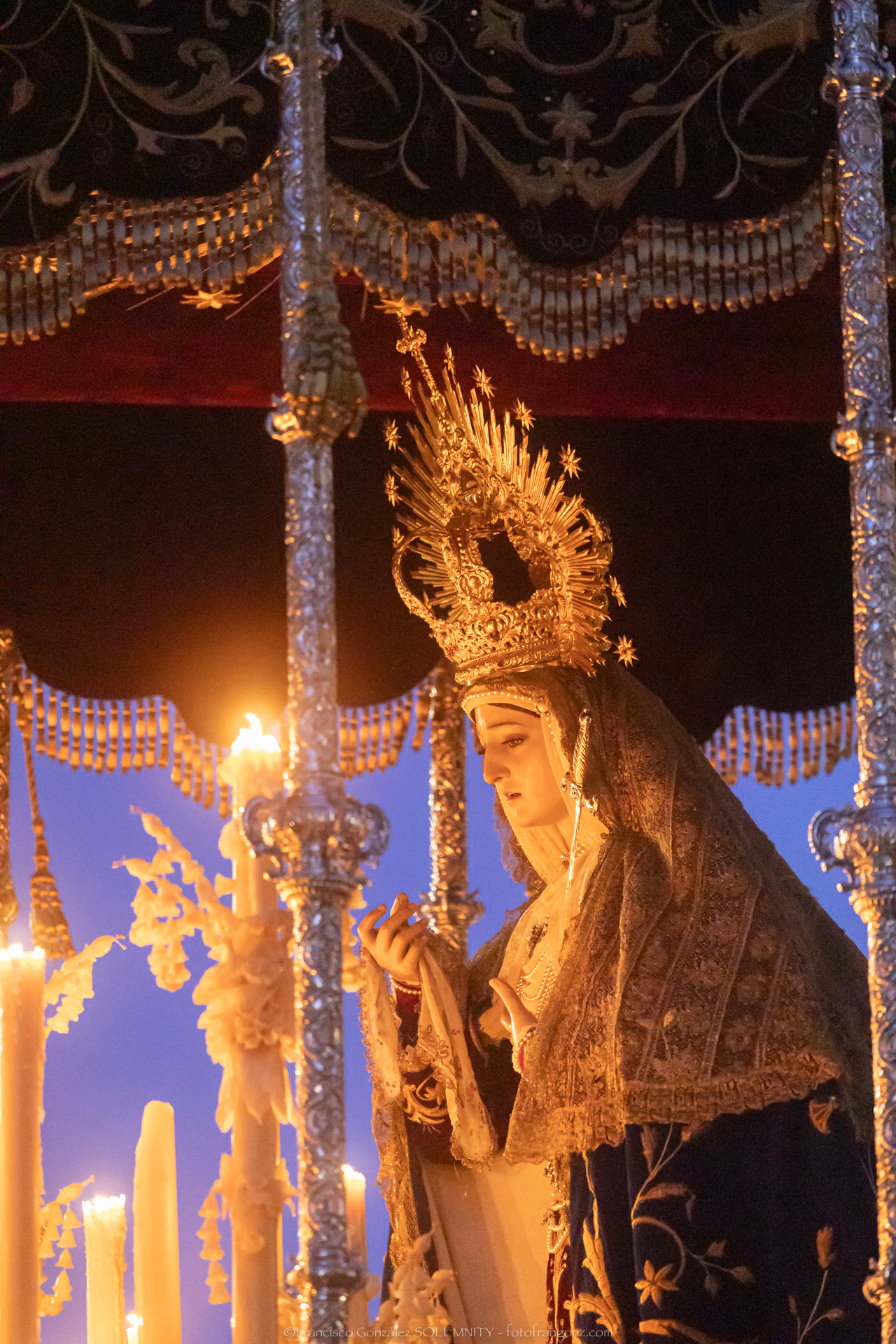
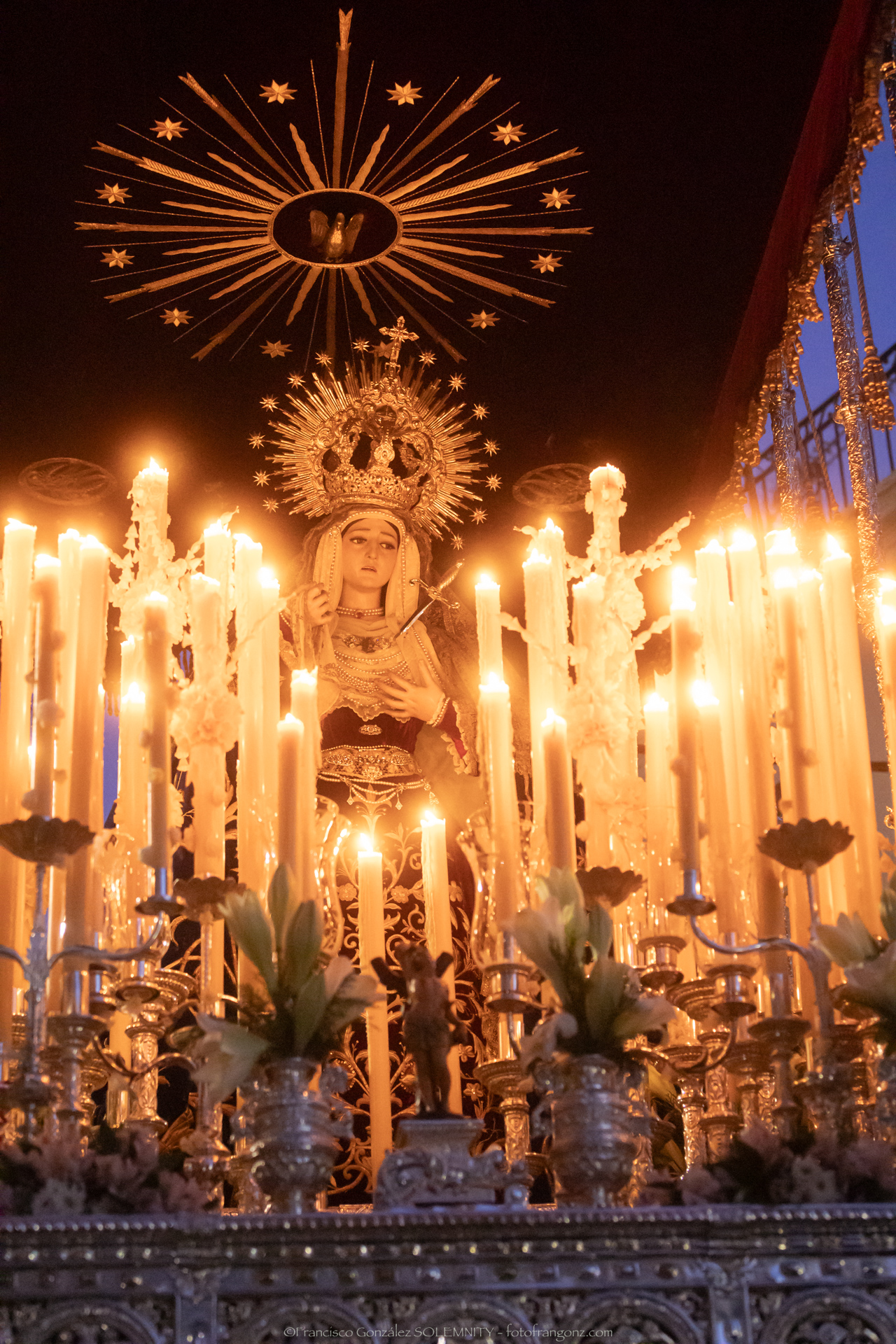
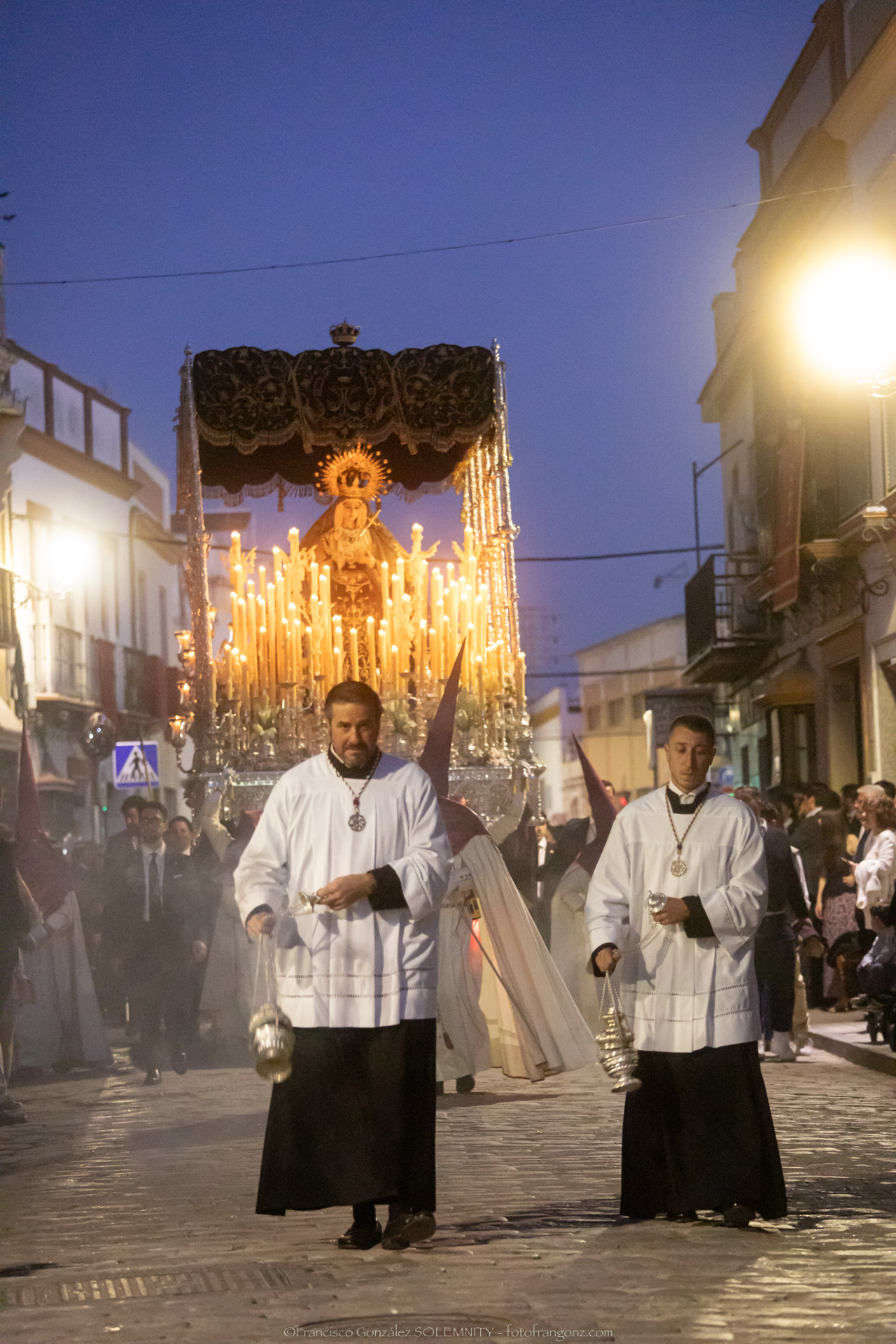
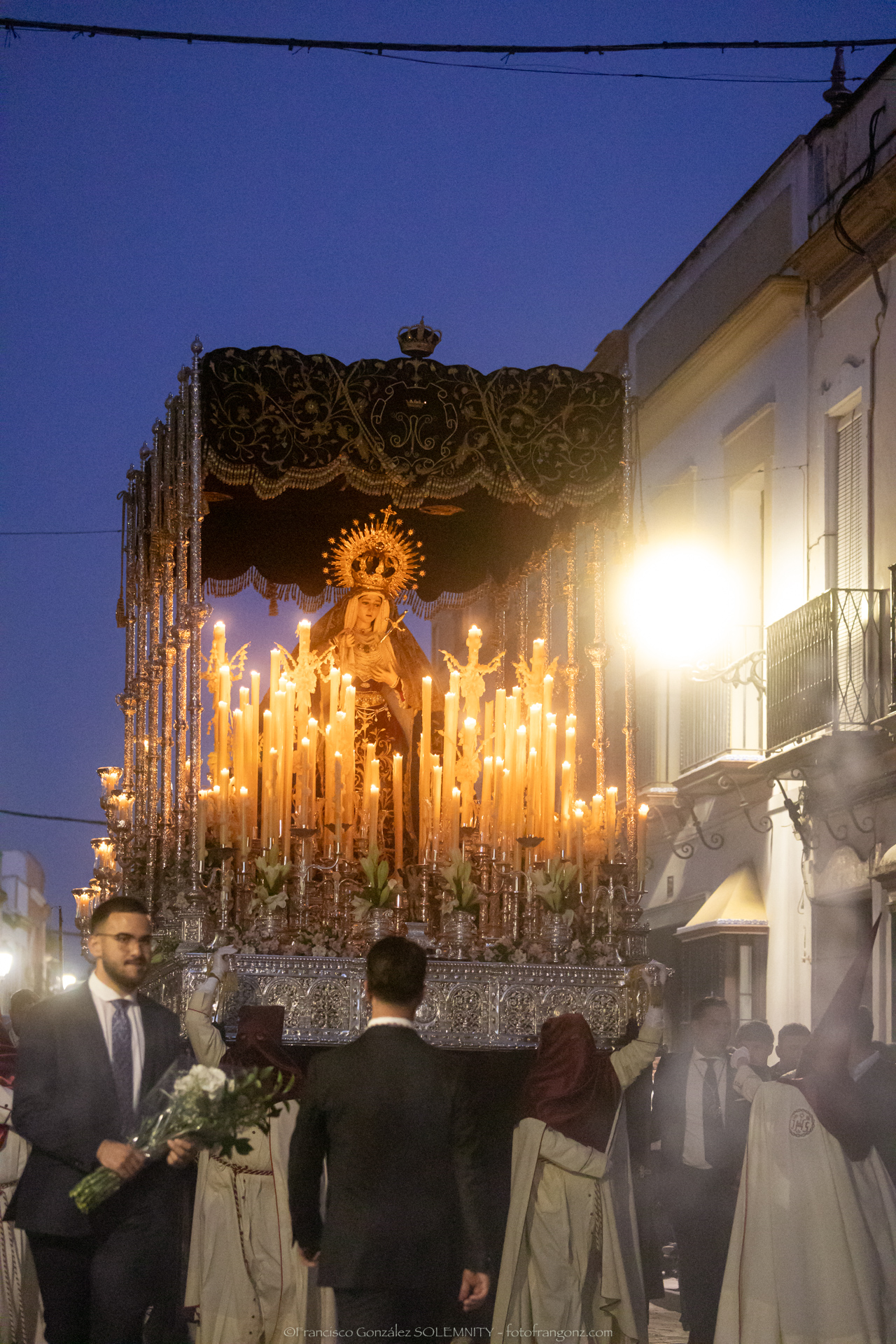
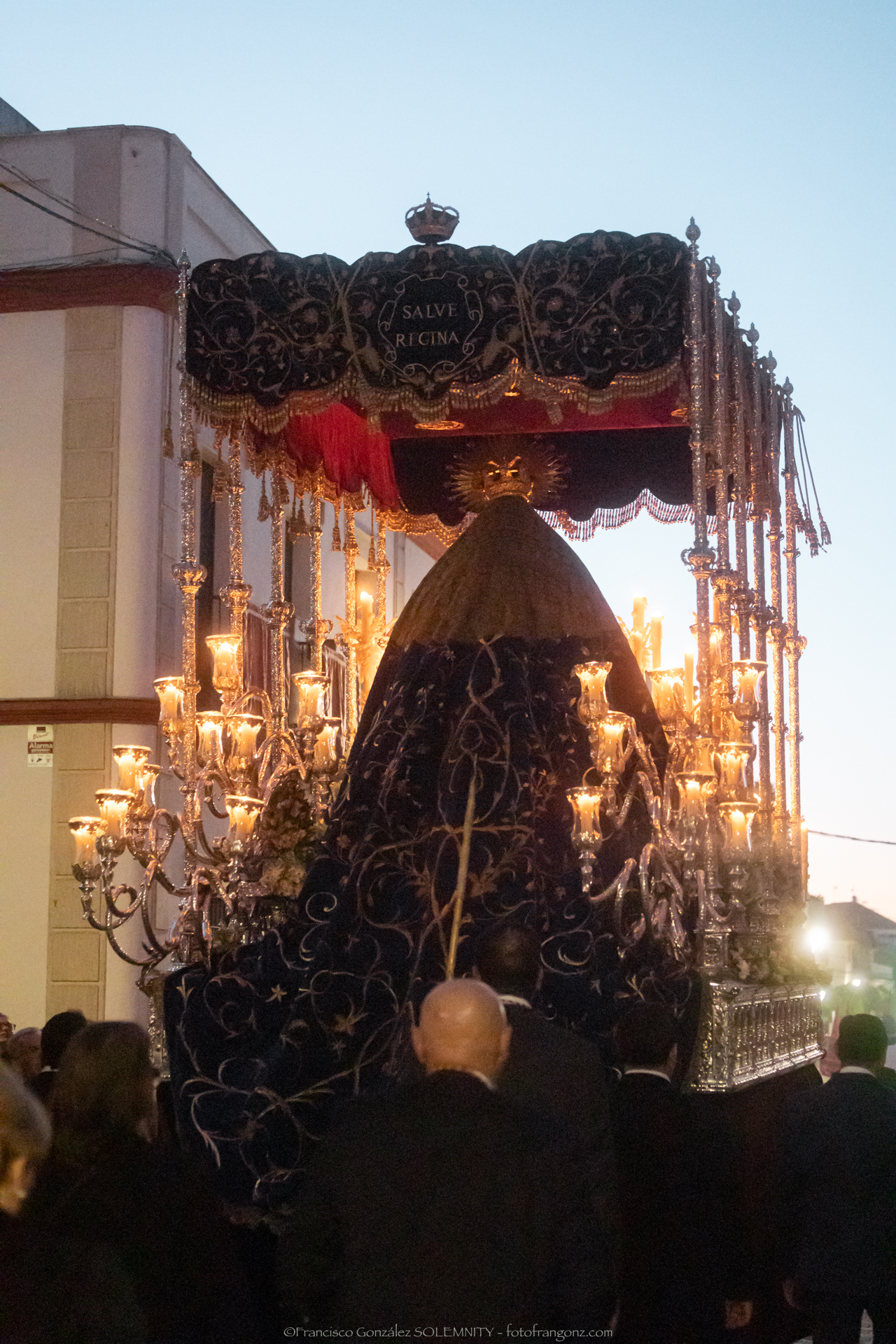
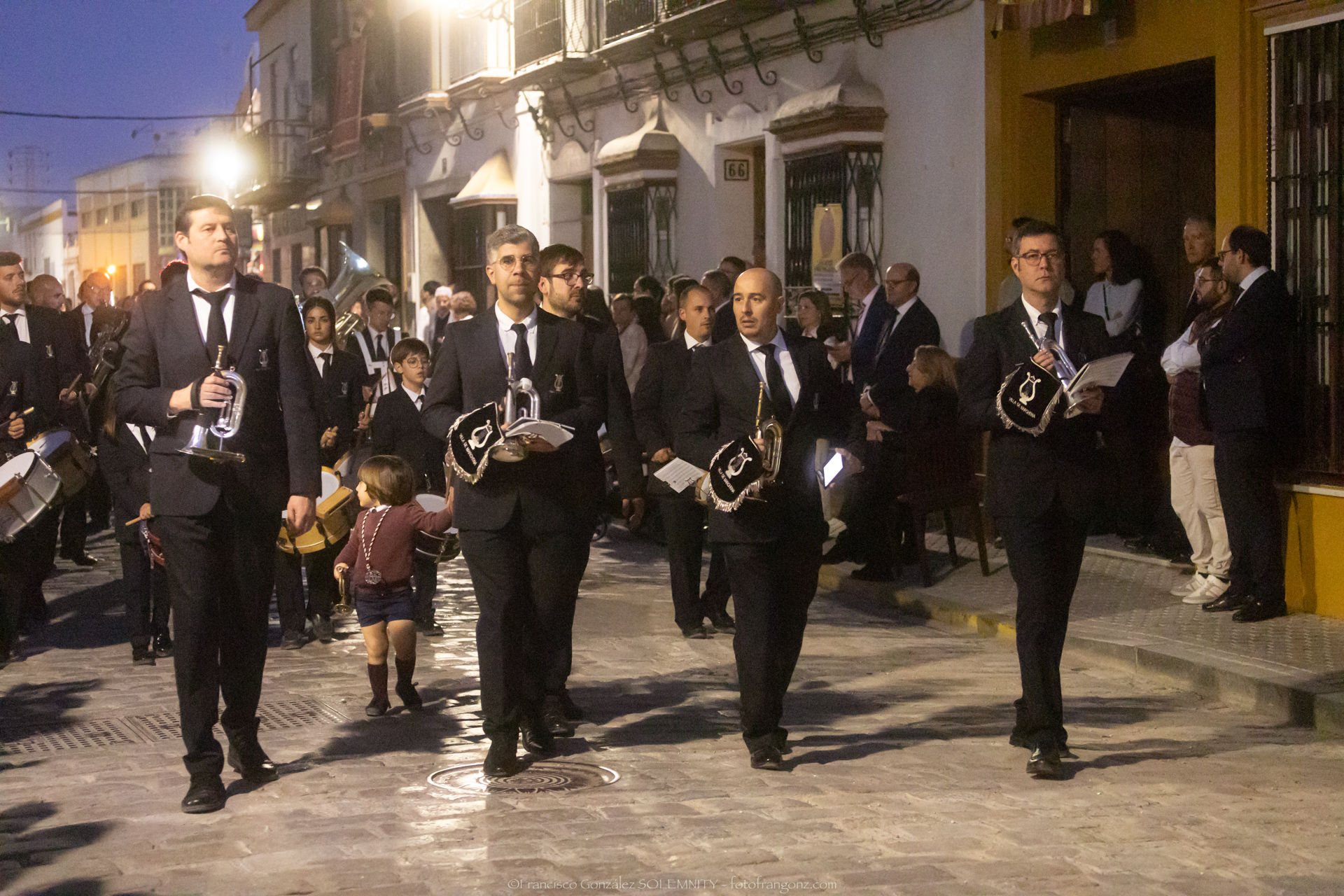
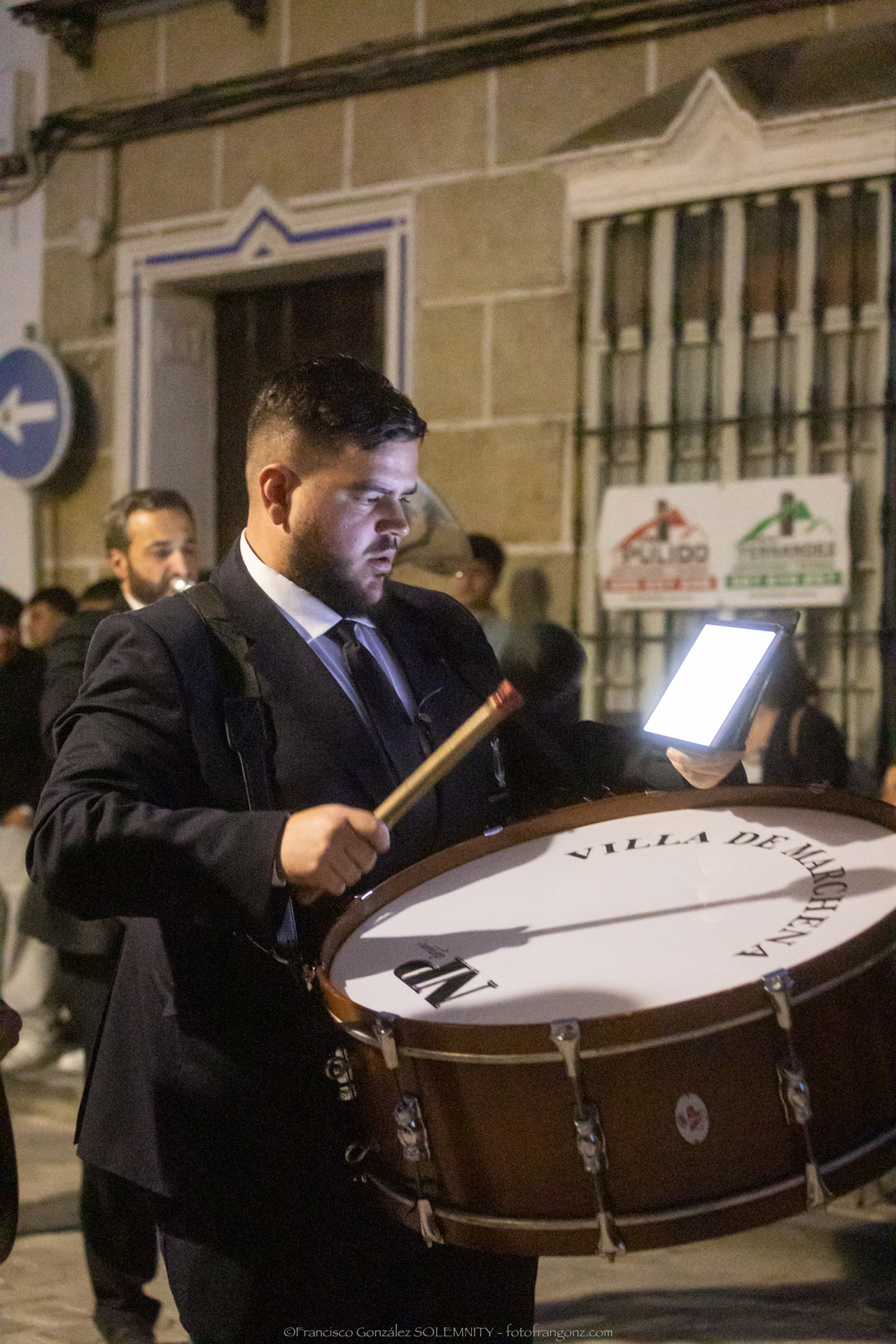
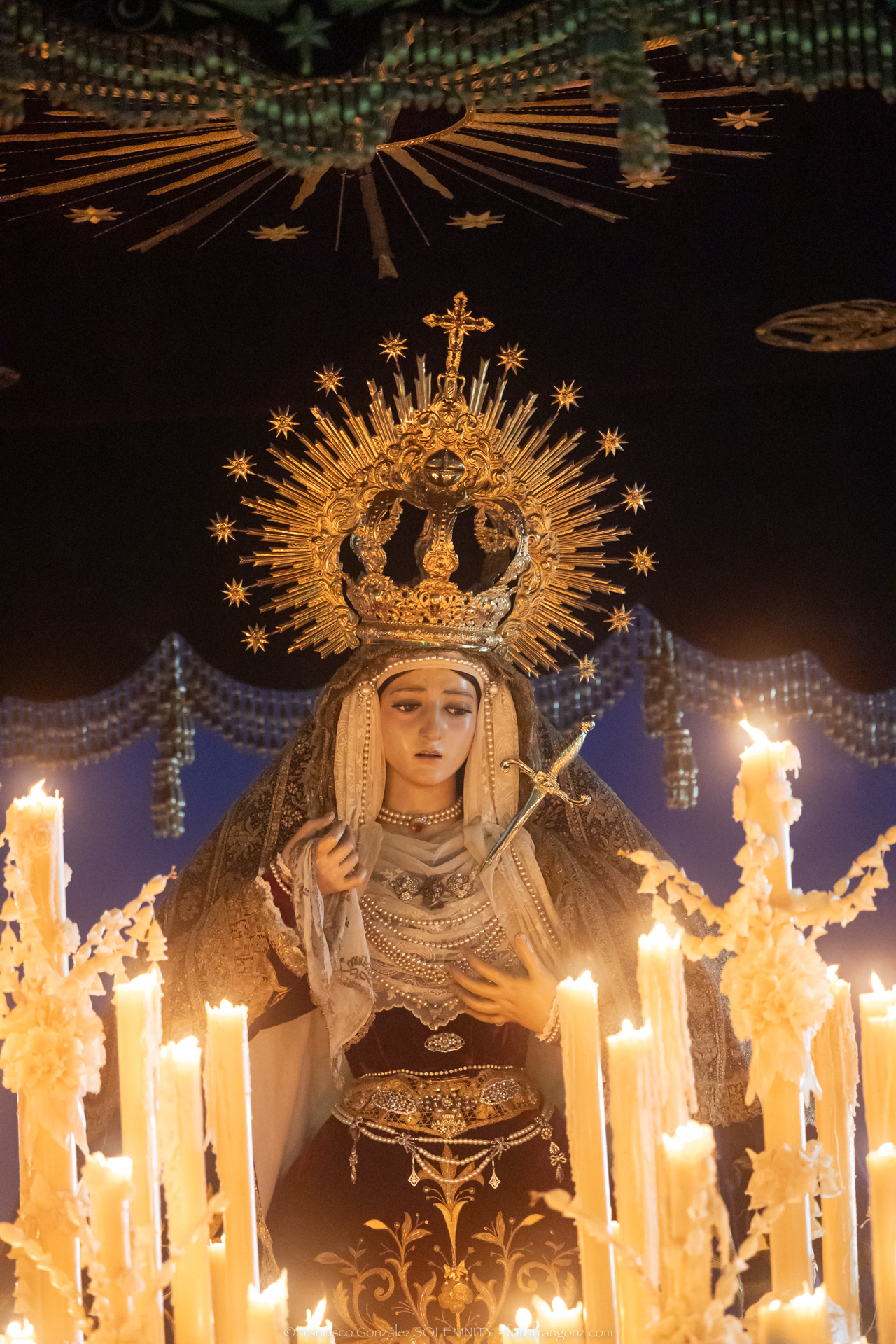
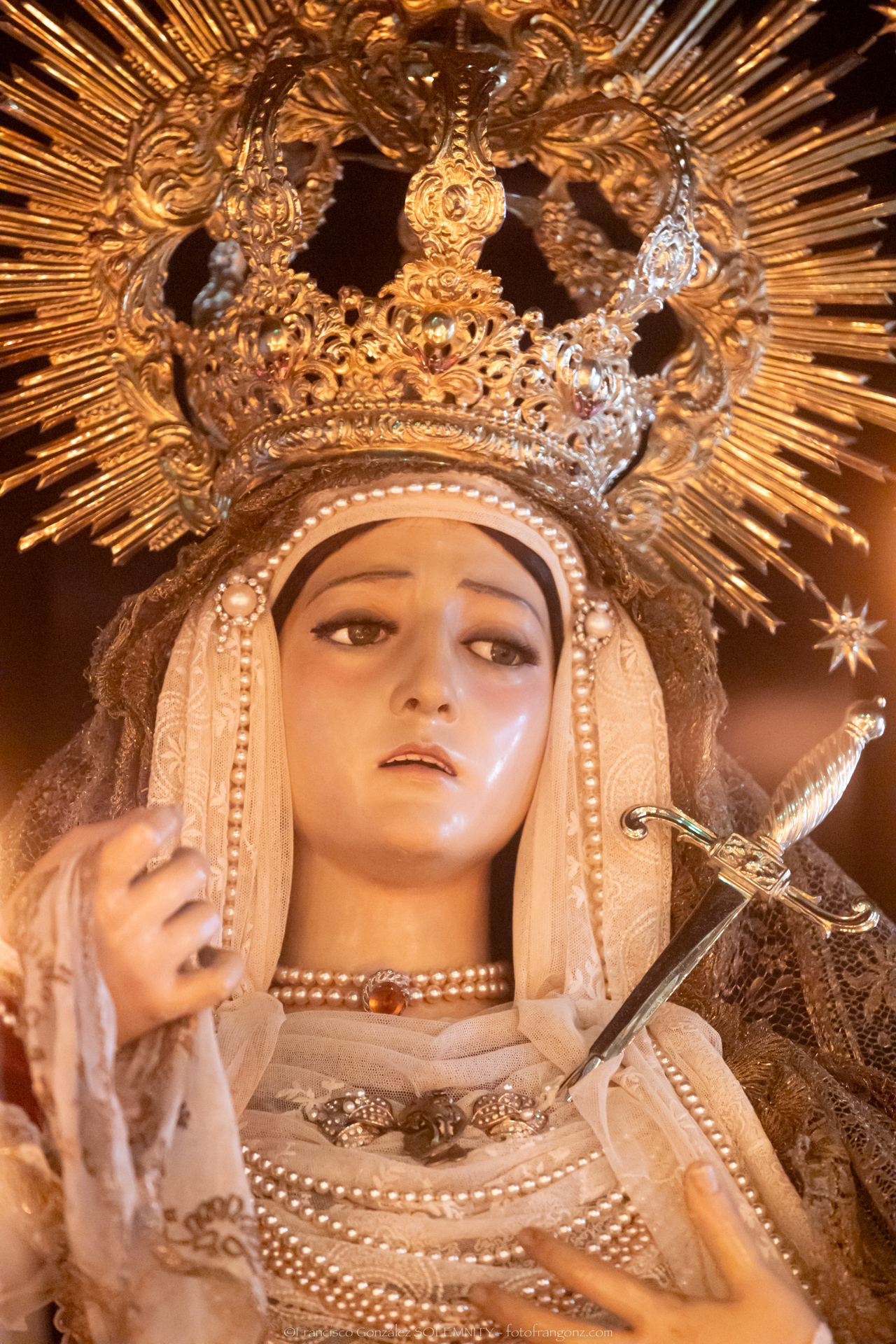
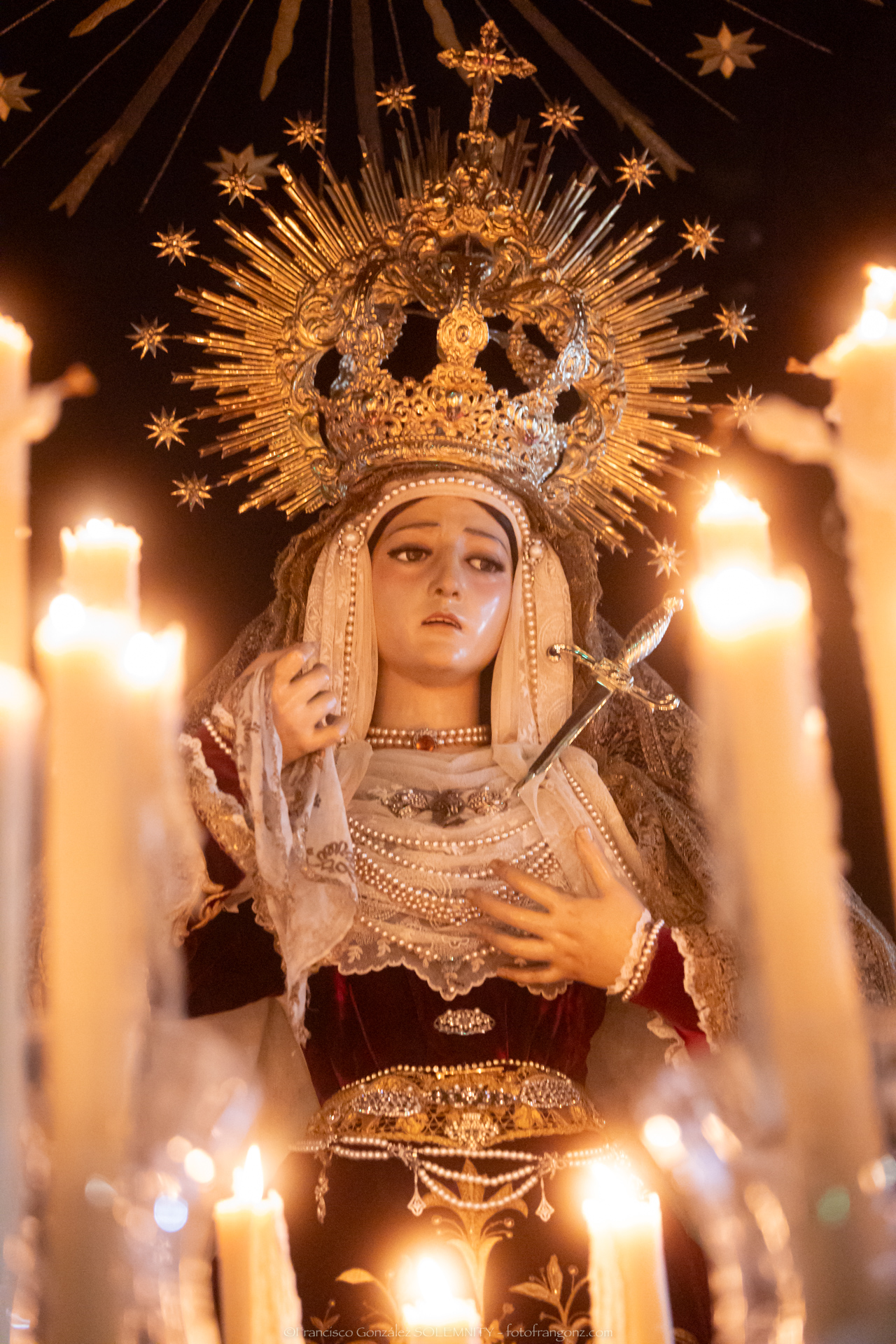
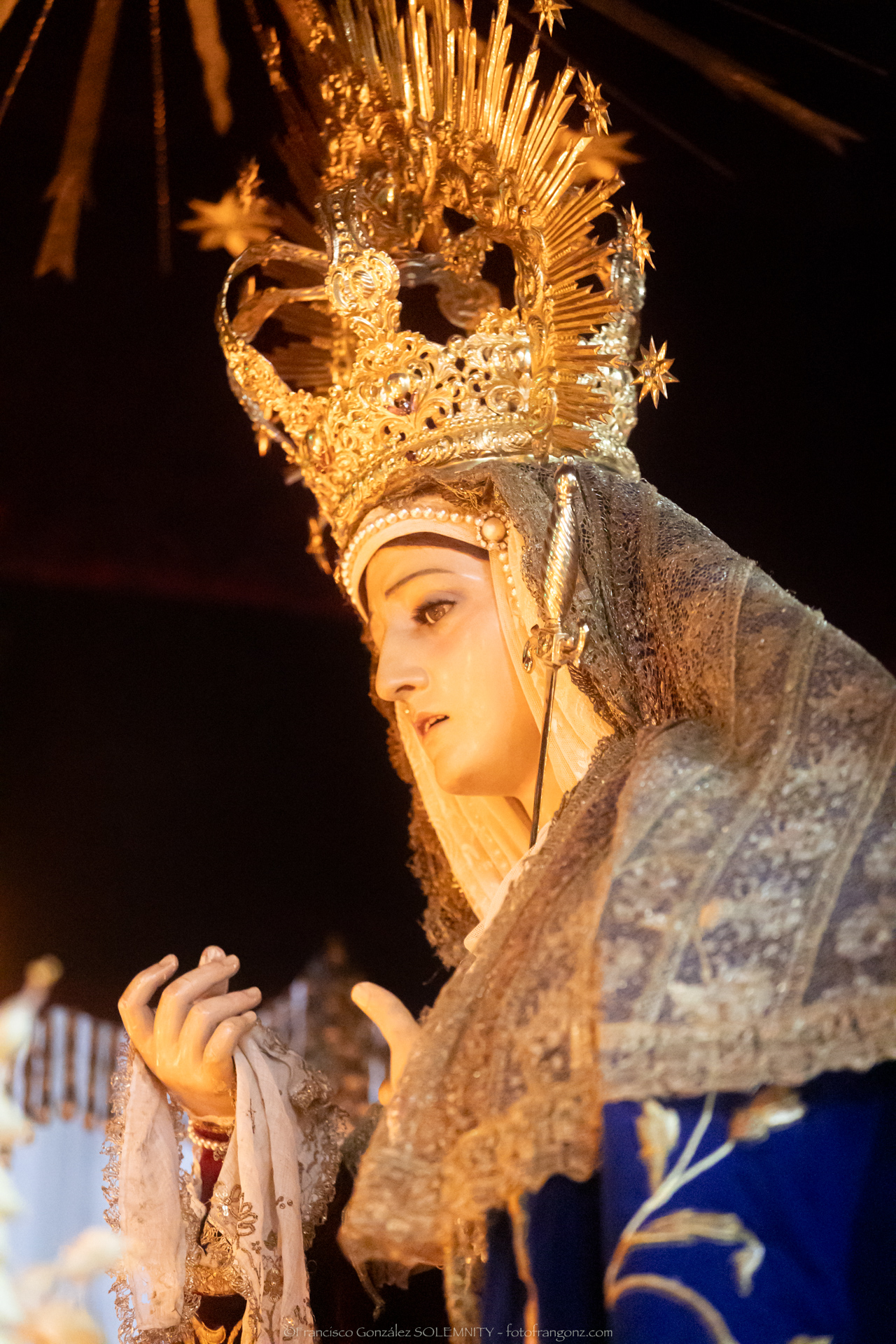
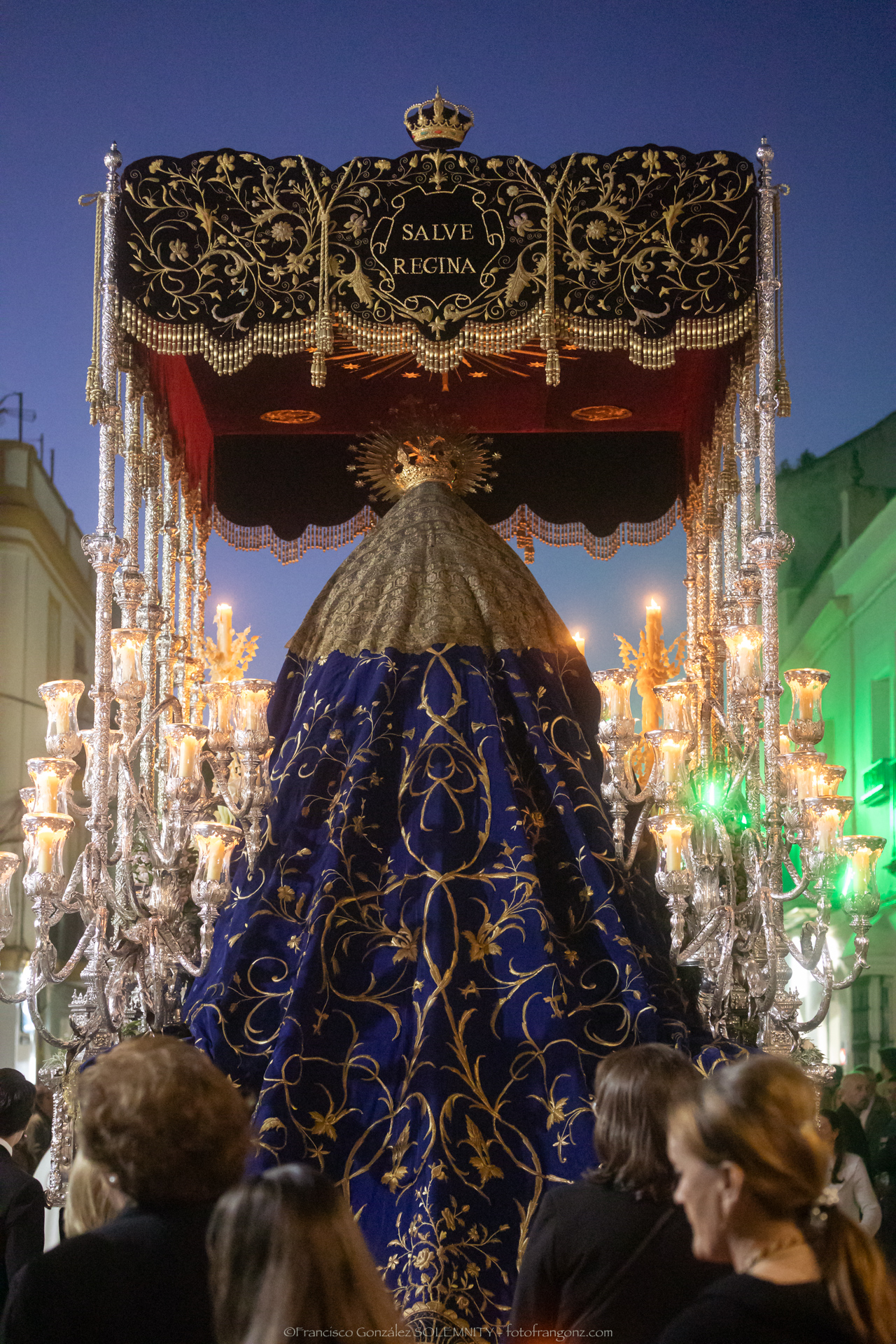
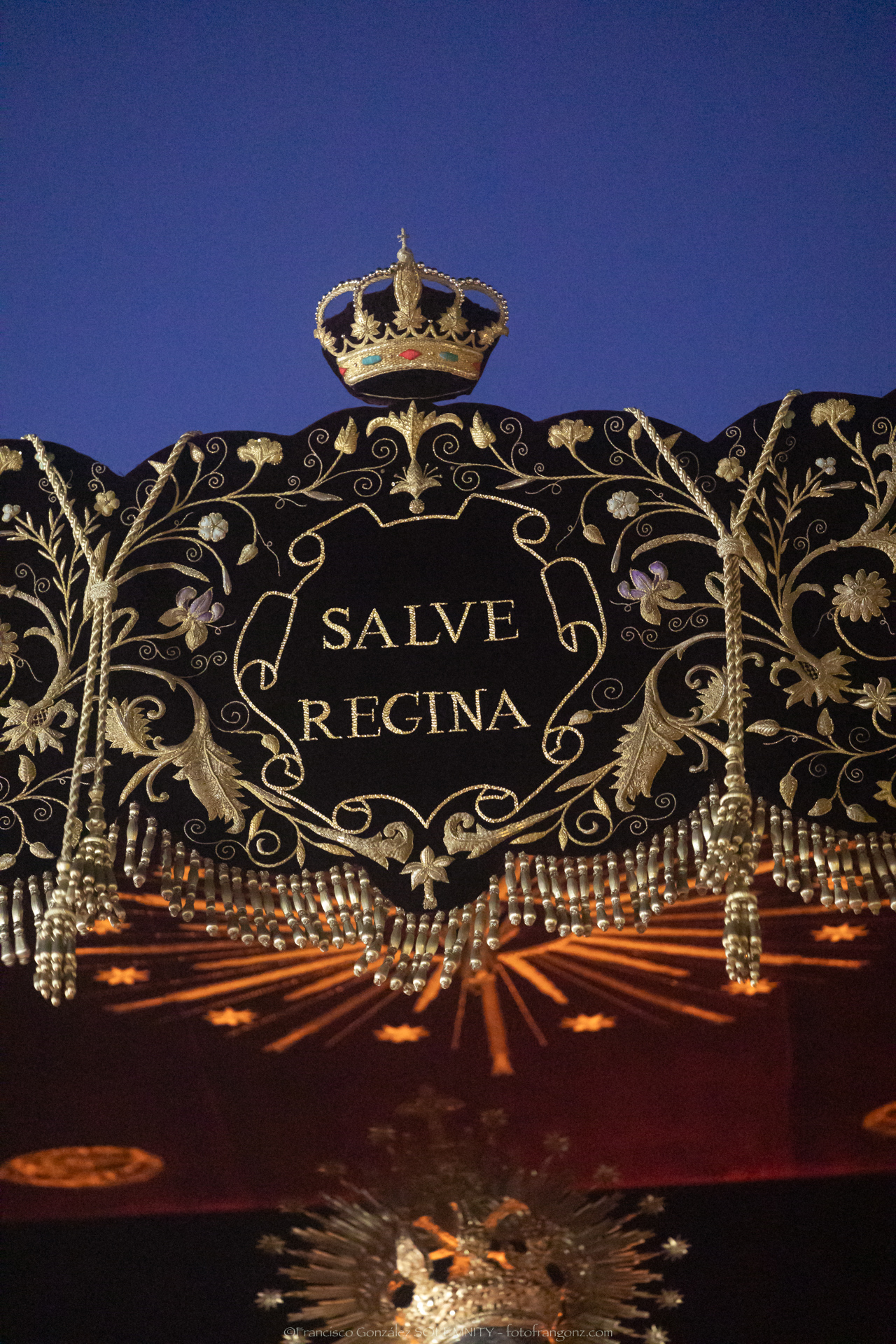
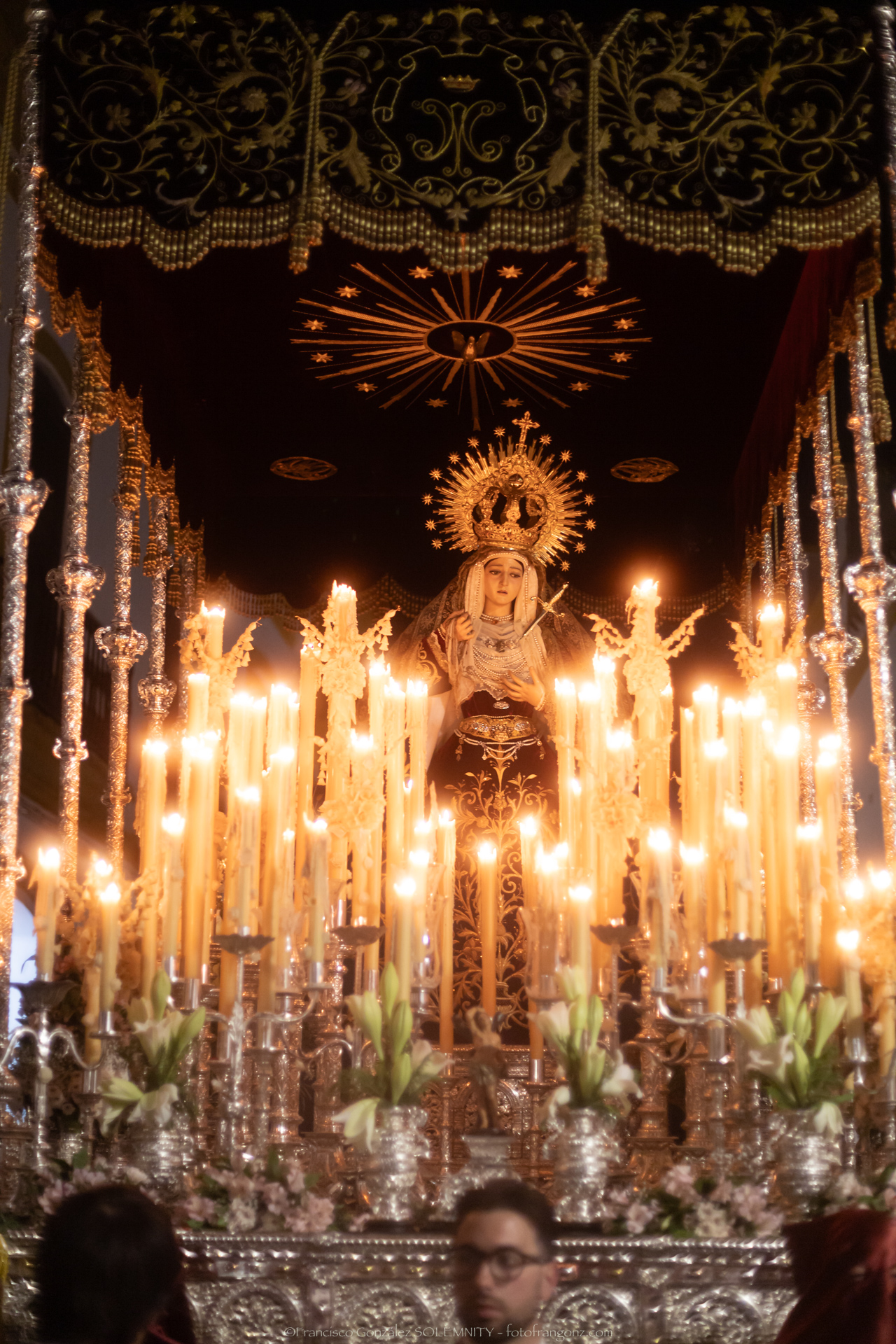
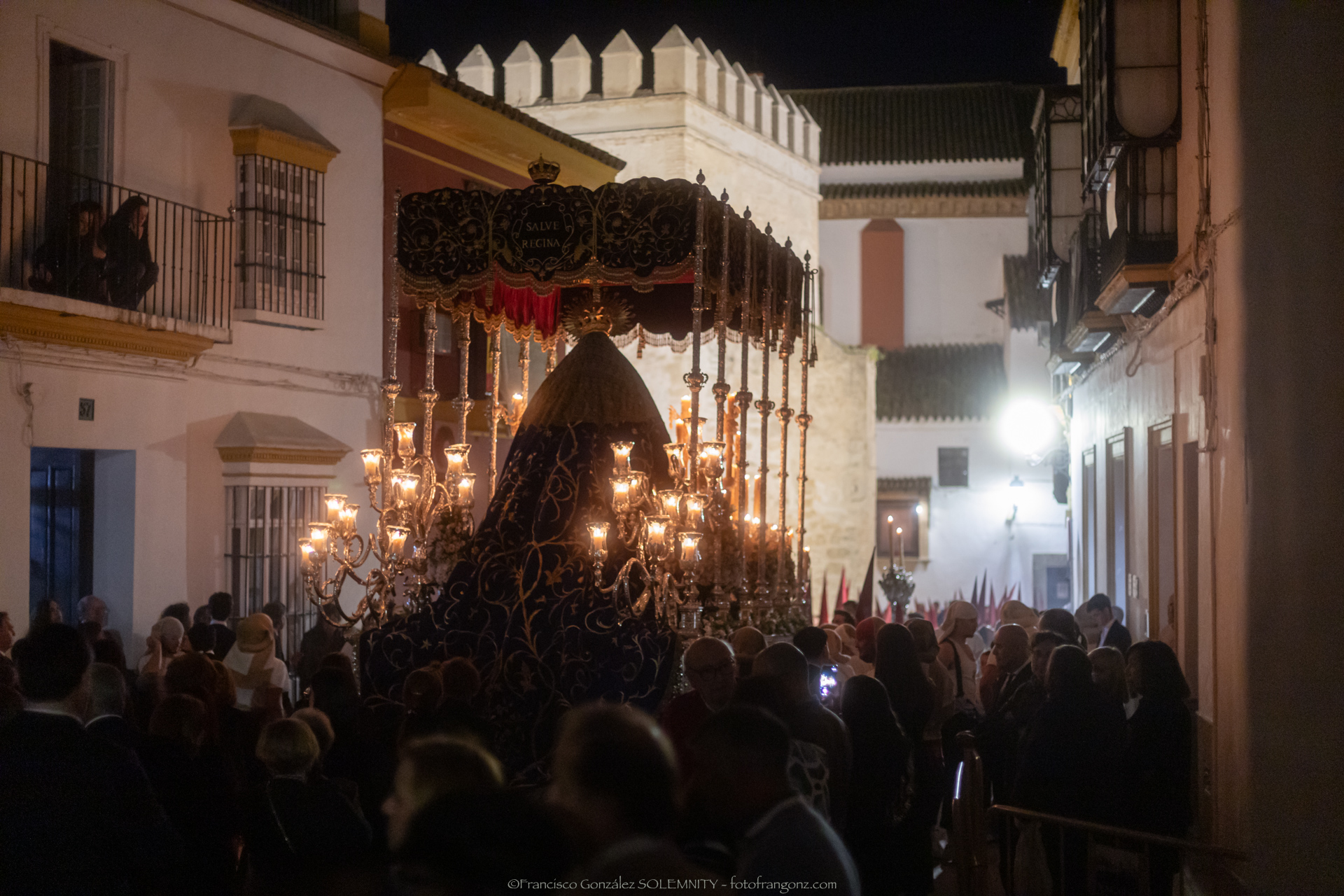
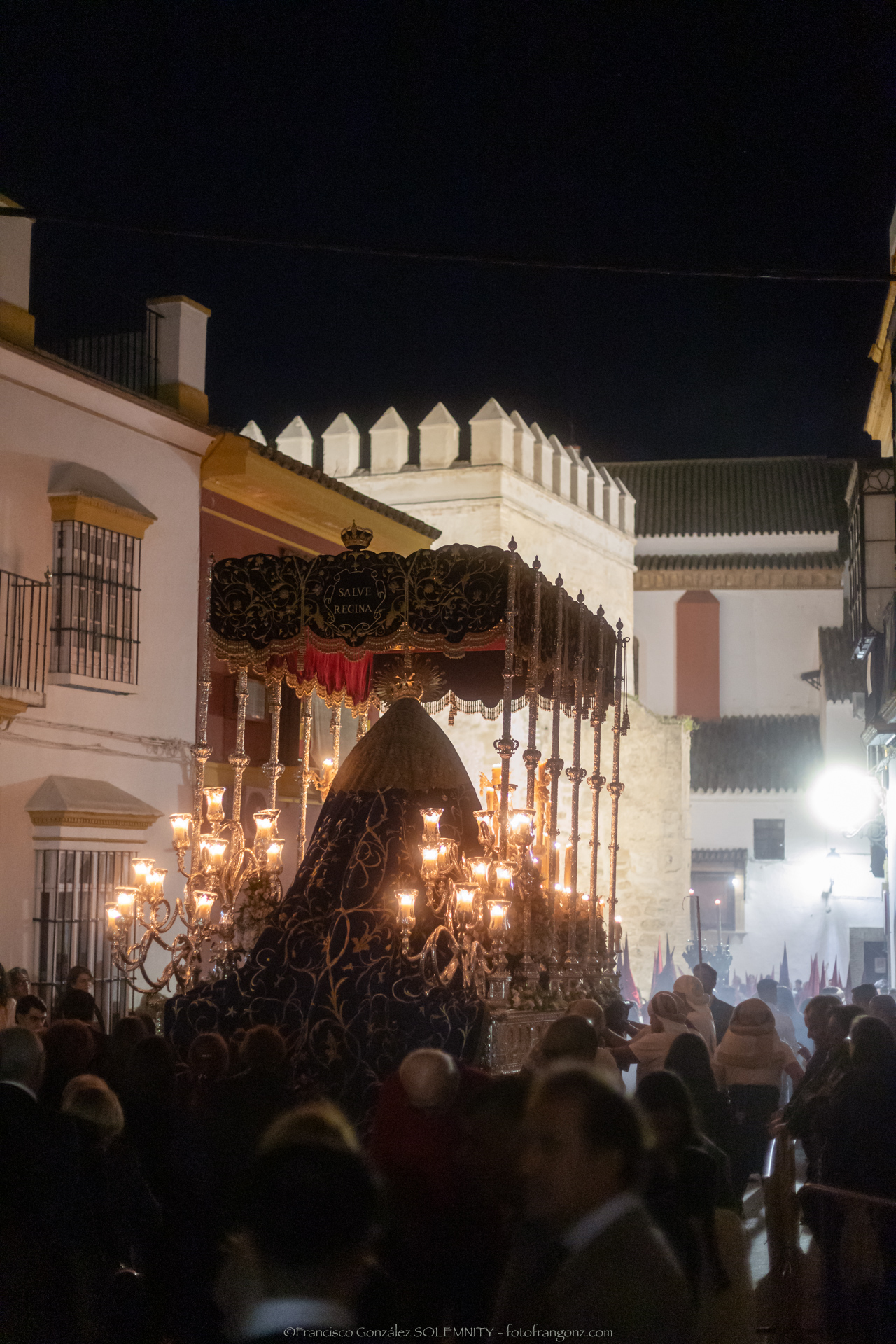
María Santísima de la Piedad (Mary Most Holy of Mercy), with her canopied float embroidered in a Romantic aesthetic, received an immense shower of petals as she turned in Plaza del Dulce Nombre towards Orgaz Street (Obispo Salvador Barrera). This sorrowful Virgin, with a serene expression radiating deep resignation and calm, was supposedly carved by José Tena in the mid-19th century. Her crown and a silver dagger plunged into her chest stand out. She was accompanied by the Villa de Marchena Music Band, which played the march Reina del Jueves Santo after the Spanish anthem.

Related posts:
 Holy Thursday – Sweet Name of Jesus Marchena Seville Holy Week 2022
 Sweet Name of Jesus – Holy Week Marchena 2023
 Holy Thursday in Marchena: The “Dulce Nombre” Procession 2025
 Our Father Jesus Nazarene and Mary Most Holy of Tears Marchena Seville Holy Week 2022
 425th anniversary of the first rules of the brotherhood of the Sweet Name of Jesus of Marchena
 Procession of True Cross and Mary Most Holy of Hope Crowned in Marchena Seville Holy Week 2022
 Solemn Sweet Name of Jesus of Marchena
 Lord of Humility of Marchena 2026 – Holy Wednesday
 Borriquita and Virgen de la Palma – Palm Sunday – Holy Week Marchena 2023
 Holy Burial and Our Lady of Solitude – Marchena 2023