

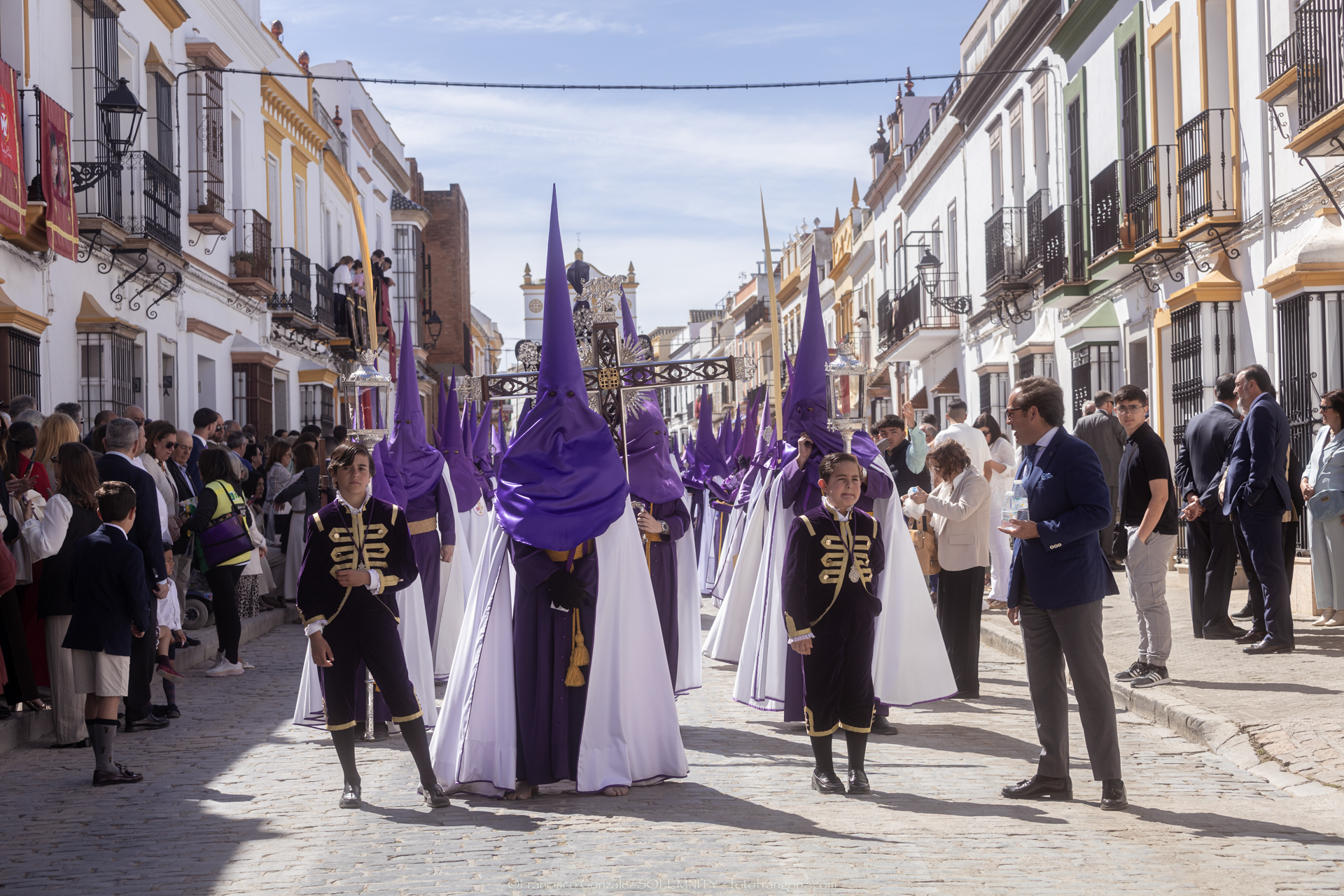
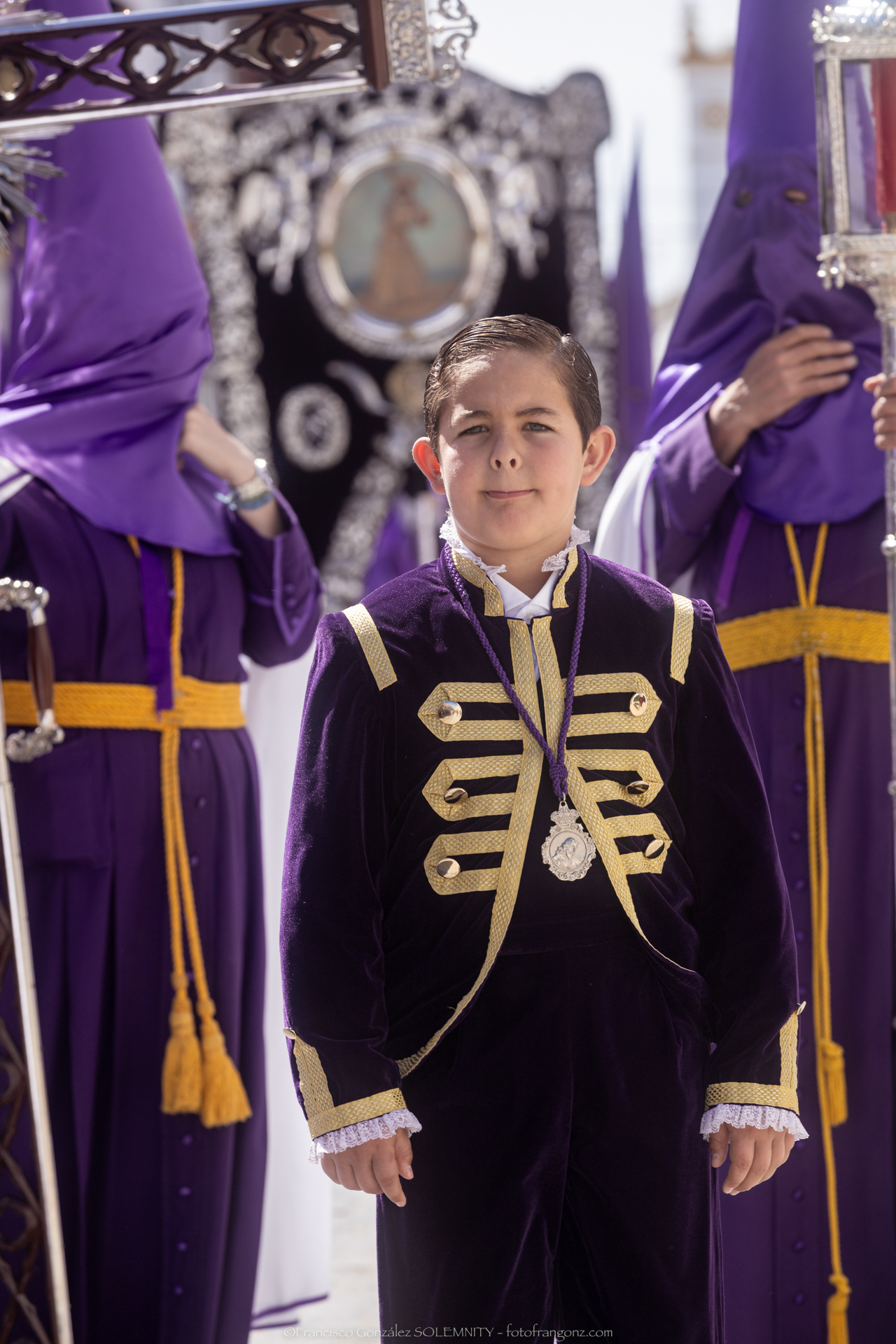
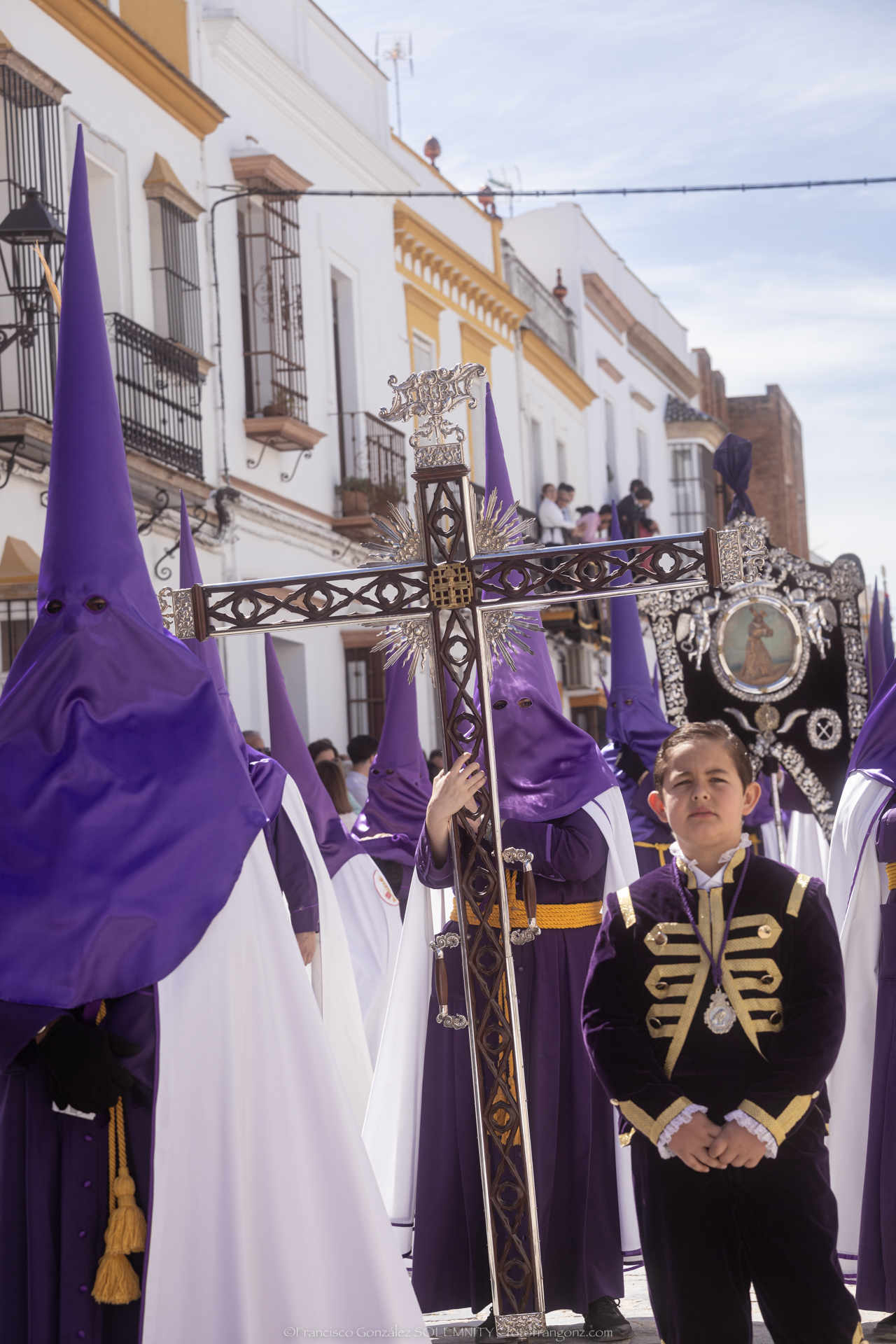
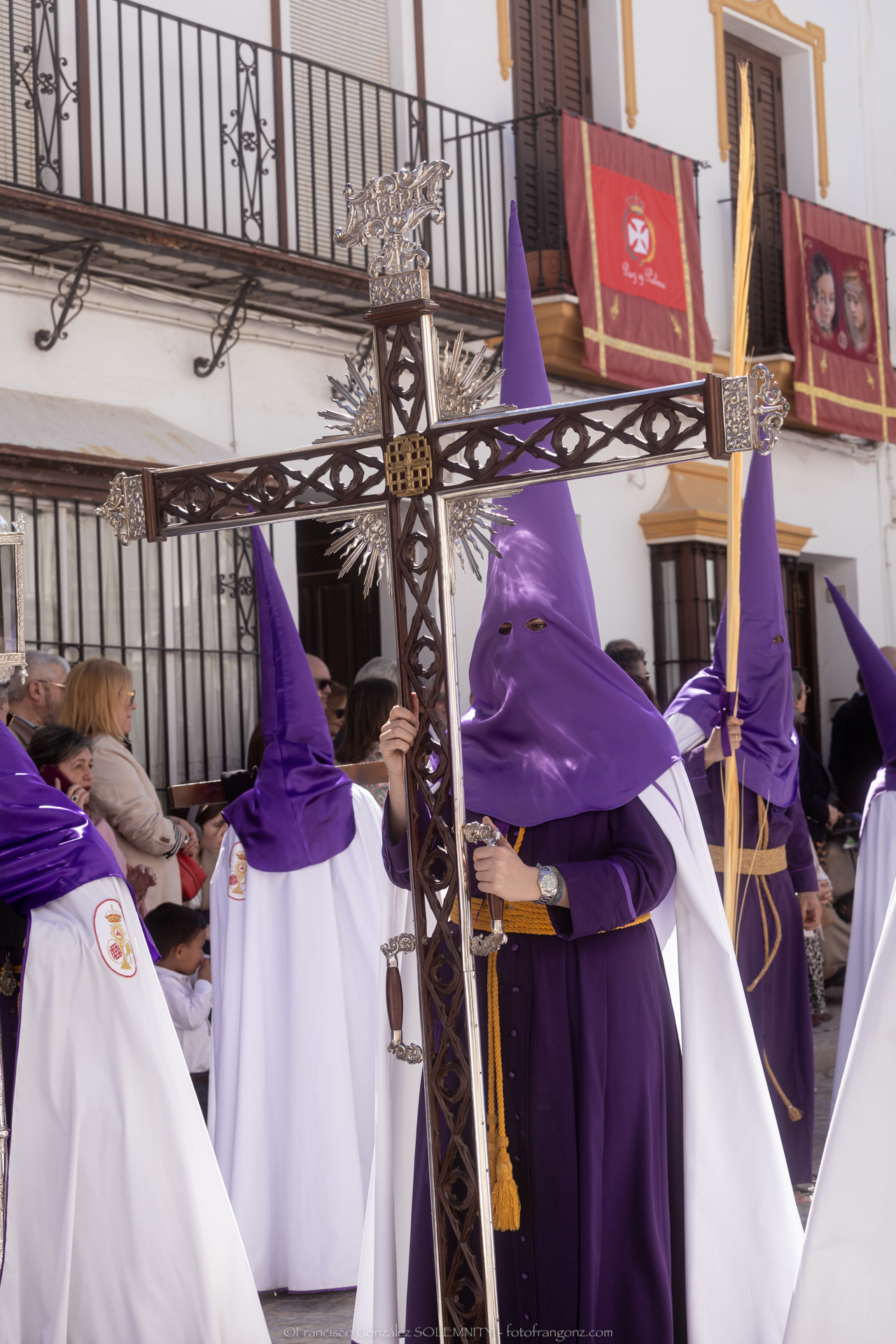
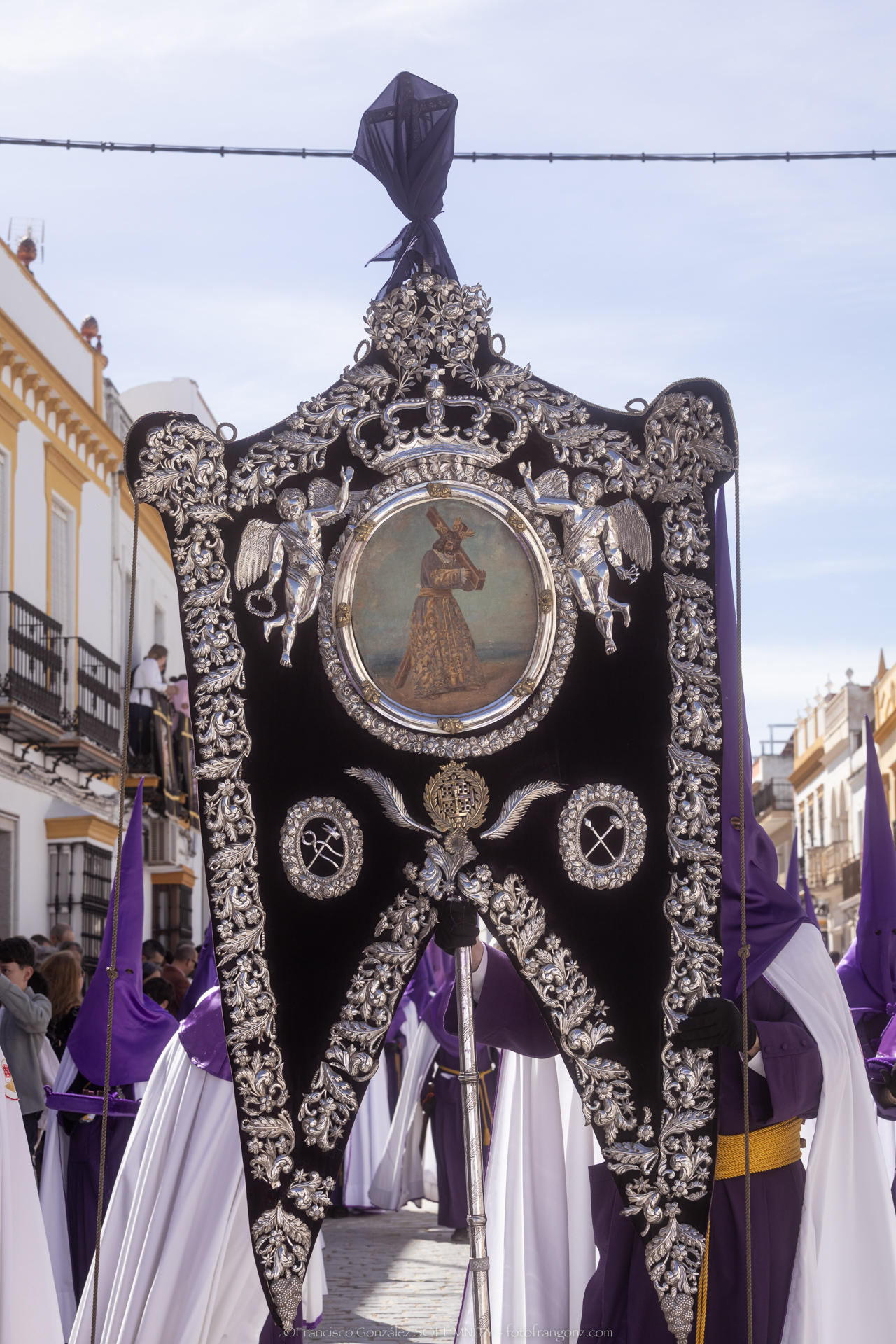
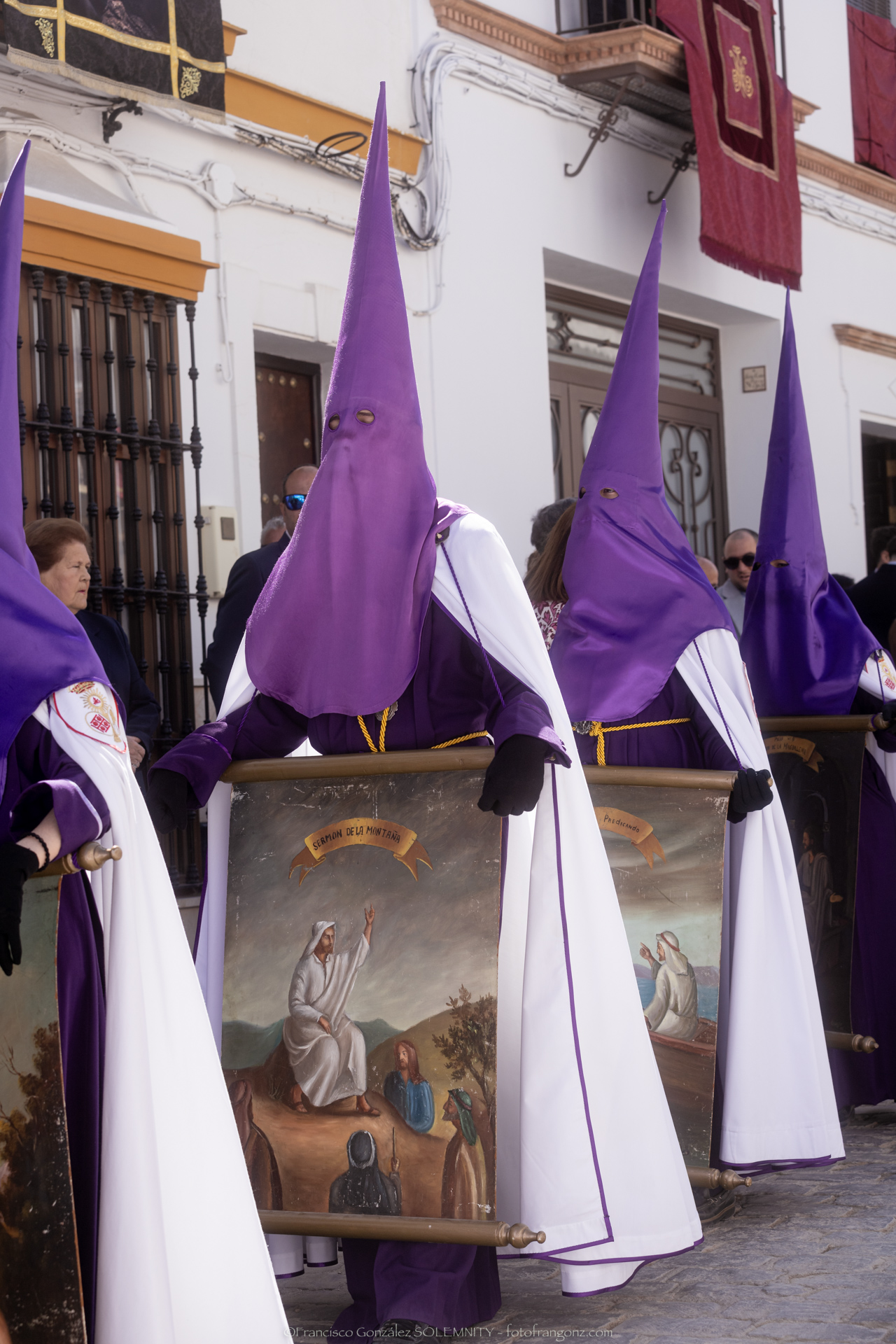
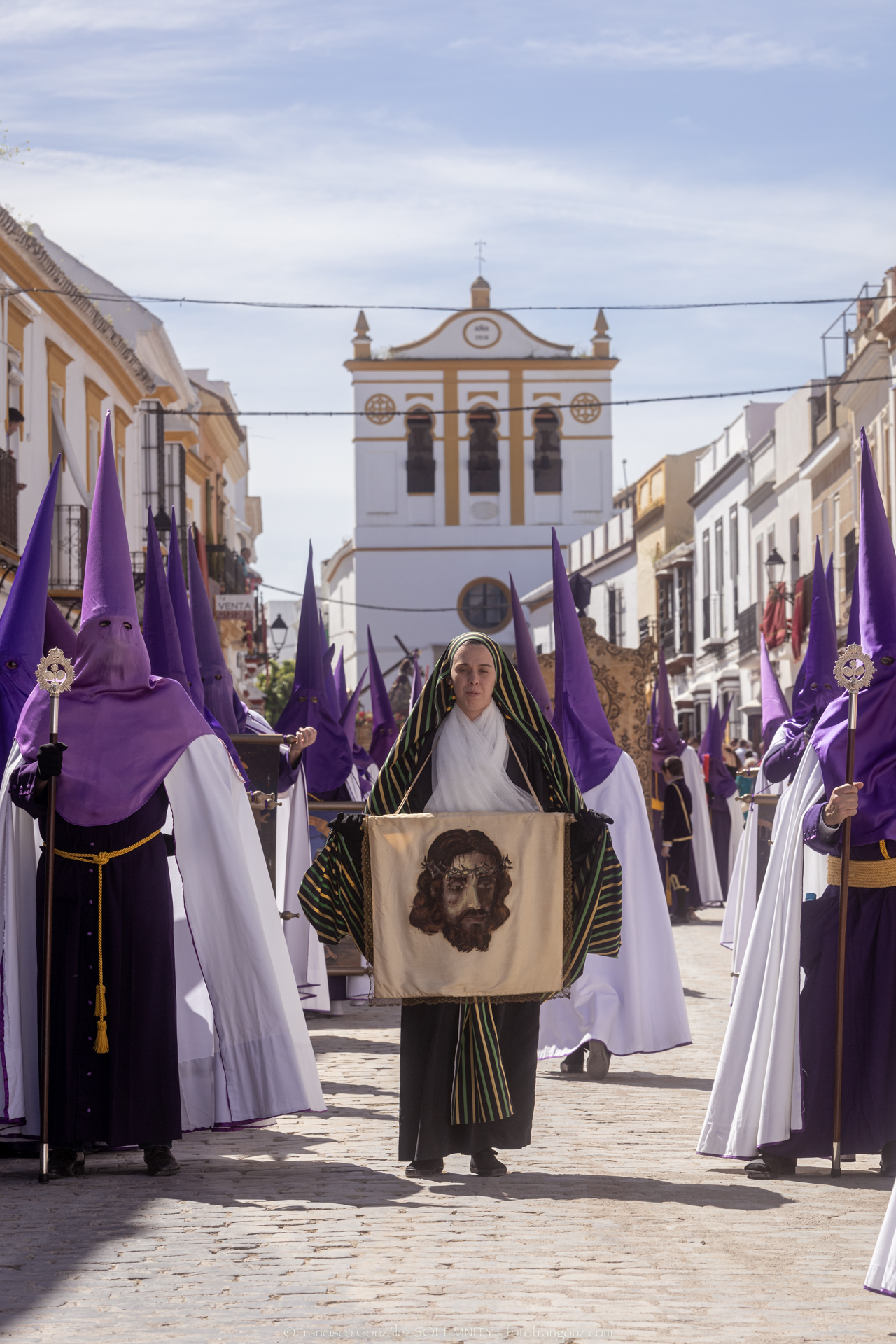
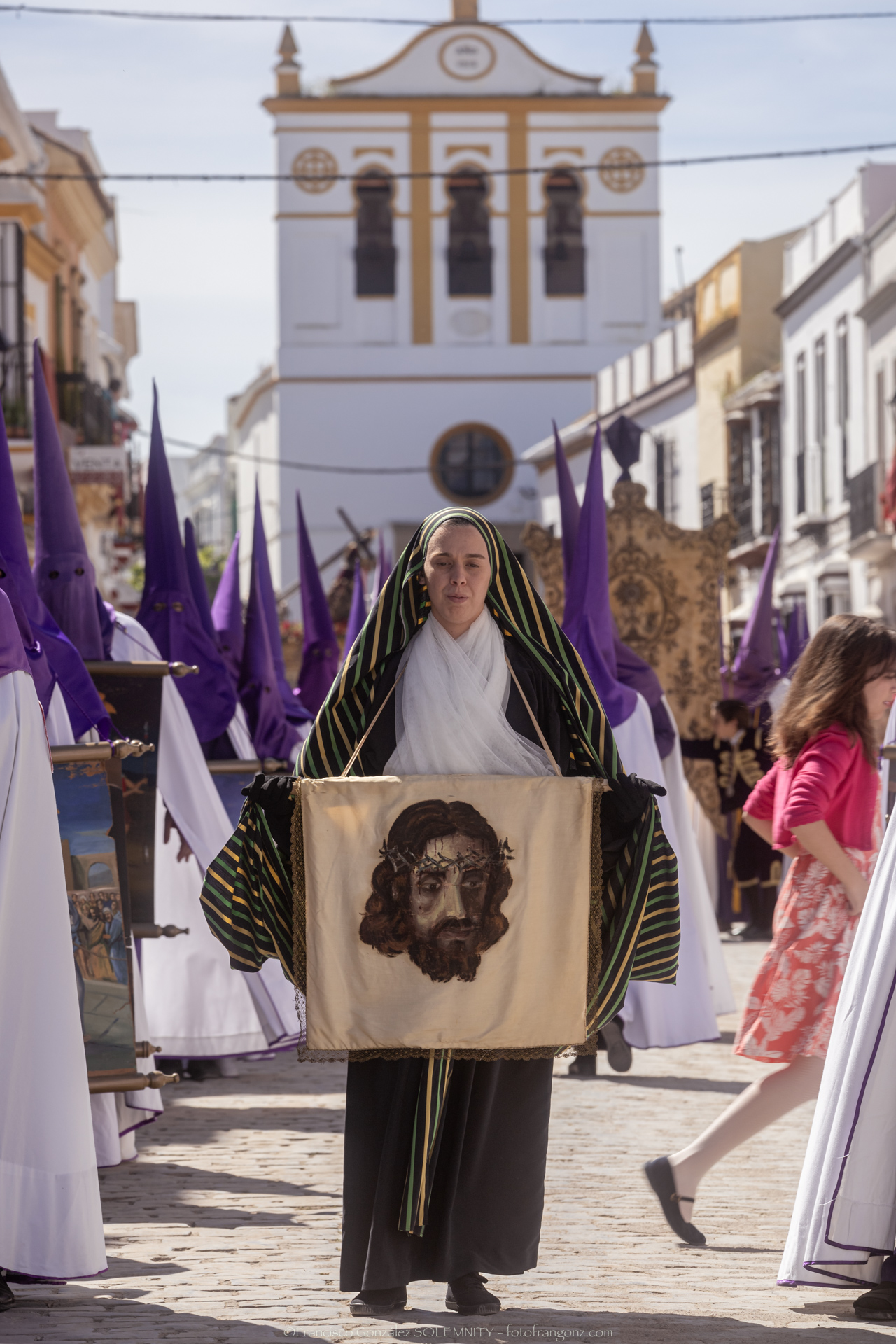
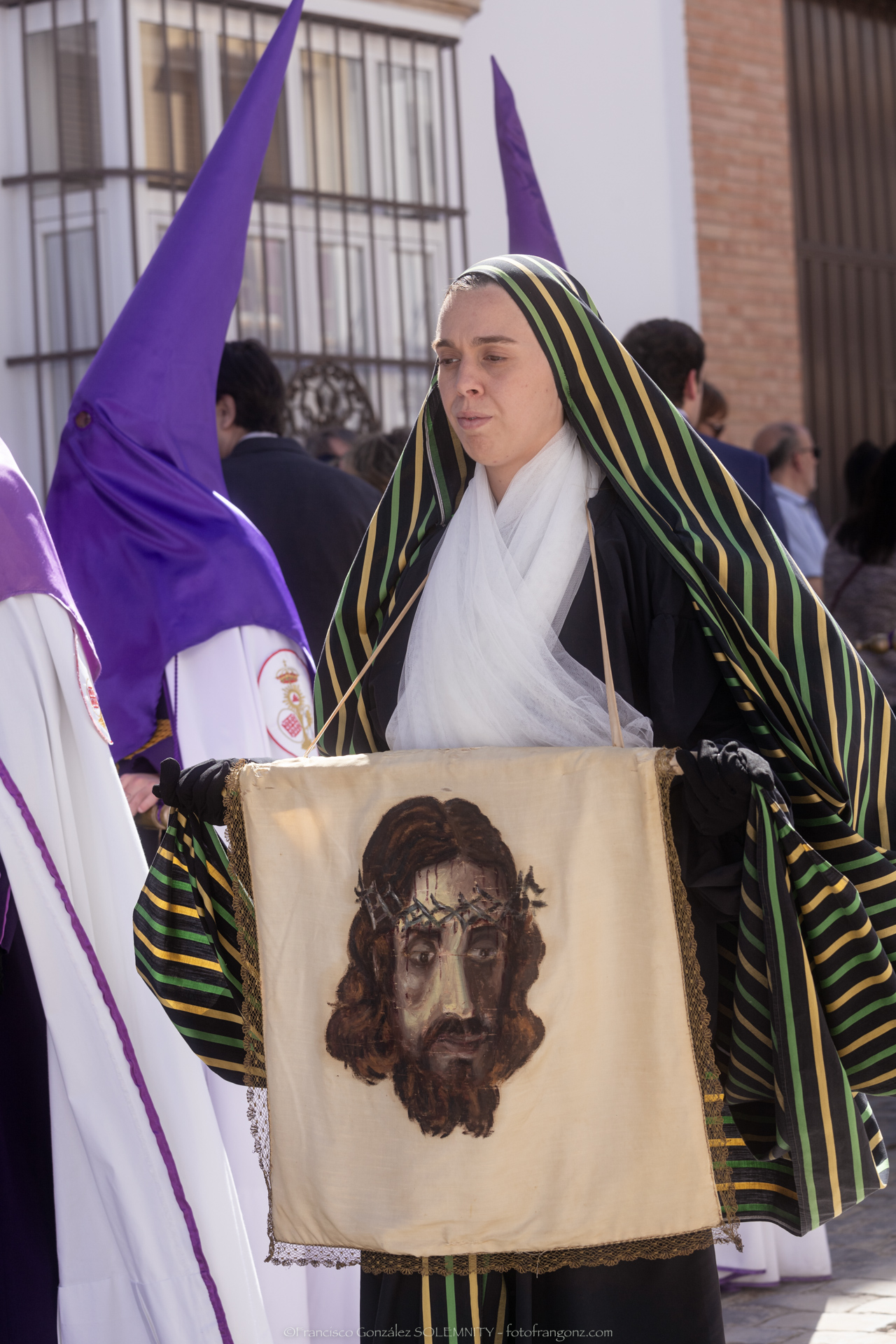
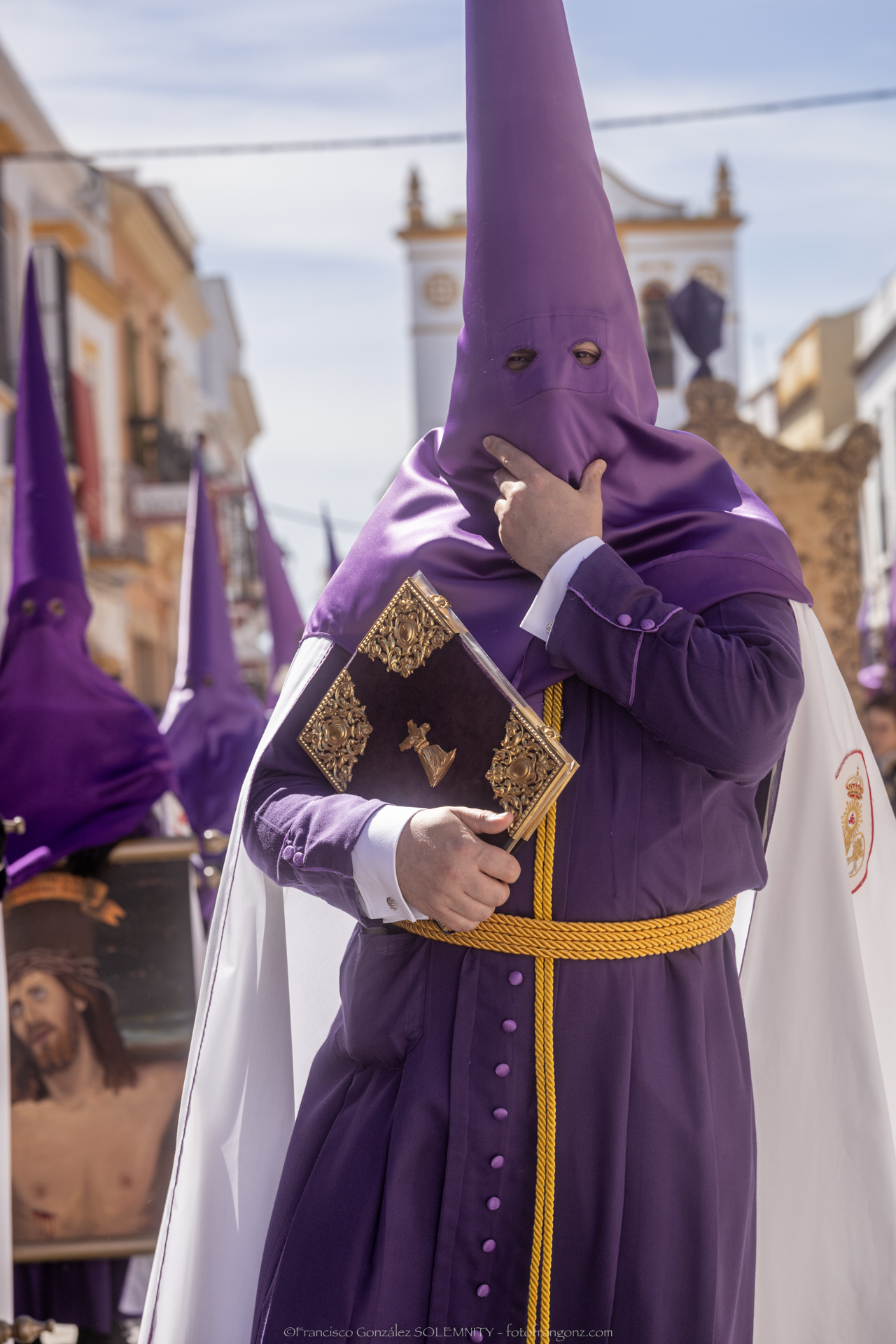
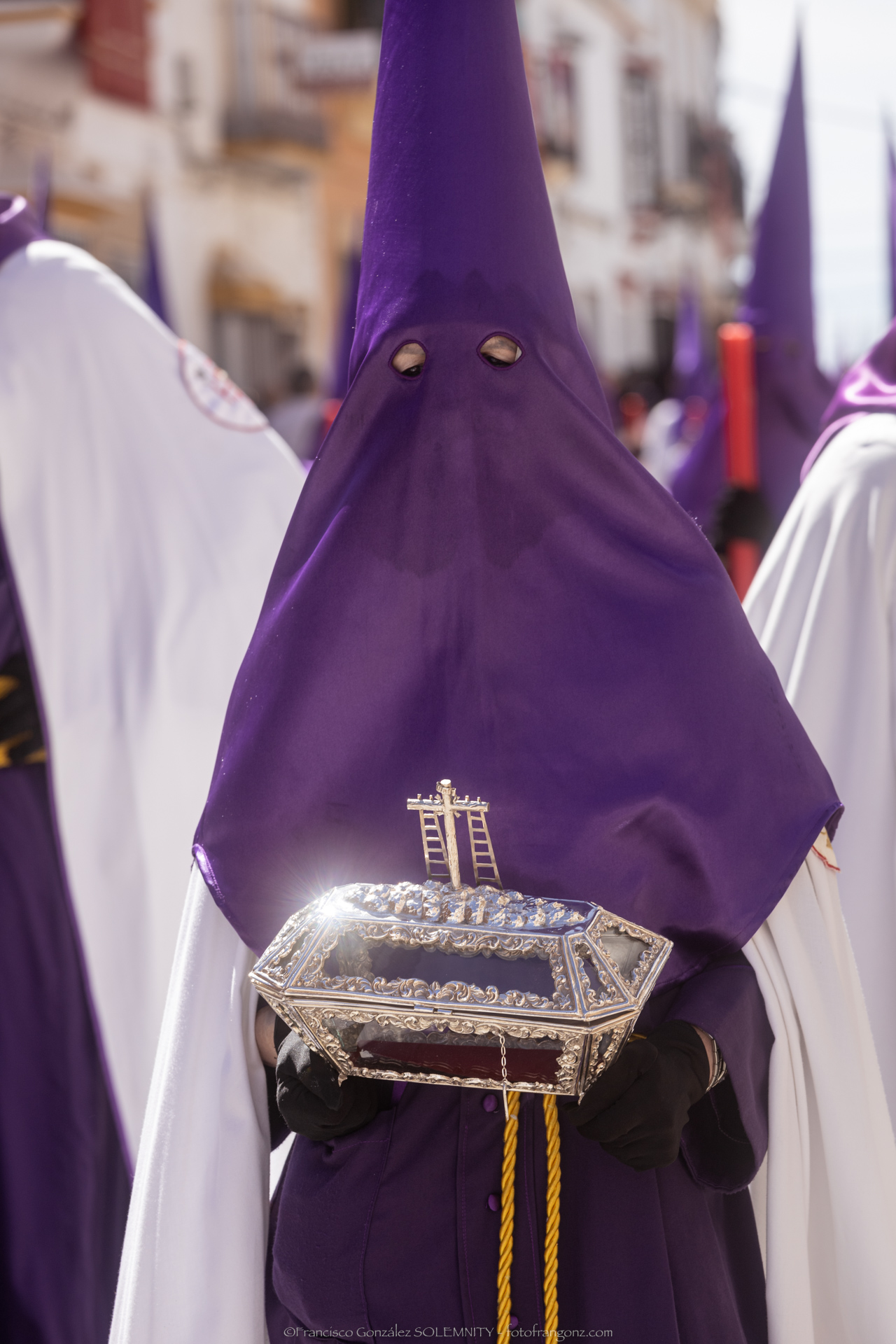
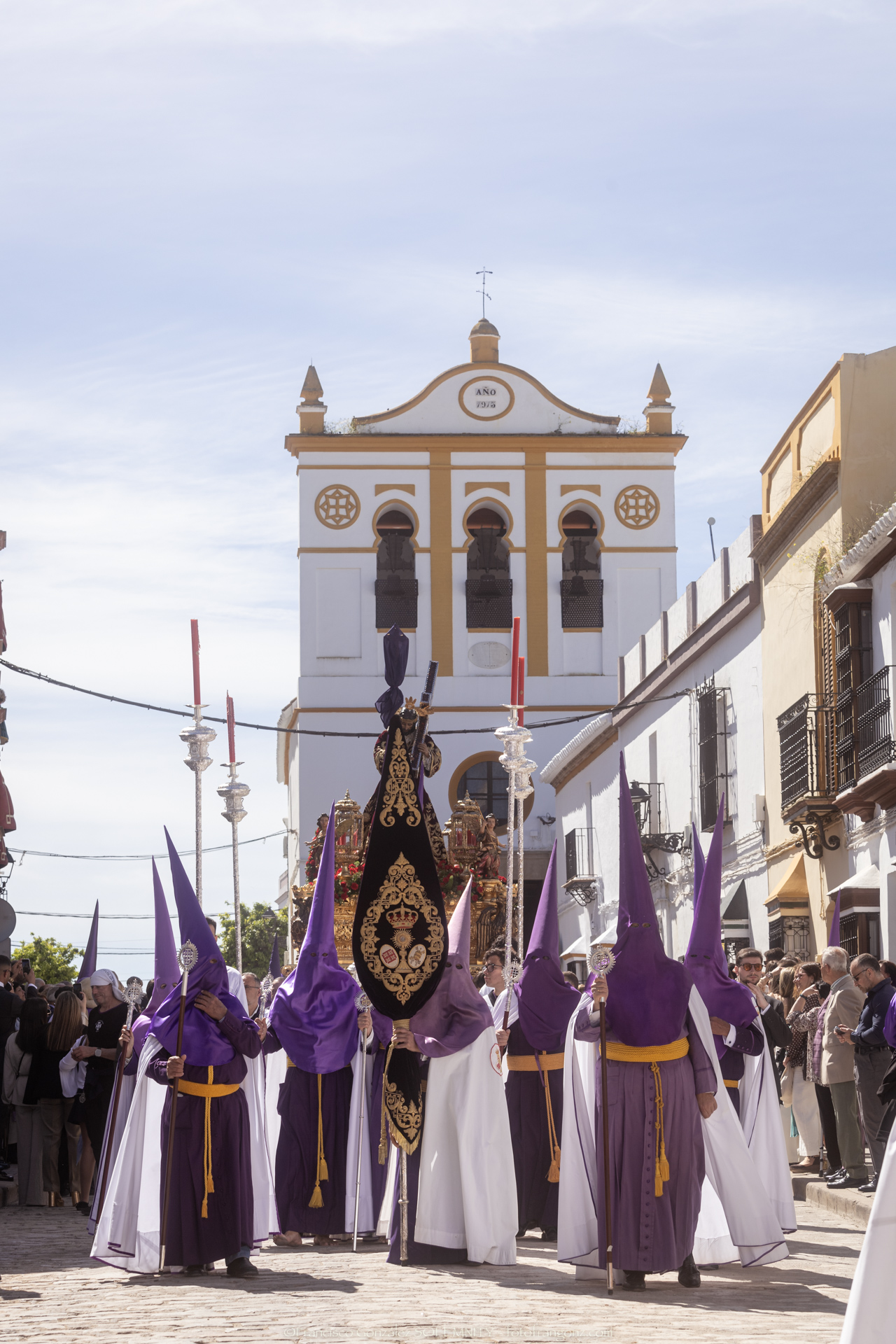
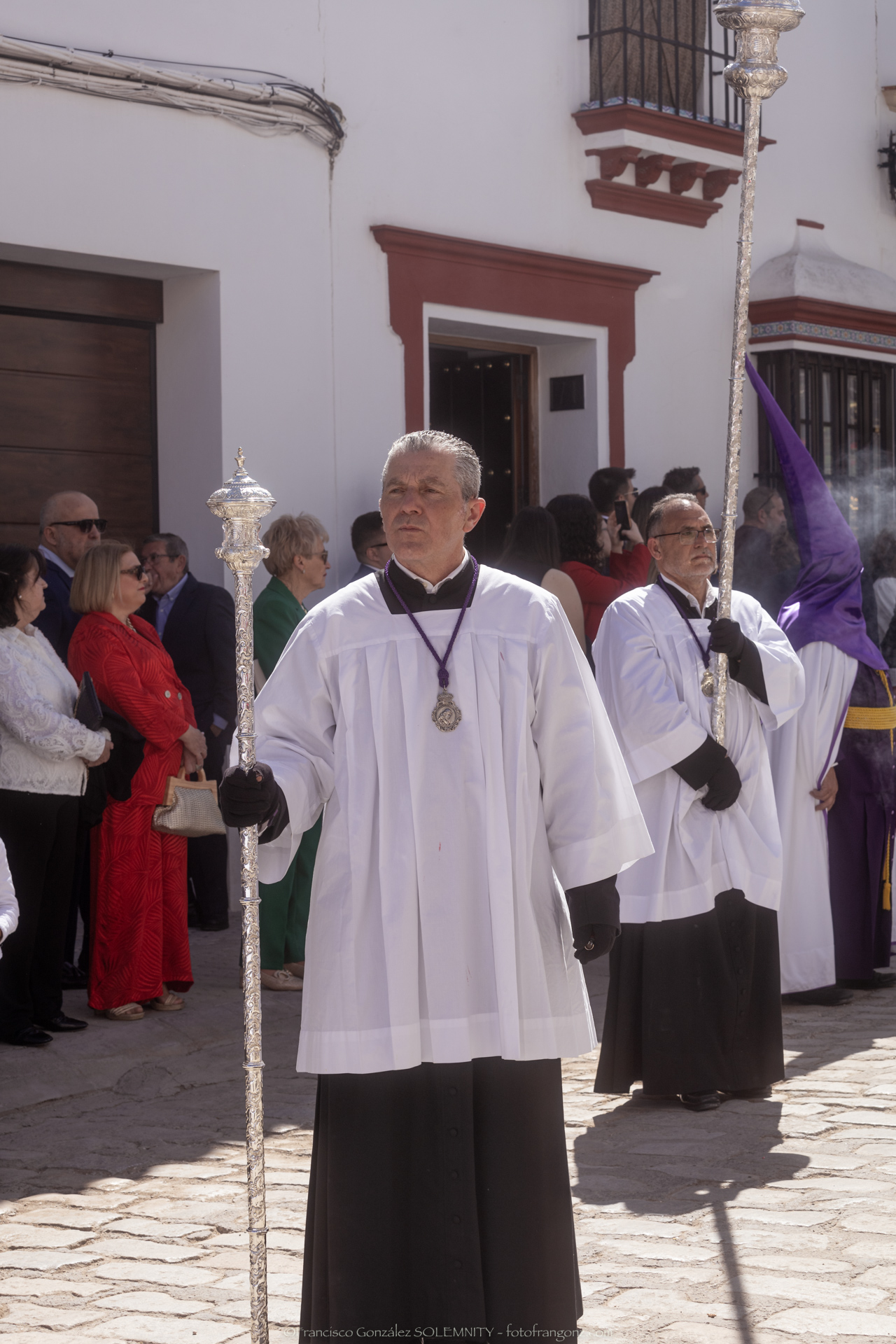
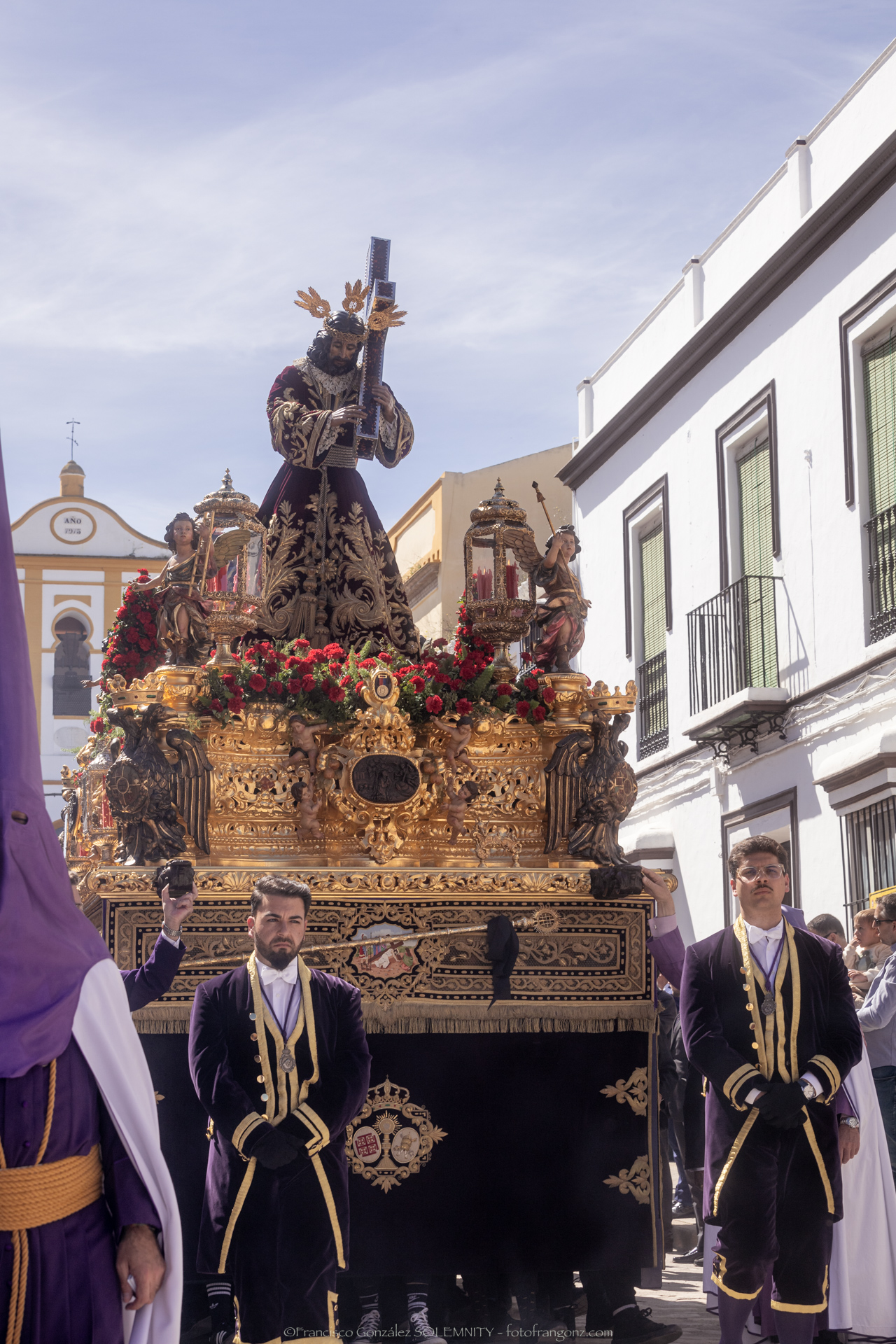
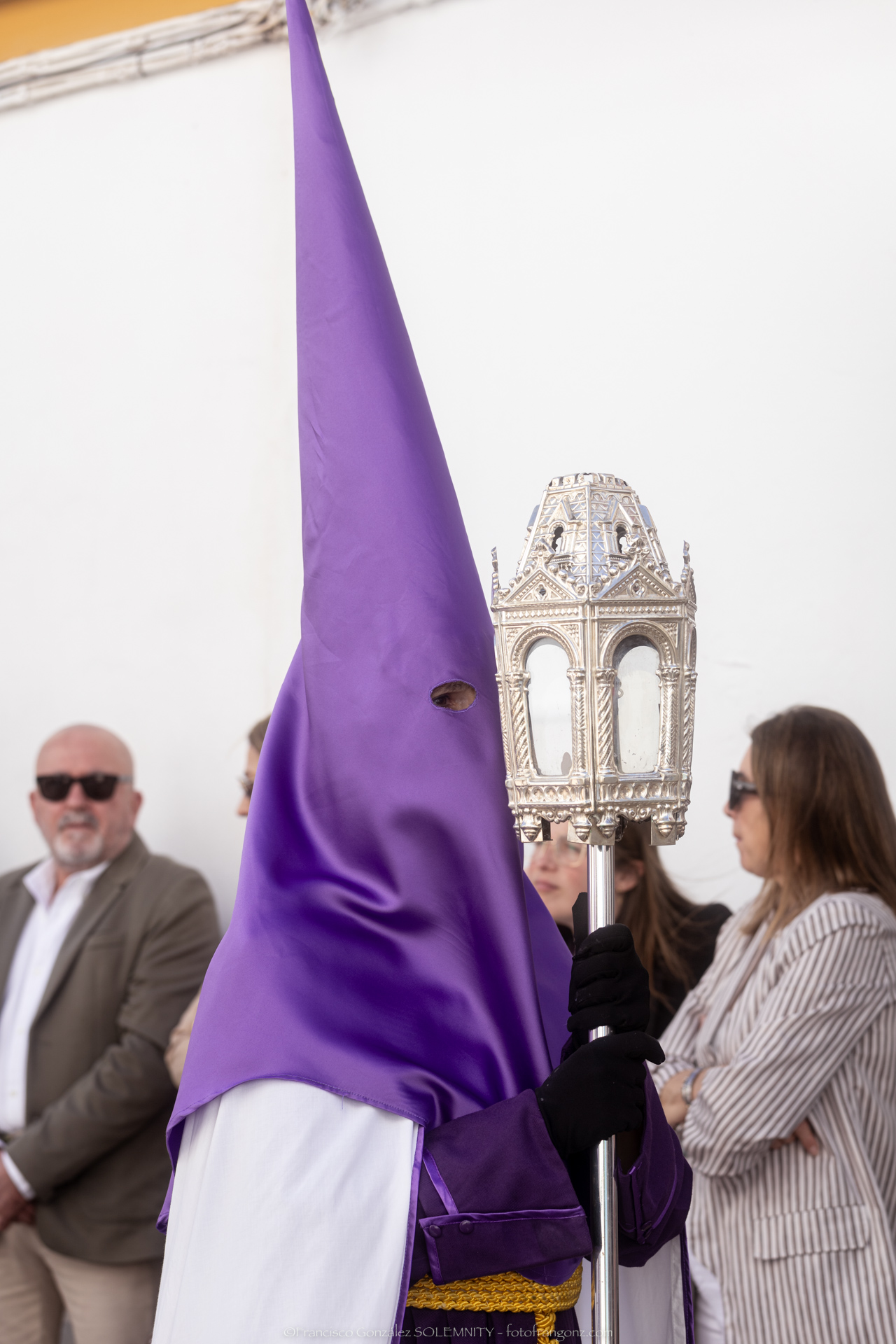
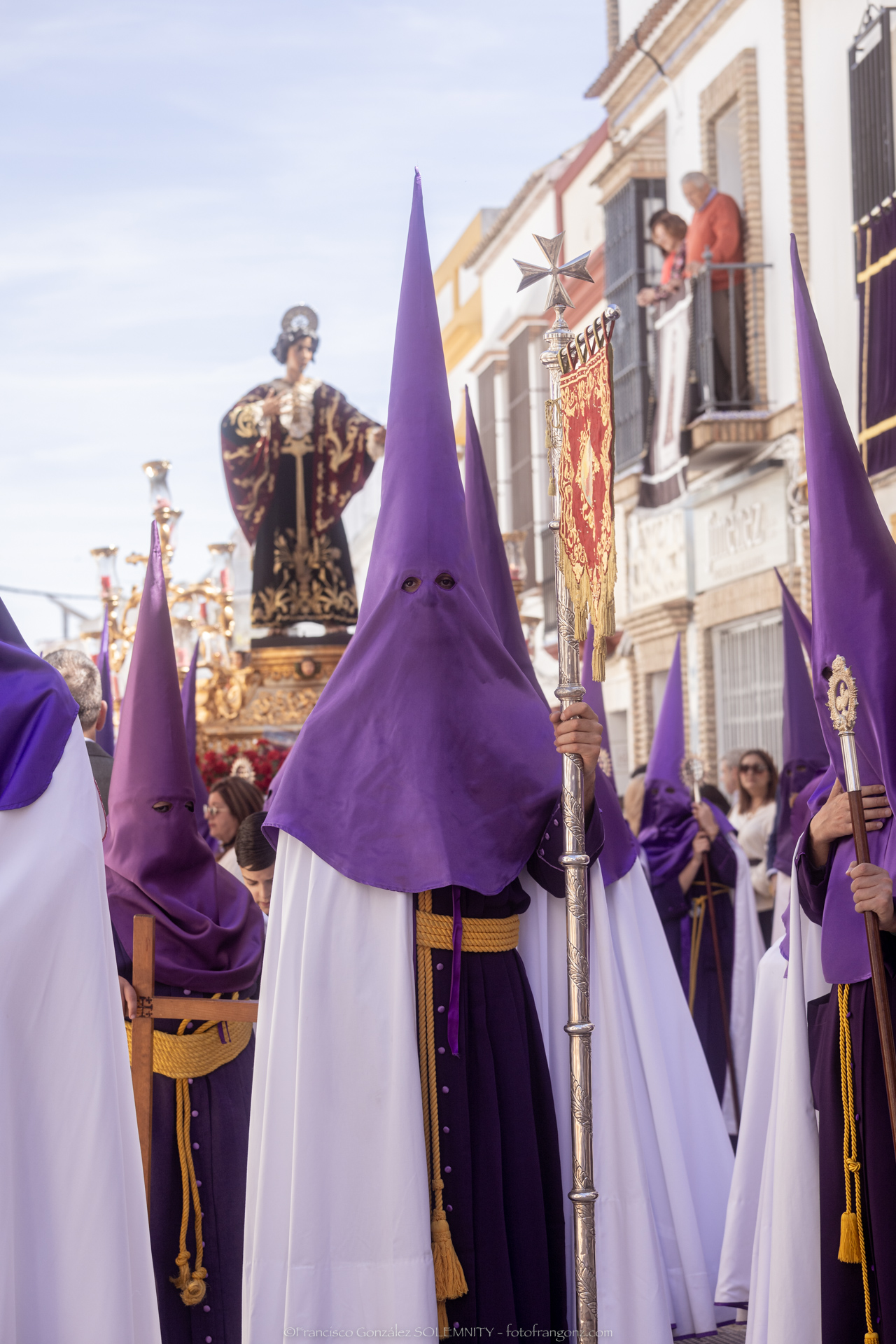
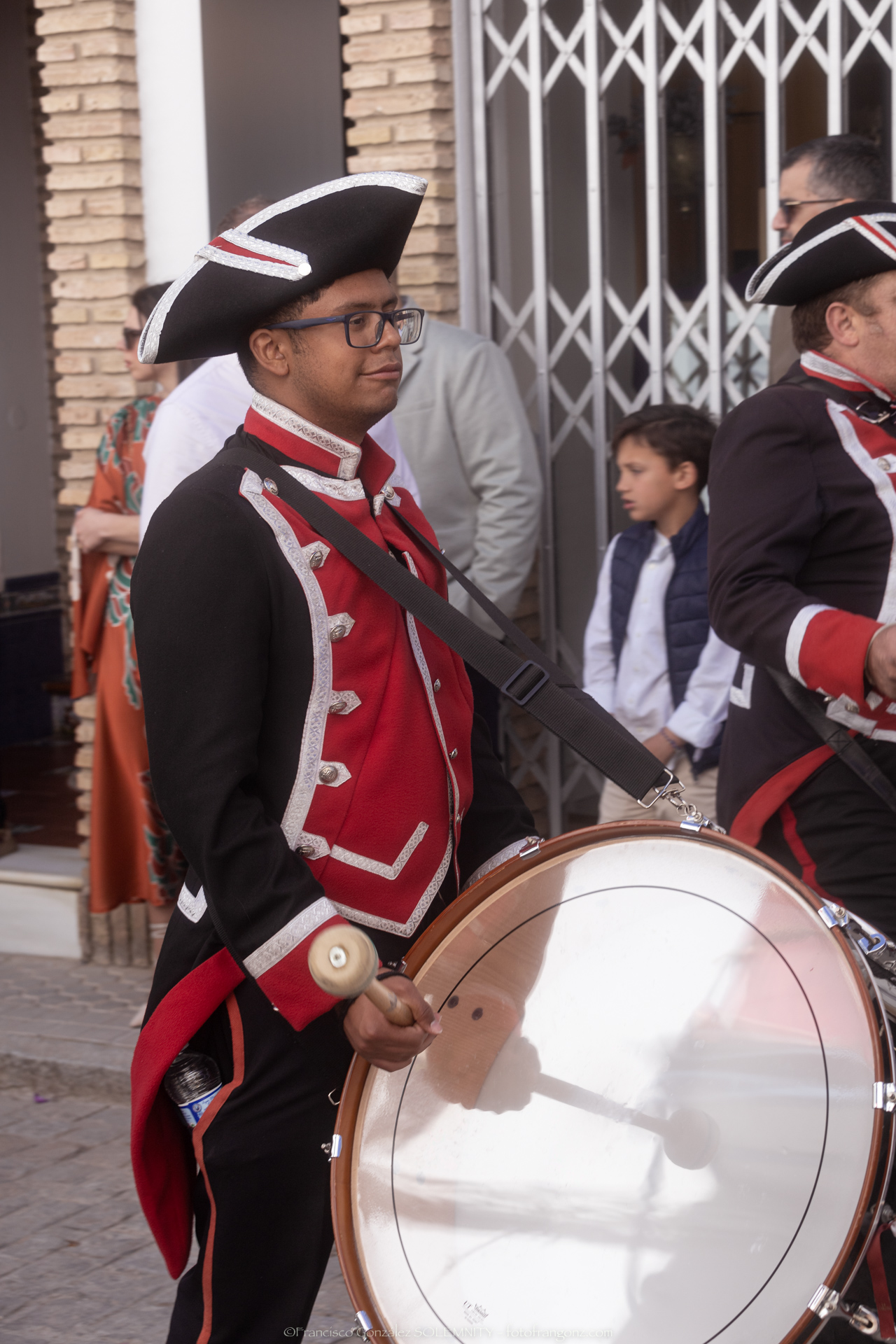
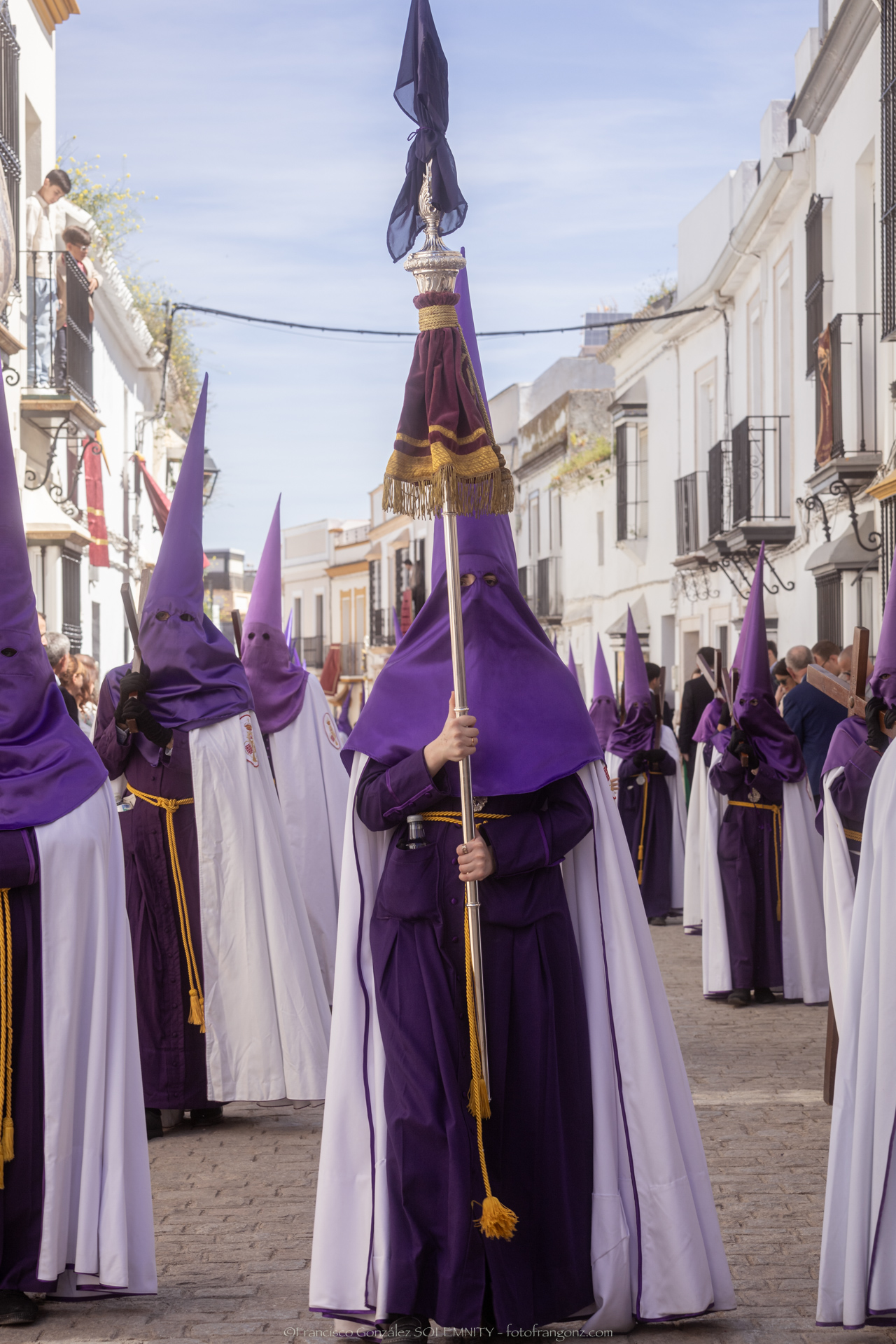
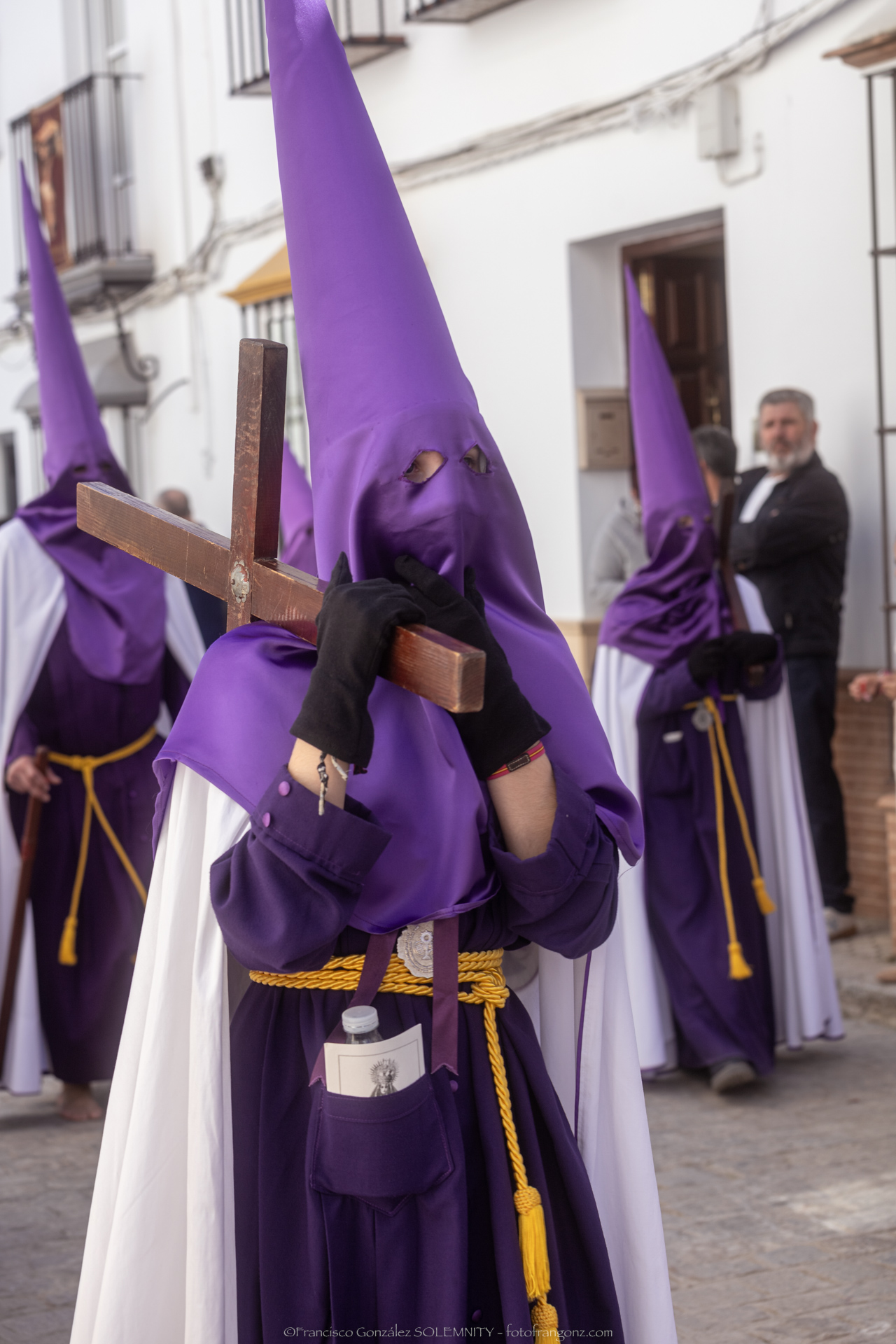
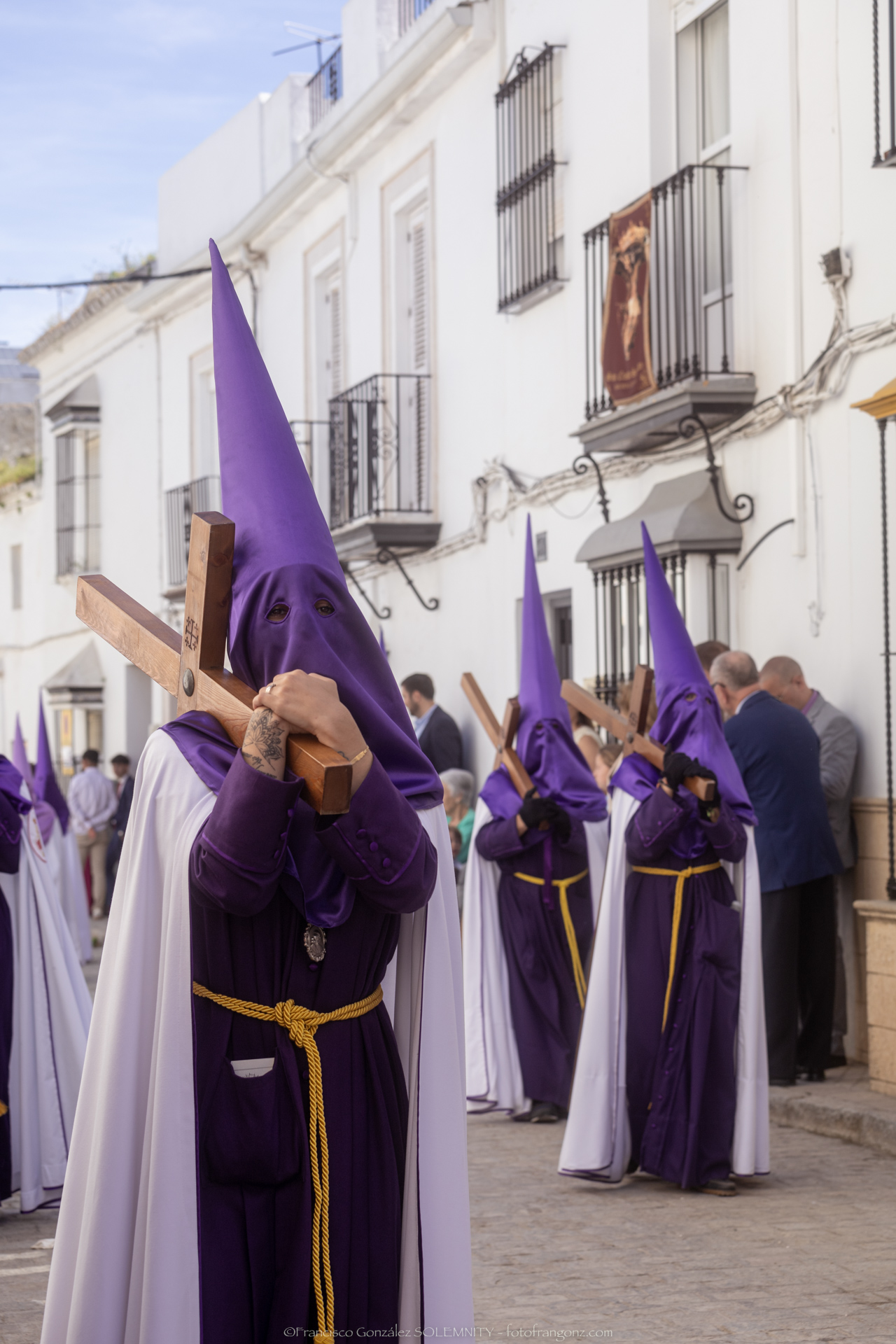
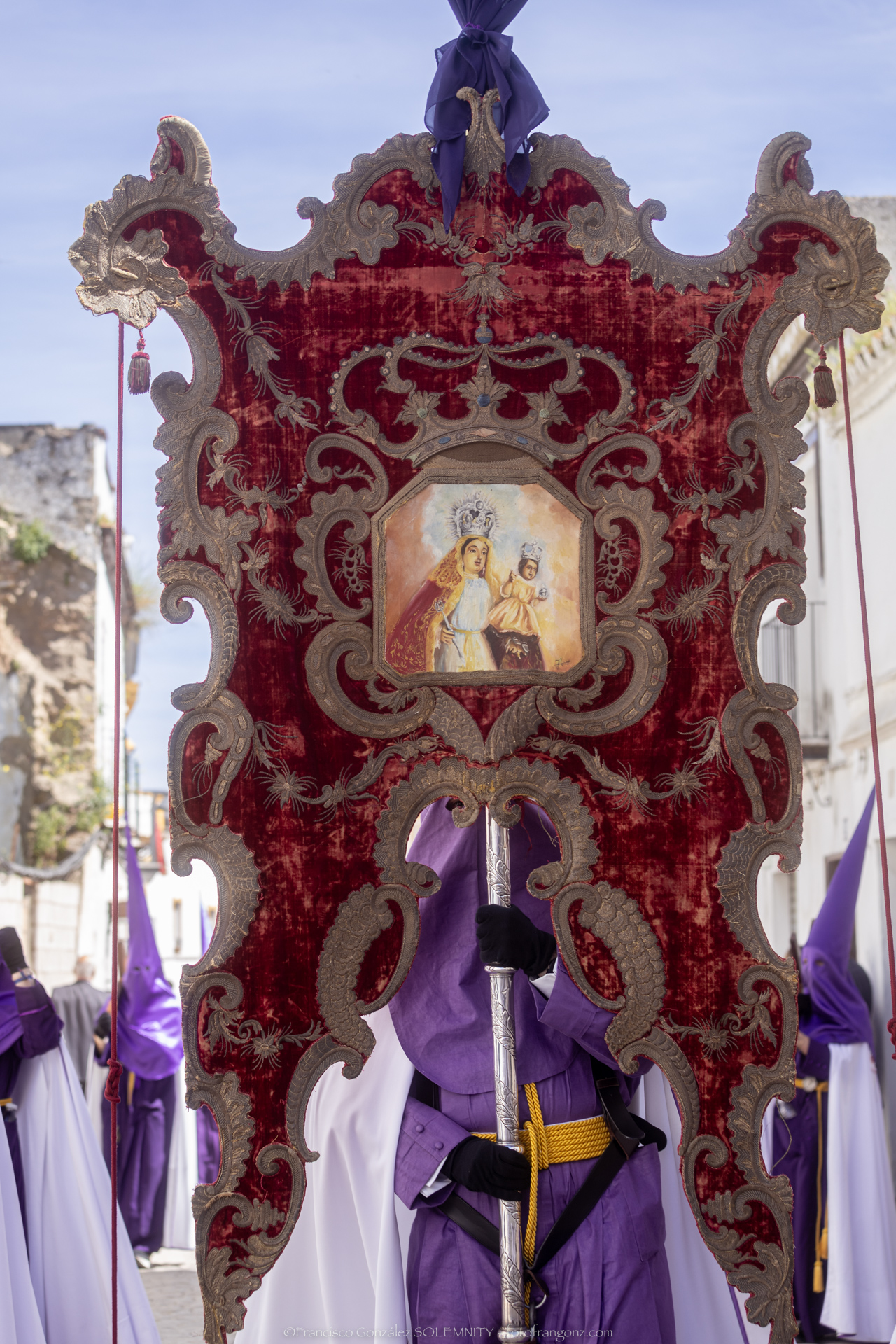
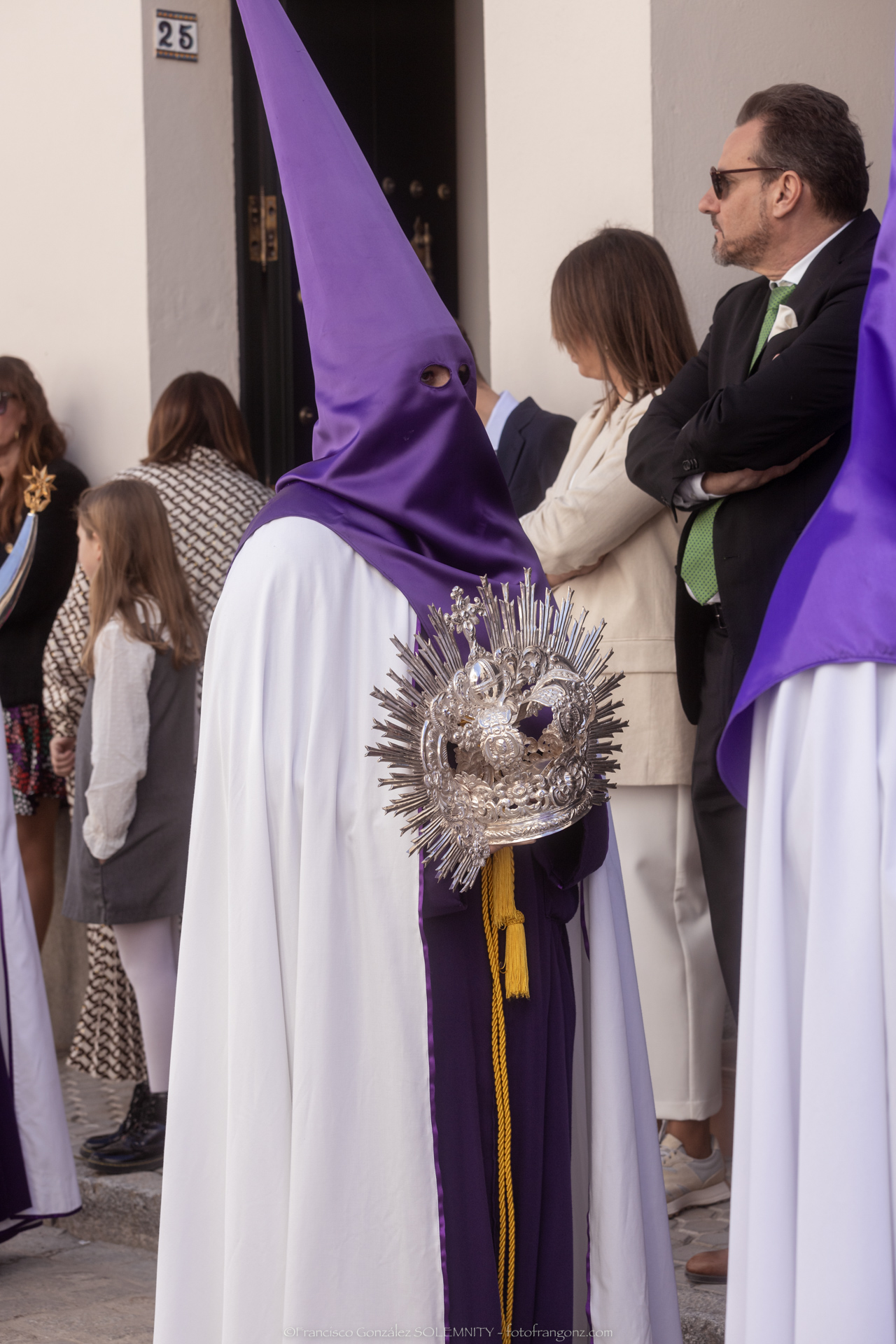
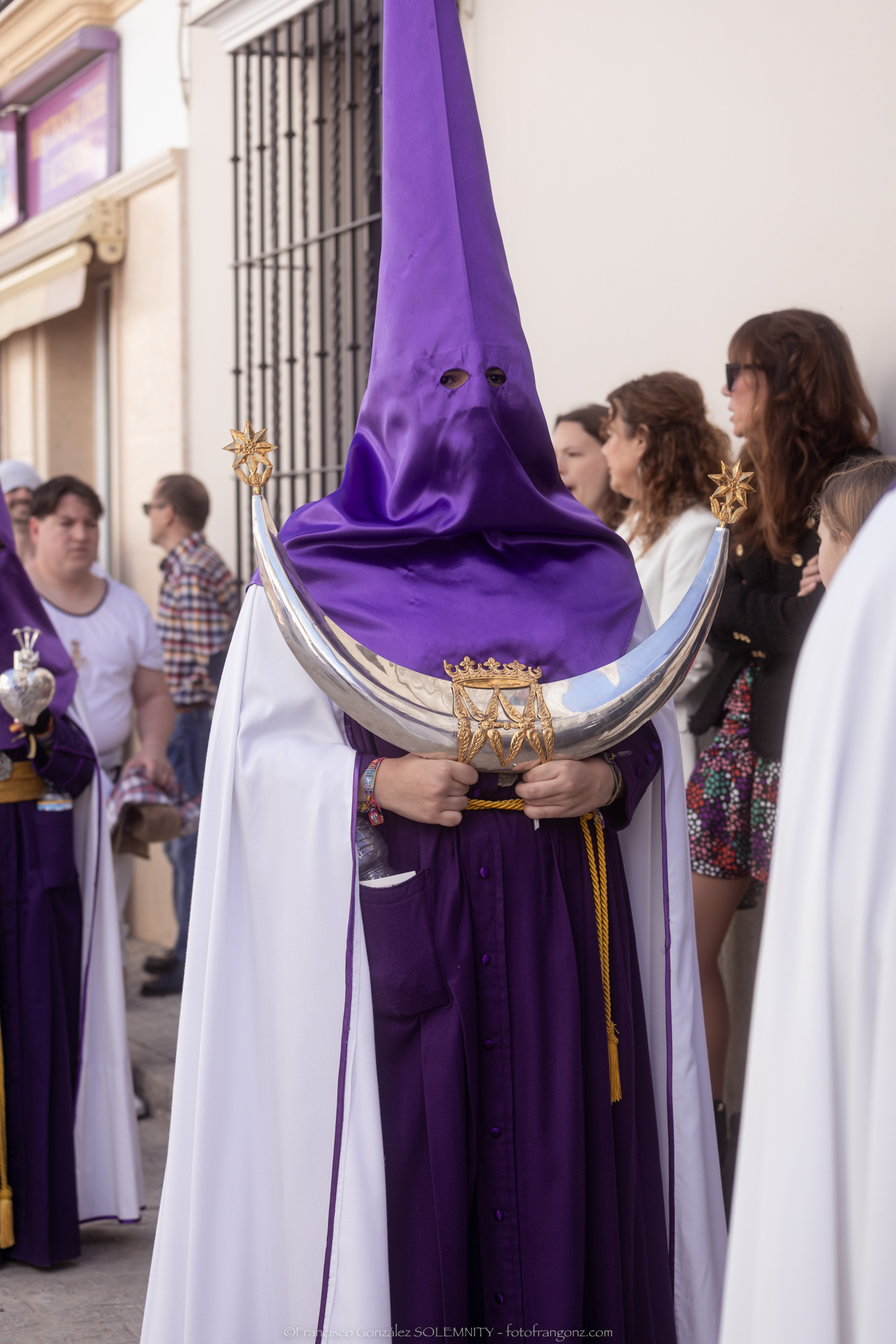
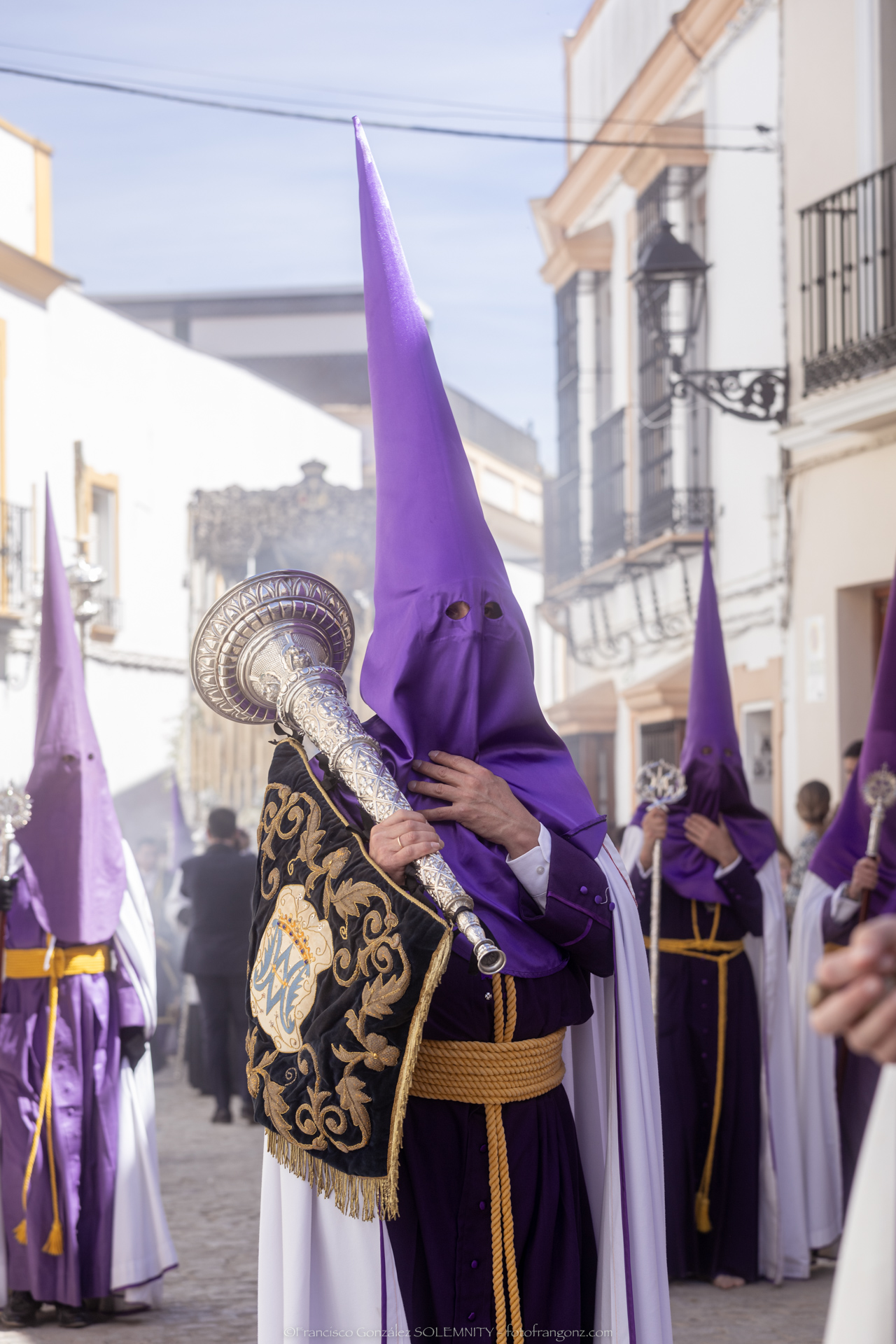
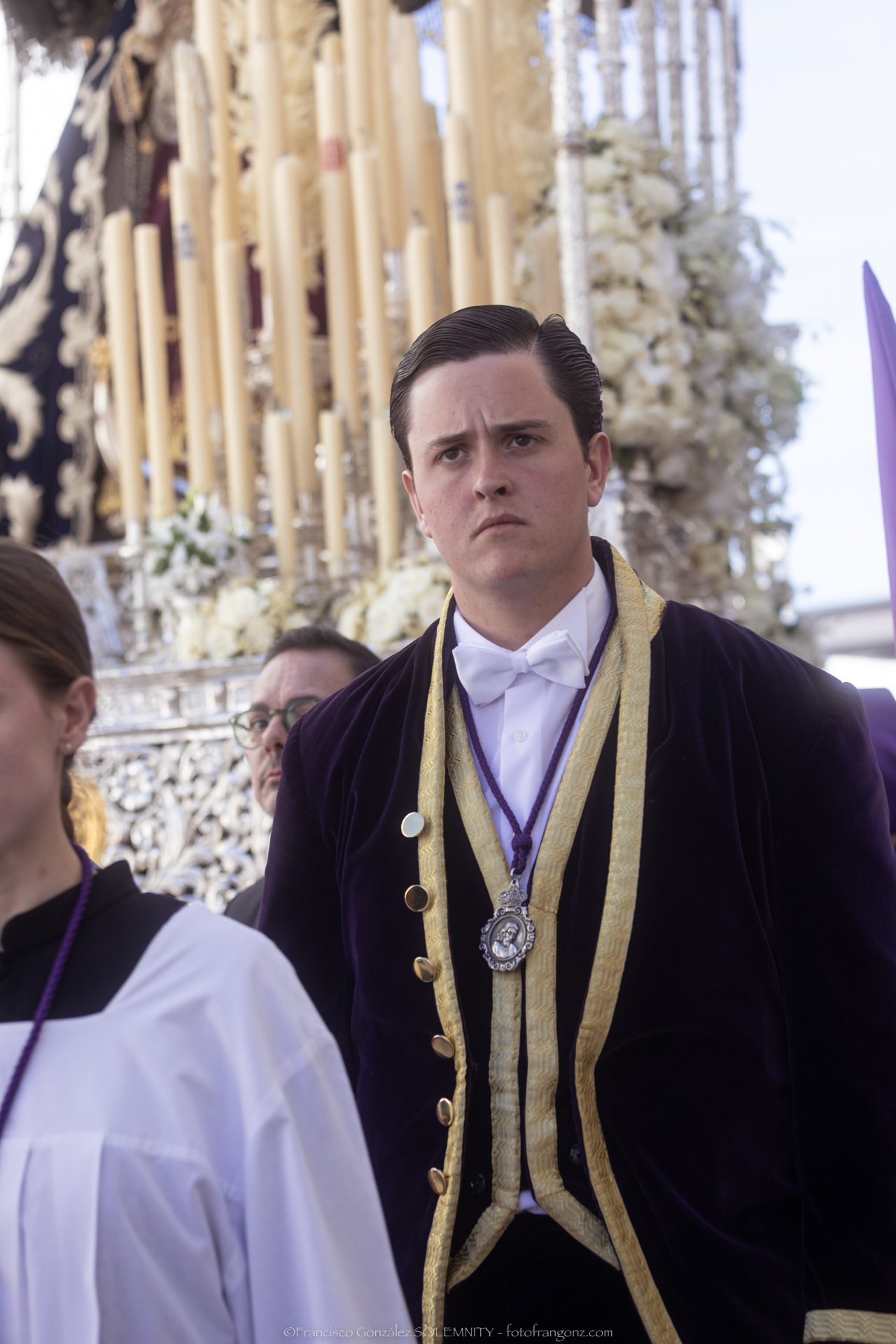
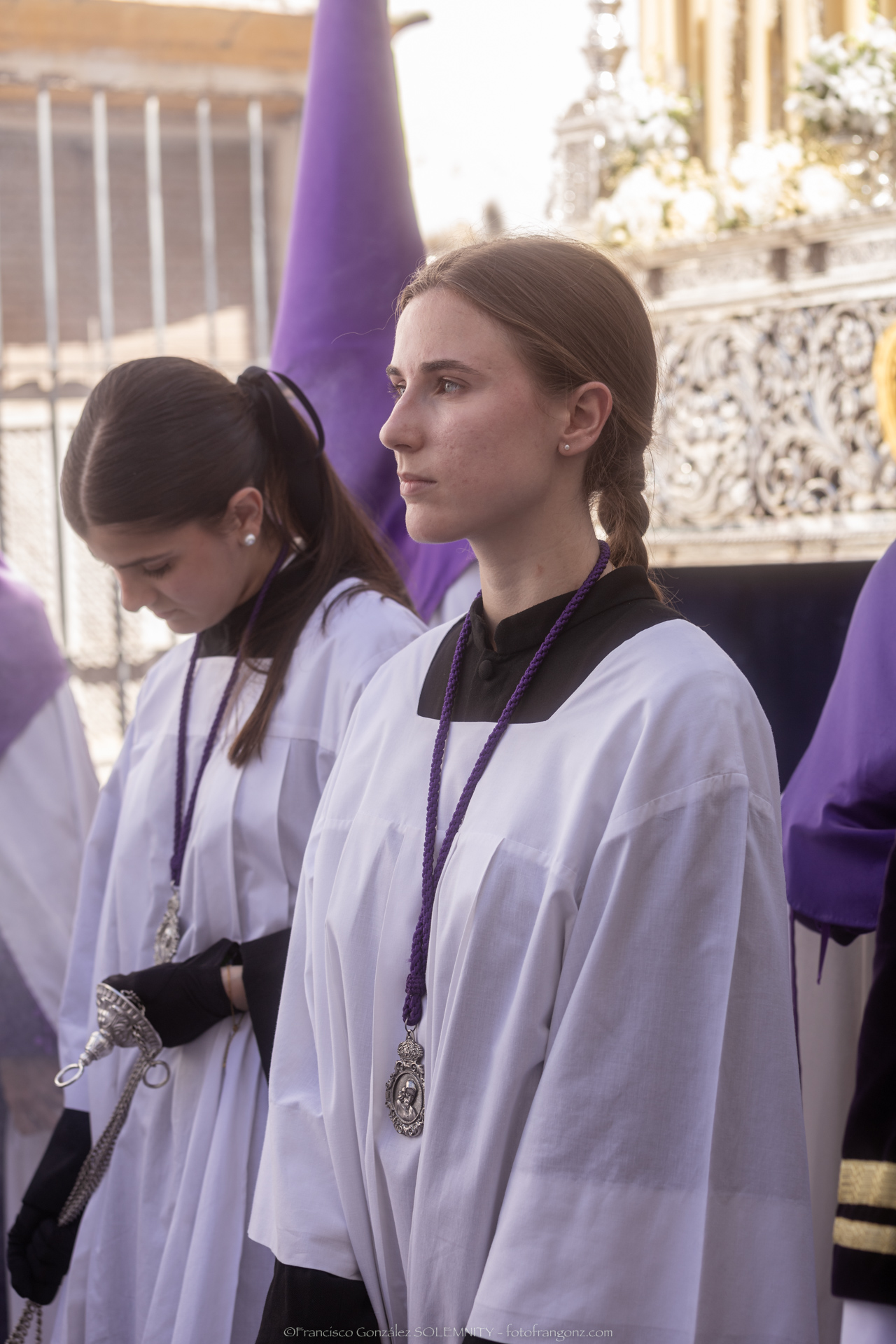
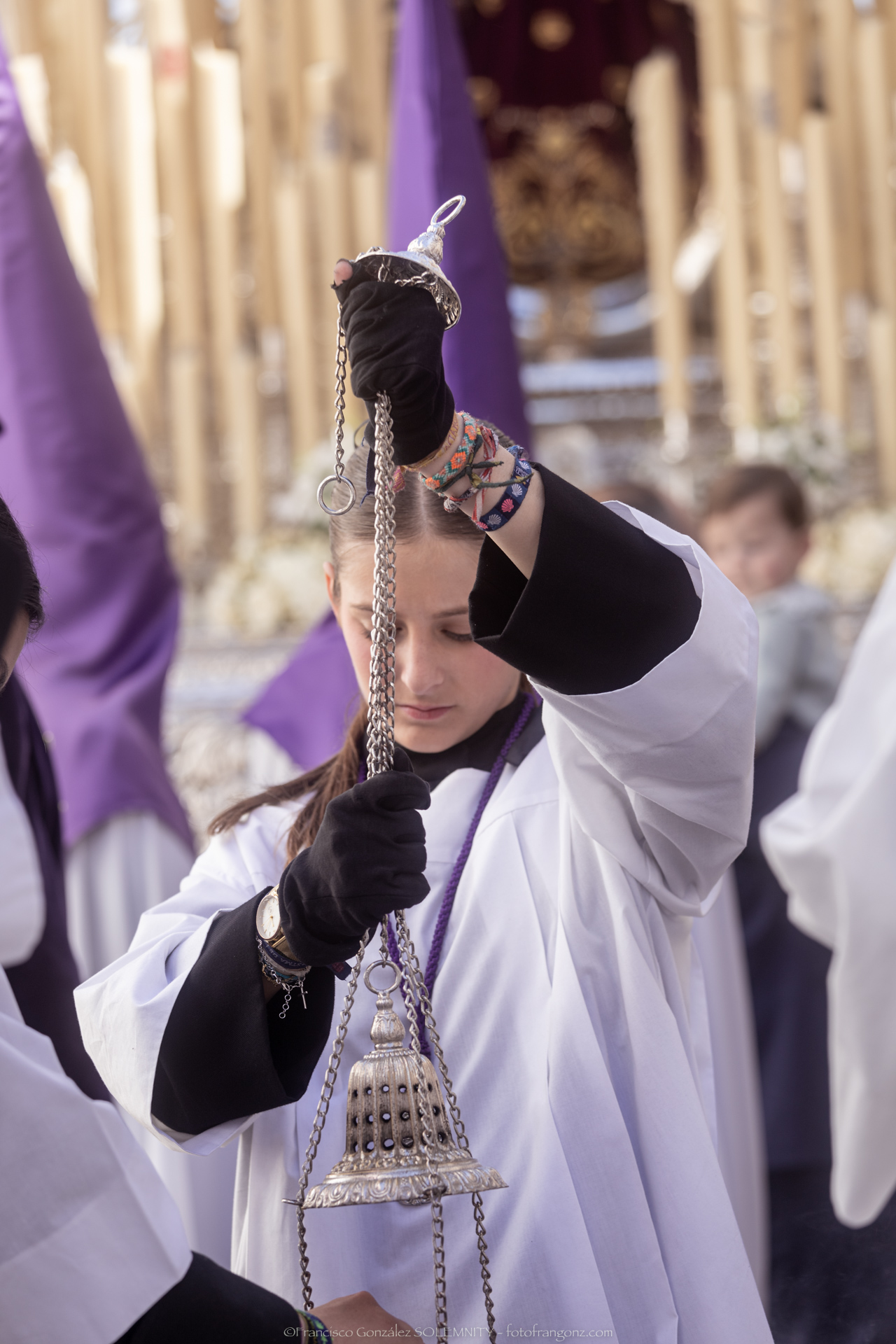
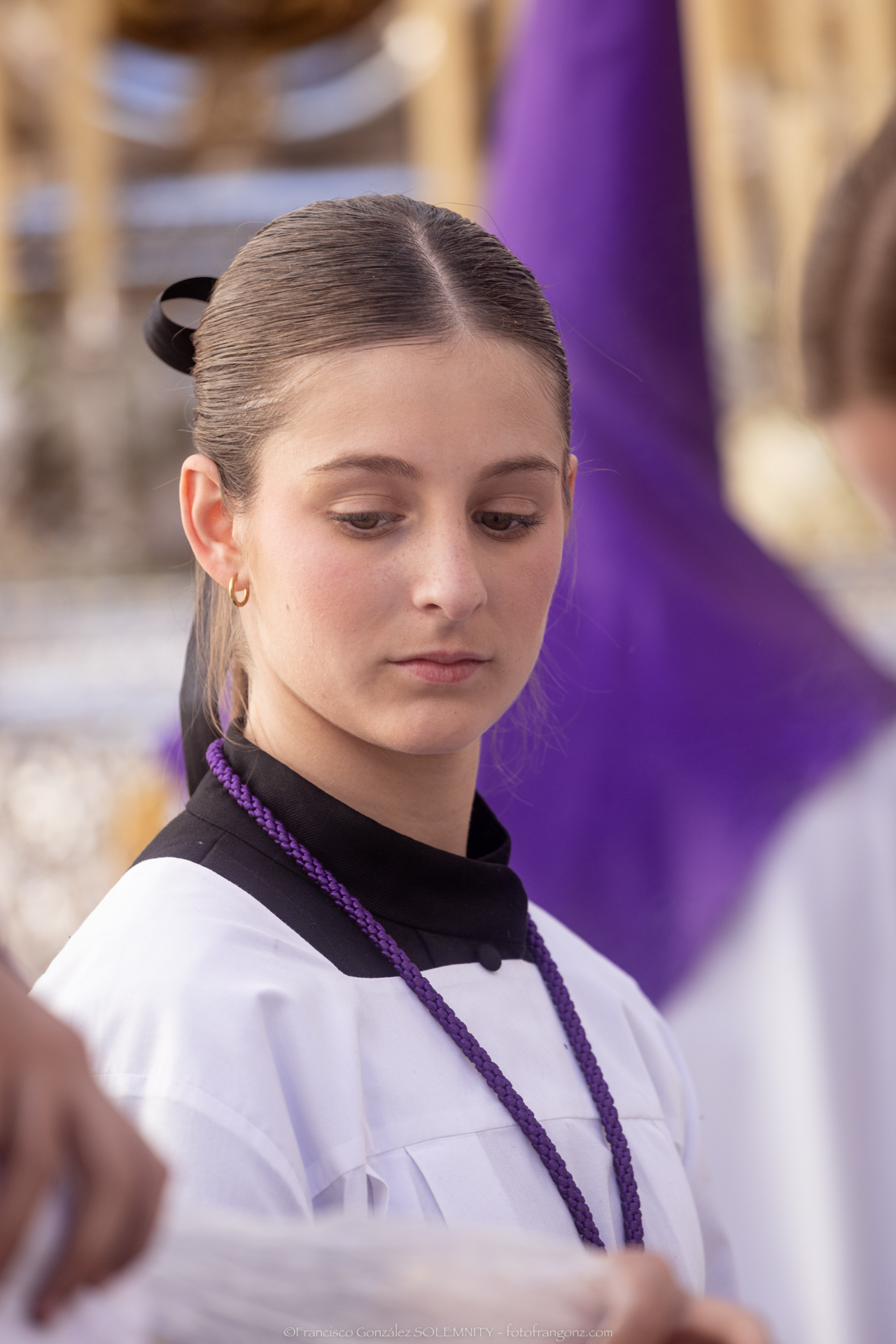
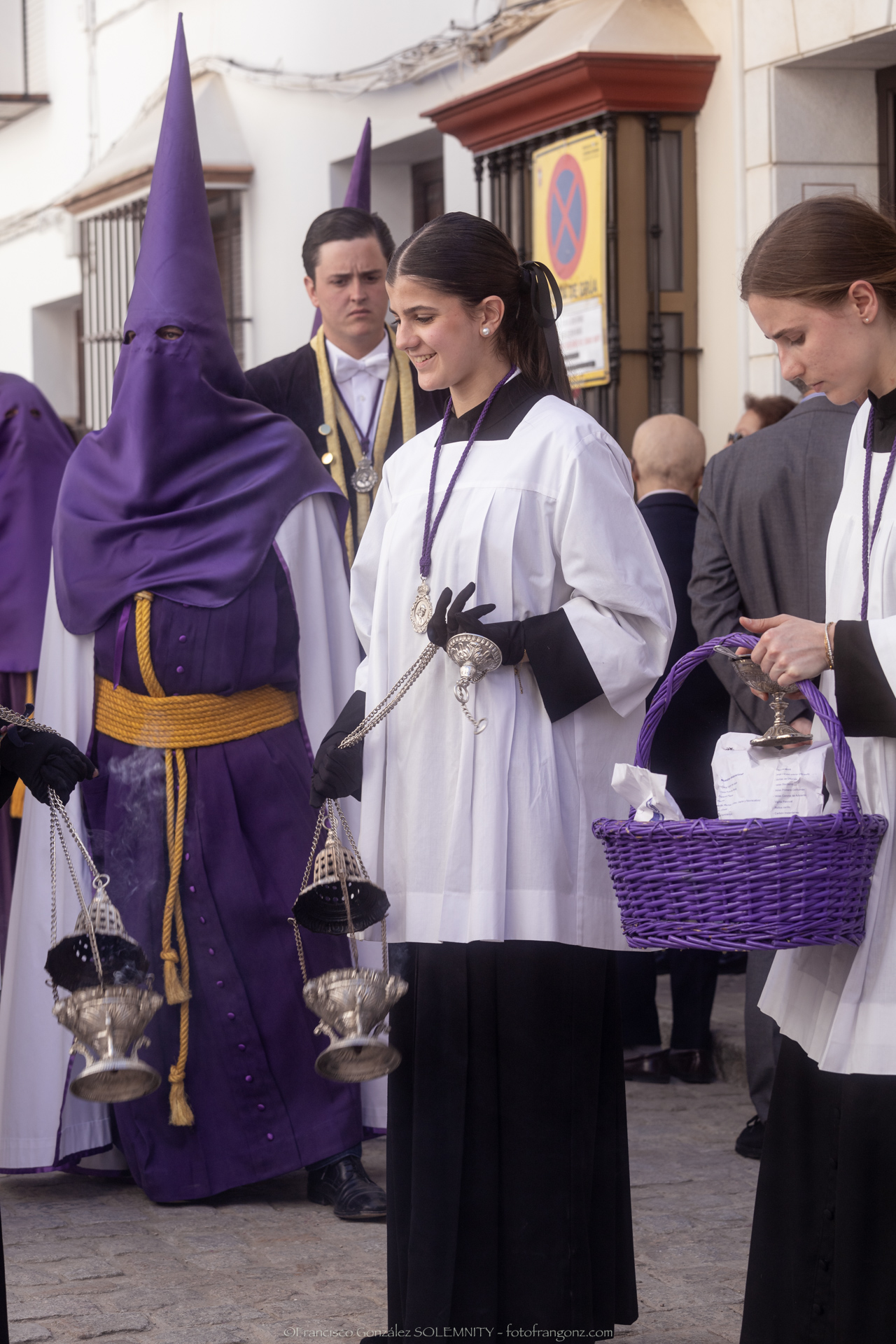
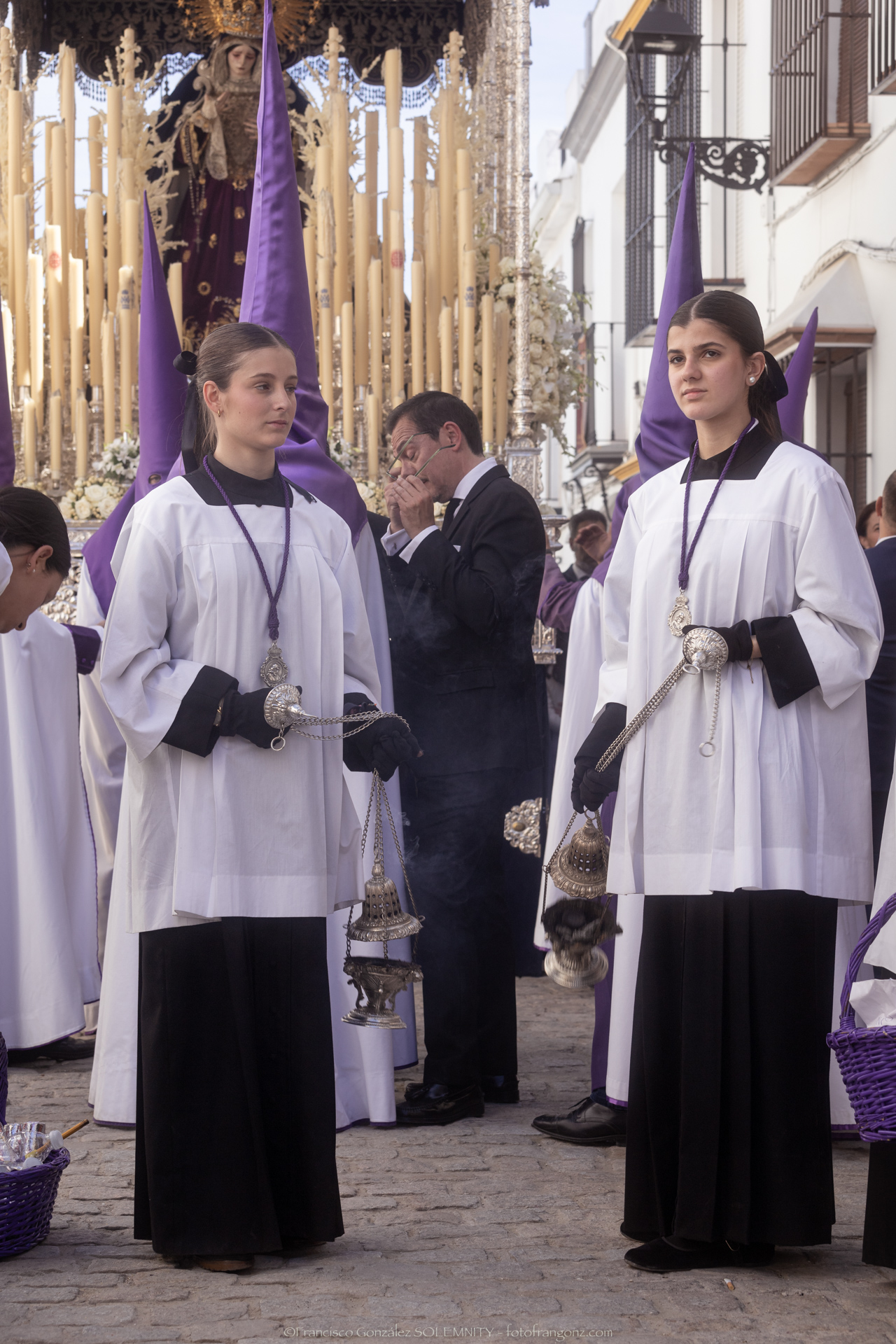
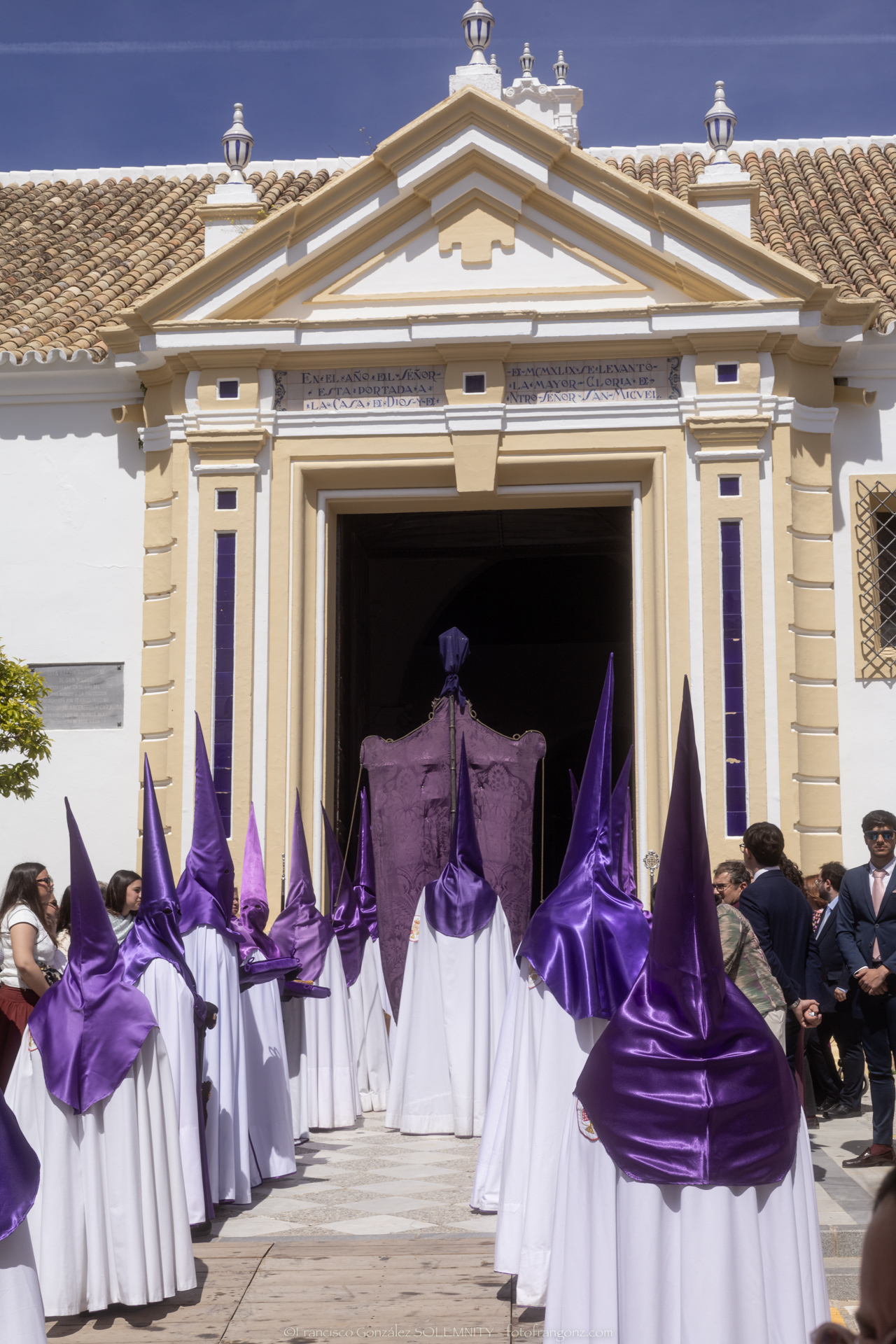
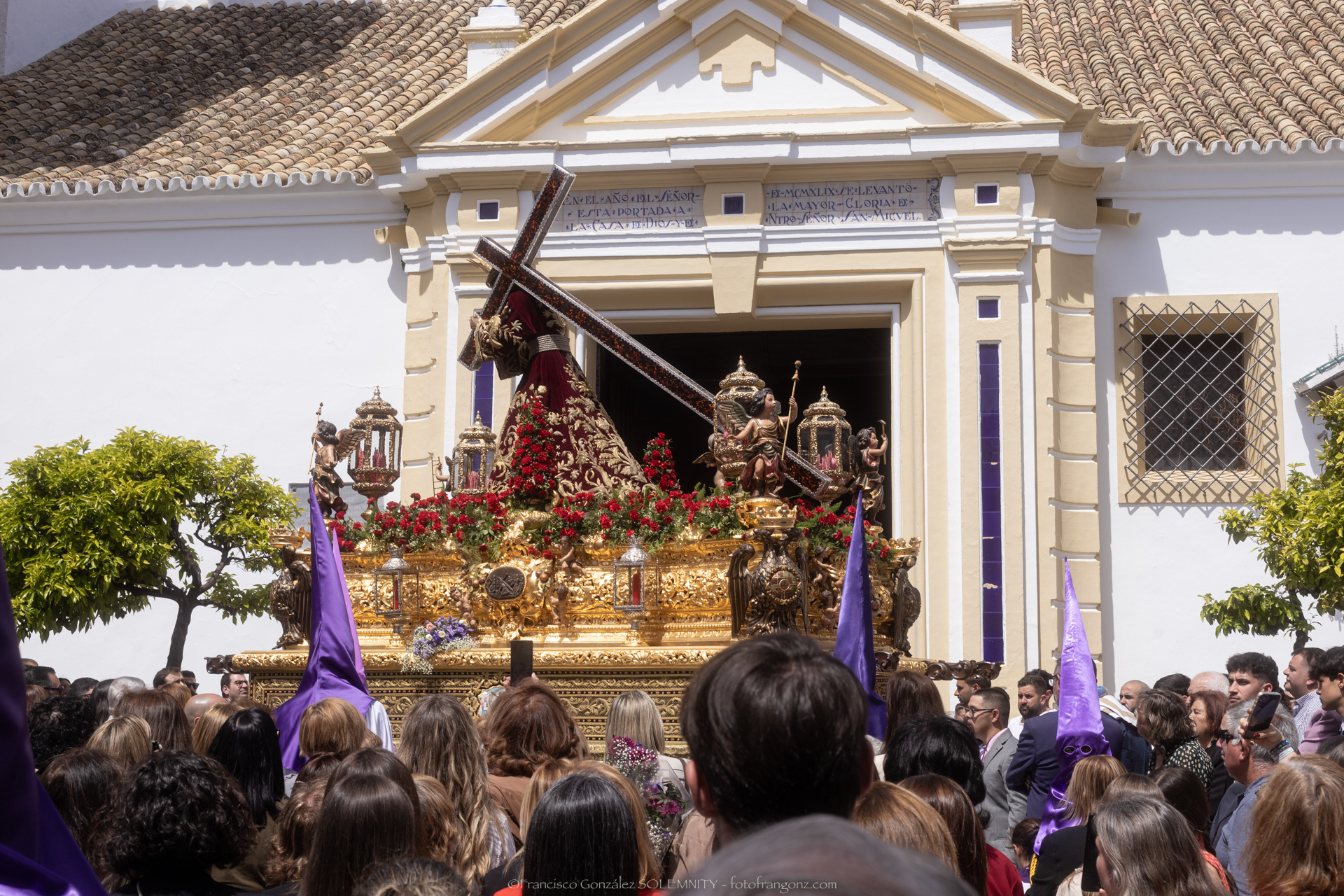
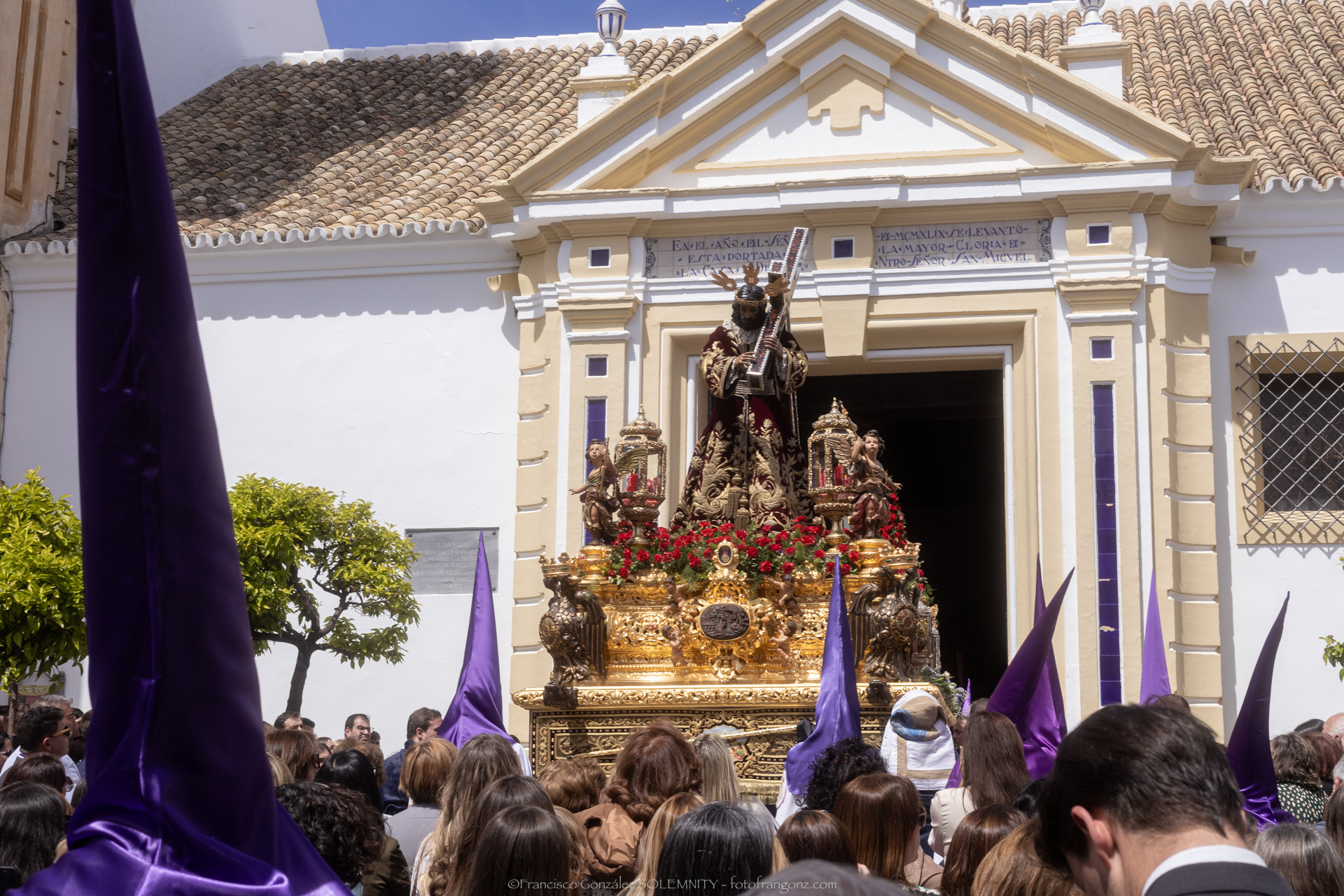
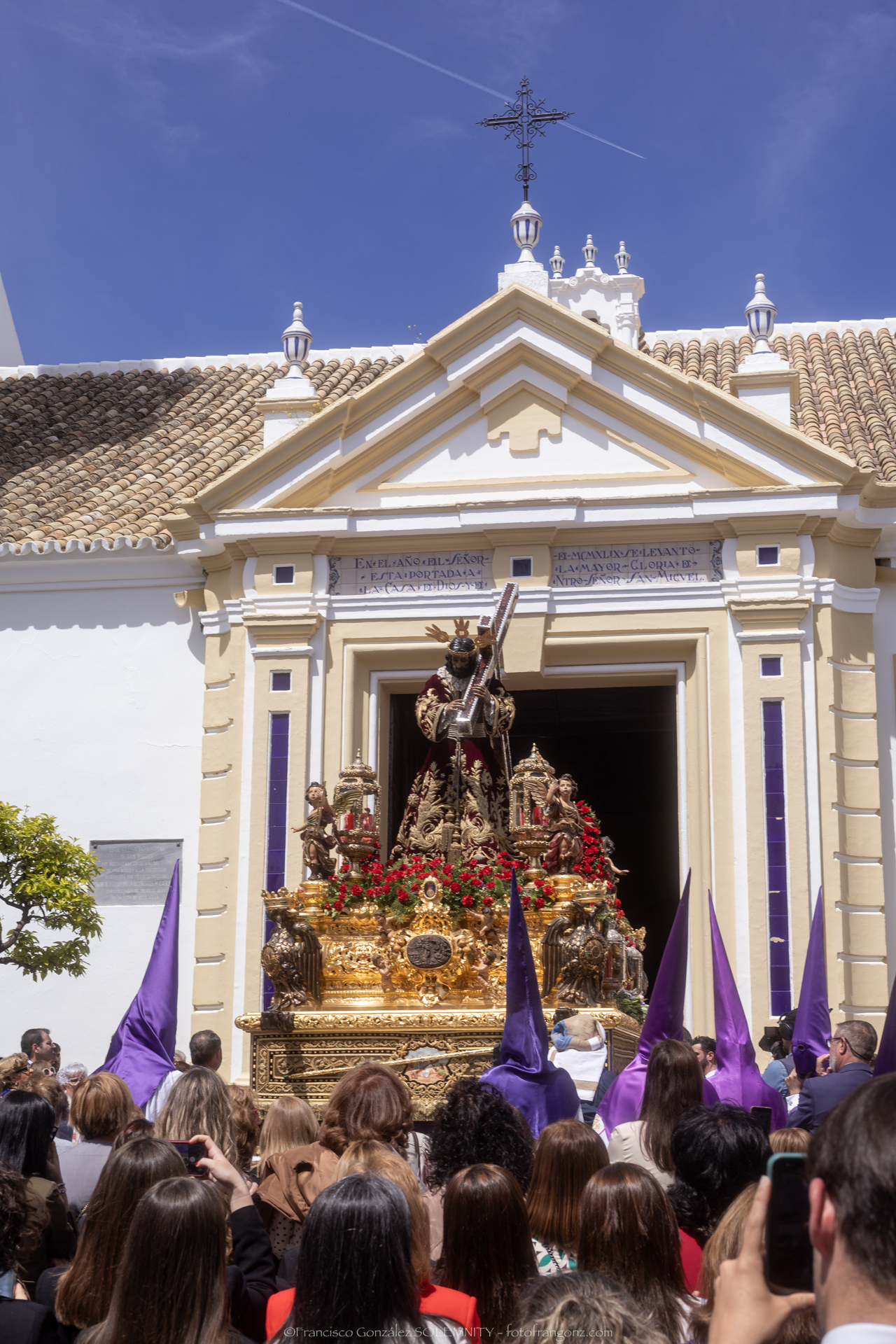
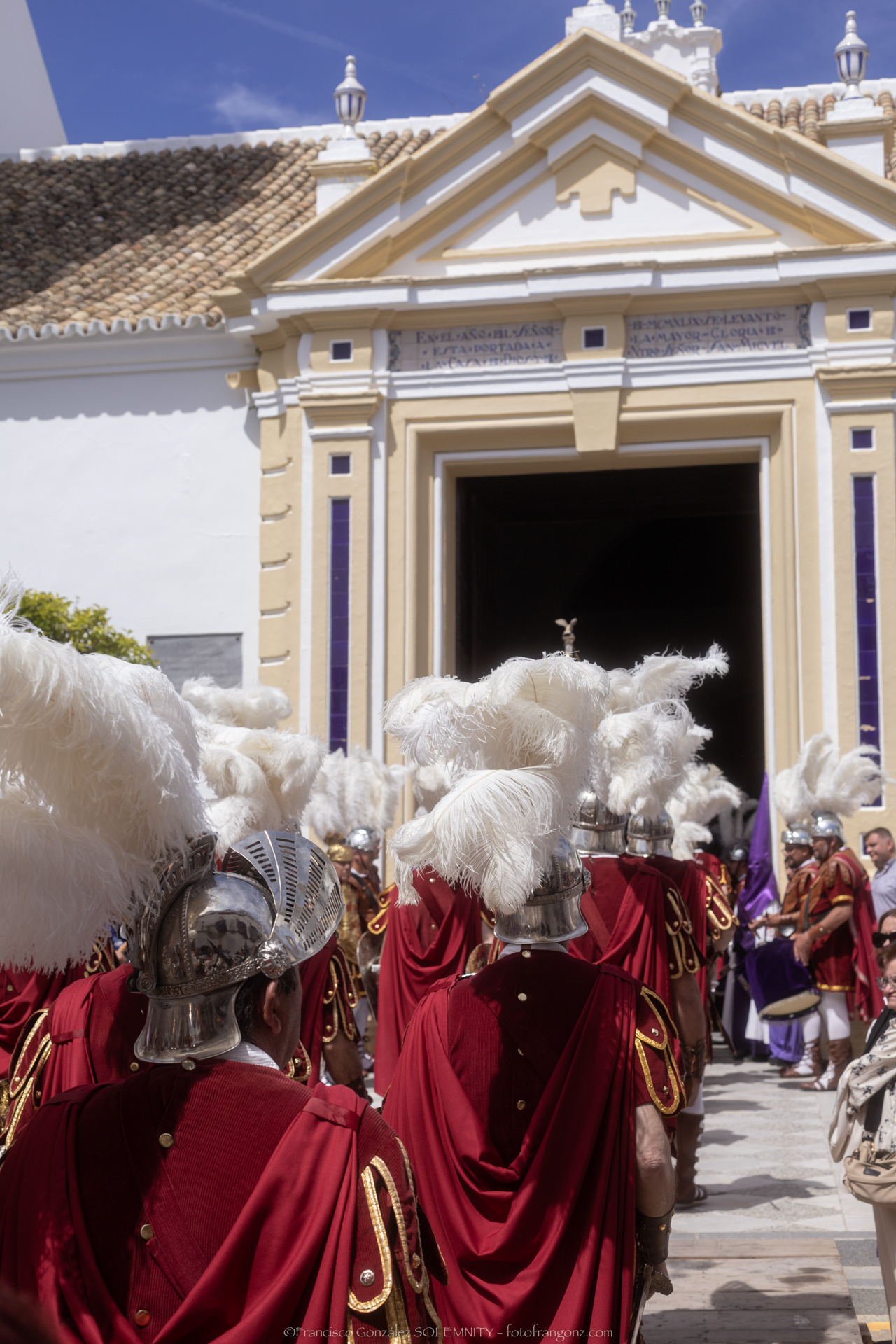
The Hermandad de Nuestro Padre Jesús Nazareno, María Santísima de las Lágrimas y San Juan Evangelista (Brotherhood of Our Father Jesus Nazarene, Most Holy Mary of the Tears and Saint John the Evangelist) carried out its penitential procession last Good Friday through the streets of Marchena. Departing from its headquarters at the Parroquia de San Miguel Arcángel, the procession begins during the Madrugá, that is, at 6 in the morning, in silence, without nazarenes, centuria or band, accompanied only by the costaleros de promesa and attendants. At 10 o’clock, the Mandato takes place in Plaza Ducal, where a scenic interpretation of the Passion is performed, including the sermon of the angel, the three falls and Veronica. After this act, the full procession begins with the incorporation of the bodies of nazarenos, the Roman centuria and the bands accompanying the processional floats.
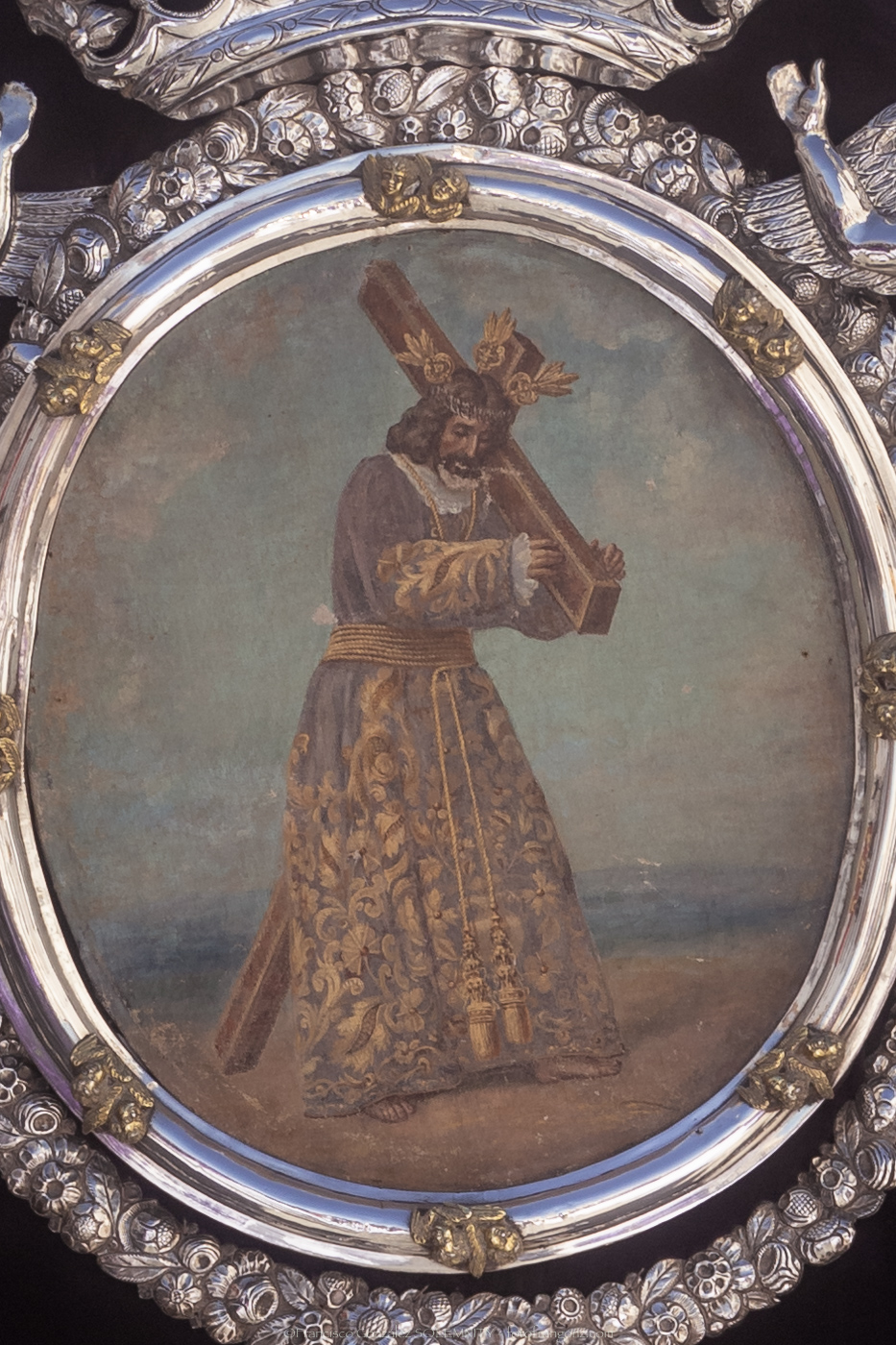
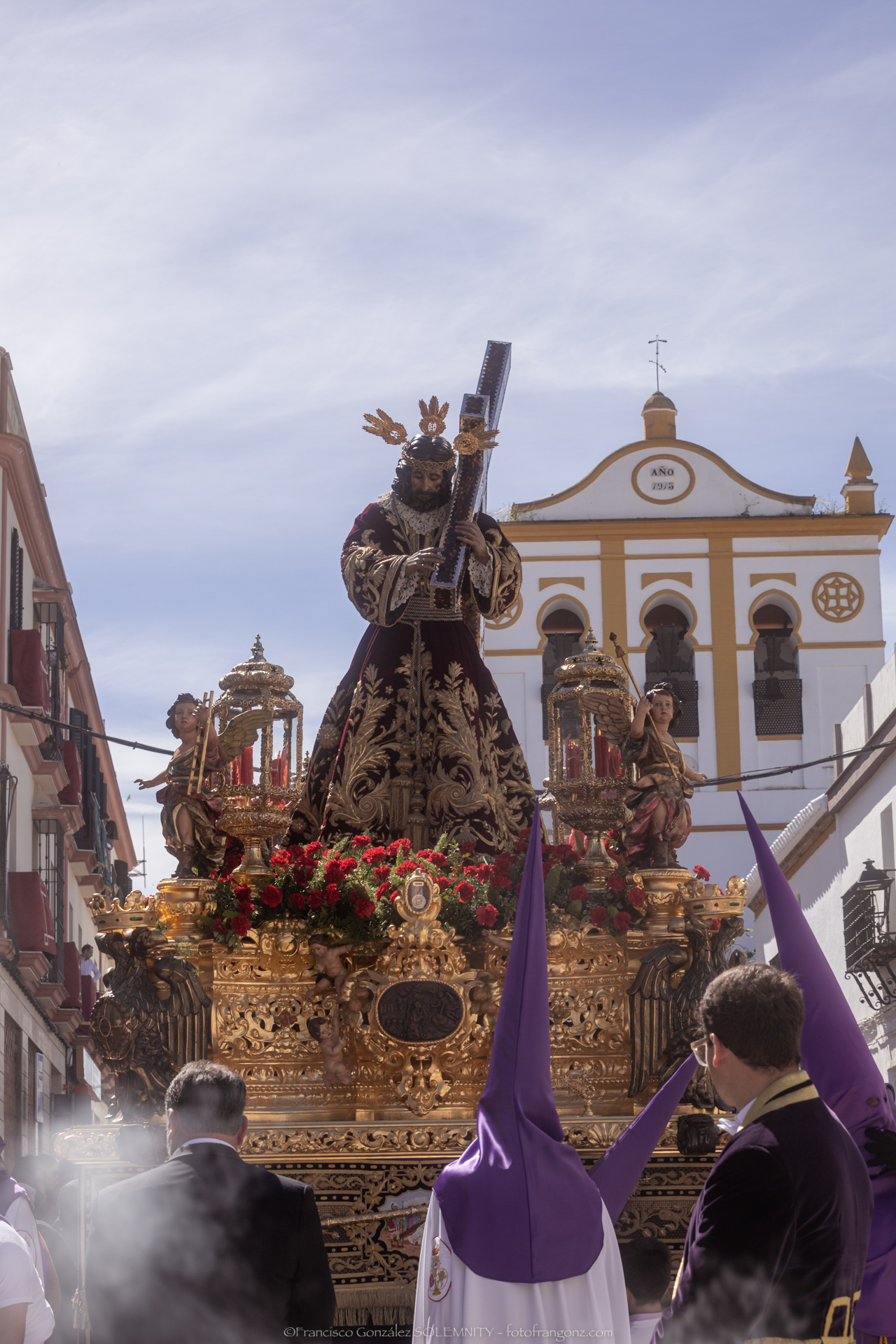
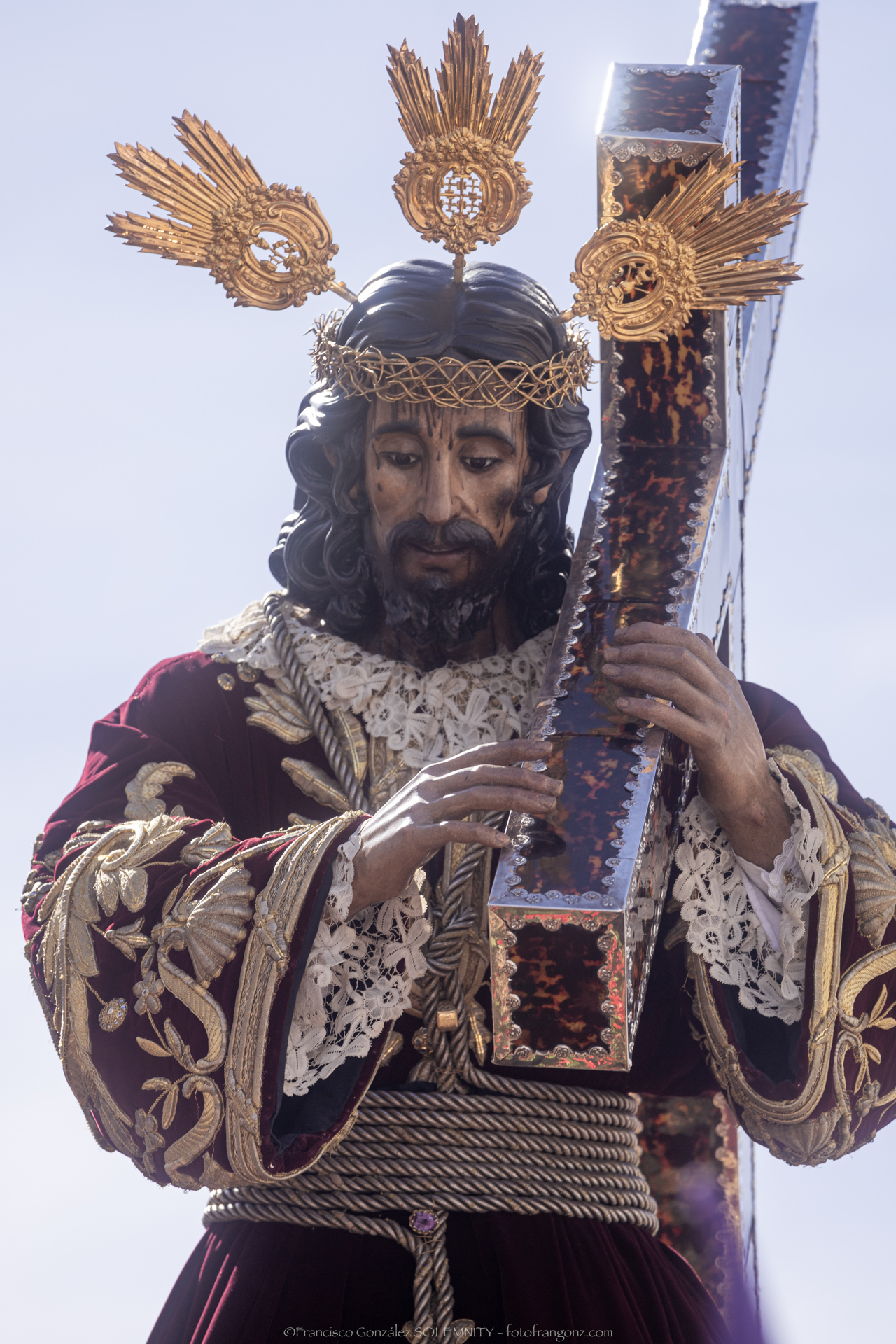
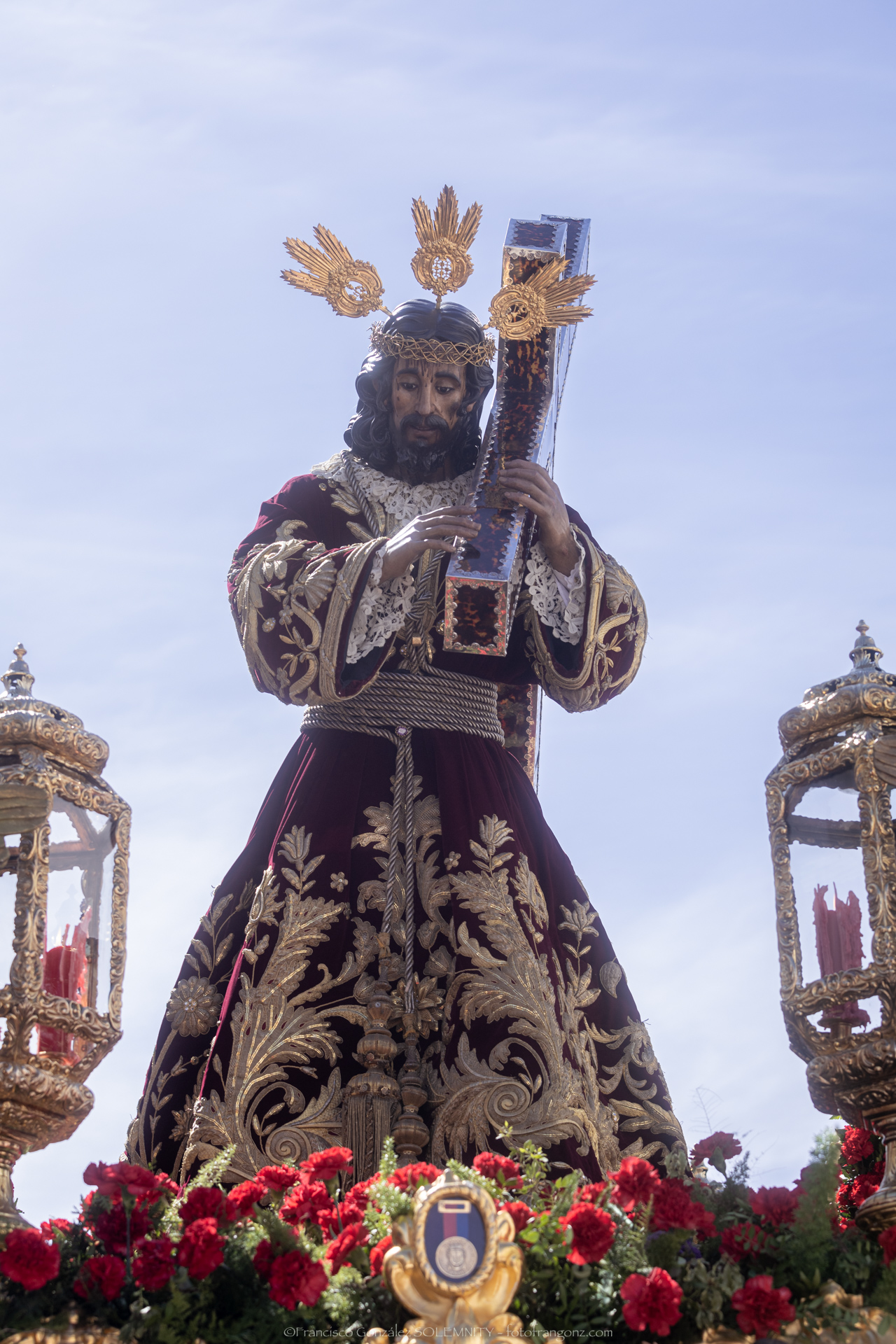
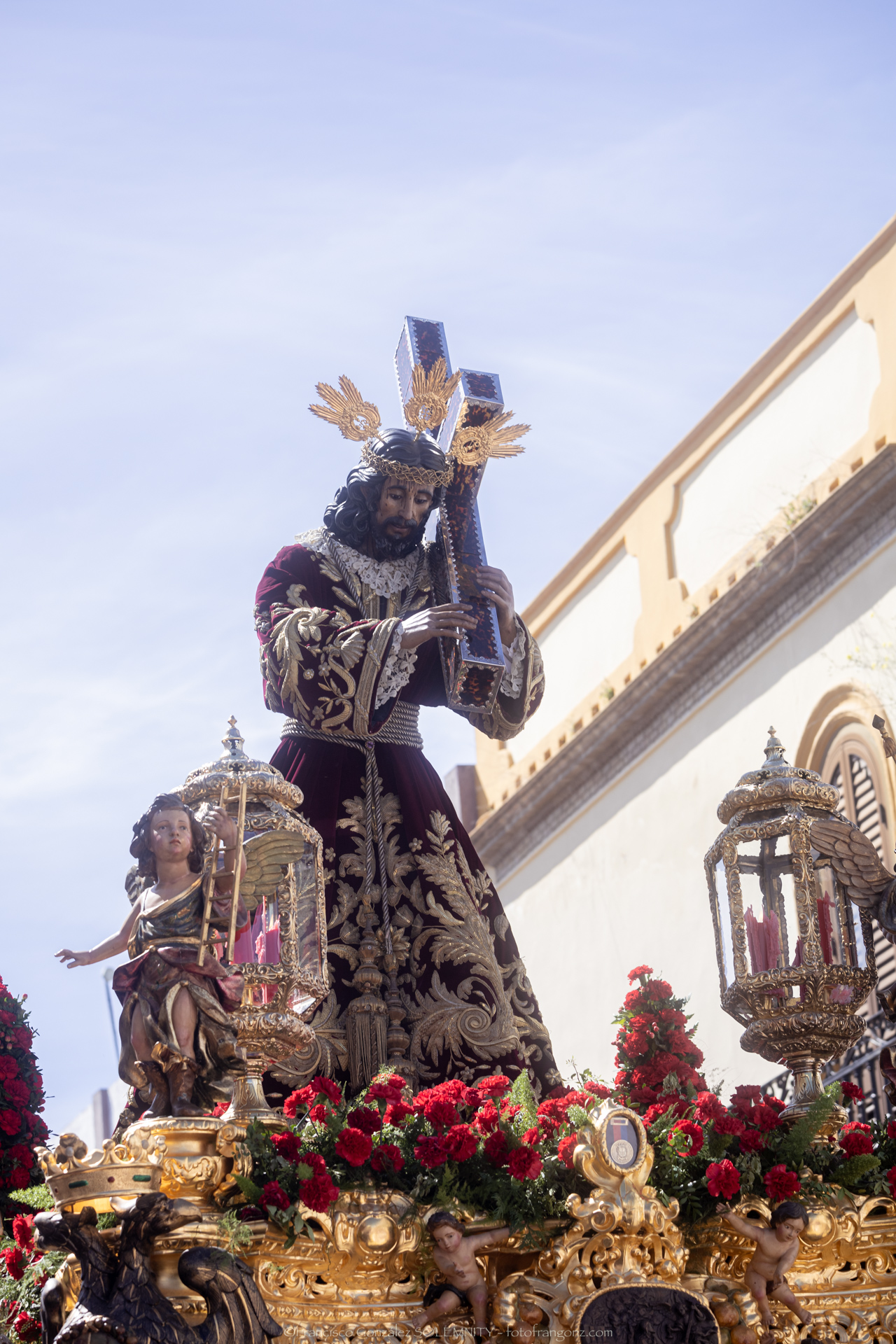
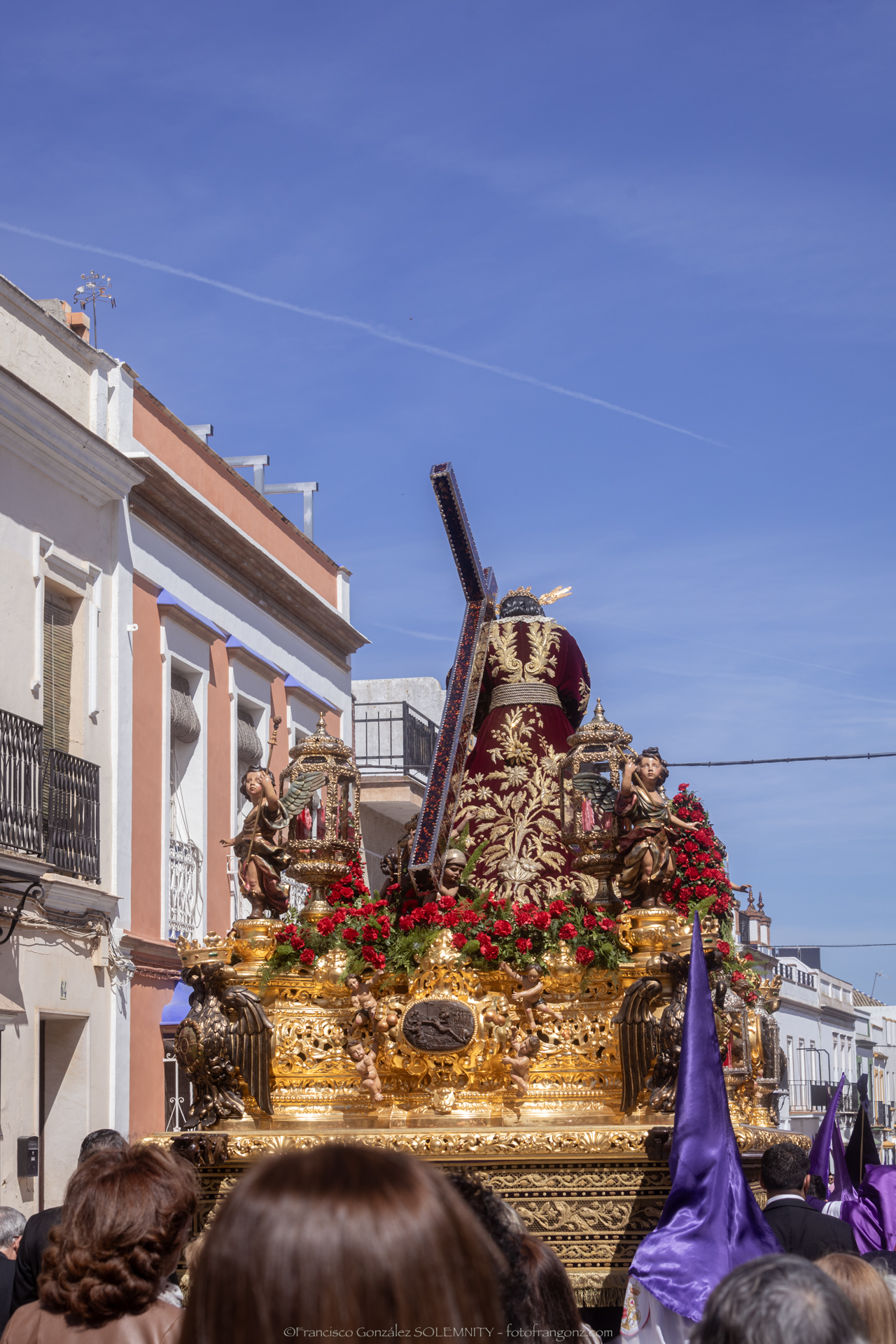
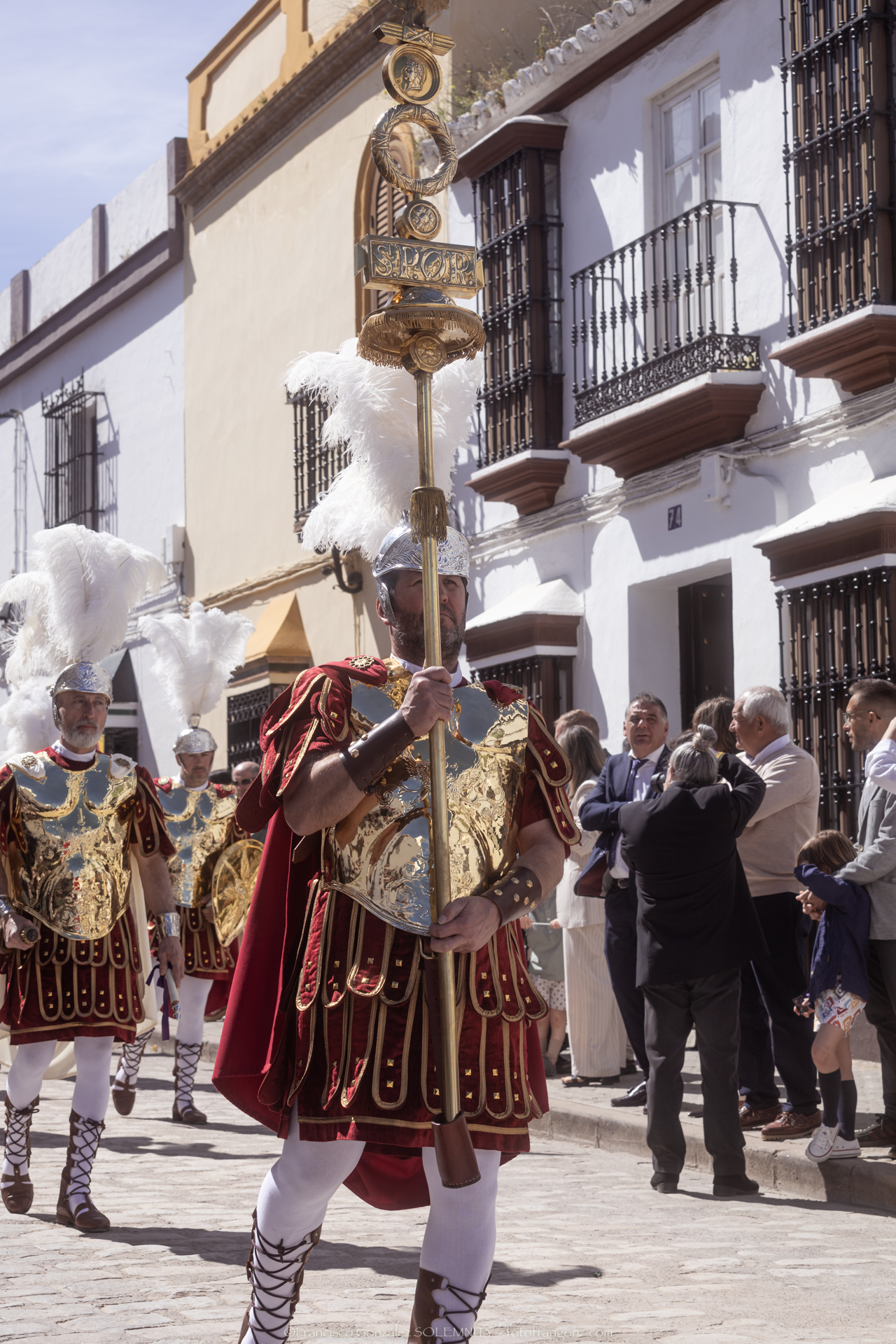
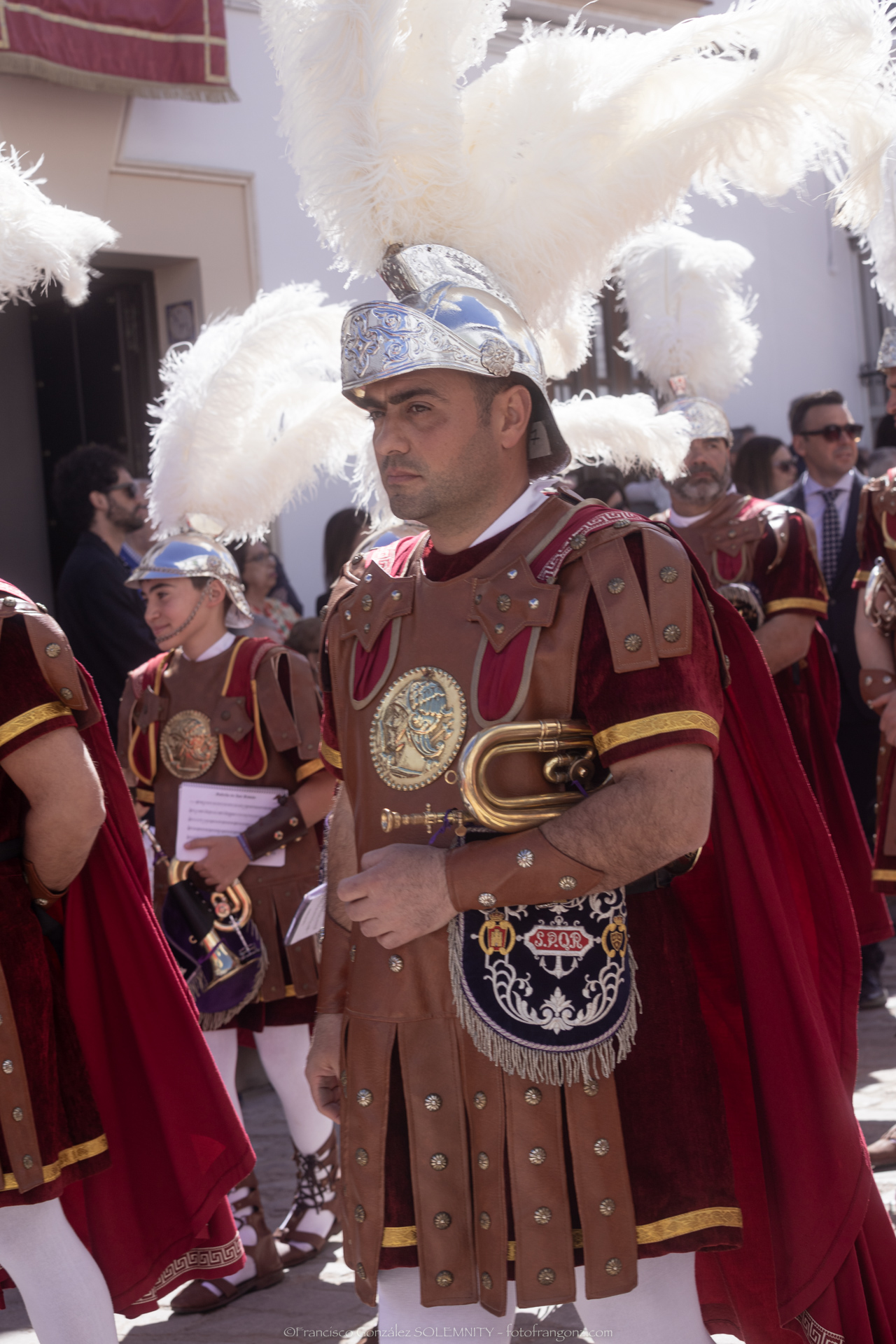
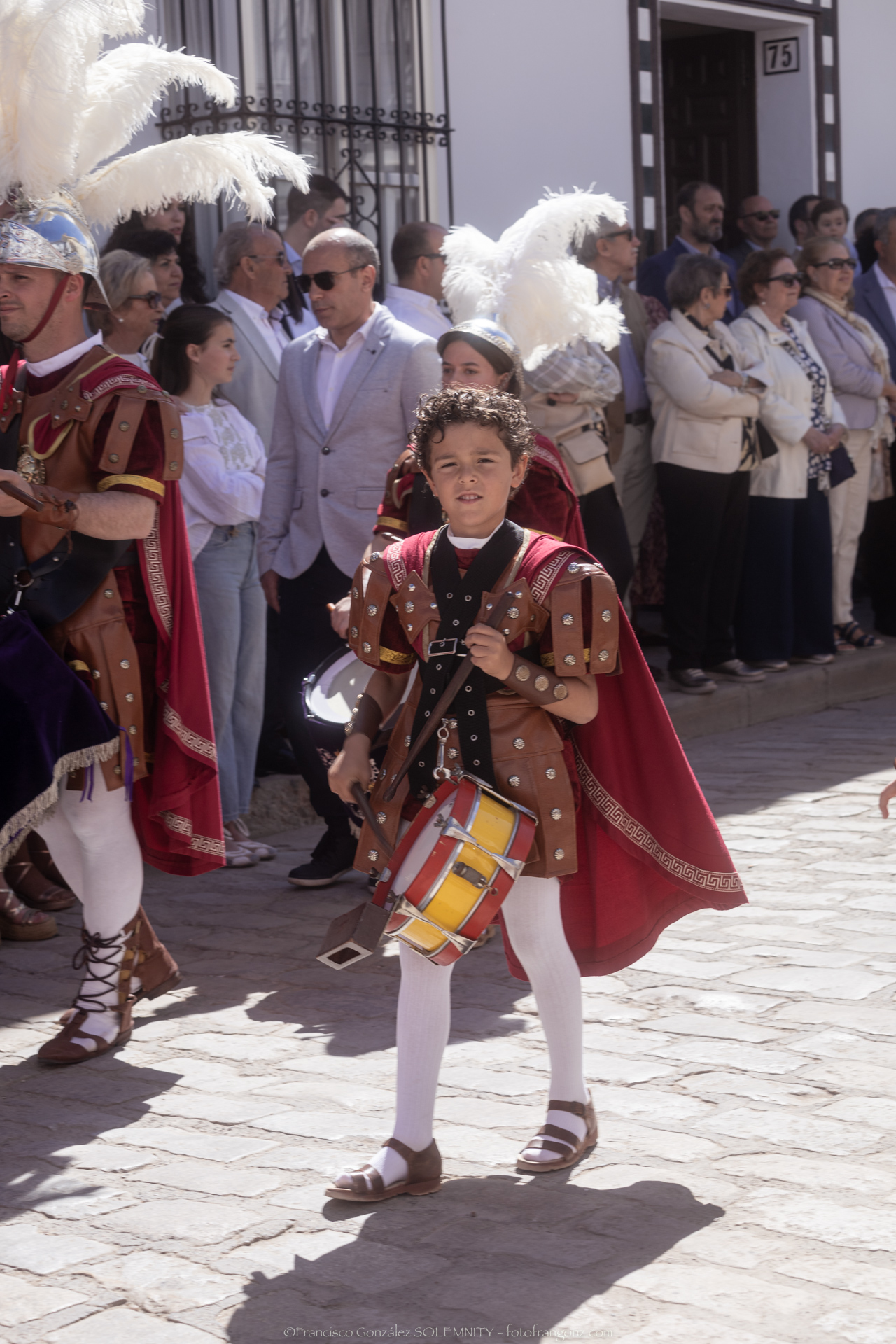
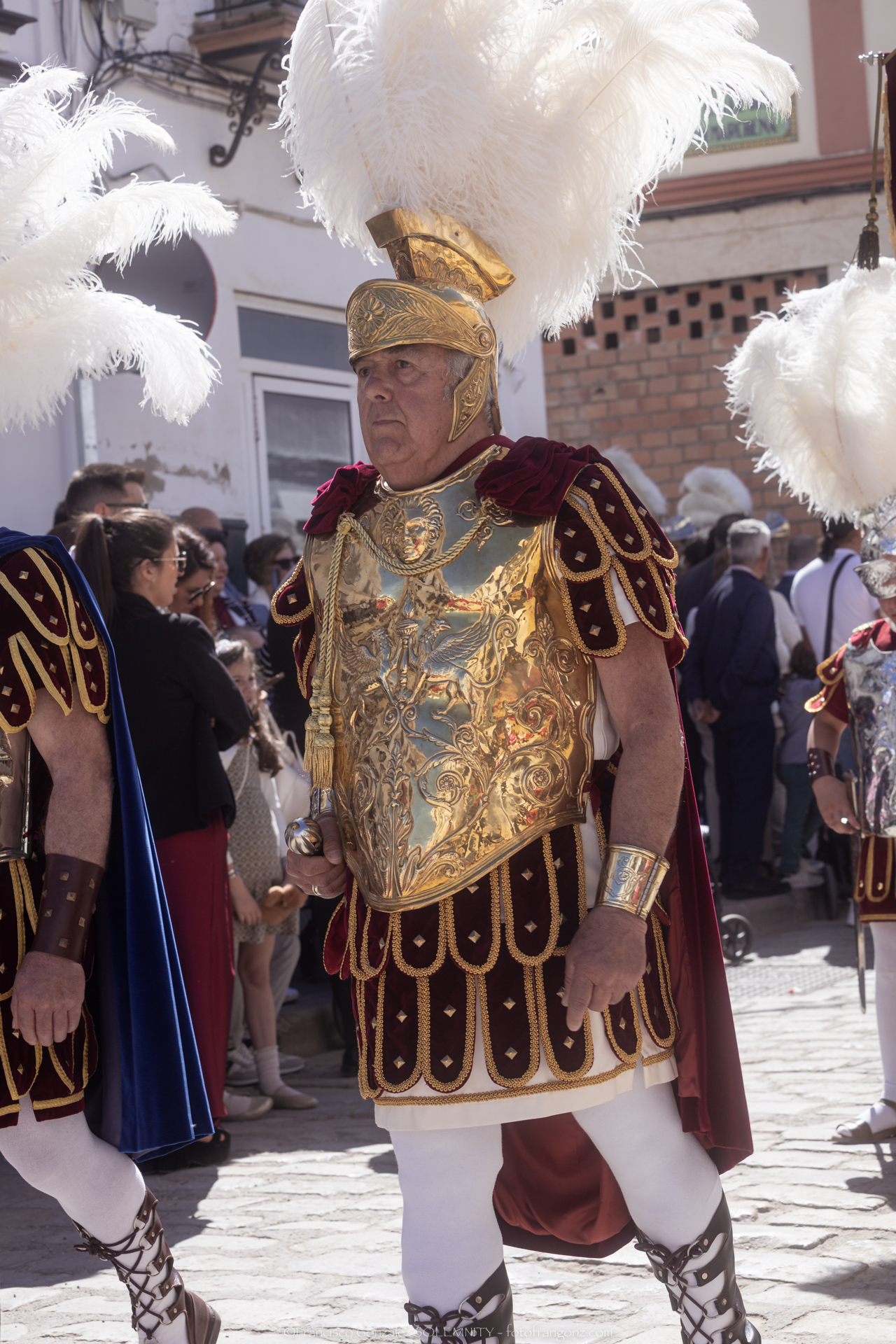
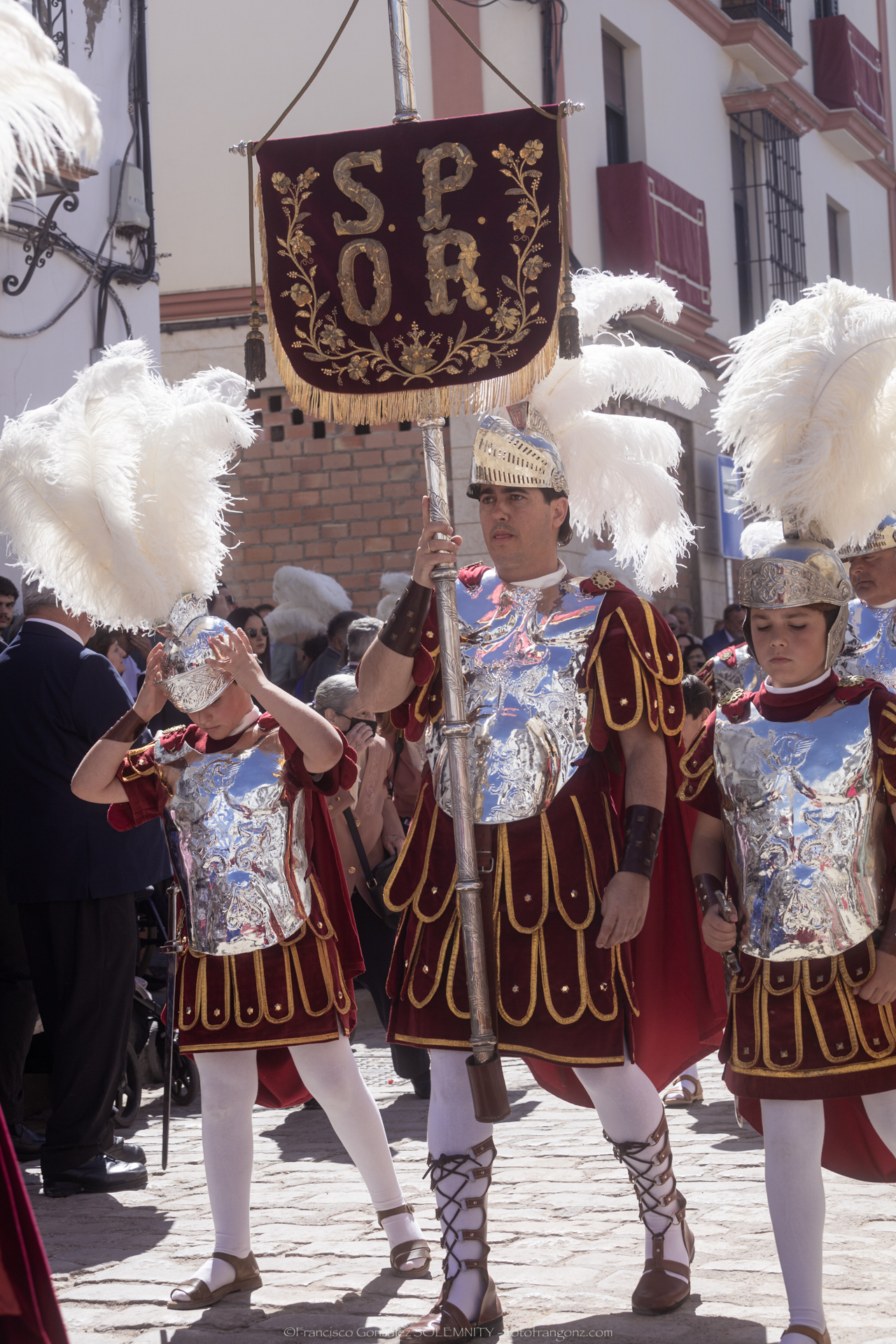
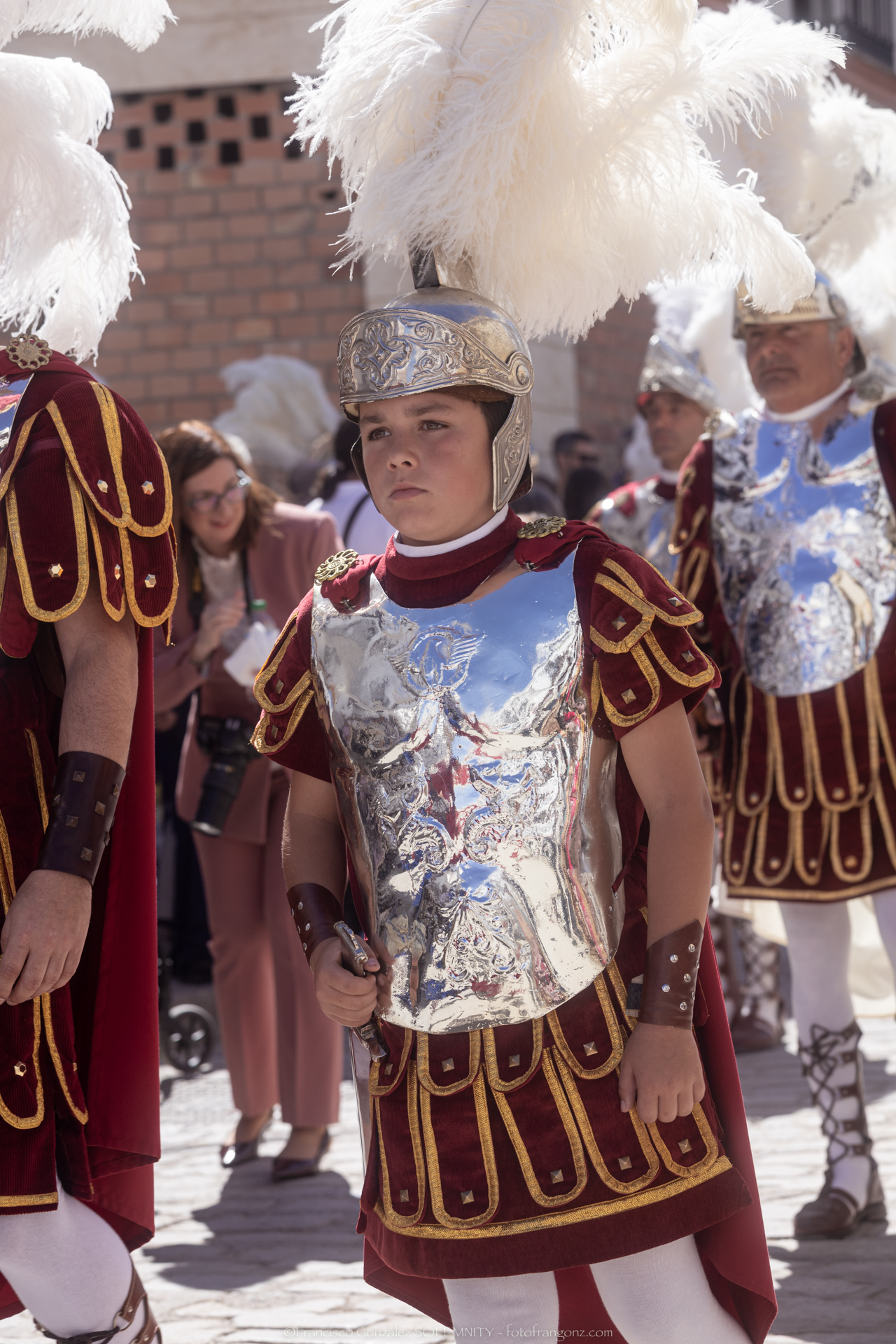
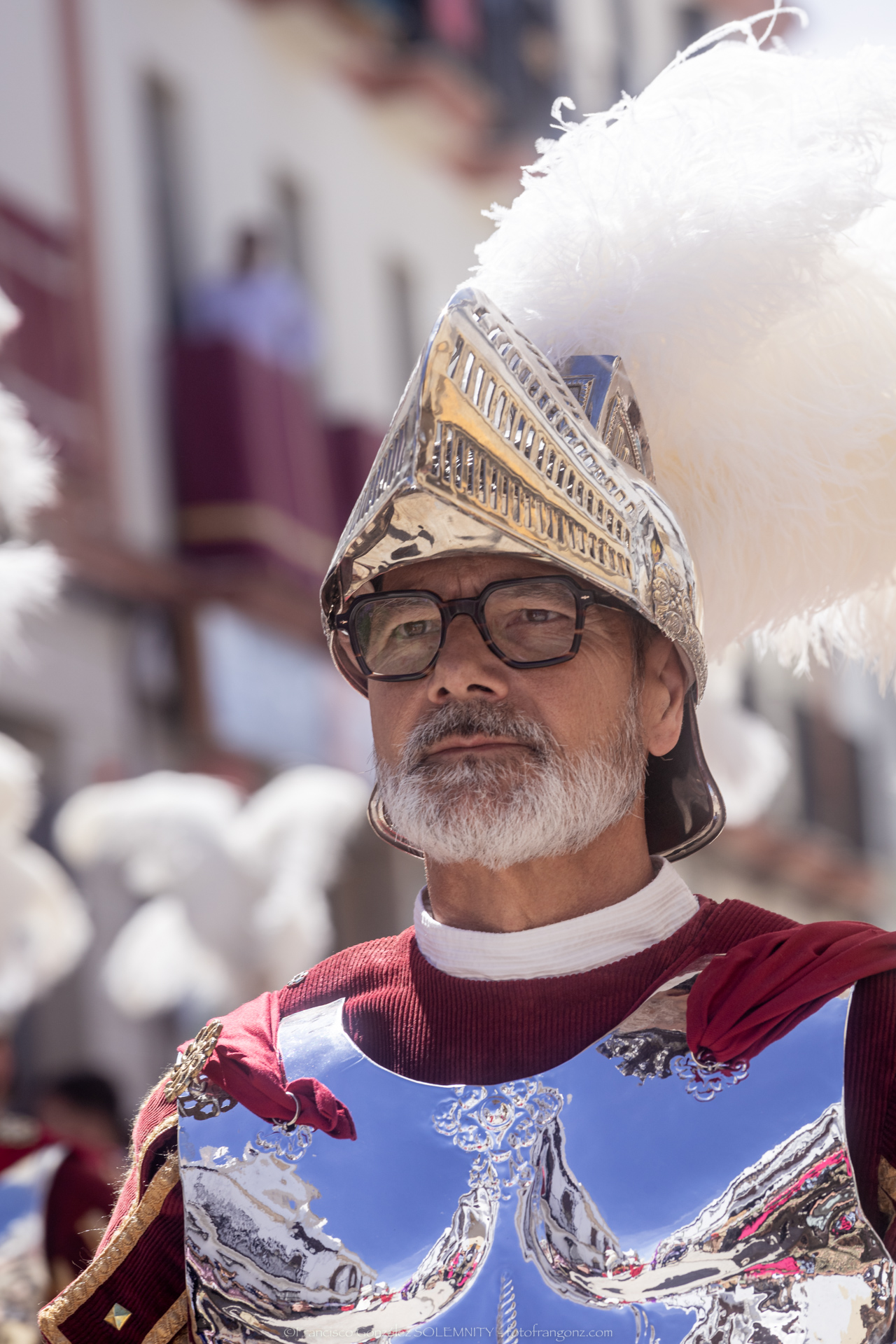
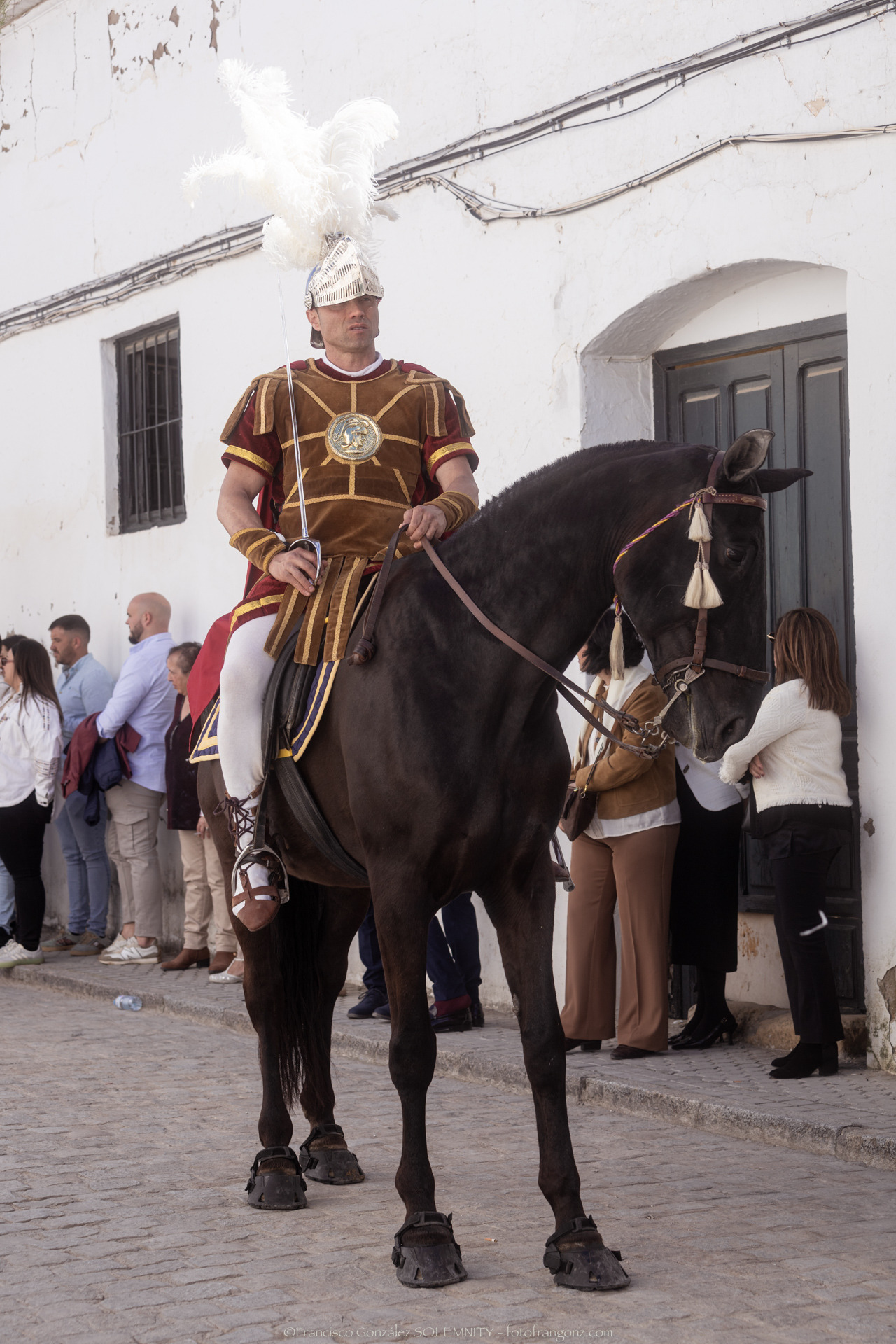
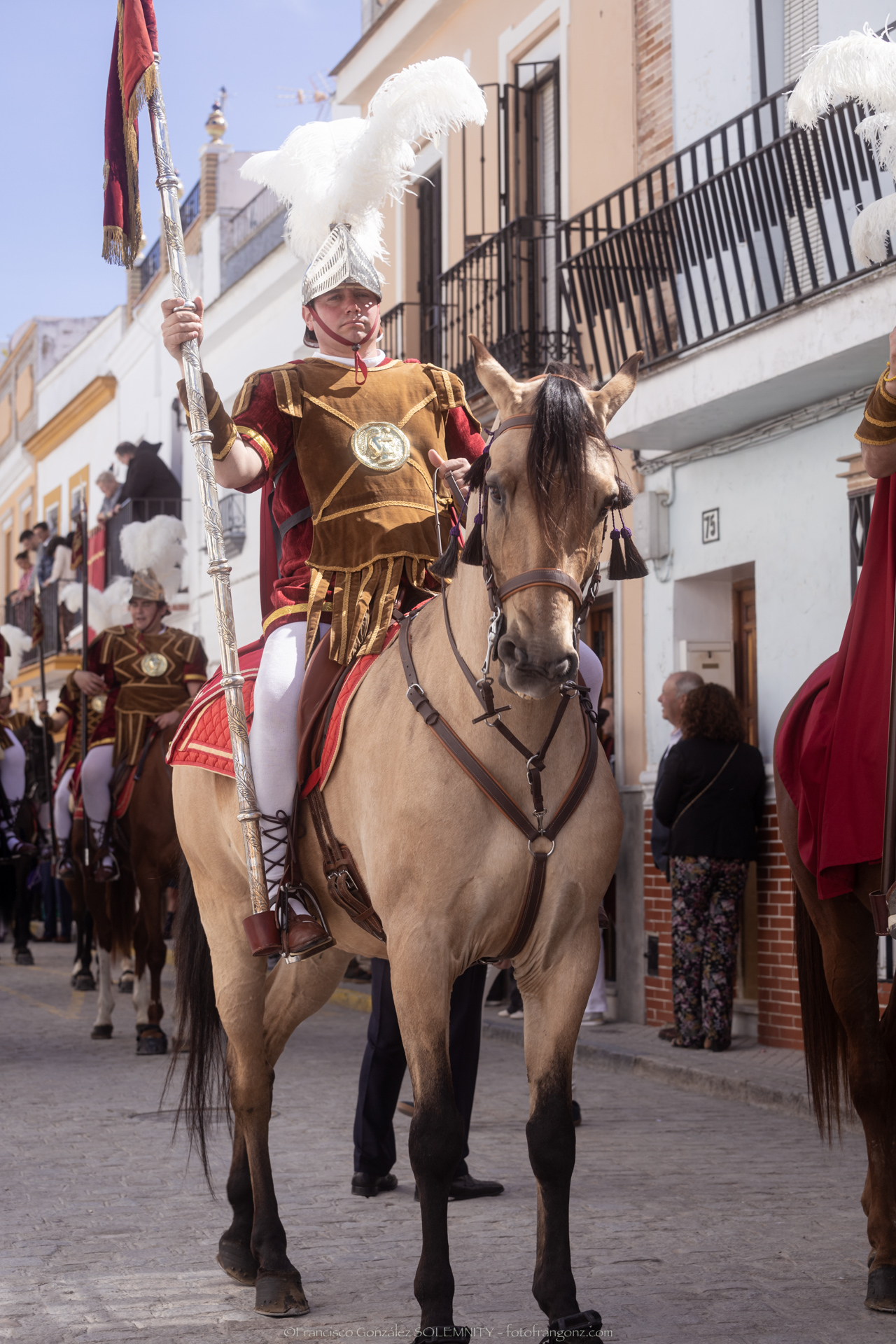
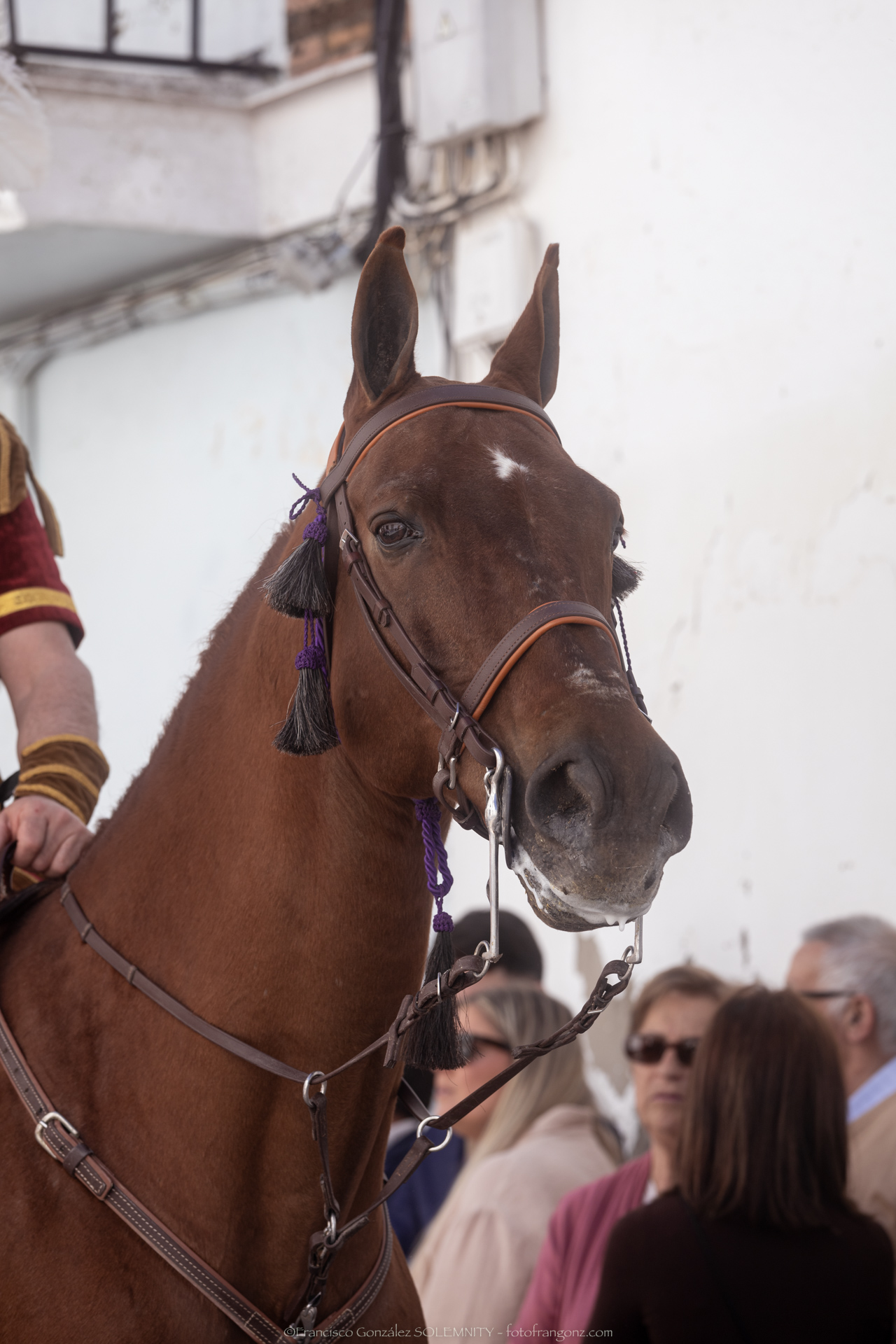
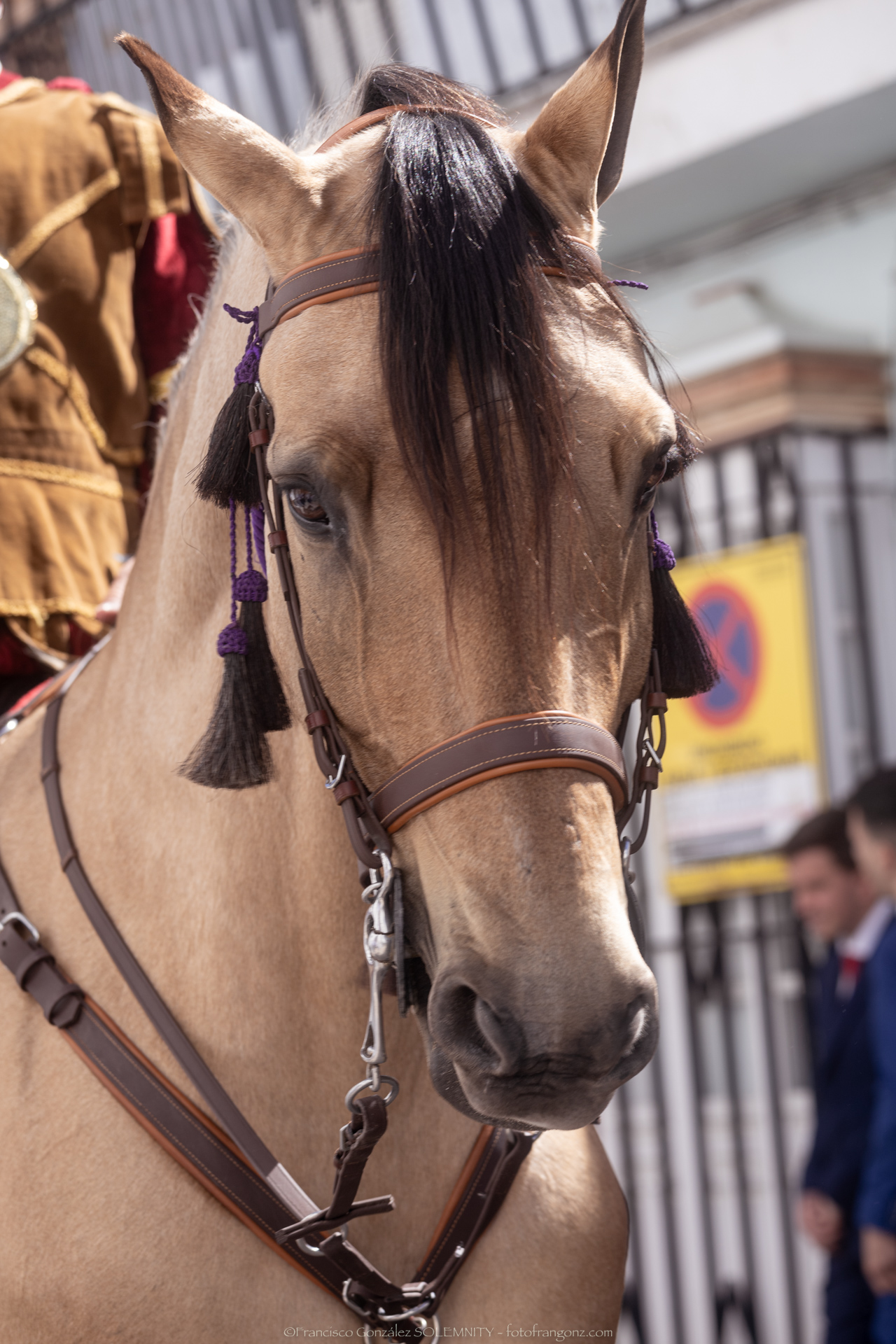
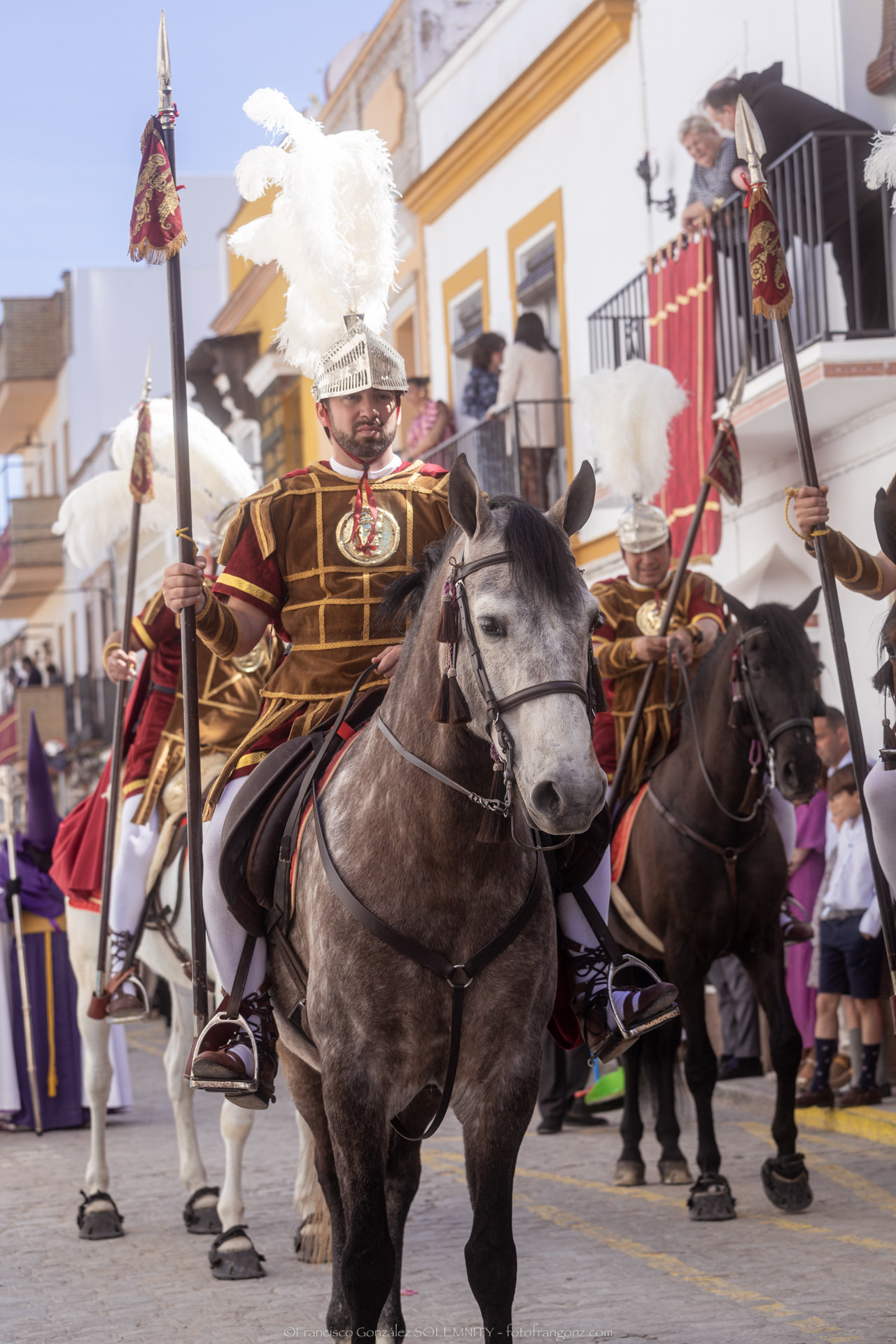
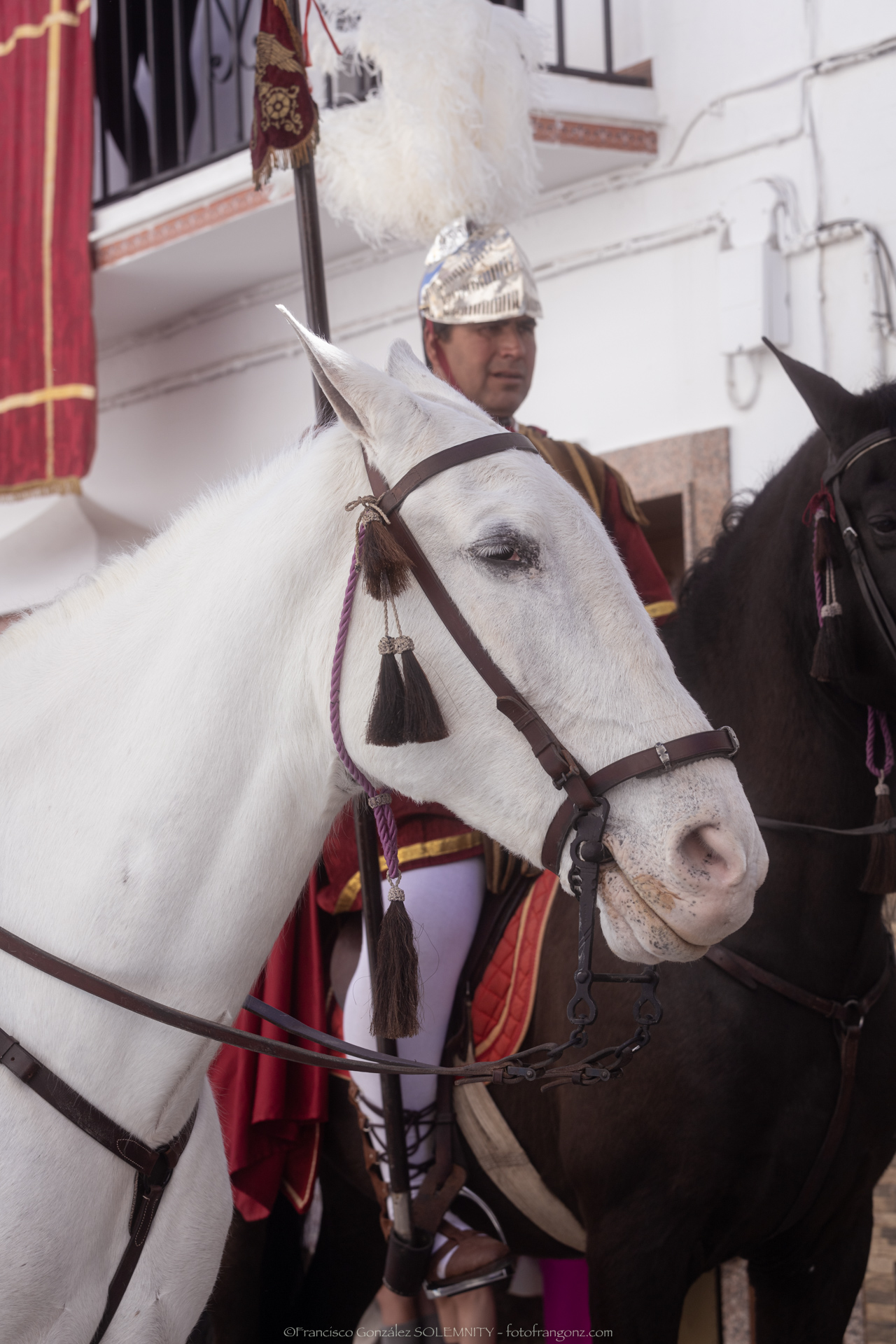
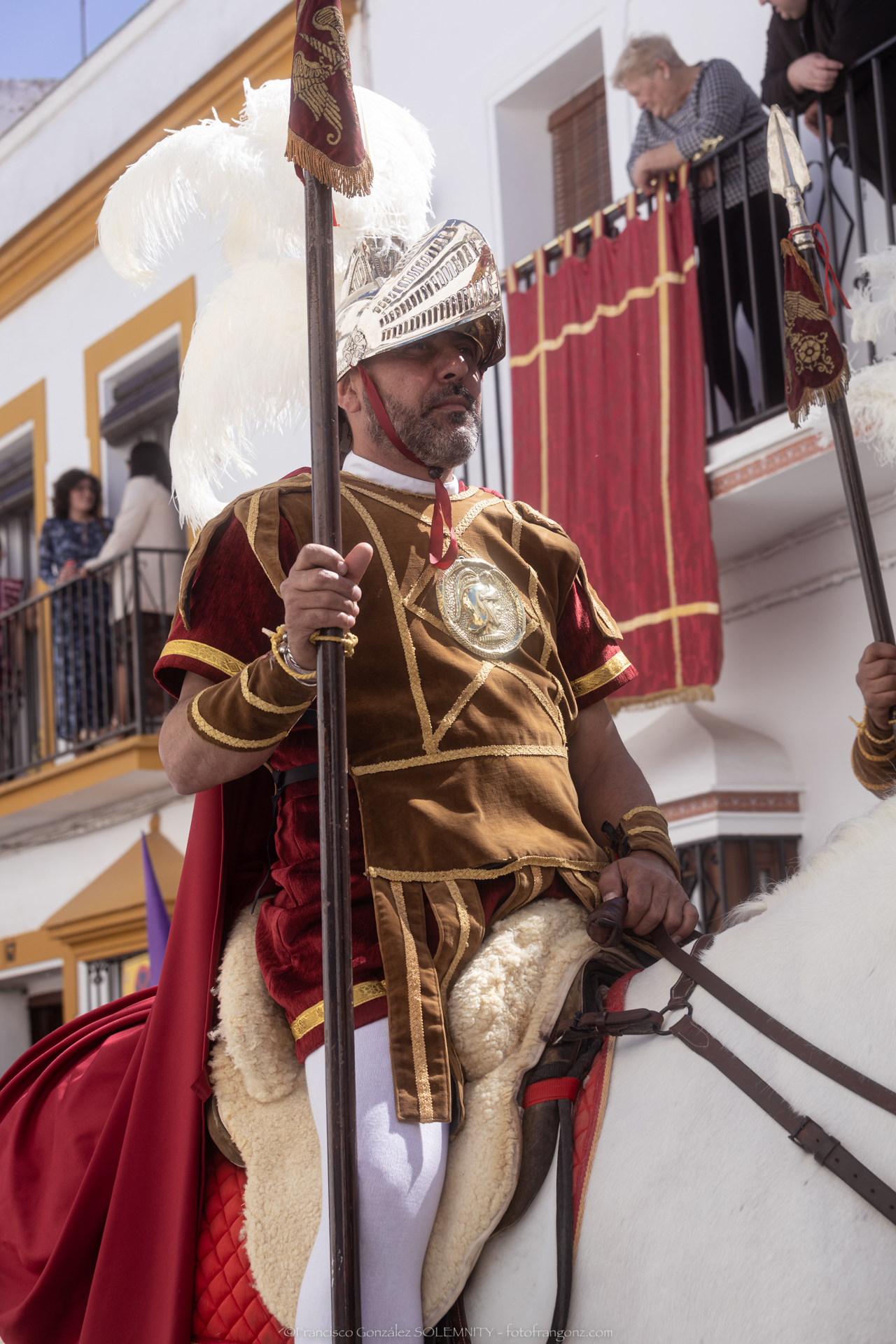
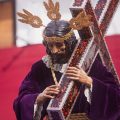
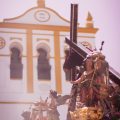
Nuestro Padre Jesús Nazareno, the “Lord of Marchena”, is an anonymous image from the late 16th century (1580–1600), and this year wore its traditional túnica de Ariza, while also recovering an aesthetic characteristic of the 20th century with a mound of red carnations and green leaves. It is accompanied by the Centuria Romana Nuestro Padre Jesús Nazareno y Nuestra Señora del Carmen Marchena-Paradas, featuring a band of uniformed Roman soldiers and a corps of armed Romans on foot and on horseback, the latter being rather uncommon in Holy Week processions in general.
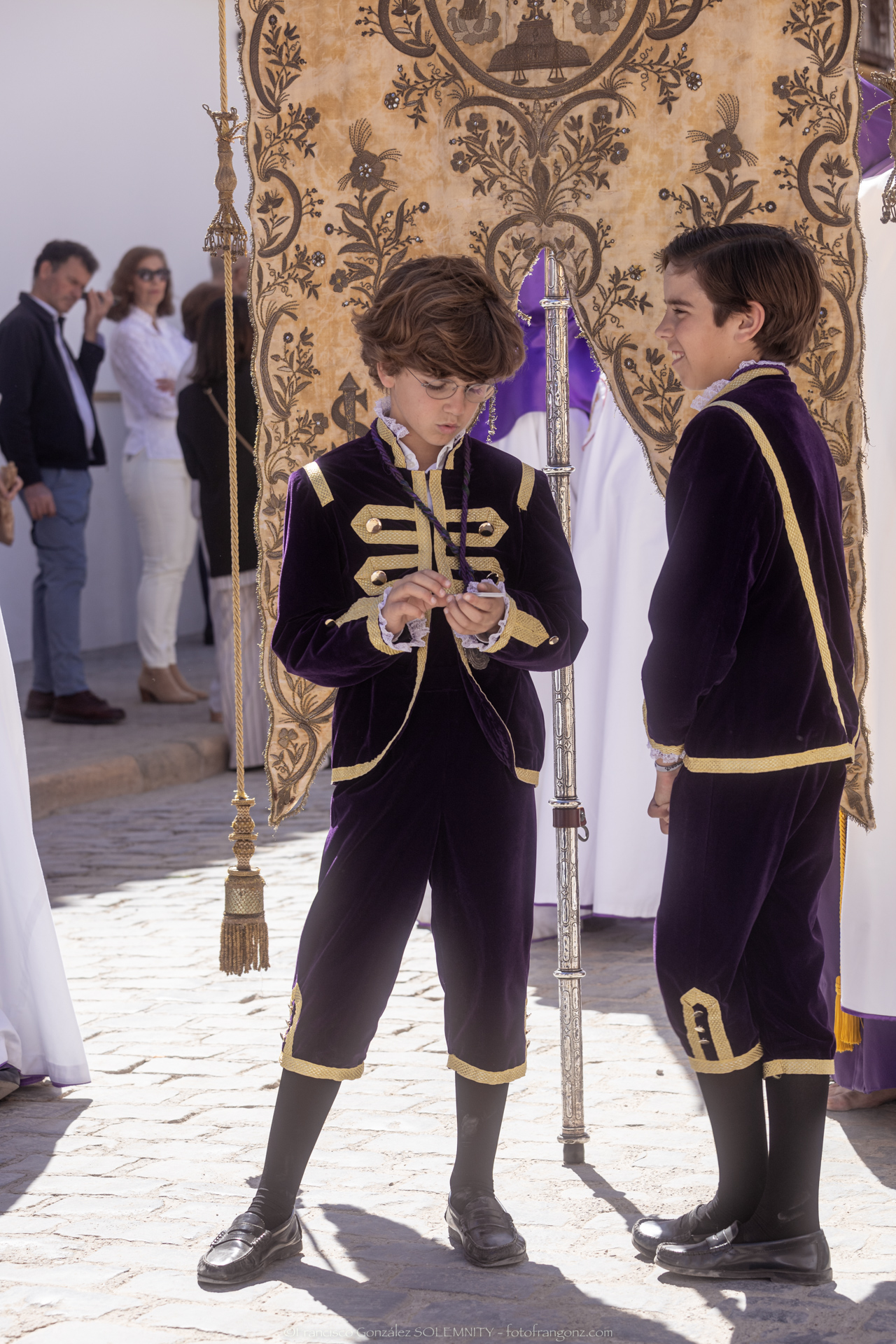
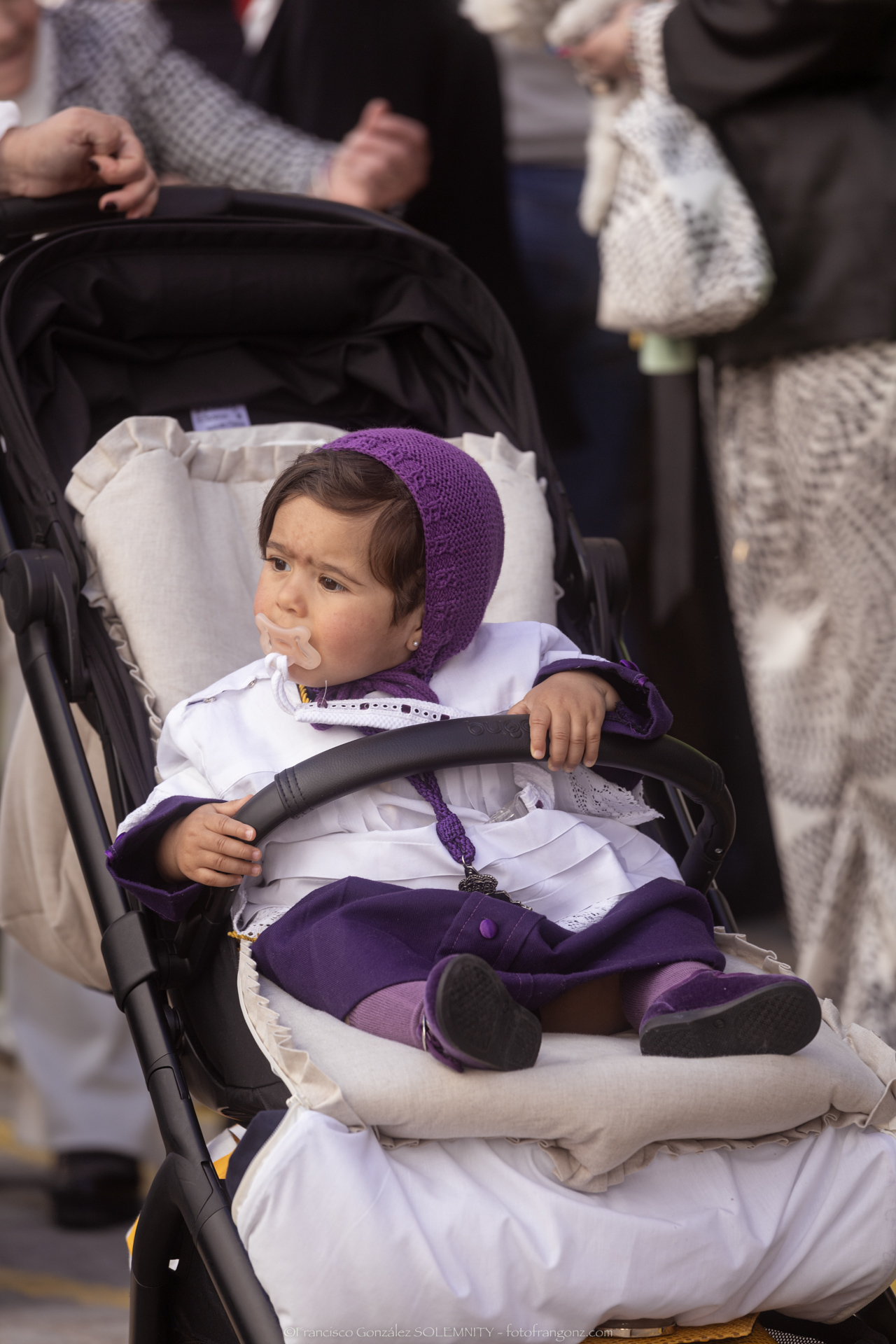
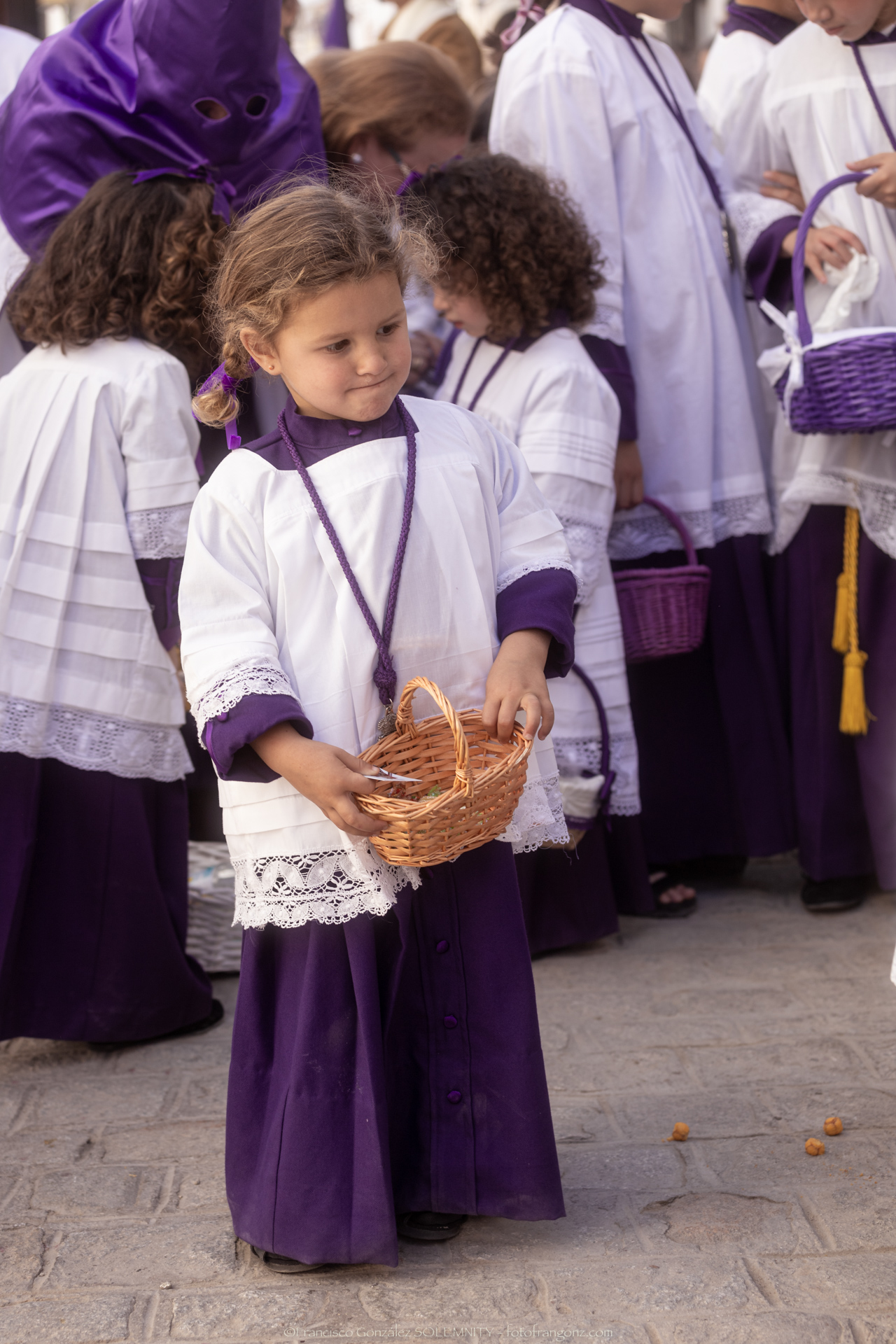
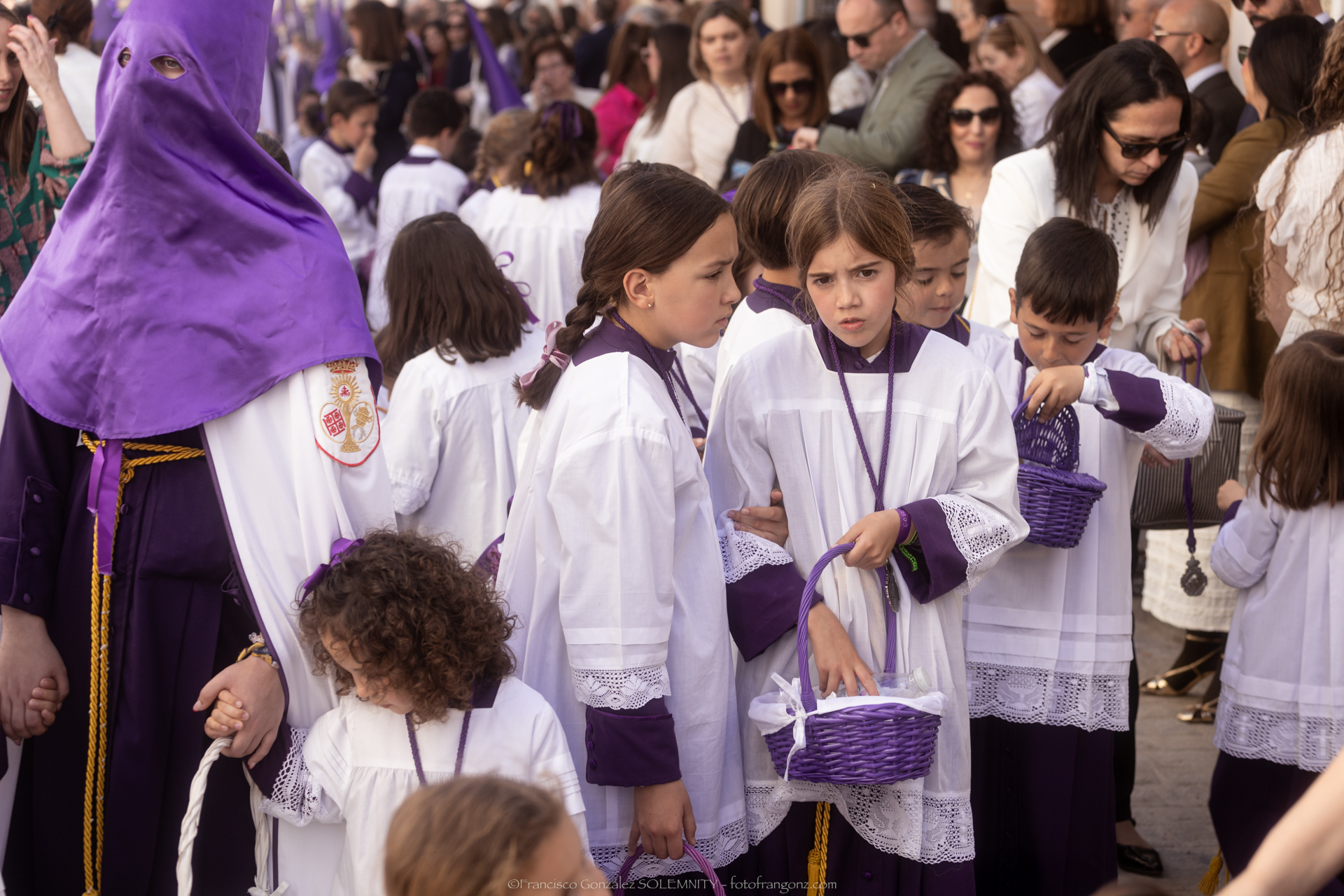
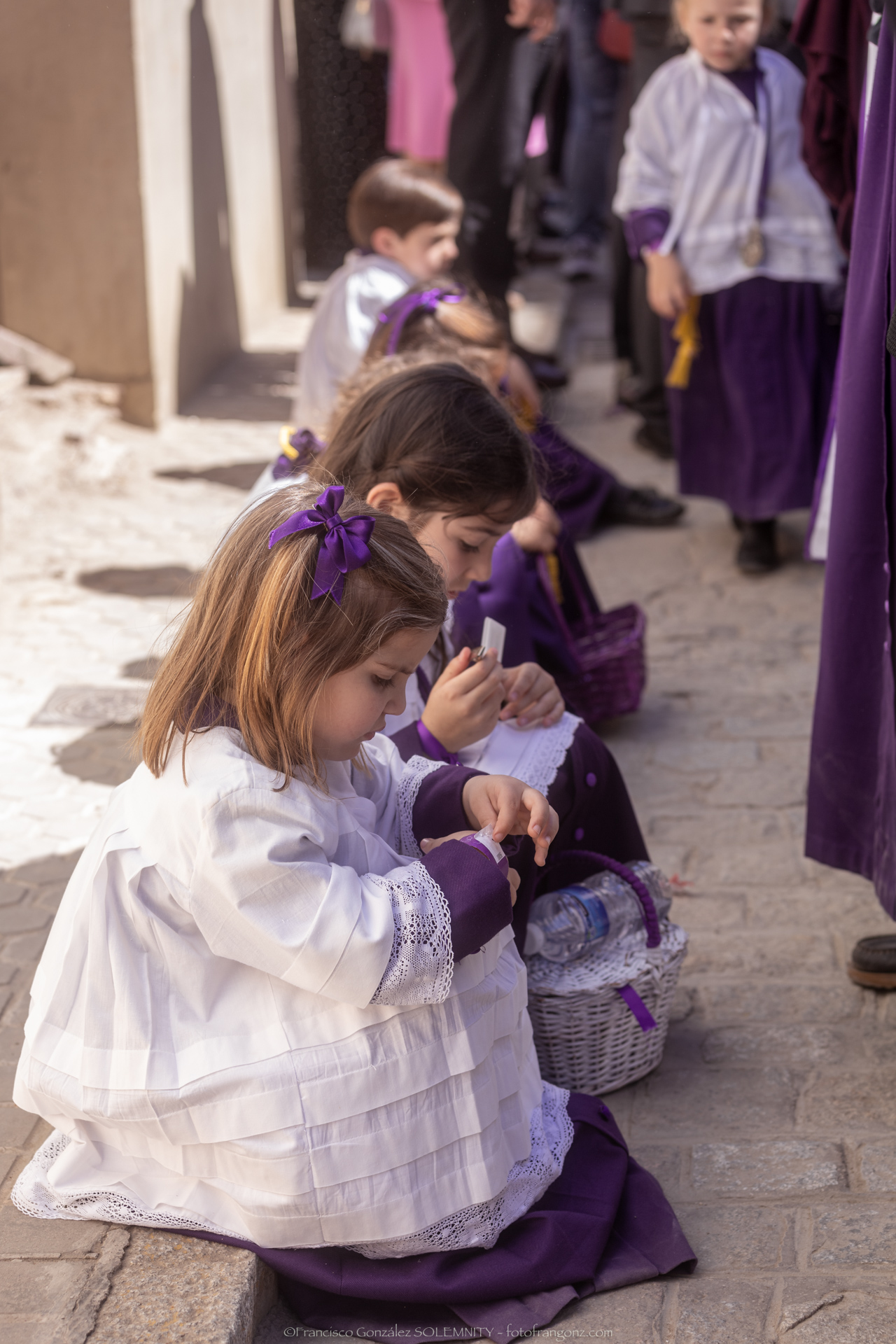
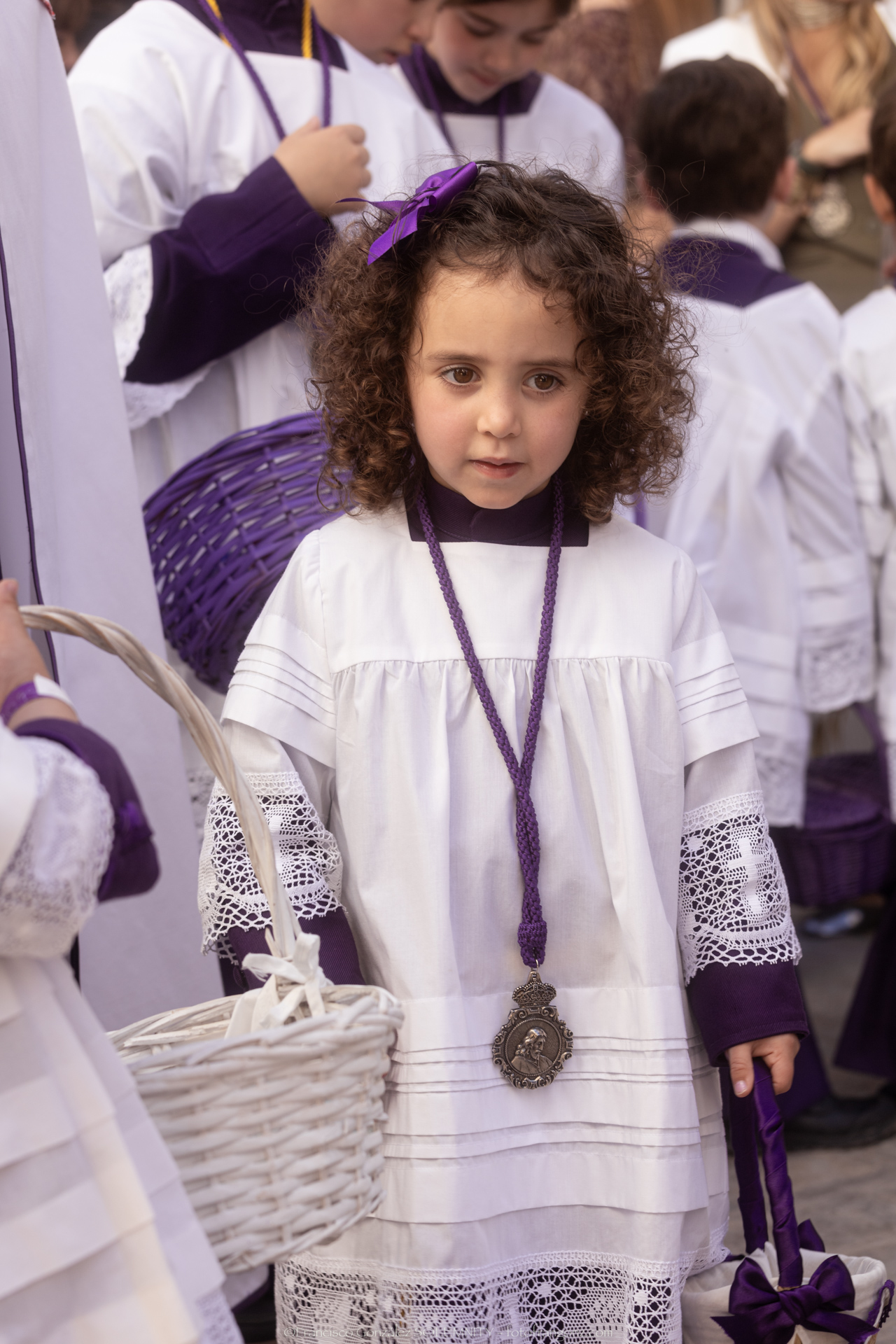
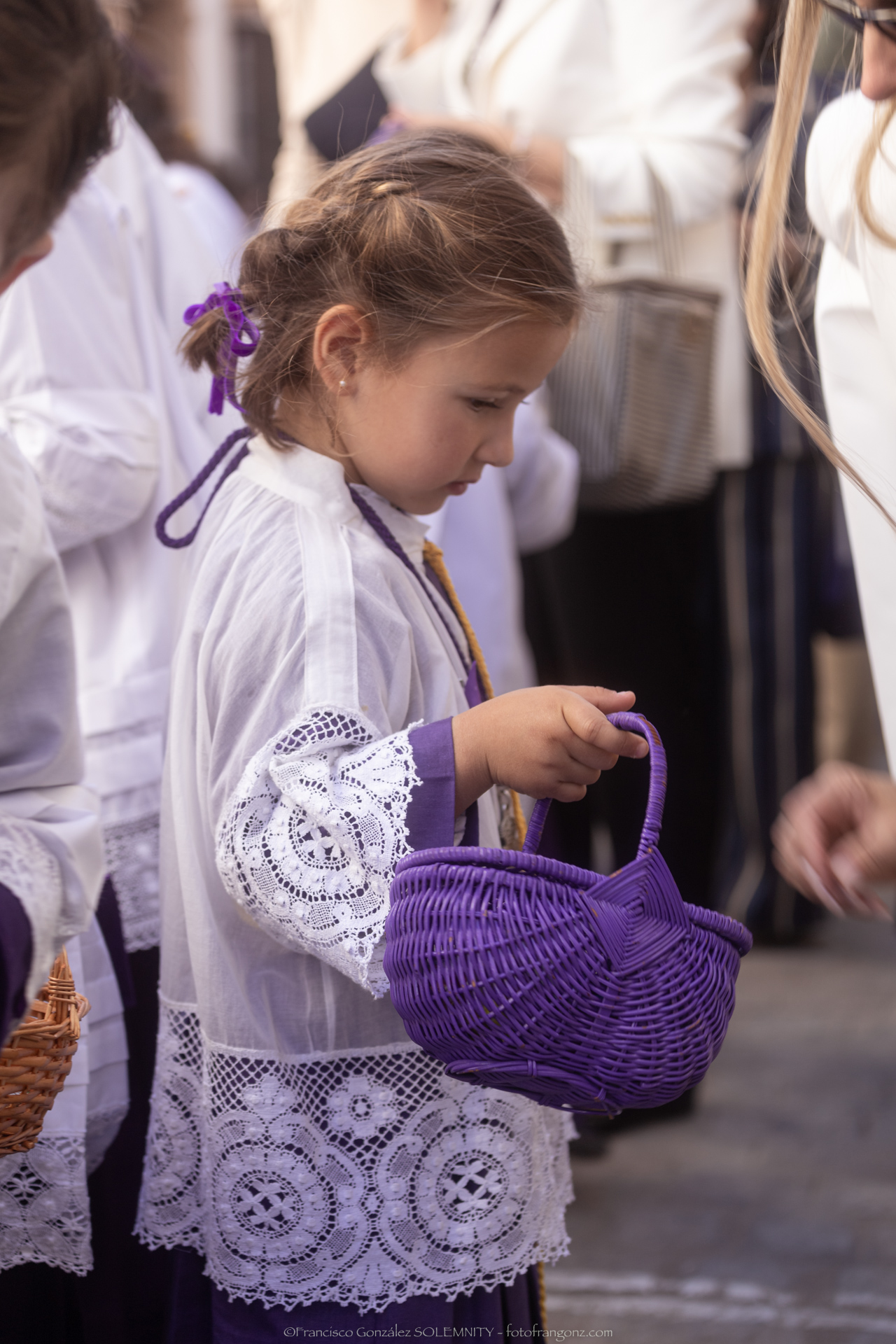
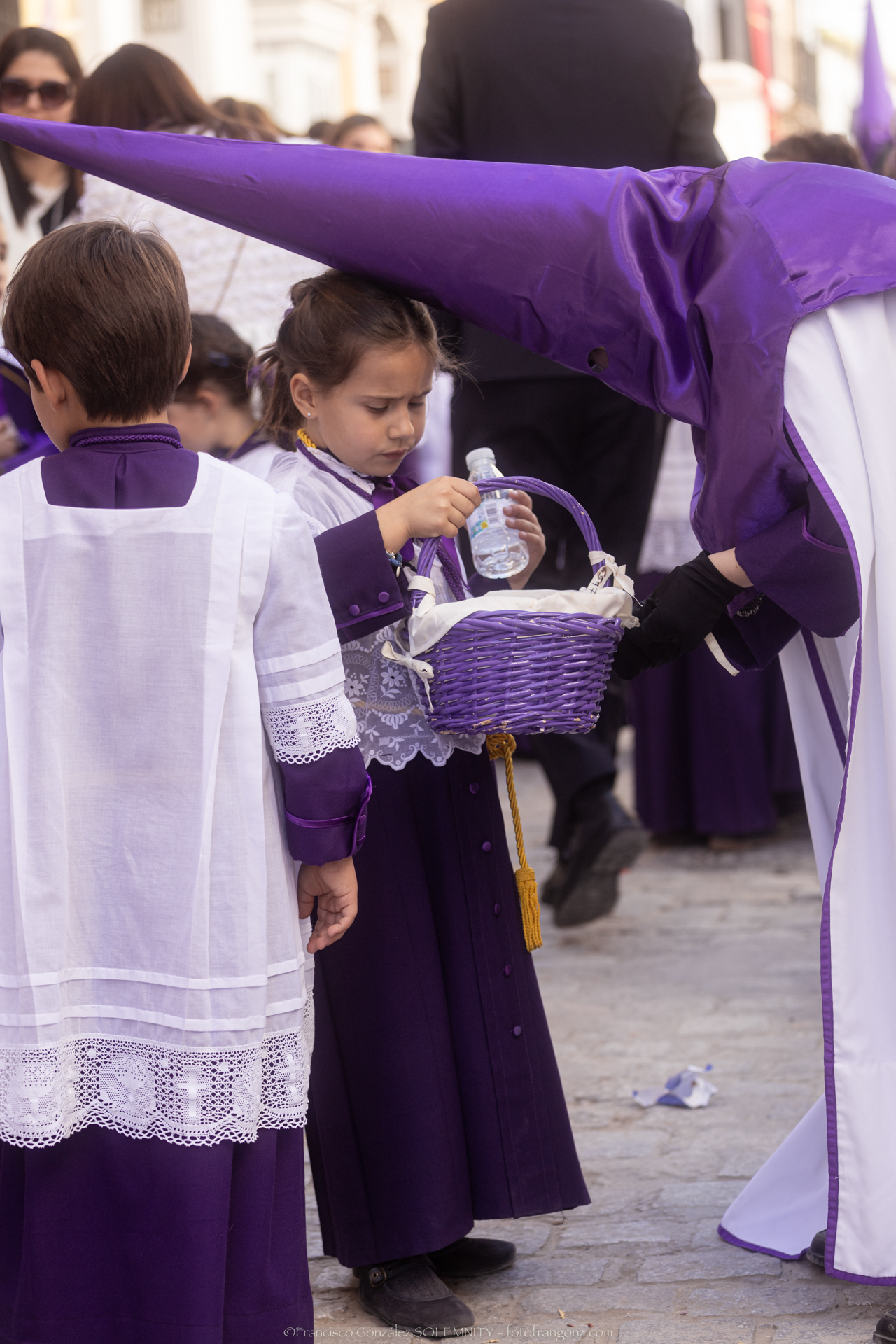
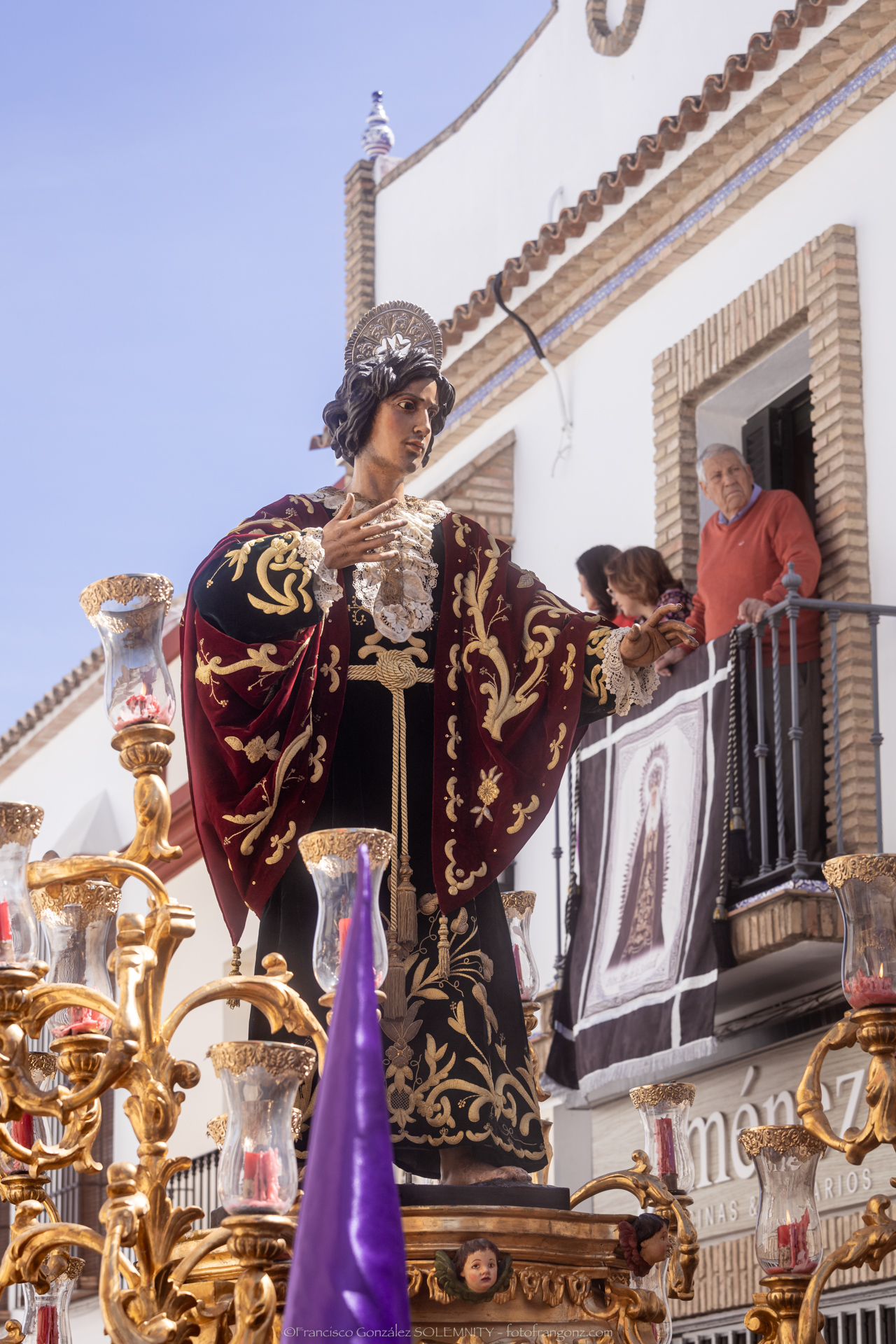
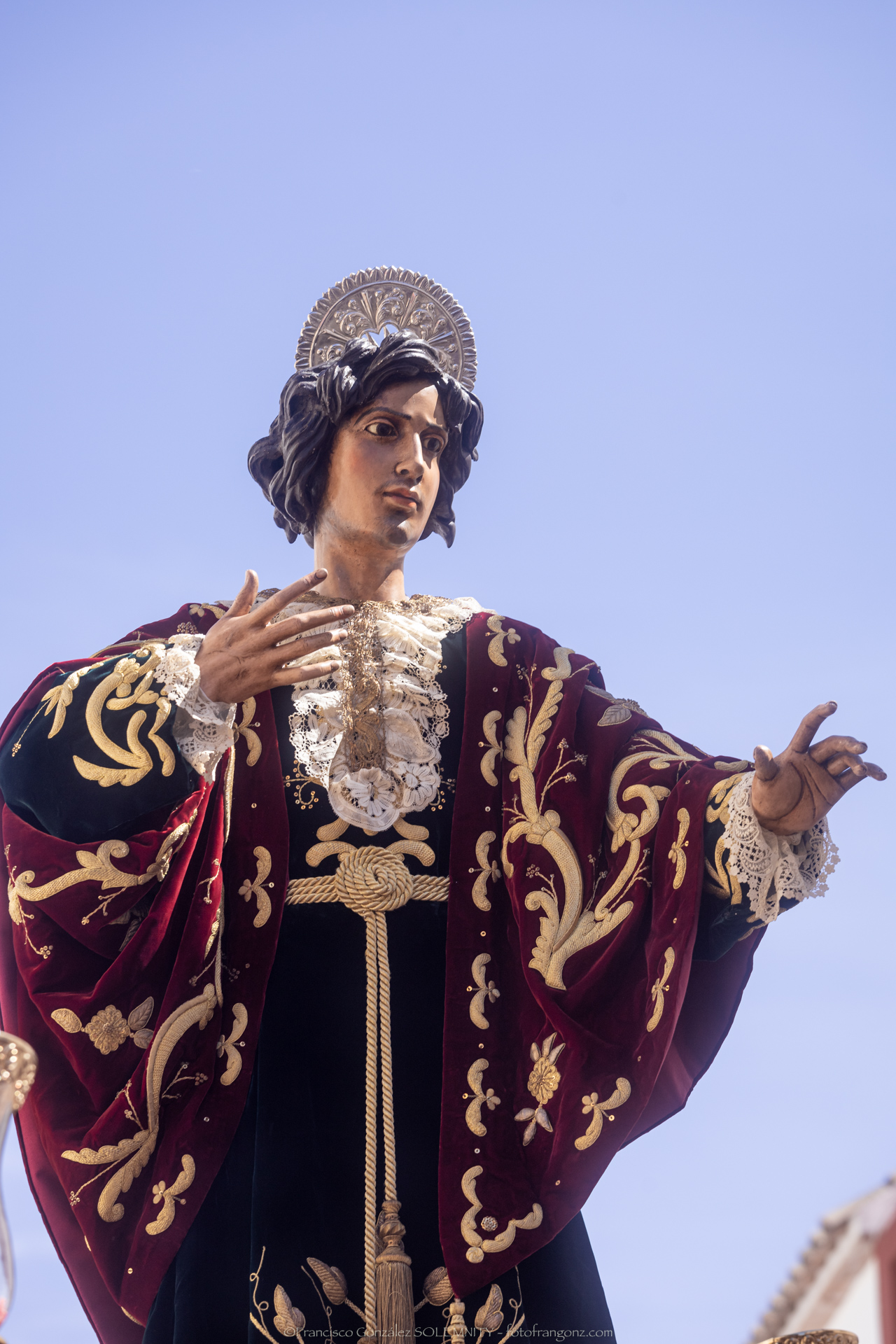
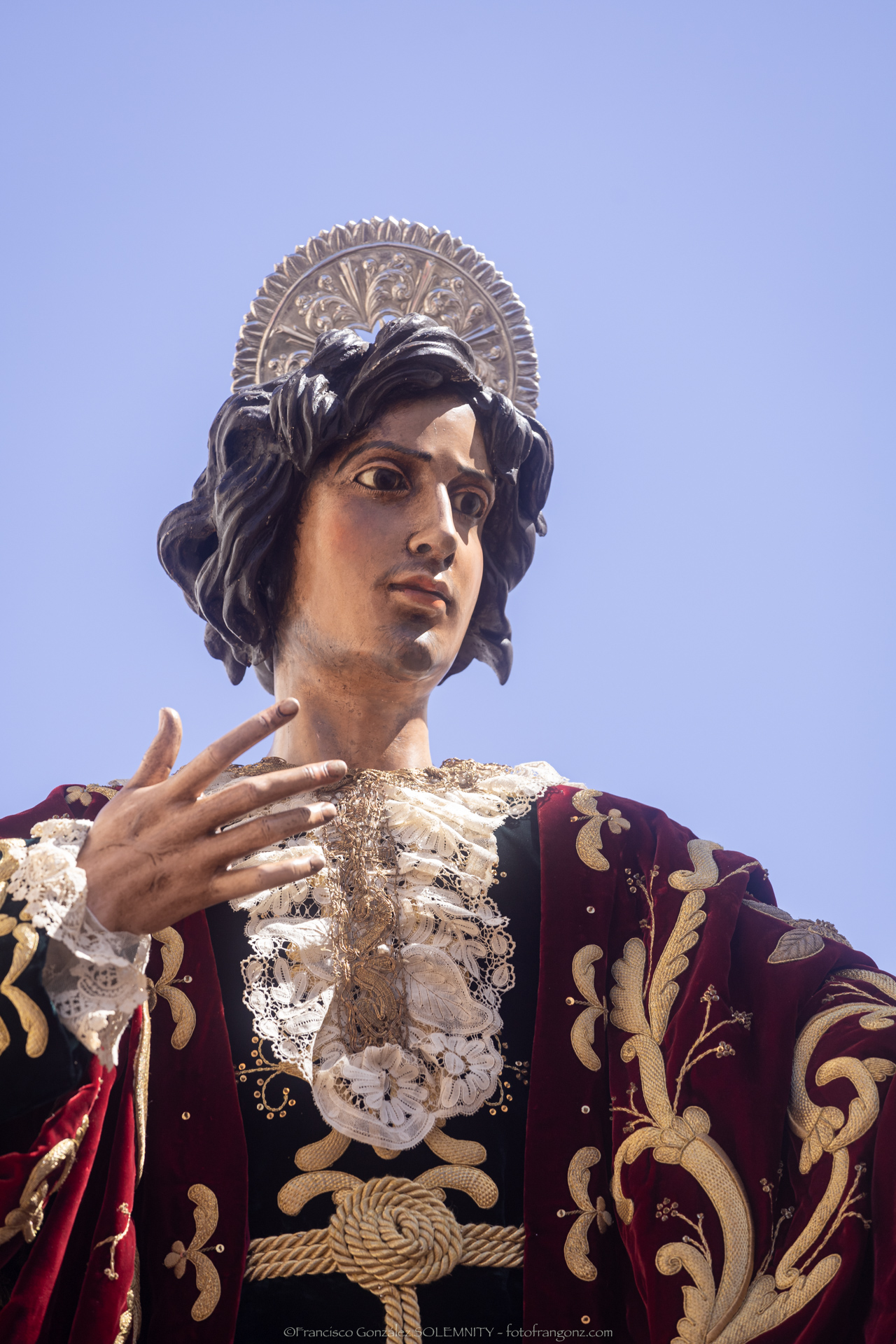
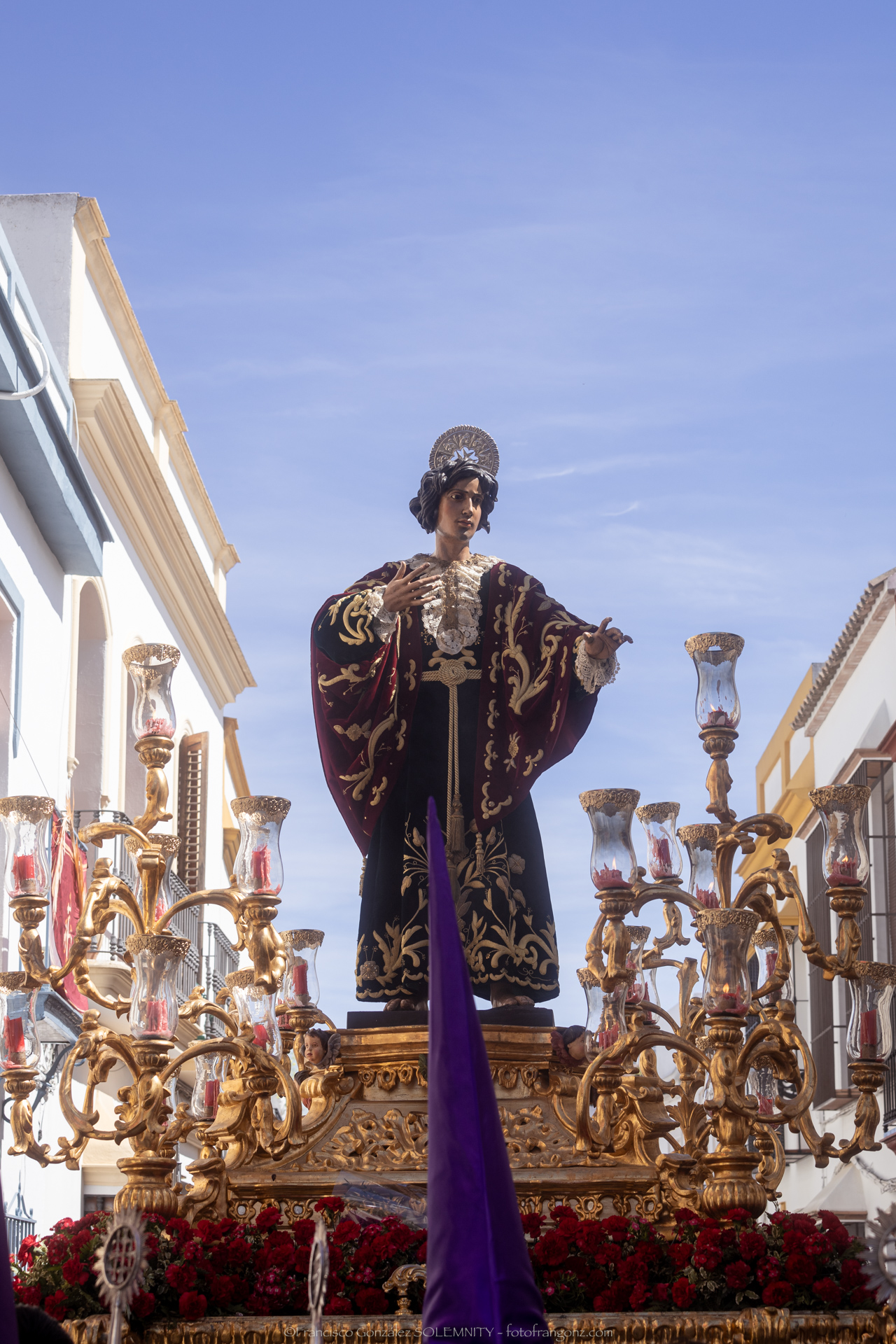
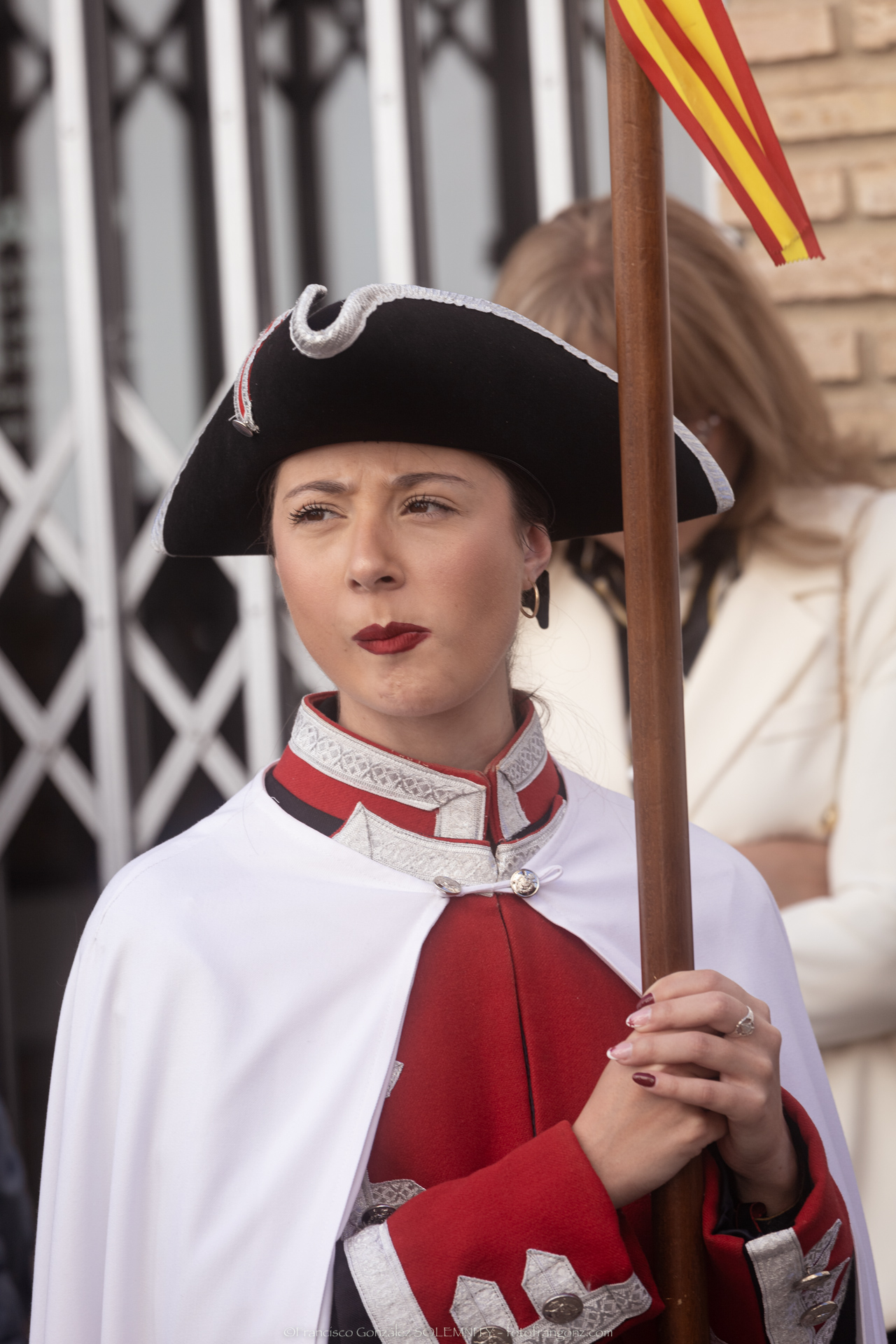
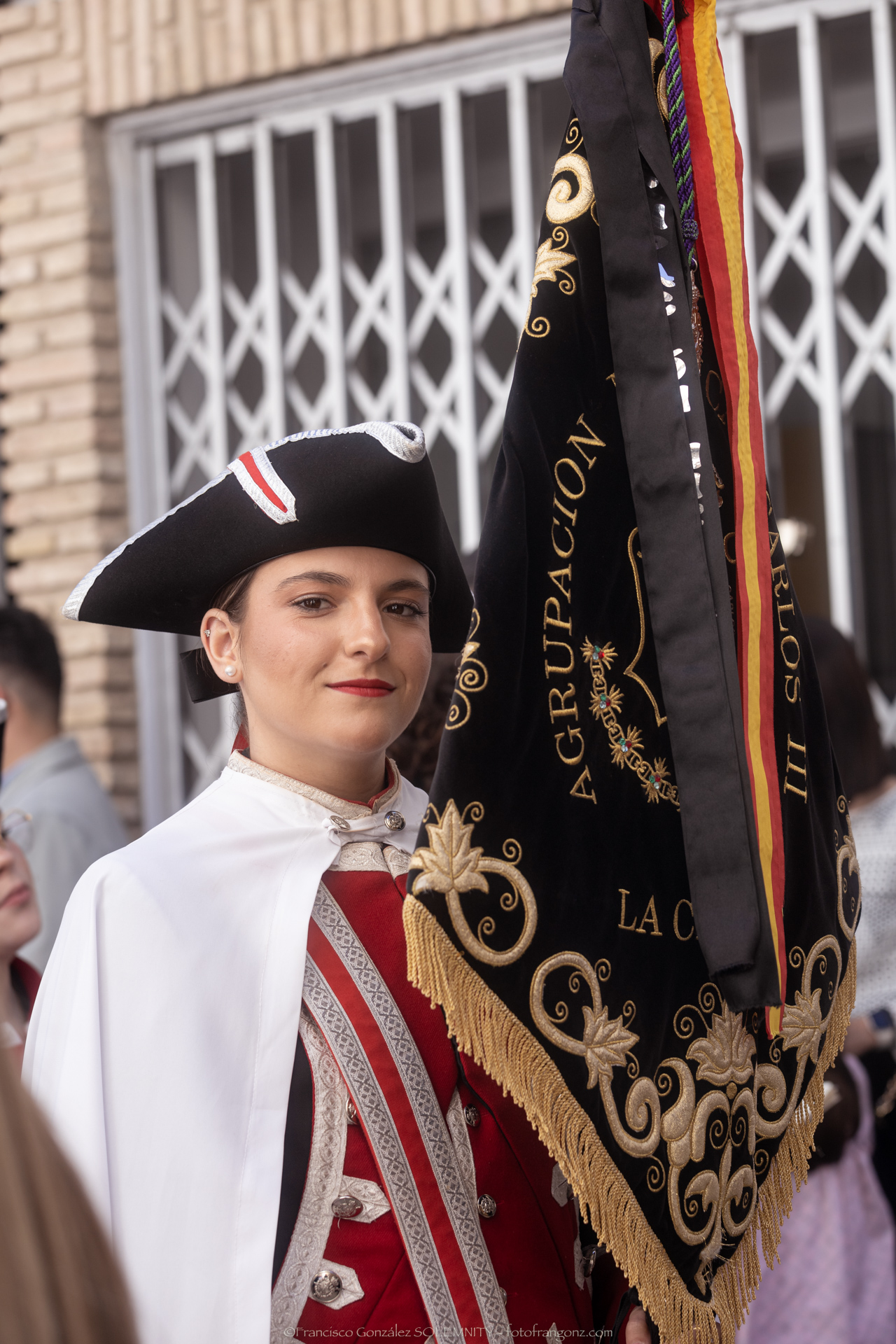
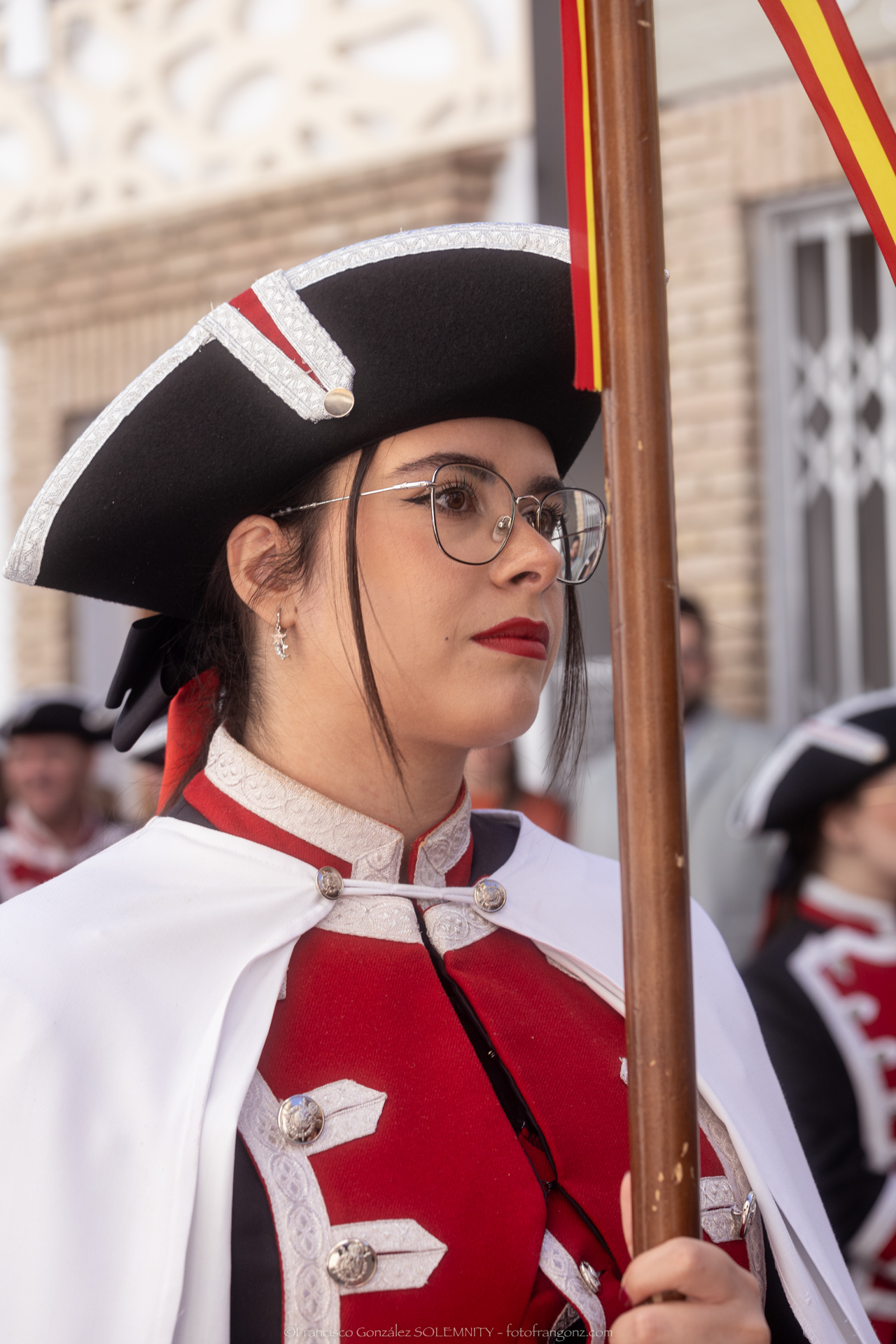
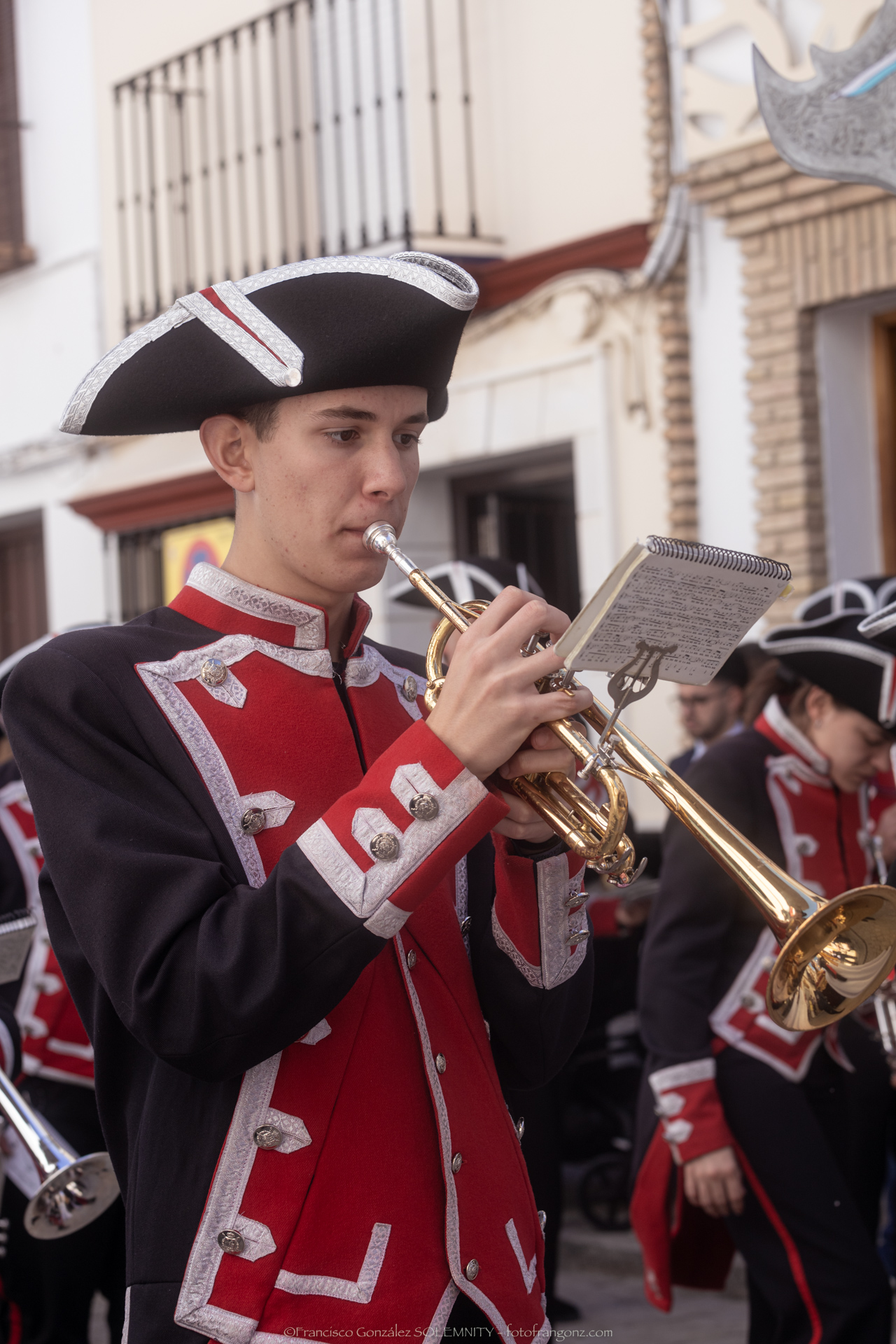
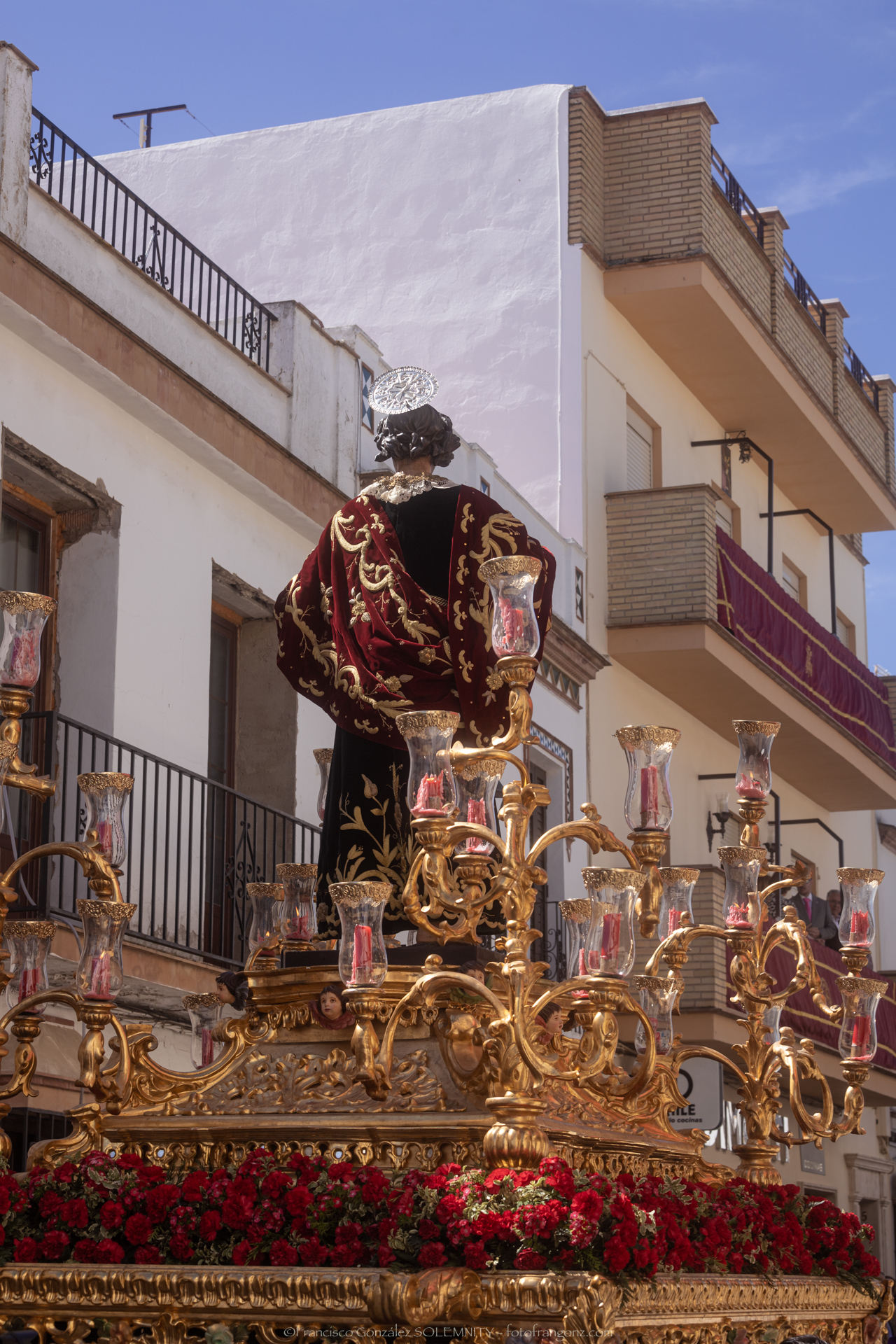
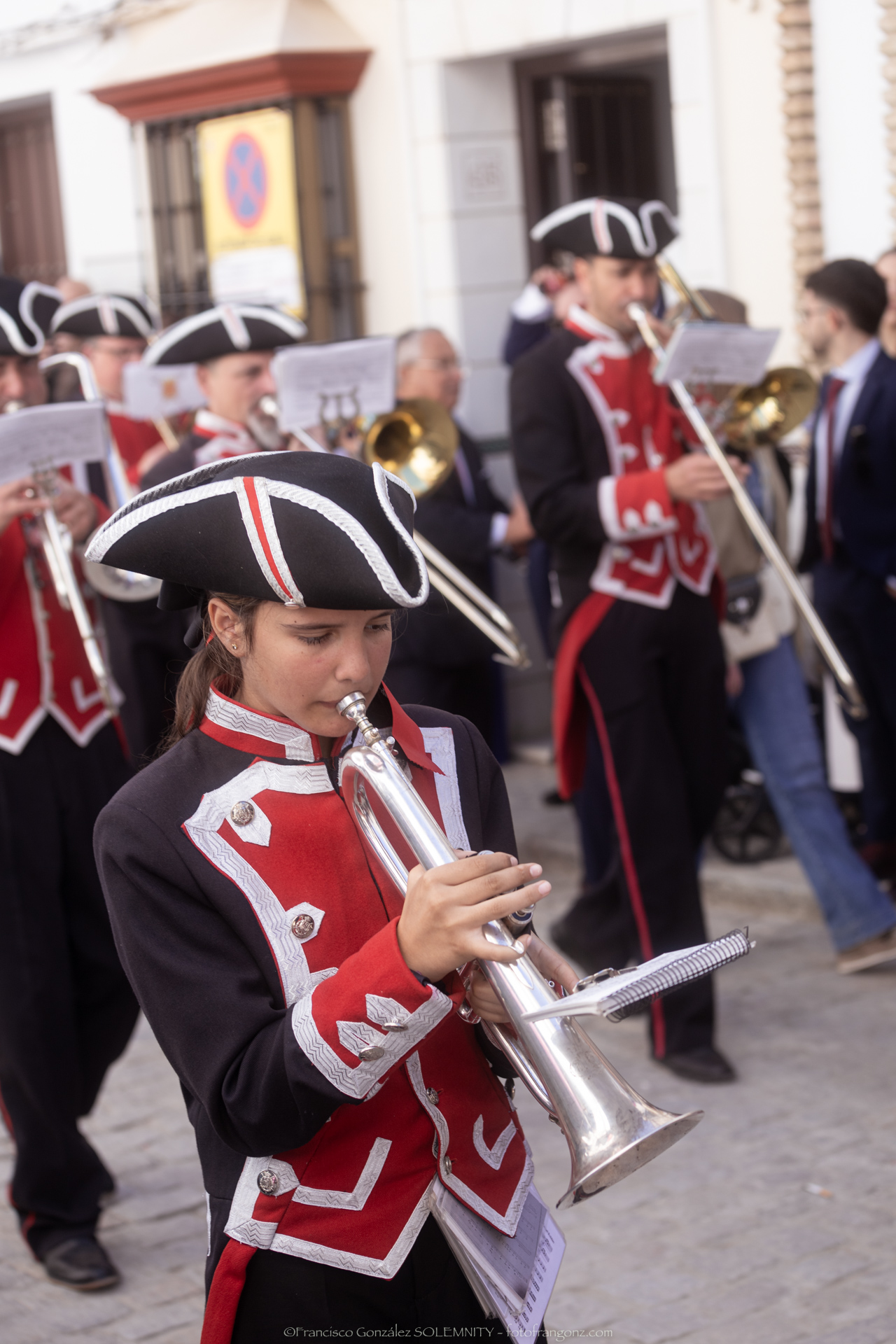
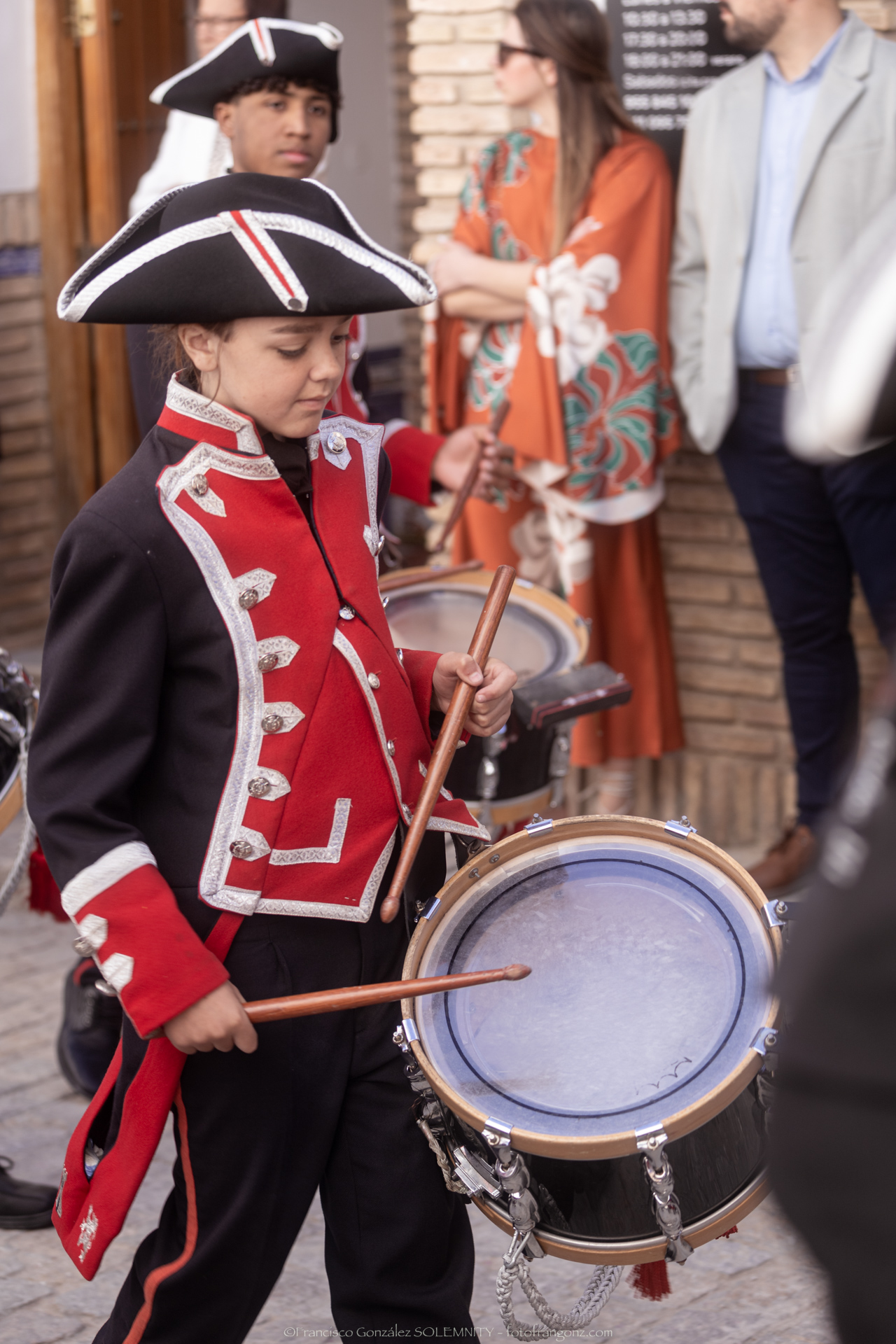
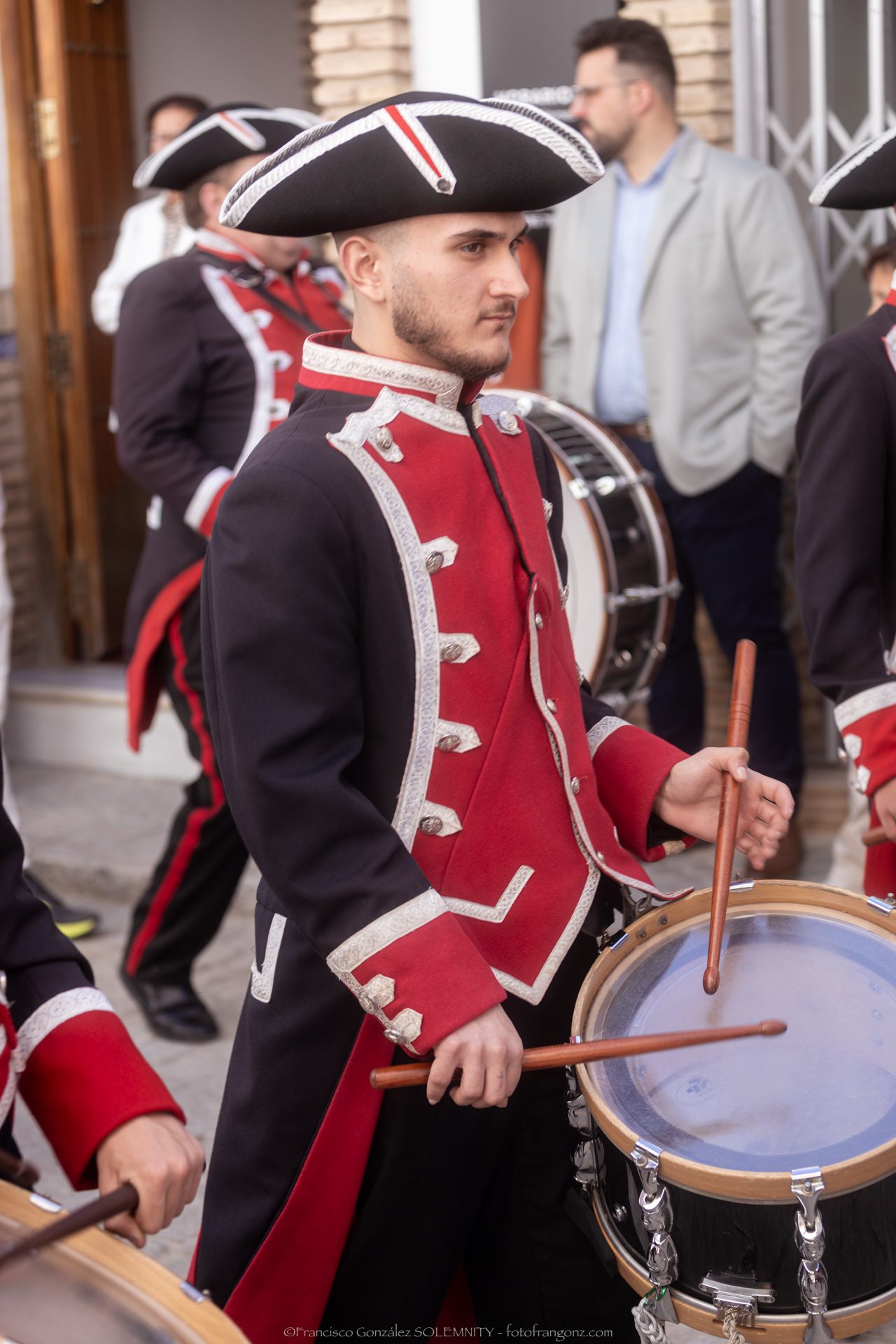
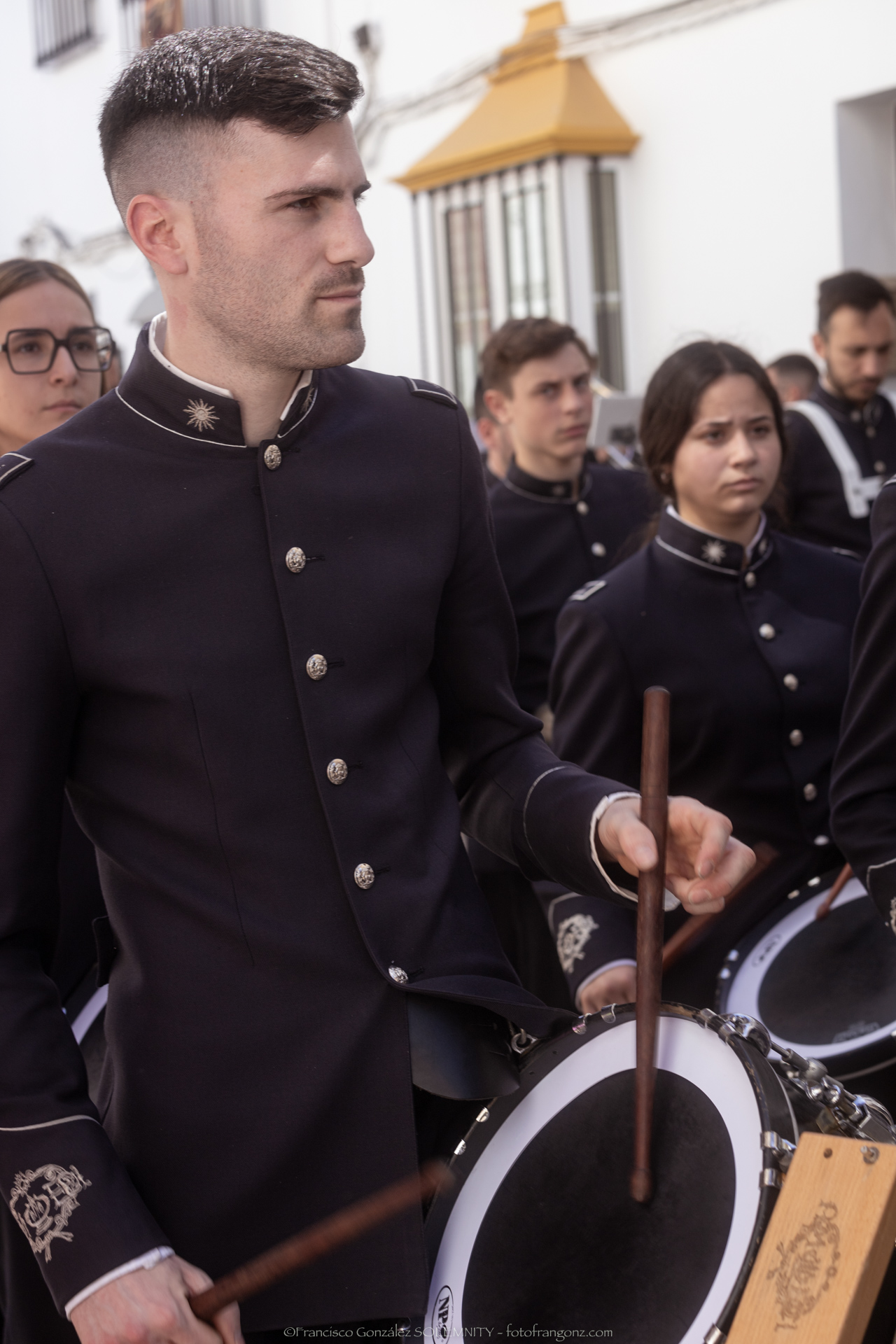
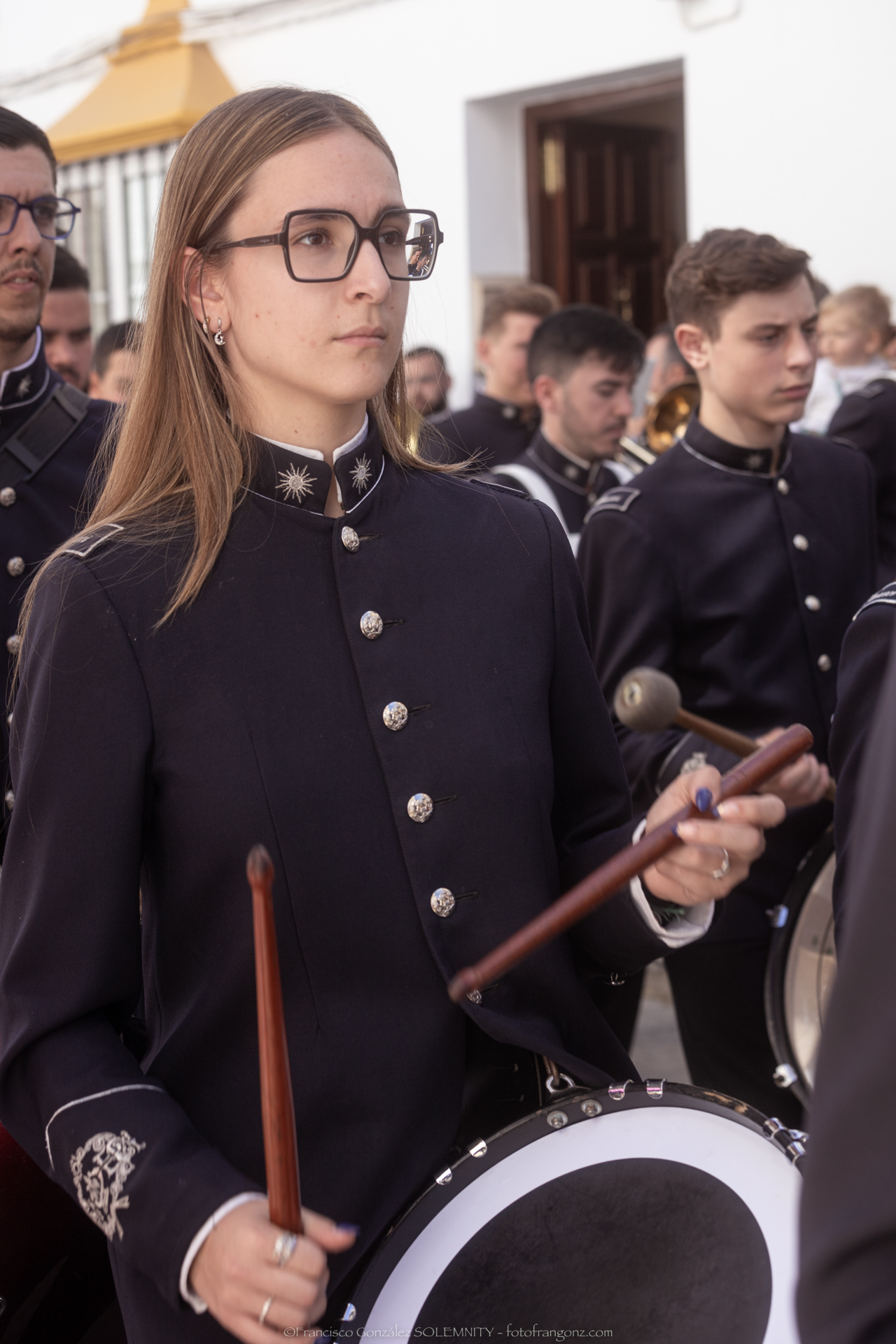
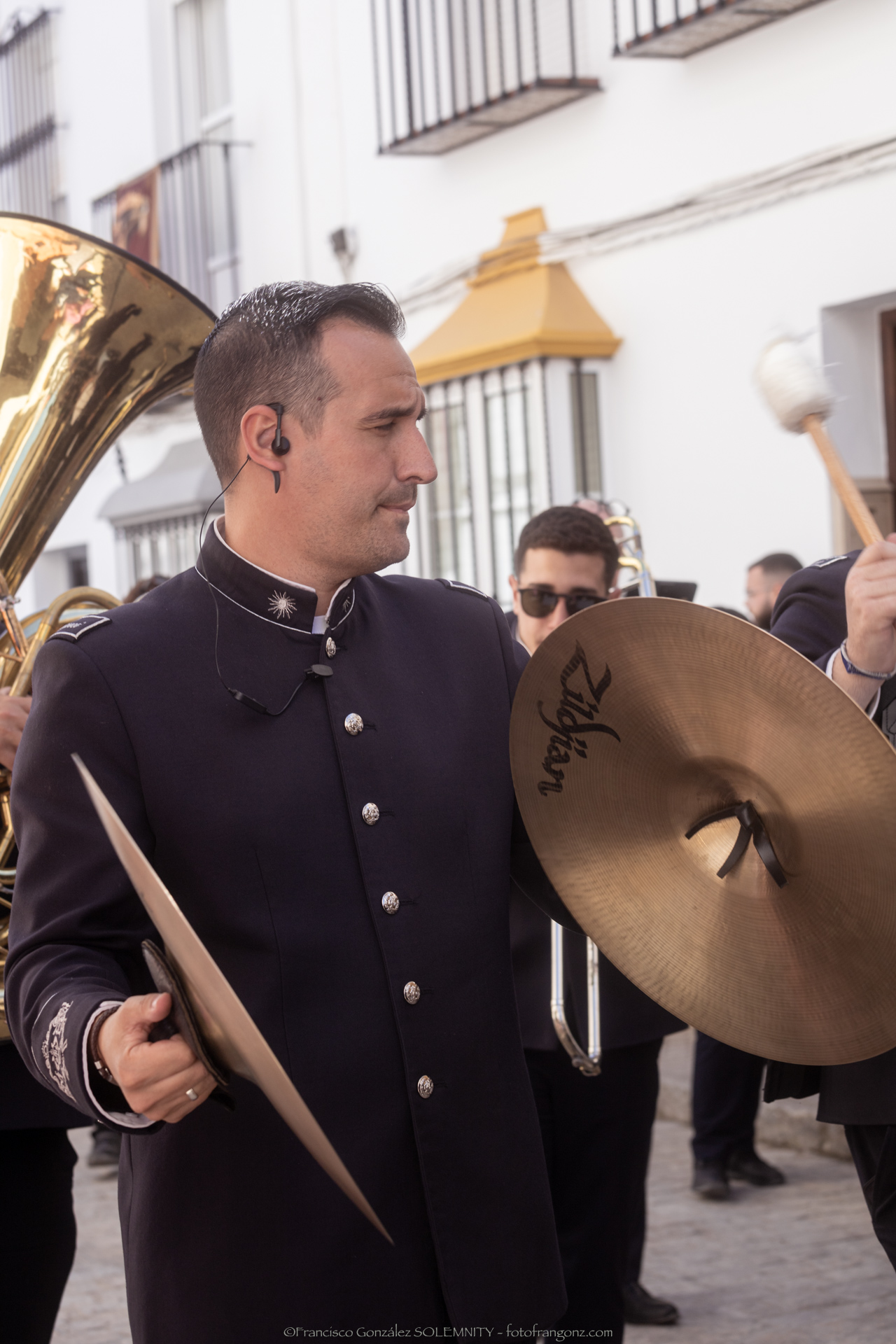
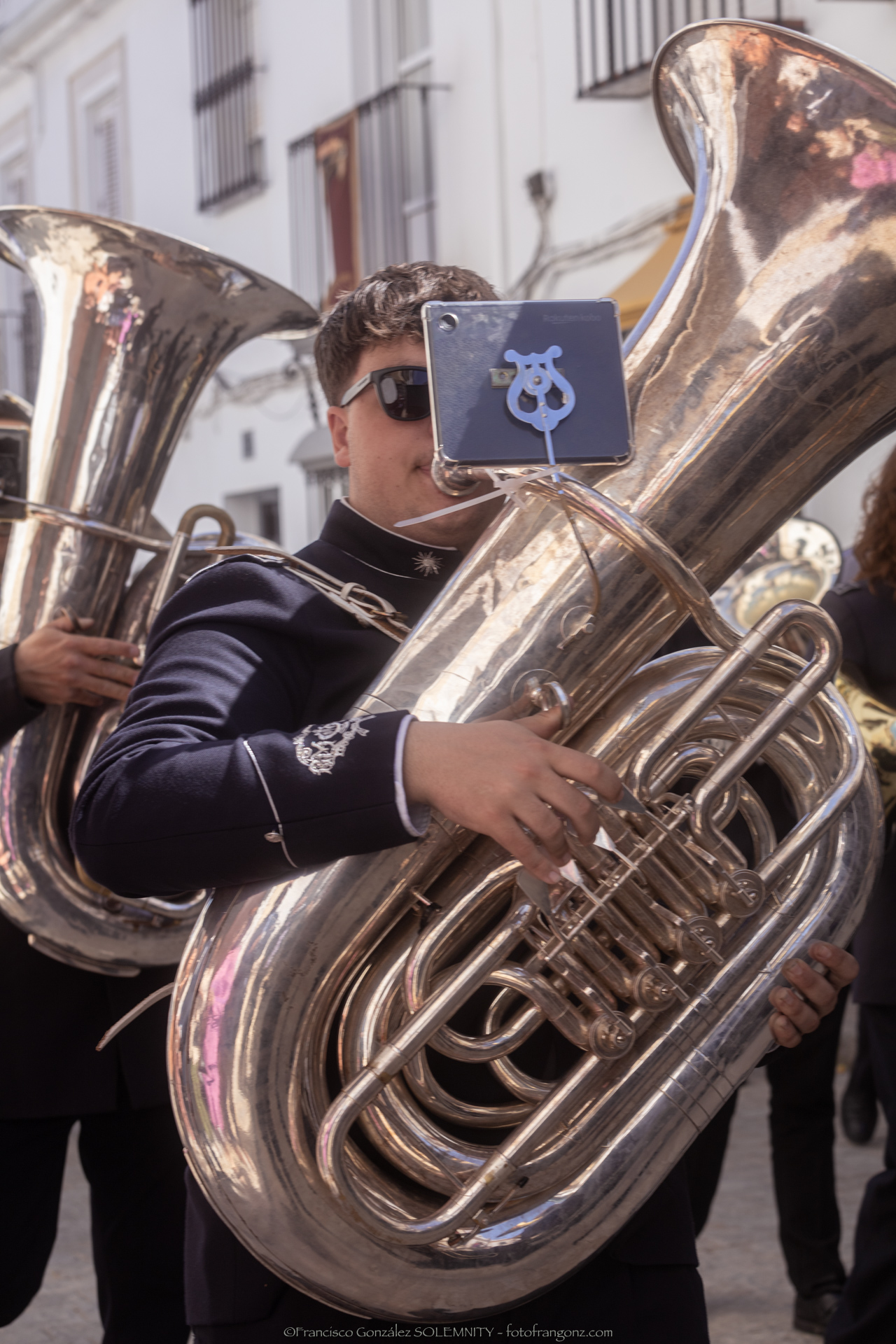
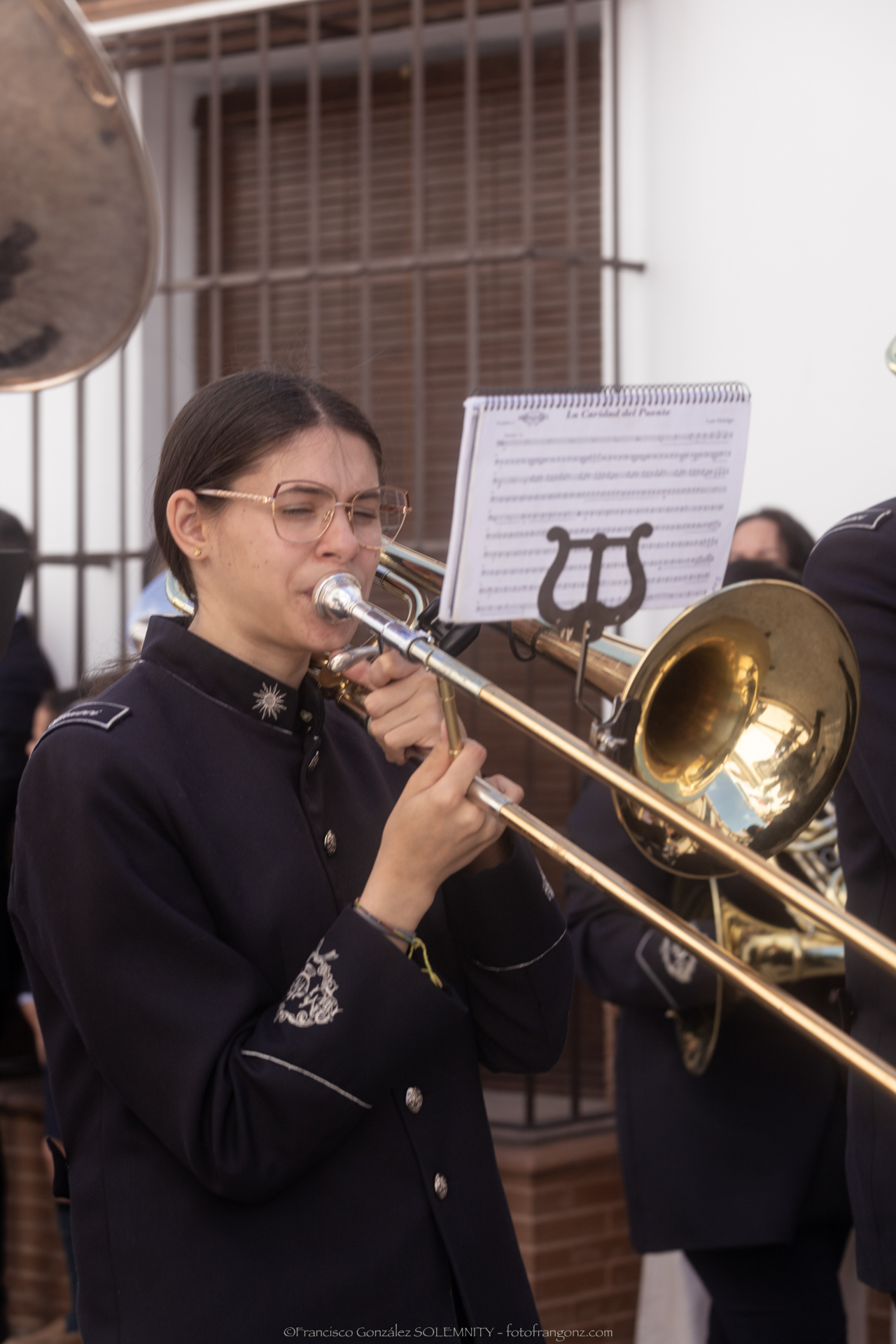
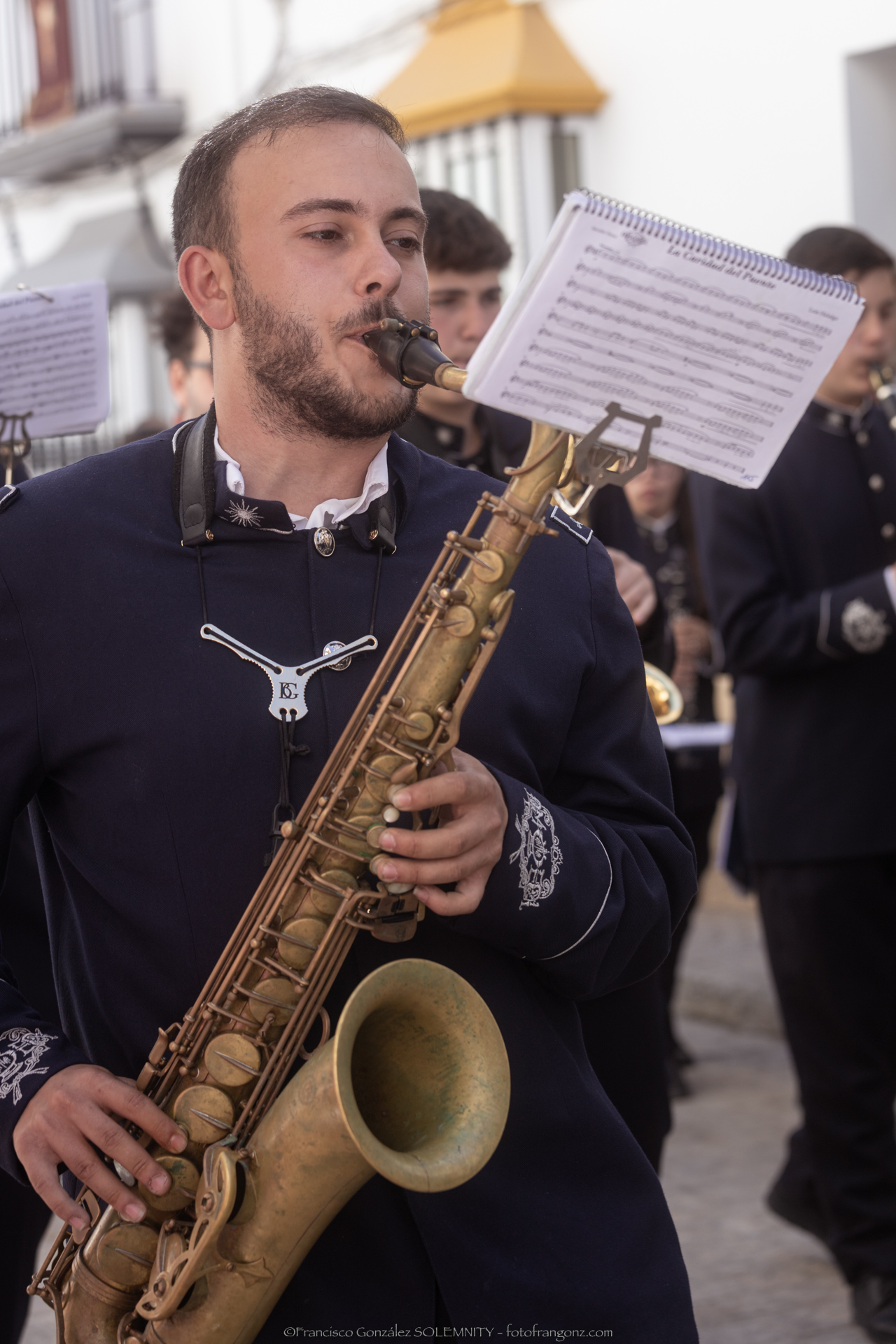
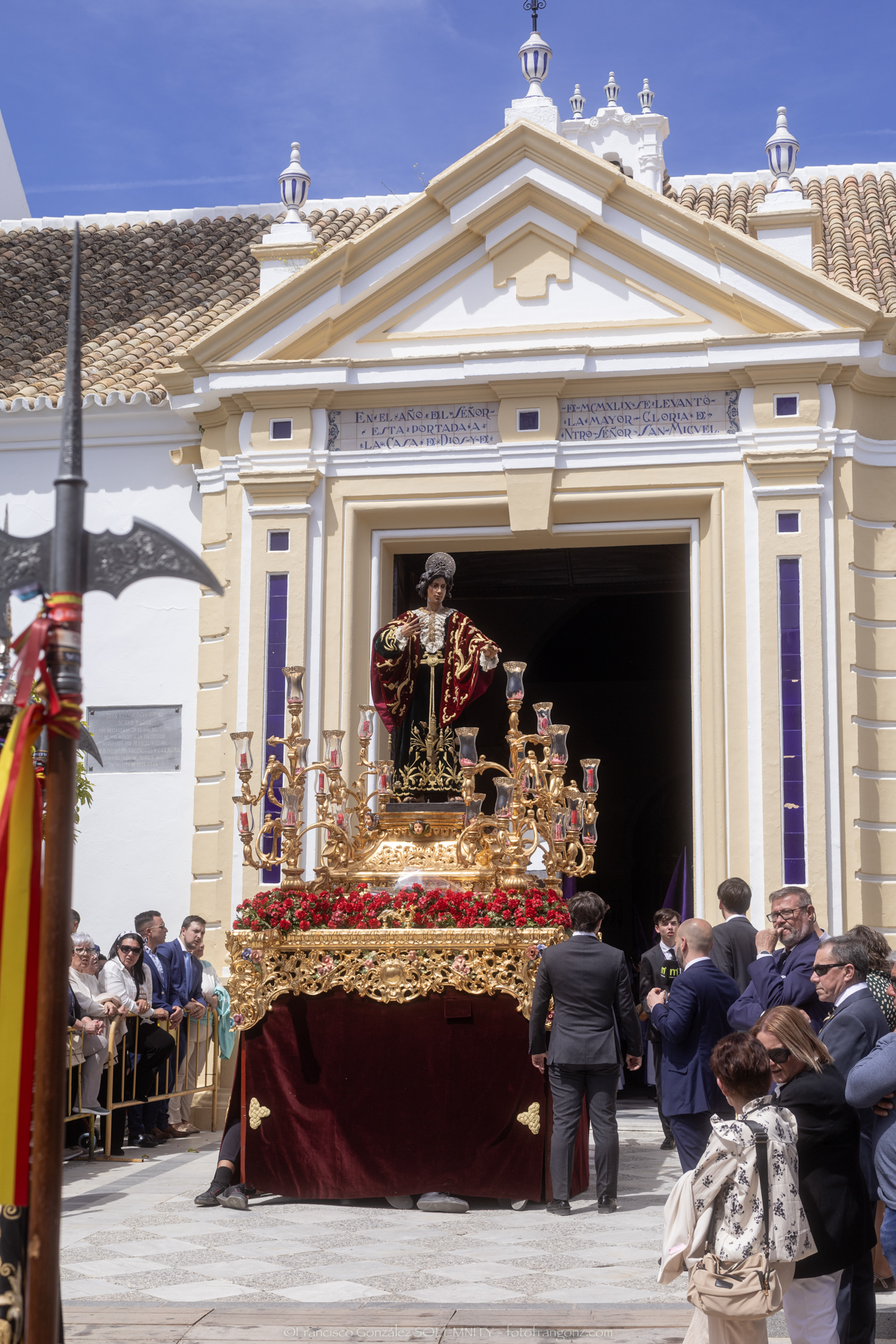
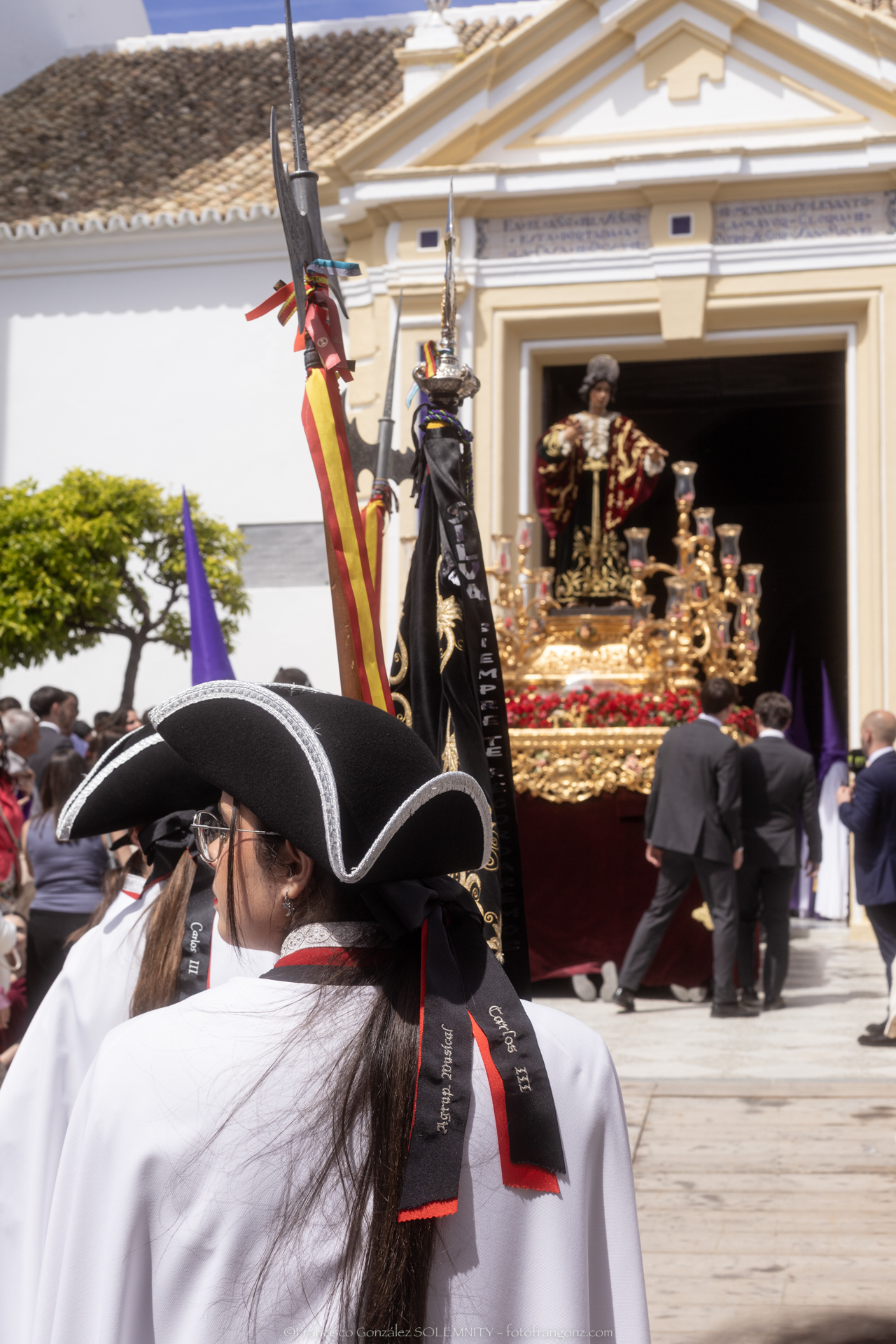
San Juan Evangelista, “the beloved disciple”, is considered a “training” float, where the young members of the brotherhood practice and learn in preparation to become future foremen and costaleros of the major floats. It is the section of the youth group, including the “paveros”, the youngest children carrying baskets (the word “pavero” comes from the person who guides turkeys, much like a shepherd guides sheep, and as one can imagine, this is a difficult task when trying to guide such young children without them becoming unruly). The float of San Juan Evangelista was accompanied by the Agrupación Musical Carlos III de la Carlota (Córdoba).
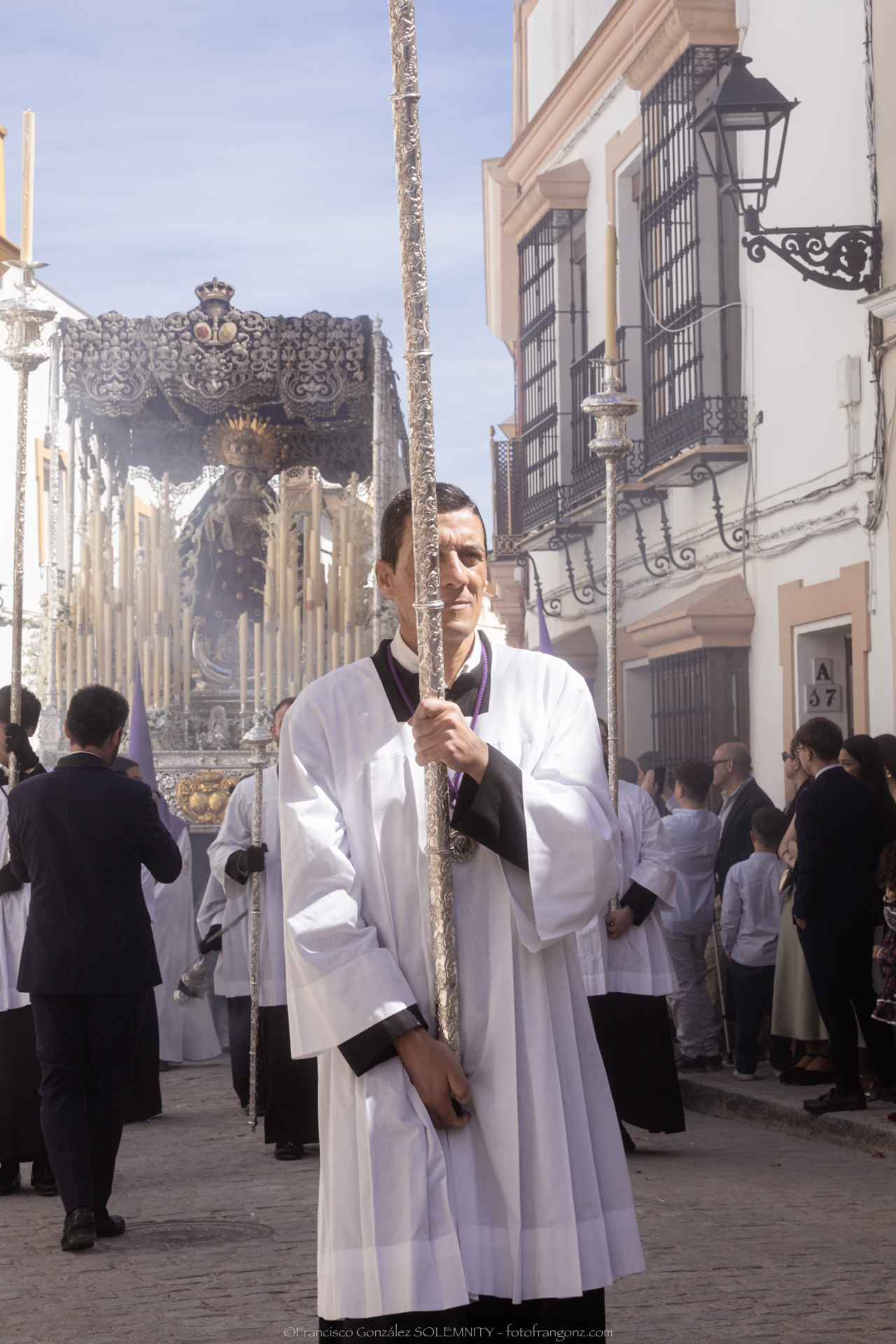
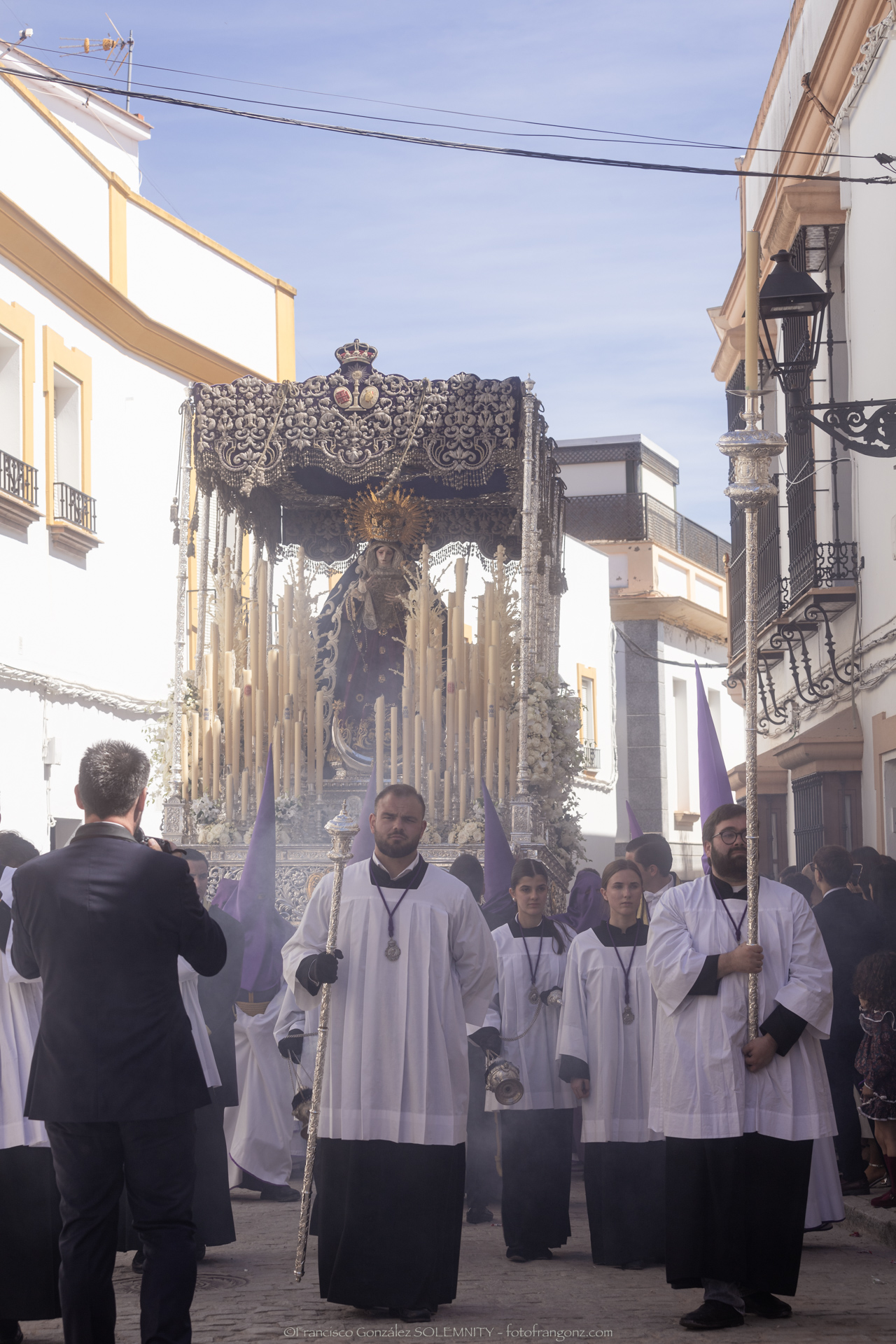
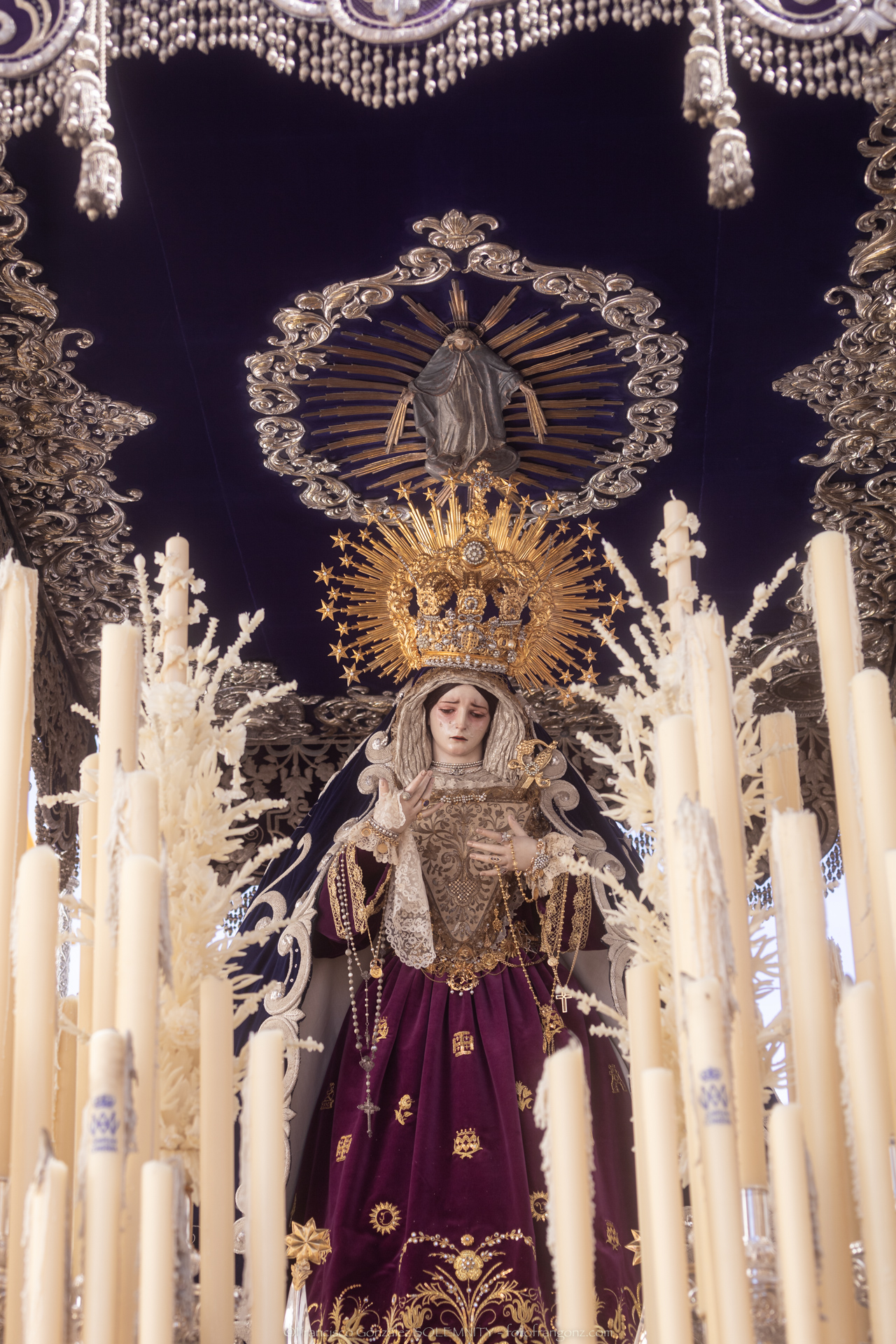
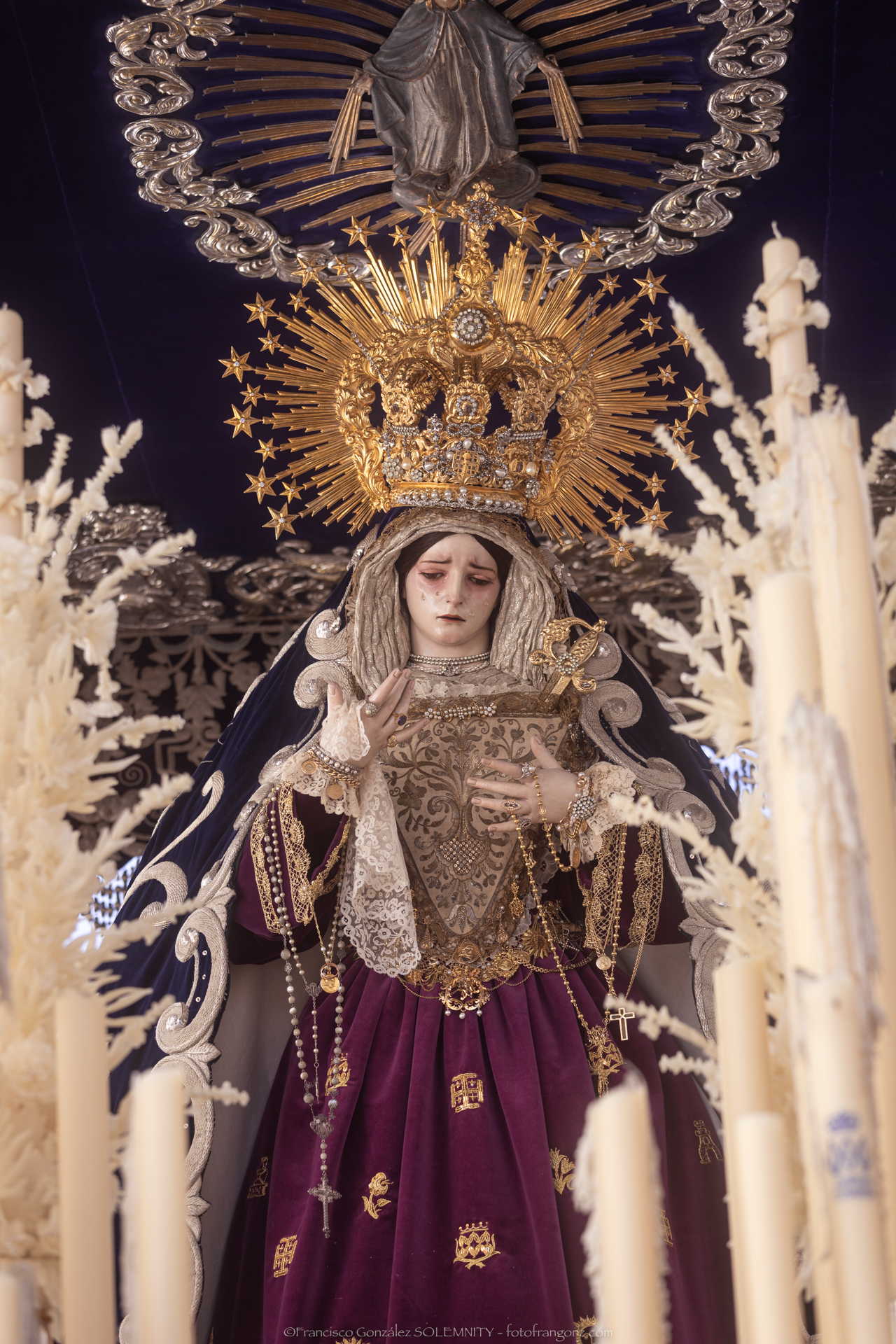
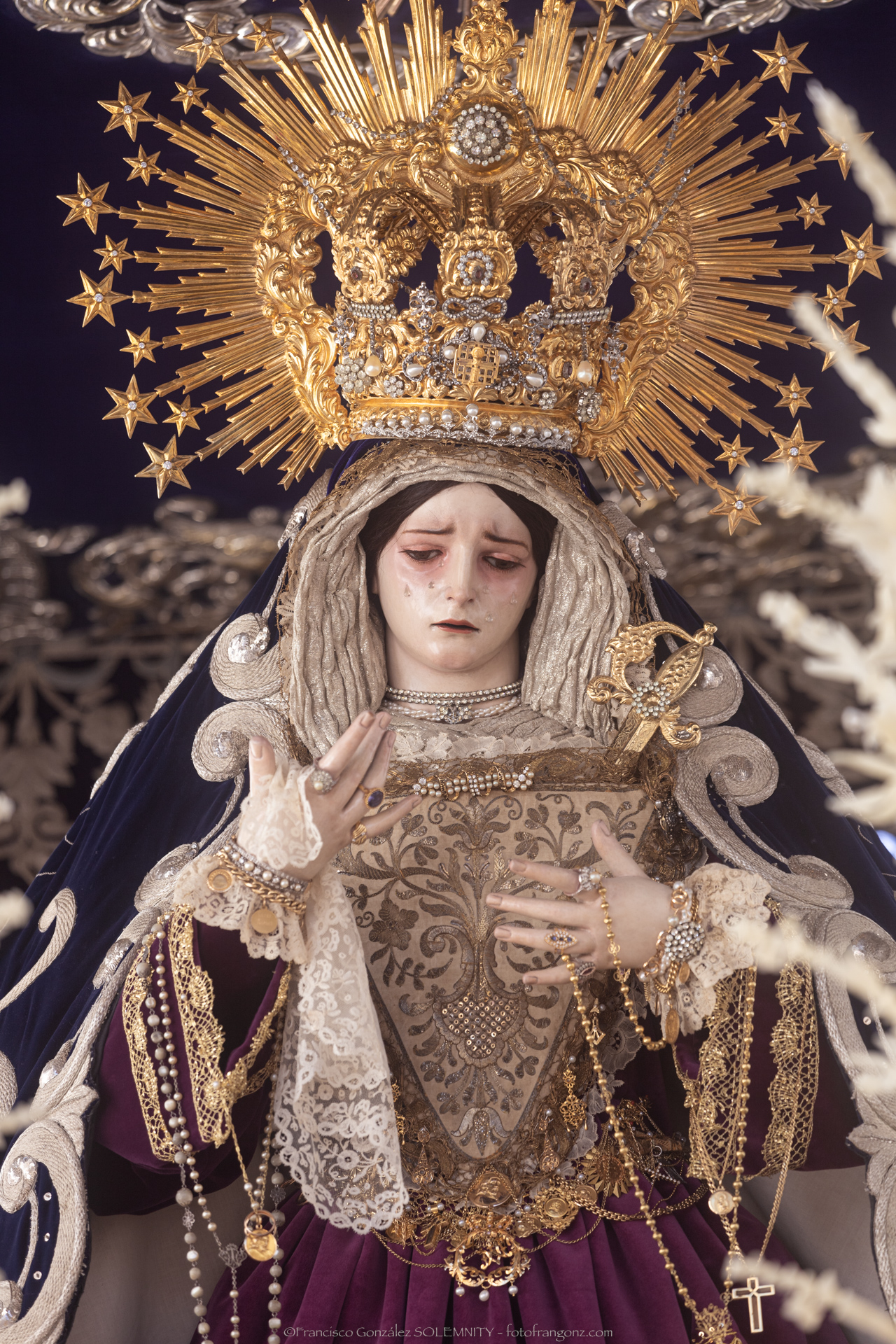
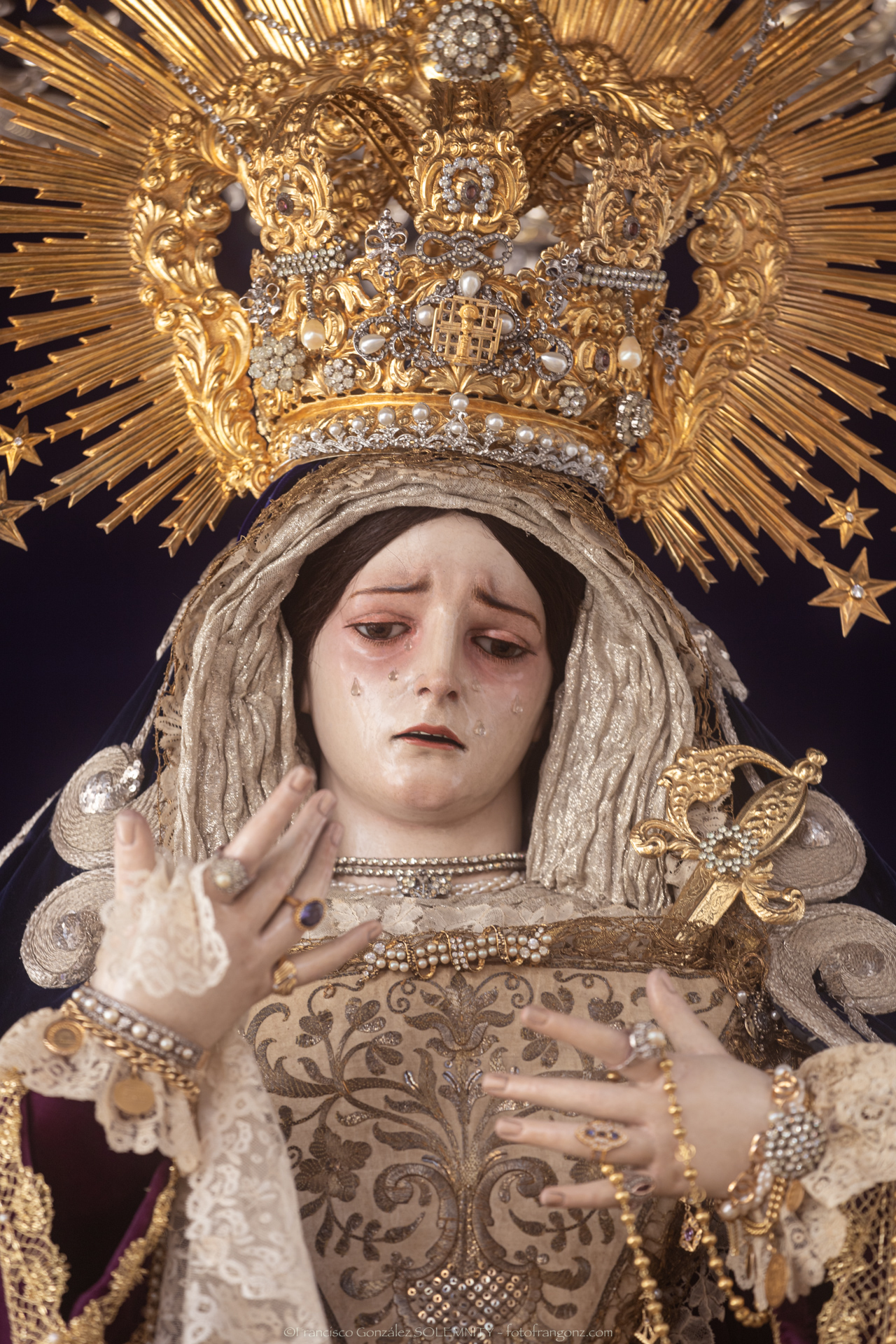
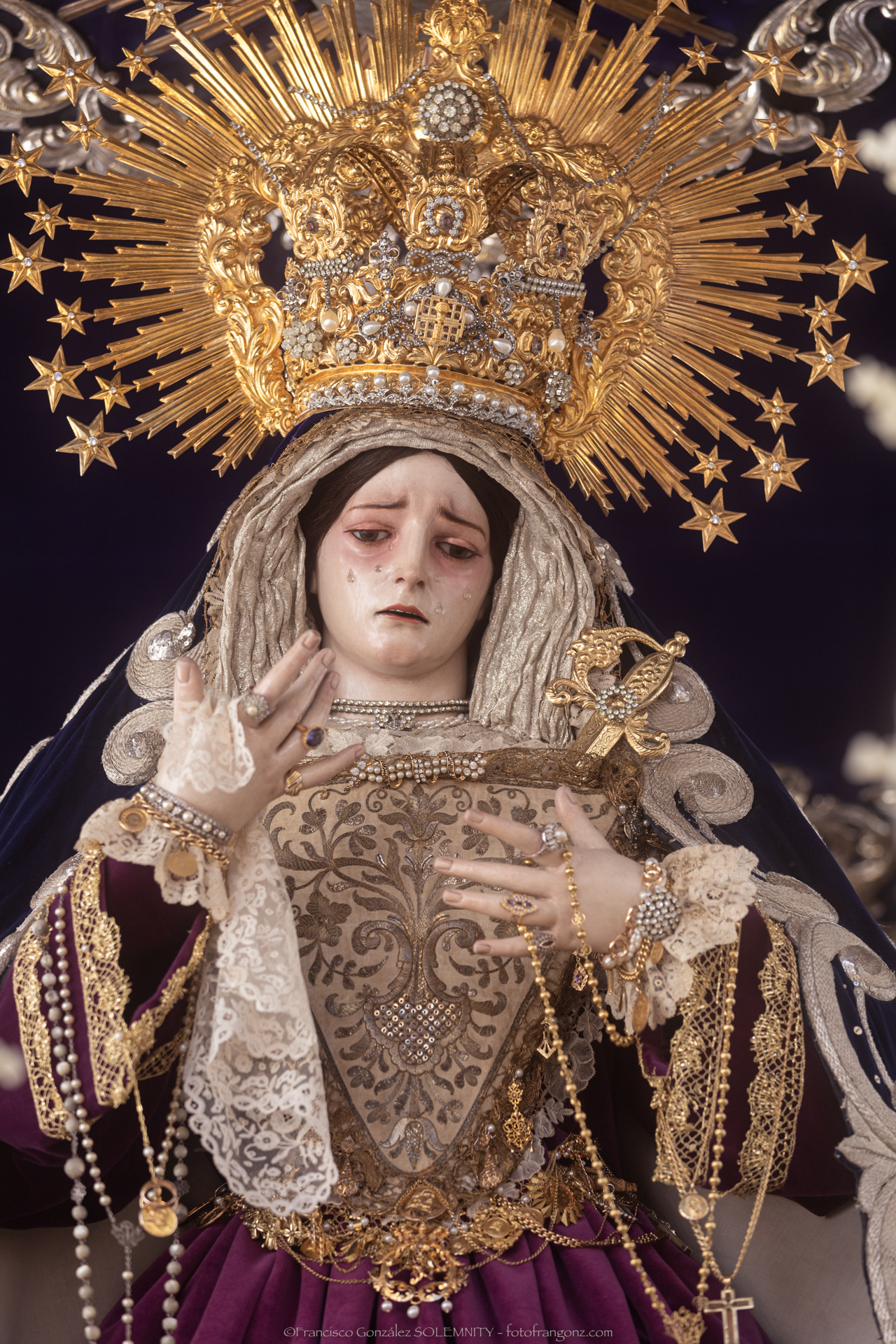
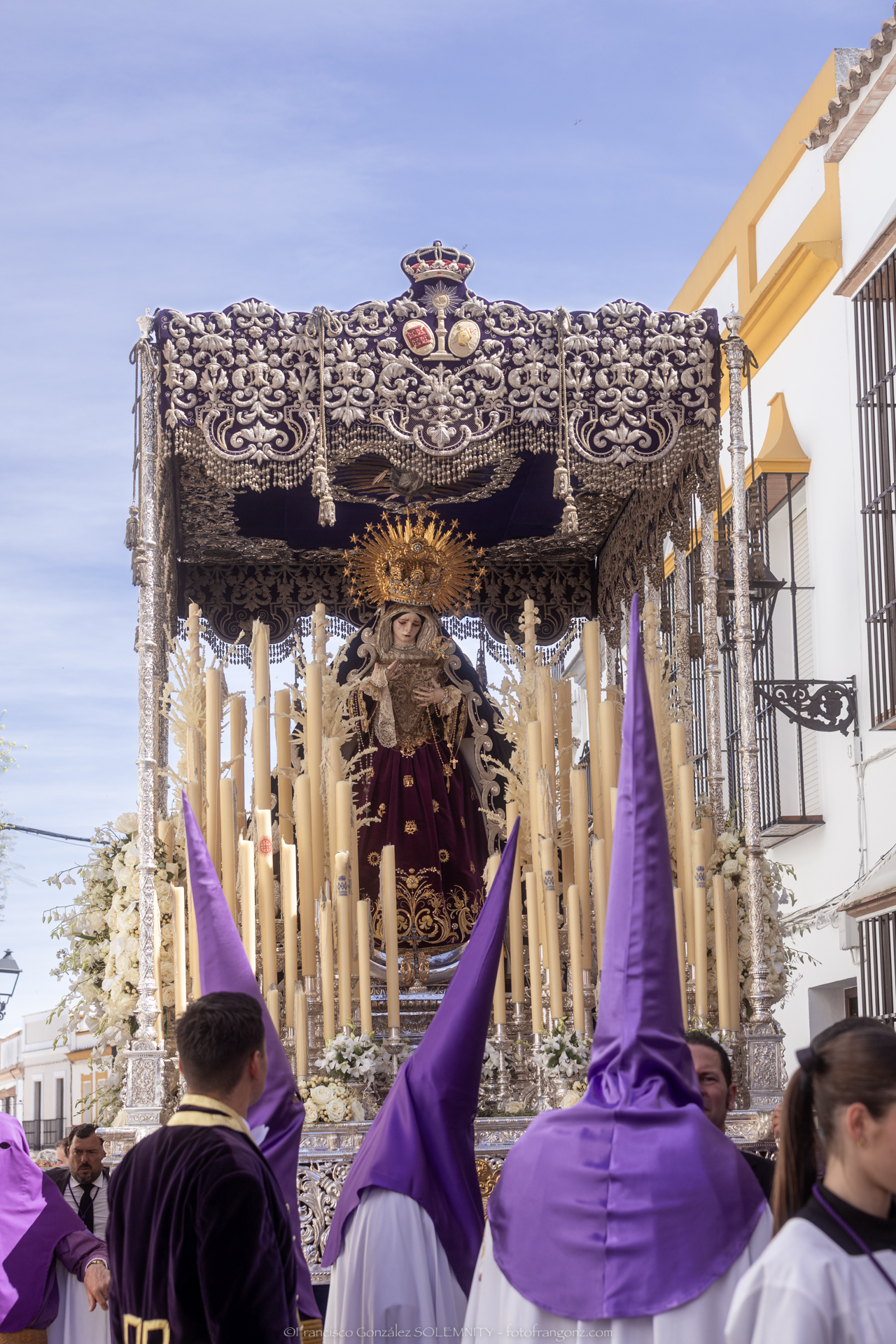
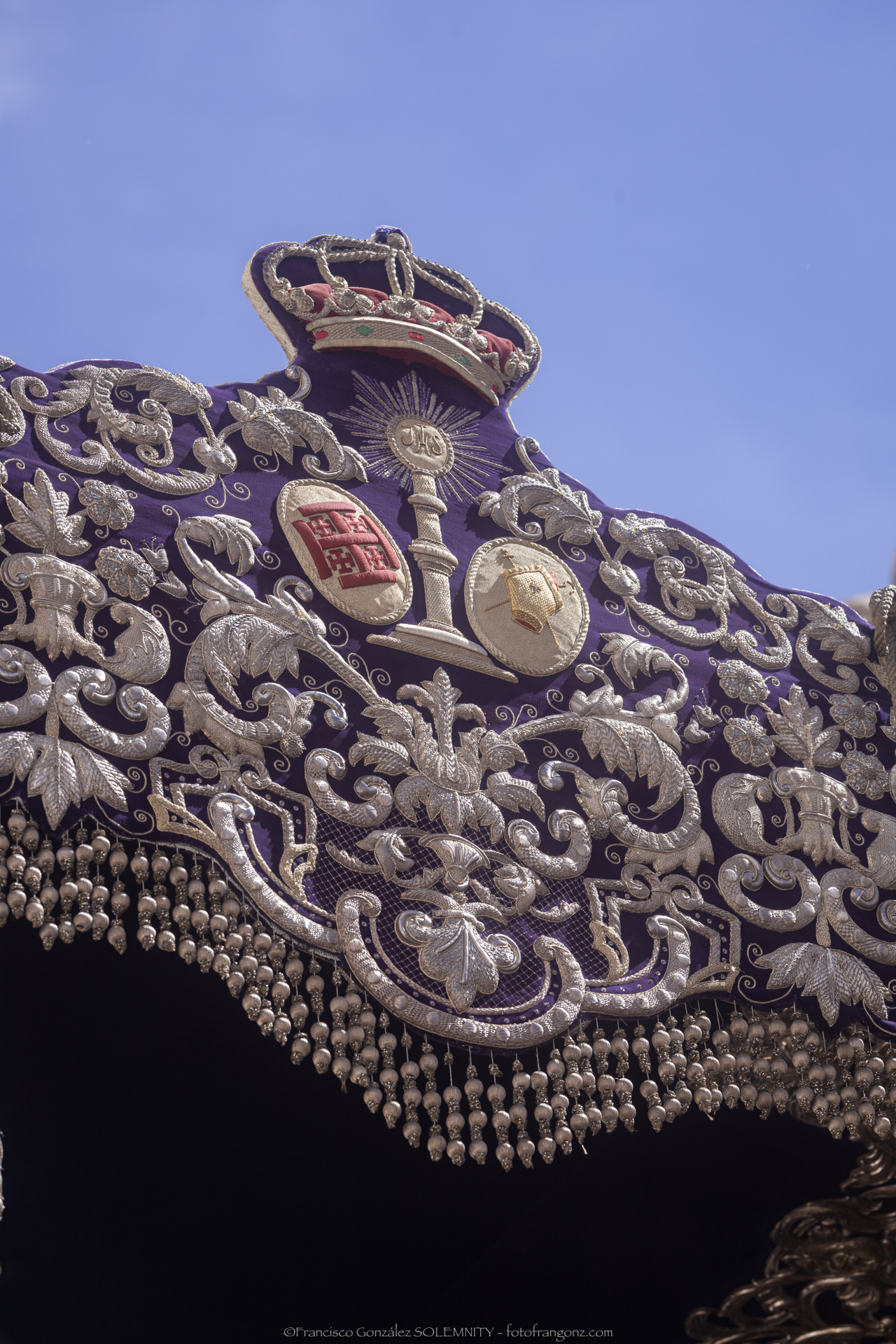
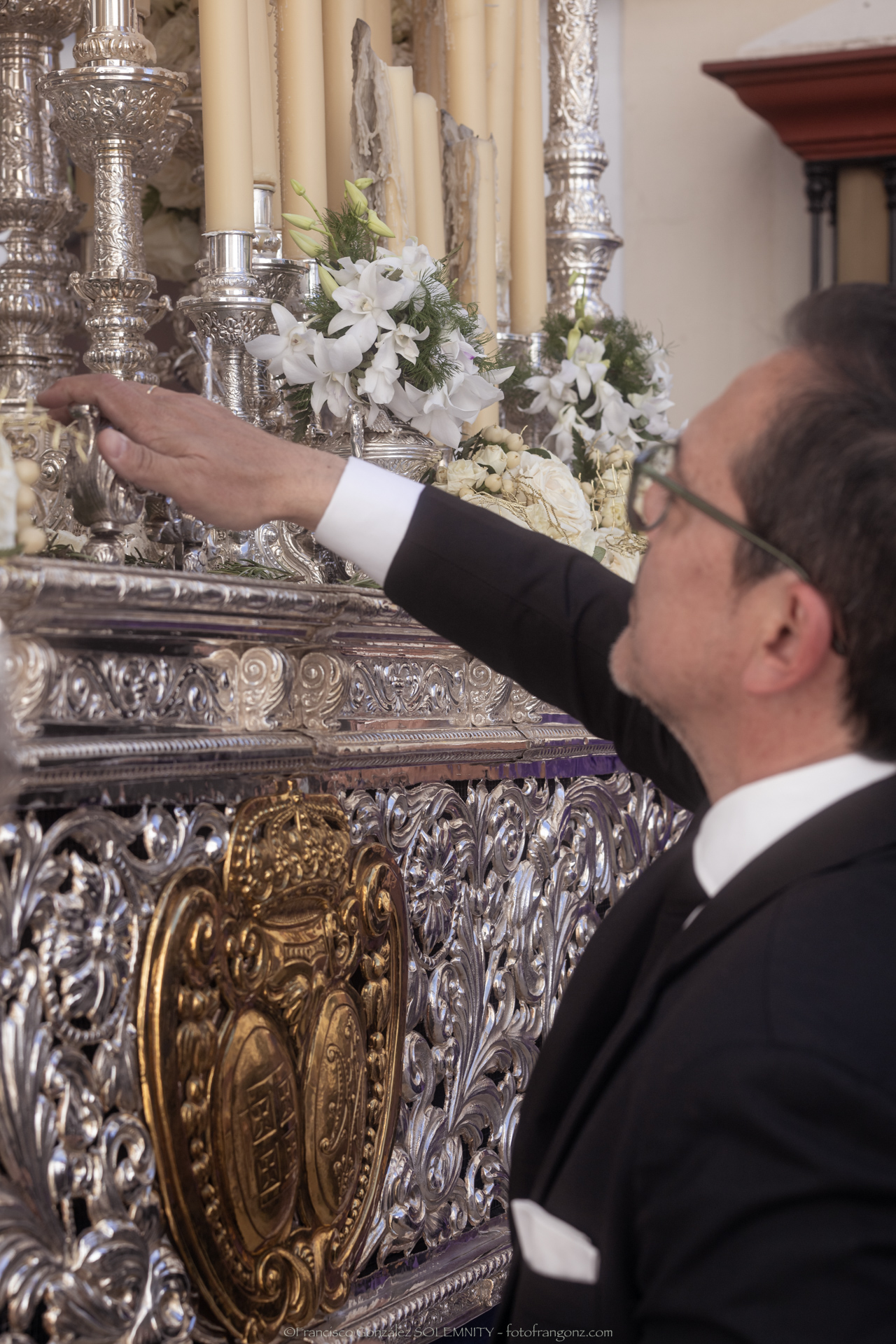
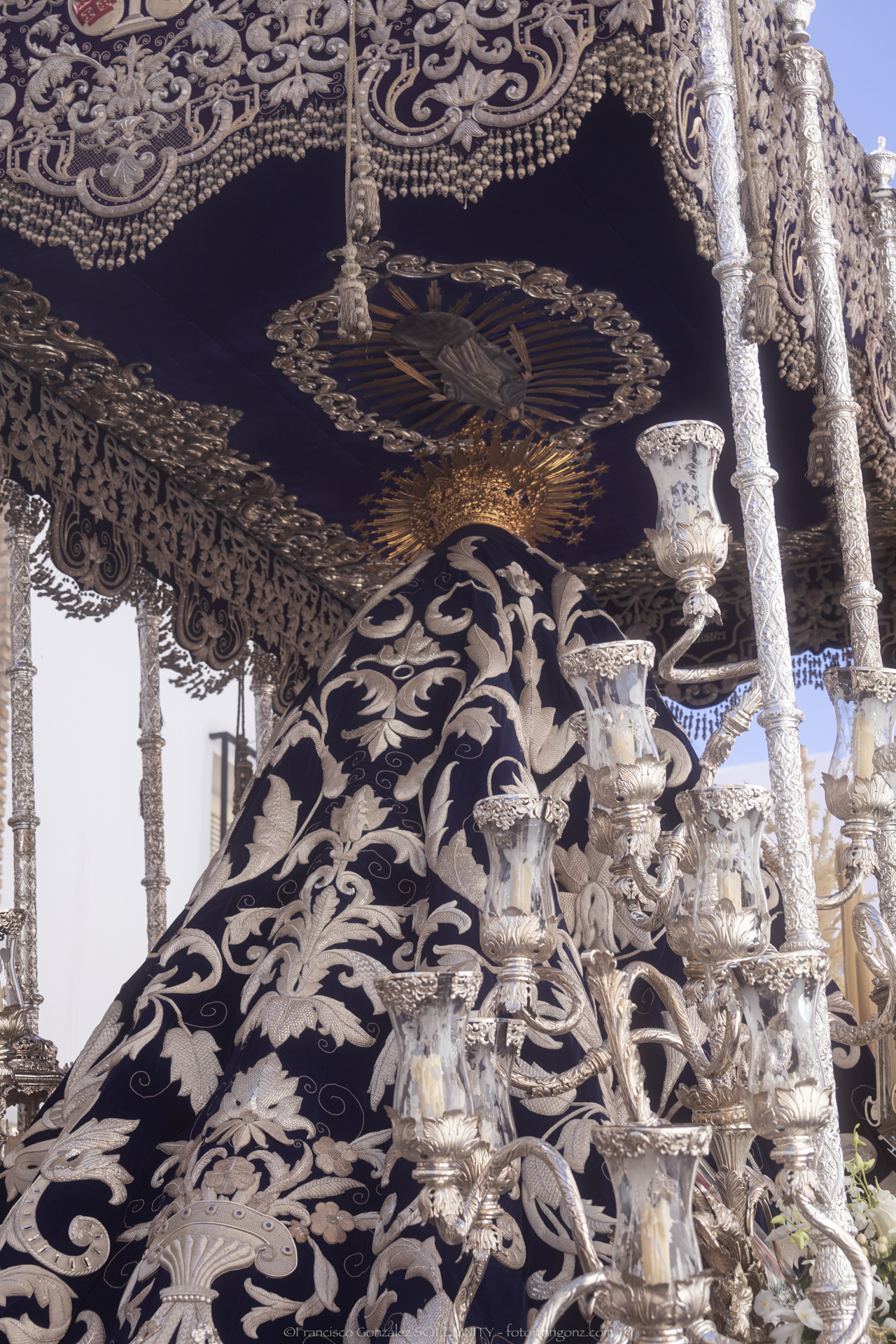
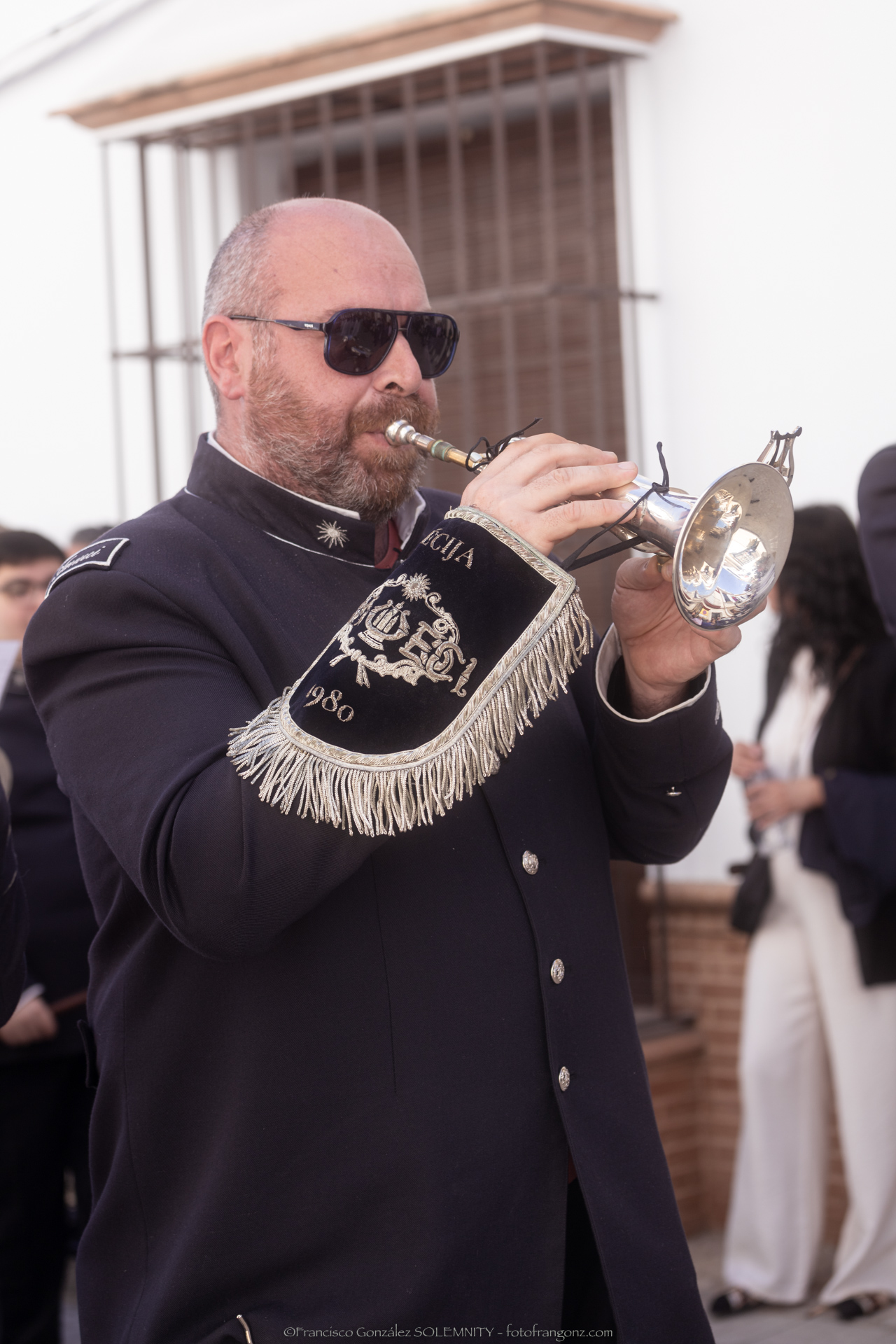
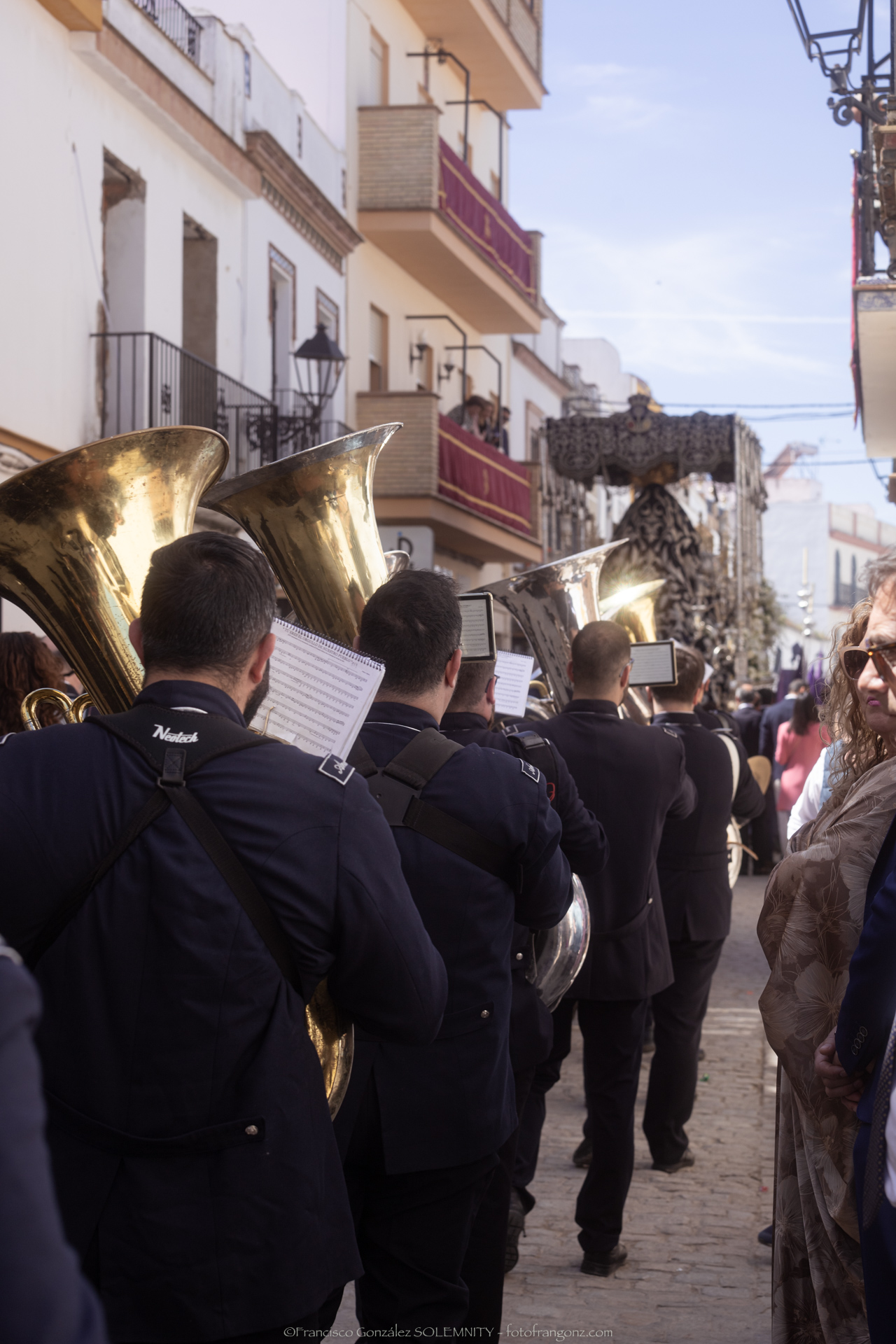
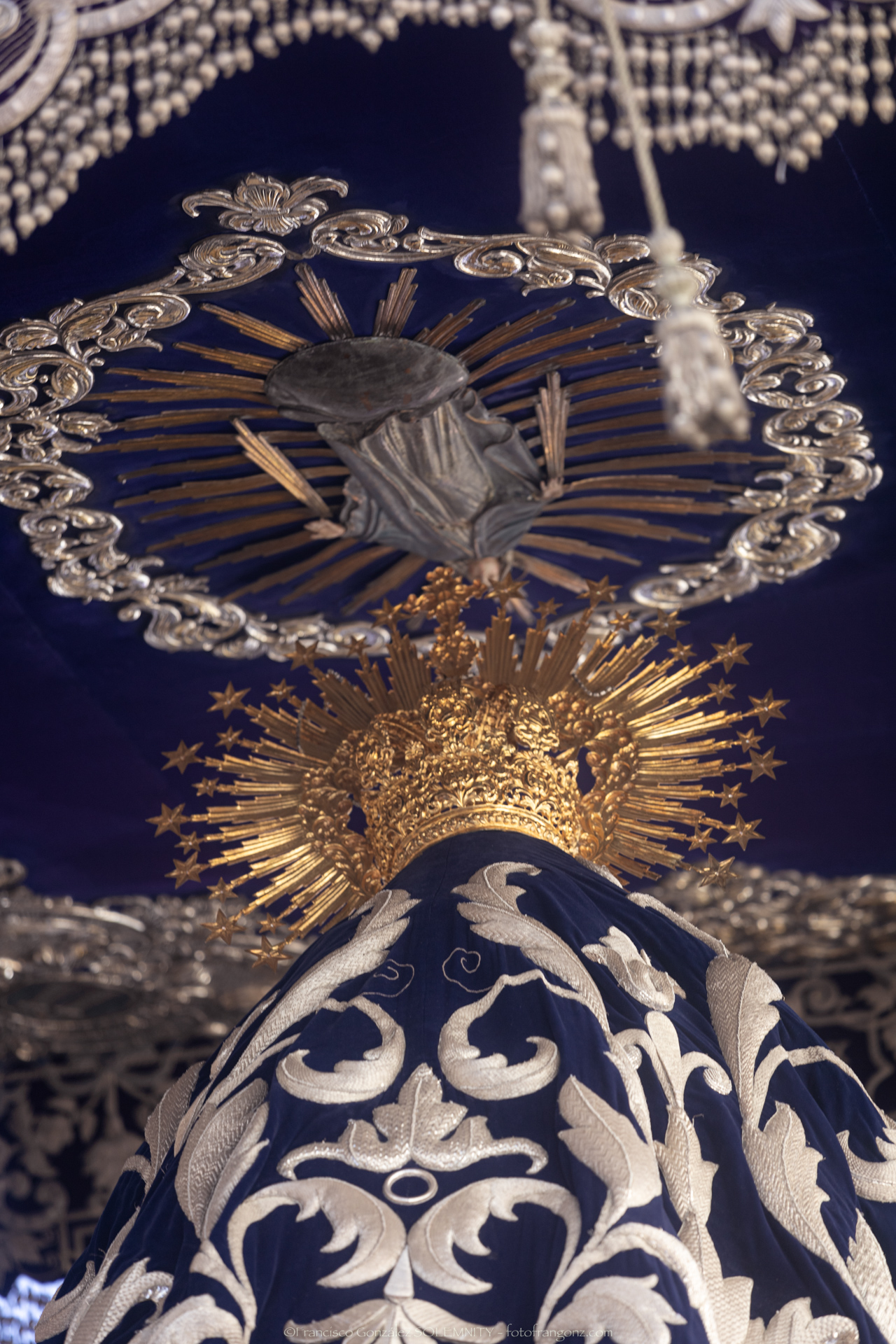
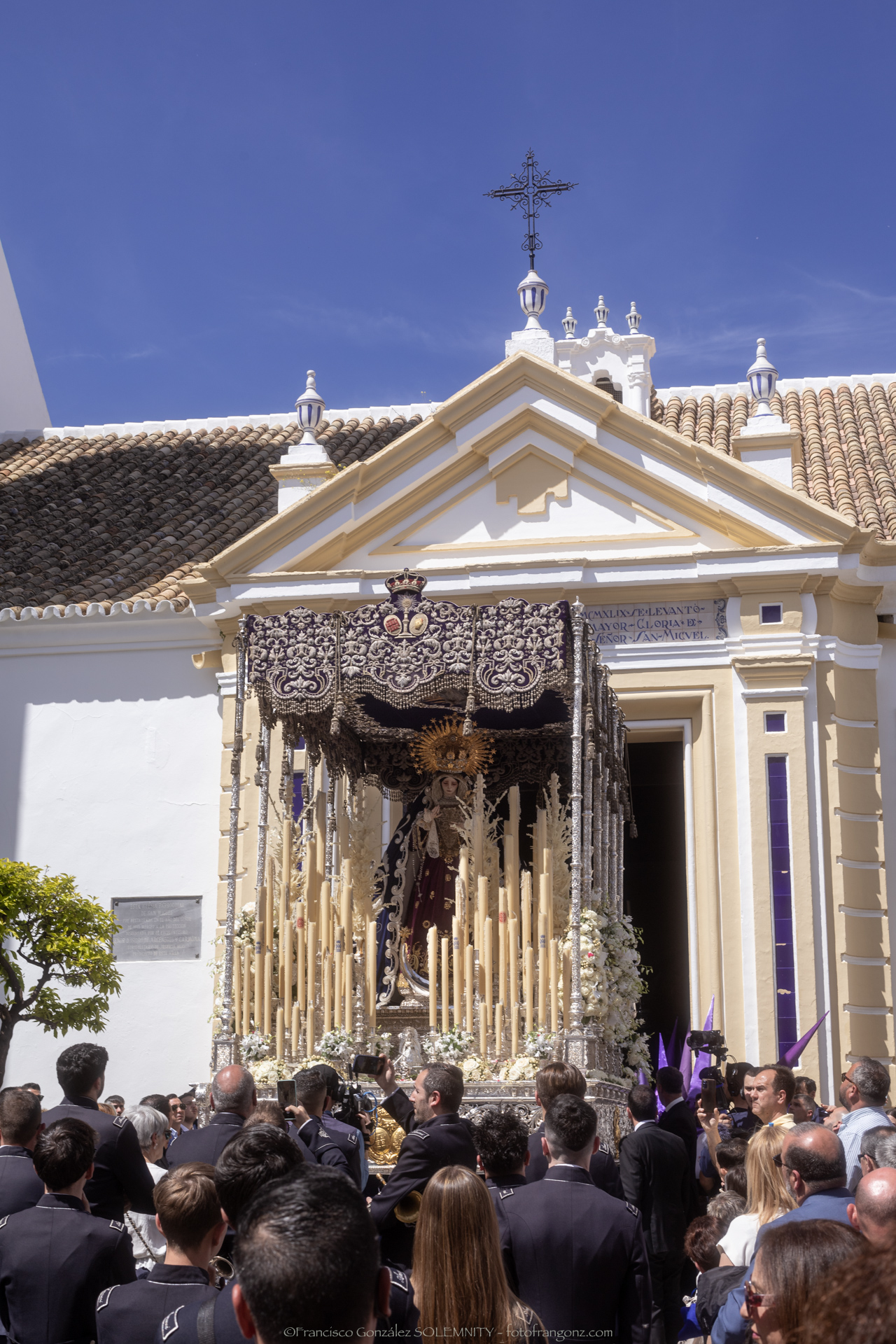
María Santísima de las Lágrimas is a Baroque-style work belonging to the Sevillian school, created by the sculptor Manuel Gutiérrez Cano in 1860. It symbolizes the sorrow of the Virgin upon encountering her son carrying the cross on the way to Calvary. This year, she premiered a purple embroidered saya featuring the litanies of the Virgin, created by José Librero in his workshop in Coria del Río and donated by a devotee. She also wore a 19th-century breastplate originating from France, and the arrangement of the candlesticks was modified, including candles hand-painted by Antonio Pliego with Marian motifs and the monogram of Mary. White roses were used instead of the traditional pink ones. She was accompanied by the Asociación Musical AMUECI de Écija (Sevilla).

Related posts:
 Jesus Nazarene – Good Friday Marchena 2023
 Jesus Nazarene Marchena 2025
 May Cross of the Nazarene Marchena 2025
 Our Father Jesus Nazarene and Mary Most Holy of Tears Marchena Seville Holy Week 2022
 Friday at the Fair of Marchena 2025
 Sweet Name of Jesus – Holy Thursday in Marchena 2026
 Sweet Name of Jesus – Holy Week Marchena 2023
 Little Donkey Marchena 2026 – Palm Sunday
 Lord of Humility of Marchena 2026 – Holy Wednesday
 Vera Cruz Marchena 2026 – Holy Thursday